Printable guide
Best Cenote Tours from Mérida: How to Choose the Right Swim and Day Trip
Updated
Compare the main cenote tours from Mérida, from Homún and Cuzamá cave circuits to hacienda pools and independent day trips. Choose by transport, pace, swimming comfort, and what else you want to see.

A cenote day from Mérida can be one of the easiest ways to escape the city heat, but the phrase “cenote tour” covers very different experiences. One outing may mean a tuk-tuk moving between several small cave pools around Homún. Another may be a long day with a private driver, a hacienda, a substantial lunch, and one carefully chosen swim. A third may combine a cenote with Uxmal, an archaeological site, or a village visit. They are not interchangeable.
The best choice depends less on a ranking than on the kind of day you want. Do you want three or four short swims, or one unhurried pool? Are you comfortable descending a steep ladder into a dark cave? Do you want a bilingual guide explaining the landscape, or simply transport and time in the water? Are you traveling with children, older relatives, or someone who does not swim? These questions matter more than a polished photograph.
Mérida is inland, and the cenote districts are inland too. The closest practical clusters are southeast and south of the city, especially around Homún and Cuzamá. Other options lie toward Tecoh, Chocholá, the Ruta Puuc, or farther east toward Valladolid. Most are reached by road rather than by a simple walk from Mérida centro, so transport is part of the experience.
Quick answer: which cenote tour is right for you?
- For the classic first visit: choose a Homún or Cuzamá small-group day trip that includes several cenotes and local transport between them.
- For the most distinctive journey: choose a Cuzamá circuit that uses the traditional “truck” or cart route to reach a group of cave cenotes. Confirm the current operating arrangement before booking.
- For comfort and a slower pace: choose a private tour to a hacienda cenote or a managed cenote site, with time for lunch and changing.
- For travelers without a car: book a tour with hotel pickup rather than trying to connect several rural taxis in one day.
- For families: look for easy stairs, changing facilities, life jackets, and a clear swim duration. A single open or semi-open cenote may work better than a three-cave circuit.
- For independent travelers: rent a car for flexibility, but use a local guide once you arrive in Homún or Cuzamá if you want to visit several lesser-known entrances.
- For a ruins-and-water day: pair a cenote with Uxmal, Dzibilchaltún, or a carefully planned eastern route. Do not attempt to see every major site and swim at multiple cenotes in one day.
Cenote Santa Bárbara in Homún, Yucatán, showing the underground swimming pool and the opening above it
Why book a cenote tour from Mérida?
A tour solves the least glamorous part of a cenote day: finding the entrances and managing the gaps between them. Cenotes are not a single park with one gate. They are individual sites, often on private land or managed by local communities. Signs can be modest, map pins can be incomplete, and opening conditions can change. In Homún and Cuzamá, local drivers and guides know which places are operating and which combination is realistic in the time available.
A good tour also makes the day easier if you do not speak Spanish. You can ask about water depth, ladders, life jackets, showers, food, and changing areas without trying to solve every detail at a roadside entrance. That is especially useful when a traveler has a fear of heights, limited mobility, or a child who needs a shallow entry.
The trade-off is control. Group tours normally work to a fixed schedule. They may collect people from several hotels, spend less time at each cenote, and stop for lunch at a predetermined point. A private tour costs more, but it can be shaped around your energy, photography, swimming confidence, and interest in Maya history or local life.
Do not book simply because a listing says “three cenotes.” Ask which cenotes are included, whether entry fees are included, how long you swim at each, whether the tour uses a shared vehicle or local cart, and what happens if the site is crowded or closed. A tour that names the route is easier to evaluate than one that promises a vague “secret cenote experience.”
The main cenote tour areas near Mérida
Homún: the widest choice of small cenote experiences
Homún is one of the most useful bases for a cenote day from Mérida because many swimmable sites are spread around the town and its surrounding countryside. The choices range from simple cave pools with basic facilities to more developed properties with platforms, changing areas, food, and several pools in one visit. The variety is the point: a guide can select a cave, a more open pool, and a quieter stop according to the group.
Many visitors hire a local mototaxi or tuk-tuk guide in Homún. This is not the same as a Mérida tour: you still need to arrange transport from Mérida, then agree on the local route when you arrive. For travelers who enjoy independent planning and can communicate clearly, that arrangement can be flexible. For a first visit, a Mérida tour with the local portion already organized is less stressful.
Homún is a good fit for travelers who want to see different cenote shapes. A closed cave may have a narrow entrance, a ladder, stalactites, and limited natural light. A semi-open pool may feel brighter and easier to photograph. An open cenote can be more comfortable for someone who dislikes enclosed spaces. Ask for the type of cenote before committing to the route.
The area is also a good place to keep money in the community. Local guides, family-run entrances, food stalls, and small operators form part of the visitor economy. Pay attention to instructions about showering, sunscreen, life jackets, and not touching rock formations. These are not decorative rules; they protect the water and the fragile cave environment.
GuideUltimate Guide to Exploring the Cenotes of HomúnThe article is a guide to exploring the underground cenotes of Homún, a small town in the Yucatán Peninsula of Mexico. From Mérida you can reach Homún by taking a colectivo or by renting a bicycle; once there you may hire a local guide, although the guide is optional. Entrance fees are paid in cash at each cenote, and the cost varies by site, but the article does not give exact prices. No specific opening hours are mentioned, so visitors should assume the cenotes are accessible during daylight. A typical visit to a cenote lasts a few hours, depending on the activities chosen, such as swimming, diving or simply admiring the scenery. The guide notes that swimwear, water shoes, biodegradable sunscreen and a waterproof camera are useful items to bring, and that cash is needed for the entrance fees. Visitors can expect an underground, often dimly lit environment that differs from open‑air cenotes. Early morning visits are recommended to avoid crowds, and interacting with locals can provide insight into the history and legends of each site. Some cenotes permit diving, but safety guidelines must be checked in advance; shallow areas are available for non‑swimmers, though life jackets are advisable. The article stresses respecting the ecosystem by not leaving waste, avoiding contact with underwater formations, and using sun protection despite the shade.Open
Cuzamá: the traditional cart-and-cave route
Cuzamá is known for circuits that connect several cenotes, traditionally using small carts on former narrow-gauge tracks or rural paths. The journey is part of the appeal. You are not simply being delivered to a pool; you are moving slowly through the landscape and arriving at a sequence of underground spaces. Current transport arrangements vary, so confirm exactly what the tour includes and whether carts are operating on the date of travel.
A Cuzamá circuit suits visitors who want a memorable rural experience and do not mind a less polished rhythm. Access can involve uneven ground, ladders, low cave entrances, and wet steps. This is not the best choice for someone who wants a resort-style facility or has difficulty transferring between a vehicle, a cart, and a ladder.
The three-cenote format can sound repetitive until you see how different the pools are. One may be almost entirely enclosed, another may have a larger roof opening, and another may be reached after a longer ride. Still, three does not mean three long swims. Some groups prefer to enter each water body briefly and then spend longer at the favorite. Tell the guide if you would rather swim properly at two places than rush through three.
Cuzamá is also a practical choice for a private driver. You can leave Mérida early, arrive before the busiest part of the day, and avoid trying to fit a distant archaeological site into the same schedule. If your main objective is cenotes, let the day remain about cenotes.
 Cenote Bolón Chojol in the Cuzamá area of Yucatán, one of the cave pools visited on the region’s cenote routes

Managed hacienda cenotes: easier logistics and more comfort
A hacienda cenote is a different proposition from a small rural entrance. The setting may include restored or partially restored historic buildings, gardens, food service, rest areas, and a more predictable visitor flow. Some properties offer one cenote; others combine an open or semi-open pool with a cave or another water feature. The historic setting can make the visit worthwhile even for a traveler who does not want to spend the whole day swimming.
This format is often a good choice for couples, multi-generational groups, and travelers who want time to change clothes and eat without improvising. It can also be easier for a non-swimmer, because the group has somewhere pleasant to sit while others enter the water. Ask in advance whether the particular tour includes meals, entrance, towels, and life jackets. “Hacienda visit” does not always mean the same inclusions.
The drawback is that a managed site can feel busier and more commercial than a small community cenote. It may also be farther from Mérida than Homún or Cuzamá, depending on the property. A tour that combines a hacienda cenote with Uxmal can become a very long day. Check the total driving time rather than judging the itinerary by the number of named stops.
Hacienda Sotuta de Peón and Hacienda Mucuyché are examples of the kind of heritage-and-water experience travelers research from Mérida, but current access, packages, and operating conditions must be confirmed directly before booking. Do not assume that an old itinerary, a third-party listing, or a social-media post reflects today’s schedule.
San Antonio Mulix and other quieter rural choices
Travelers who have already seen the most popular routes may prefer a smaller community-managed site such as San Antonio Mulix. The appeal is usually the rural setting and a calmer pace rather than a long list of facilities. These places can work well with a rental car or private driver, particularly if you want to spend time outdoors without moving between many entrances.
Quiet does not mean effortless. Rural roads may be slower, signs can be limited, and facilities may be basic. Confirm payment method, water access, food options, and the final return time. A tour is valuable here when it gives you reliable transport and a local explanation without turning a simple swim into a rushed checklist.
GuideCenote Dzombakal Guide: How to Visit from Mérida & What to ExpectPractical guide to Cenote Dzombakal near San Antonio Mulix, including access from Mérida, swimming conditions, prices, safety, facilities, and how to combine it with Cenote X-Batún.Open
Dzibilchaltún and Cenote Xlacah: a short culture-and-water option
For travelers with limited time, the archaeological site of Dzibilchaltún and Cenote Xlacah can be a more compact outing than Homún or Cuzamá. The cenote is within an archaeological context, making the visit less about a full cenote circuit and more about combining Maya history with a natural water feature. Confirm current archaeological-site access and whether swimming is permitted on your date; rules and conditions can change.
This is a useful alternative if you have only a half day, are staying in northern Mérida, or do not want a long rural transfer. It is not the right substitute for a dedicated swim day if your priority is several cave cenotes. Treat it as a cultural visit with a possible water component, not as a guaranteed multi-cenote tour.
 Cenote Xlacah at Dzibilchaltún near Mérida, an open water feature within an archaeological landscape

Group tours, private tours, and car rental compared
Small-group tour
A small-group tour is the straightforward default for a first visit without a car. Transport, a guide, and the broad route are arranged for you. It is usually easier to find an English-speaking guide through a tour listing than at a rural entrance, though language availability must be checked for the exact departure.
Expect less control over departure time and swimming duration. Hotel pickup can also be wider than expected, especially if the operator serves Mérida’s northern neighborhoods as well as Centro. Ask for the approximate pickup window and whether the vehicle returns to your hotel or a central meeting point.
The best small-group tours explain what is included in writing. Look for separate mention of transport, guide, cenote entry, life jacket, food, drinks, and any cart or mototaxi transfer. If an item is not listed, treat it as uncertain rather than assuming it is included.
Private tour or private driver
A private tour is the strongest option for families, photographers, people with a strict schedule, and groups with different swimming abilities. You can choose one major cenote and stay longer, or use the extra flexibility to change the route if the first stop is crowded. A private guide can also explain the relationship between cenotes, Maya settlement, the henequen landscape, and groundwater without forcing the whole day into a generic script.
The important distinction is between a private vehicle and a private guided experience. A driver may provide transport but not archaeological or environmental interpretation. A guide may be excellent at history but not control the local cenote transport. Clarify who is traveling with you, what languages they speak, and whether they remain at each stop.
Private does not mean every request is realistic. Homún, Cuzamá, Uxmal, Valladolid, and the coast are not neighboring stops simply because they appear on the same map of Yucatán. Pick a geographic direction and leave room for heat, traffic, lunch, changing, and the return journey.
Rental car
A rental car gives the most independence. It works well for travelers who are comfortable driving outside Mérida, using offline maps, carrying cash, and adapting when a rural entrance is busy. You can choose a single cenote and combine it with a town or a modest cultural stop.
The car does not remove the need for local knowledge. In Homún and Cuzamá, a local guide can help identify entrances and arrange a circuit. If you use a guide’s mototaxi, ask whether your vehicle follows separately or whether the guide is taking you by local transport. Do not leave valuables visible in a parked car, and check the rental company’s insurance and fuel rules before setting out.
Driving after a swim requires extra care. Wet clothes, tiredness, glare, and an unfamiliar road are a poor combination. Change fully, dry your feet, keep water available, and leave time to return before dark if you are not confident on rural roads.
Public transport
It is possible to reach some cenote areas using colectivos and then arrange local transport, but this is a different kind of day. Vehicles may depart when full, schedules may not be posted in a way visitors can easily read, and the last return can be earlier than expected. A low-cost outbound ride is not useful if you miss the final colectivo back to Mérida.
Public transport is most sensible for experienced independent travelers who speak enough Spanish to ask where to get off and can accept visiting fewer sites. It is not the best default for a family with a fixed return flight, a traveler with limited mobility, or anyone trying to fit three cenotes into an afternoon. Confirm the current departure point and return schedule locally rather than relying on an old blog post.
How long should a cenote tour take?
A realistic dedicated cenote day from Mérida commonly occupies most of the daylight hours once pickup, the outbound road, local transfers, swimming, lunch, and the return are included. A half-day is possible for a nearby site, but it is harder to make work for a multi-cenote route.
For three or four cenotes, plan for short visits. Descending, showering, changing, putting on a life jacket, taking photographs, and getting back into the vehicle all take time. If you swim for ten minutes at each site, the day may still feel full because of the movement between entrances.
For one or two cenotes, a private itinerary can provide a better experience. You can swim until you are ready to leave, sit in the shade, eat without watching the clock, and stop in a village on the return. This is often the right choice for travelers who say they want to “see a cenote” rather than “collect cenotes.”
Avoid a dawn-to-night itinerary that adds Chichén Itzá, Valladolid, multiple cenotes, and a long lunch to a Mérida departure. It may be technically possible in a private vehicle, but the result is usually heat, shallow visits, and a late return. Choose either a cenote-focused day or a carefully limited combination.
What to check before you book
Ask for the exact route
“Cenotes near Mérida” could mean Homún, Cuzamá, Tecoh, Chocholá, or a far eastern site. Ask for the towns and cenote names, not only the marketing category. Exact names also help you check distance and understand whether the tour matches the photographs.
Ask how much time is spent in the water
A full-day tour can include only a short swim at each stop. That is not necessarily a problem, but it should be your choice. If you want a relaxed swim, tell the operator before booking and look for a private format.
Check physical access
Ask about stairs, ladders, narrow openings, handrails, platform height, and whether a life jacket is required. A cave cenote may be visually spectacular but physically awkward. Travelers with knee, balance, or anxiety concerns should not feel pressured to enter.
Confirm inclusions
Get a clear answer on cenote fees, local cart or tuk-tuk transport, lunch, drinks, towels, lockers, and hotel pickup. Keep some pesos in small denominations even when a tour says fees are included; rural vendors may have separate purchases or changing conditions.
Check the language and group size
A bilingual label can mean different things. Confirm whether the guide speaks English throughout the day and whether interpretation is provided at the cenotes or only during the drive. Group size affects how long people wait at ladders and how much flexibility you have.
Read recent reviews for logistics, not only scenery
A beautiful review tells you that the water looked beautiful. More useful reviews explain whether pickup was on time, whether the group was rushed, whether the guide handled non-swimmers well, and whether the listed inclusions were honored. Look for patterns across recent comments.
What to bring
Bring a swimsuit, a dry change of clothes, a lightweight towel, sturdy sandals or water shoes, and a bag that can handle damp items. Cave floors and steps can be slippery. A hat and light shirt help during outdoor waiting and transfers, even though they will not be worn in the water.
Bring cash in Mexican pesos. Some entrances, local guides, small food stalls, lockers, and roadside purchases may not accept cards. Keep money divided rather than carrying everything in one wallet near the water.
Do not apply sunscreen, insect repellent, perfume, or body oil before swimming unless the site specifically allows the product. Many cenotes require a shower before entering. Use a reusable bottle where possible, but follow local rules about what may be taken onto a platform or into a cave.
A dry bag or two sealable plastic bags are useful for phones and wet clothes. Do not bring drones, large speakers, glass containers, or anything you cannot secure. A small camera is enough; the best memory is not worth dropping a phone into deep water.
 A cave cenote in Homún, Yucatán, with the water reached below the limestone opening
Swimming and safety in a cenote
A cenote is not a swimming pool. Depth changes quickly, the water can be dark, and the edge or ladder may be wet. Wear the life jacket when the site requires it, even if you are a strong swimmer. A guide’s instruction about where to enter is more important than a photograph of another visitor jumping.
Never jump unless the site clearly permits it and the guide identifies the safe area. Do not touch formations, climb cave walls, or swim into a restricted passage. Stay within the marked zone and keep children close. A child who swims confidently in a hotel pool may still be unsettled by darkness, echoes, a ladder, or the sudden change in depth.
The water is usually cool compared with Mérida’s heat, which can make the first entry feel sharp. Warm up slowly and take breaks in the shade. If you feel dizzy, cold, breathless, or anxious, leave the water. There is no prize for completing every stop.
Ask before taking photographs of other swimmers. Some cenotes are quiet or culturally significant places, and a low-key approach is more respectful than treating every platform as a photo studio. Follow local staff instructions about showering, flotation equipment, and where bags may be left.
GuideCenote Hool Kosom Guide: Swimming, Prices and the Homún Cenote RouteA practical guide to Cenote Hool Kosom near Mérida, including swimming, current price guidance, opening hours, transport and nearby Homún cenotes.Open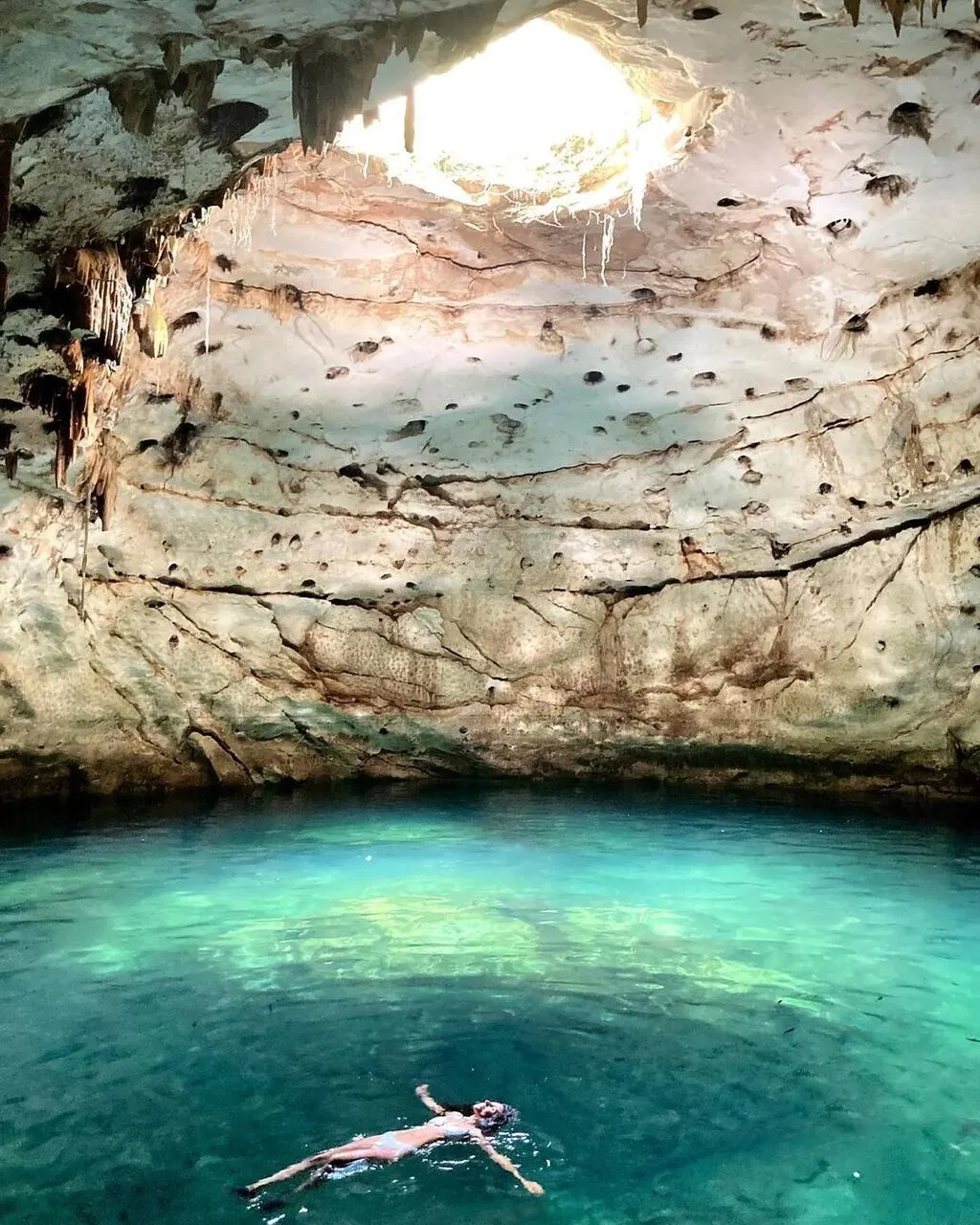
The best time to go
Weekdays are generally easier than weekends and public holidays. Early departures help with heat and can reduce the chance of arriving alongside several groups. The most popular sites may still become busy later in the morning, especially during school holidays.
The dry season is often comfortable for road conditions, while the rainy season can bring sudden showers and humid heat. A rain shower does not automatically ruin a cave cenote day, but it can affect unpaved access and outdoor pools. Ask the operator about the road and the specific site on the morning of travel.
Light changes throughout the day. A cave opening may look different as the sun moves, and an open cenote can be easier to photograph before the strongest midday glare. Do not choose an unsafe or inconvenient schedule only to chase a beam of light; water, access, and crowd levels matter more.
Food and the shape of the day
Many cenote tours include a Yucatecan meal or a stop at a local dining area, but the quality and timing vary. Ask whether food is included, whether there are vegetarian options, and whether lunch happens before or after swimming. A heavy meal immediately before a long swim is uncomfortable for some travelers.
If food is not included, carry a simple snack and water, but do not assume every rural road has a shop open when you need it. Keep food away from the water and take packaging back with you if there is no clear bin. A tour that stops at a village market can be more interesting than a generic roadside break, but that depends on the route and the day.
A cenote day is not the moment to plan a formal dinner reservation immediately after your return. Delays happen: a group may need help on a ladder, rain can slow a dirt road, or a vehicle may wait for a local guide. Leave a buffer when you return to Mérida.
Cenote tours for different travelers
Couples
Couples often enjoy a private or small-group itinerary with one visually dramatic cave and one open or semi-open pool. The private format gives you time to swim, dry off, and stop for food without negotiating with a bus group. If you want a heritage setting, consider a hacienda cenote, but confirm whether the day leaves enough time to enjoy the buildings rather than seeing them through a rushed transfer.
Families with children
Choose facilities over the largest number of cenotes. Easy stairs, shallow entry, life jackets, bathrooms, shade, and a place to change are more valuable than an ambitious route. Ask how long children spend in the vehicle and whether the cart ride has restraints or clear safety rules. Bring snacks, dry clothes, and patience for wet transitions.
Older travelers or anyone with limited mobility
Request photographs or a detailed description of access before booking. “Cenote visit” can involve a narrow ladder and no lift. A managed open cenote with a stable staircase may be a better experience than a beautiful cave that cannot be entered comfortably. A non-swimmer can still enjoy the landscape, but should have a safe place to sit and should never be pressured into the water.
Photographers
A private tour is usually worth considering. You can avoid spending the whole visit waiting behind a group and can ask the guide about quieter times. Protect equipment from humidity and splashes, and respect restrictions on tripods, flash, or swimming with cameras. Do not block ladders or platforms for a shot.
Budget travelers
A shared tour or public transport plus a local guide can reduce cost, but the cheapest headline price may exclude entry fees, local transfers, food, or return transport. Compare the complete day rather than the first number you see. Homún and Cuzamá can be rewarding without a luxury package, especially when travelers share a private local transfer among several people.
Combinations that make sense from Mérida
A Homún-focused day is the simplest dedicated plan: leave Mérida, visit two or three cenotes selected by the guide, eat locally, and return. It avoids the temptation to cross the state for a second headline attraction.
A Cuzamá-focused day works for travelers who specifically want the traditional cart journey and several cave environments. Keep the day open. If the group is tired after the circuit, do not add another distant destination merely because there is space on the map.
A Dzibilchaltún-and-cenote half day suits short stays, especially if archaeological context matters as much as swimming. Confirm the current access conditions and allow time for both parts rather than treating the cenote as a guaranteed add-on.
An Uxmal-and-hacienda-cenote day can be worthwhile with a private vehicle or a well-organized tour, but it is a long southbound excursion. Start early, check current opening arrangements, and understand whether the archaeological entrance, cenote access, food, and guide are included separately.
A Mérida plus nearby cenote day can also mean staying closer to the city, visiting a rural site such as San Antonio Mulix or a managed property, and returning in time for an evening walk through Centro. This is often better than trying to fit a faraway cenote into a day when you have a dinner, performance, or early departure.
Avoid combining Homún, Cuzamá, Celestún, and Progreso in one itinerary. Progreso and Celestún are coastal destinations; they are not natural extensions of an inland cenote loop. If you want the Gulf, give the coast its own day.
Respecting cenotes and the communities that manage them
Cenotes are freshwater environments and, for Maya communities, places with cultural and historical meaning. Treat them as more than attractive holes in the ground. Shower when asked, avoid chemicals in the water, do not leave litter, and listen when local staff explain the rules.
Choose operators that pay local guides and use community-managed entrances rather than promising access to places with unclear ownership. Ask before photographing people, children, food preparation, or ceremonies. Buying a meal or craft directly from a local seller can be a more meaningful contribution than chasing a polished “exclusive” label.
Your behavior affects whether a site remains open and healthy. Keep music low, do not feed fish, do not carve limestone, and do not take stones or natural material home. A cenote is part of a connected groundwater system, not an isolated attraction.
Frequently asked questions
Are cenote tours from Mérida worth it?
Yes, if you choose a route that matches your preferred pace and physical comfort. A tour is especially useful for Homún and Cuzamá because the sites are distributed across rural roads and local transport can be part of the visit. It is less useful to book a generic package without checking the exact route and inclusions.
Can I visit cenotes from Mérida without a car?
Yes, through an organized tour or by combining a colectivo with local transport. The independent option requires more time, Spanish, and tolerance for uncertain schedules. For most first-time visitors, an organized tour is the simpler choice.
Is Homún or Cuzamá better?
Homún offers a broad range of cenotes and local guide options. Cuzamá is known for its distinctive multi-cenote cart circuits. Neither is universally better. Choose Homún for variety and flexible local routing; choose Cuzamá if the traditional journey is a major part of what you want.
Do I need to be a strong swimmer?
No, but you must tell the guide if you are not confident in deep water. Life jackets are commonly available or required, but access may still involve steep stairs or a ladder. A non-swimmer can enjoy the scenery and stay on a platform if the site provides a safe place.
Can children visit cenotes?
Many can, but each cenote is different. Choose one with clear access, life jackets, shade, and facilities. Avoid assuming that a cave with a dramatic ladder is suitable for a young child simply because other families appear in photographs.
Should I bring sunscreen?
Bring it for the road and outdoor portions, but do not apply it before entering the water unless the cenote permits it. Most sites ask visitors to shower first and keep sunscreen, oils, and repellent out of the groundwater.
How many cenotes should I visit in one day?
Two or three is usually enough for a satisfying day. A three-cenote circuit may involve short swims and substantial transfer time. If you want to relax, choose one or two and stay longer.
Are prices fixed?
Entrance fees, tour prices, local transport, and inclusions change. Use current operator listings for a starting point and confirm the total directly before payment. Avoid relying on a price copied from an old article.
The practical recommendation
For most visitors staying in Mérida, the safest first choice is a clearly described small-group or private tour to Homún or Cuzamá, with exact cenote names, local transport, and the included costs written down. Pick Homún if you want variety and an adaptable local route. Pick Cuzamá if the cart journey and cave circuit are the reason you are going. Pick a managed hacienda or community site if facilities and a slower day matter more than the number of swims.
Start early, bring cash and dry clothes, listen to the people managing the water, and leave enough time for the return to Mérida. The best cenote tour is not the one with the longest list of stops. It is the one that lets you enter the water calmly, understand where you are, and return with enough energy to remember the day.
Related Yucatán guides
- Best cenotes near Mérida
- Best cenotes without a car
- Best hotels near Homún cenotes
- Cuzamá cenotes guide
- Cenotes Santa Bárbara in Homún
The exact operating hours, entrance conditions, transport arrangements, and prices at individual cenotes can change. Confirm those details with the tour operator or local site before setting out.