Printable guide
Best Río Lagartos Tours from Valladolid: Flamingos, Las Coloradas and Wildlife
Updated
Compare the best ways to visit Río Lagartos from Valladolid, from a local boat trip to a full-day route with Las Coloradas, wildlife and a cenote.

Río Lagartos is one of the better nature days from Valladolid, but it is not a simple attraction at the edge of town. The reserve is on Yucatán's north coast, while Valladolid is inland, so the right tour solves two separate problems: getting to the coast and finding a sensible way to experience the wetlands once you arrive.
The central decision is whether you want a focused boat trip or a long combination day. A focused boat tour gives you more time to watch birds, mangroves and crocodiles without racing between stops. A combination tour can add Las Coloradas, a cenote or Ek Balam, and is often the most efficient option if you have only one free day. Neither is automatically better. It depends on whether your priority is wildlife, photography, variety, archaeology or convenience.
This guide explains the main tour formats from Valladolid, what each usually includes, how to choose a departure, what to ask before paying, and how to plan the day without treating a living reserve like a checklist.
The short answer: which Río Lagartos tour is best?
For most first-time visitors staying in Valladolid, the best all-round choice is a small-group or private full-day trip that includes a Río Lagartos boat tour and Las Coloradas, with time clearly protected for the reserve. It removes the need to arrange an early intercity journey, reaches places that are awkward without a car, and gives you a local guide for the landscape rather than only a driver between photo stops.
Choose a dedicated Río Lagartos boat tour instead when wildlife is the main reason you are going. This is the better format for birders, photographers, repeat visitors and anyone who would rather spend a calm morning on the water than add three more stops. If you are already renting a car, you can also drive independently and book the boat locally, but confirm the meeting arrangement and departure window before leaving Valladolid.
A tour that combines Río Lagartos, Las Coloradas, Ek Balam and a cenote can work for travelers who want a broad Yucatán overview. It is a demanding day, though. The route covers a large area, and every added stop takes time from the reserve. Treat it as a sampler, not as a deep visit to each place.
Río Lagartos on the Yucatán north coast
What you are actually visiting
Río Lagartos is a coastal town beside the Ría Lagartos Biosphere Reserve. The name can confuse visitors: you are not visiting a conventional river landscape. Yucatán is limestone country, shaped by wetlands, lagoons, mangroves and underground water rather than tourist-style river valleys. The reserve's appeal is the meeting of brackish water, coastal habitat and exceptionally rich birdlife.
A typical boat route leaves from the town and enters channels or open lagoon areas depending on local conditions and the operator's route. The experience is less about a single monument than about reading a wide landscape. Mangrove edges may hold herons, egrets, pelicans and cormorants. Flamingos may gather in feeding areas. Crocodiles can sometimes be seen resting at the margins. Wildlife is never guaranteed, and a responsible guide will not promise a perfect animal encounter.
Las Coloradas is a separate destination farther along the coast, associated with industrial salt production and vivid water colours that vary with season, weather, salinity and light. The colour is not a swimming opportunity. Access rules and viewing arrangements can change, so follow the local route rather than approaching restricted working areas or assuming that an old photograph describes current conditions.
Tour format 1: the dedicated Río Lagartos boat trip
A boat-only or boat-first tour is the strongest option when the reserve matters more than collecting destinations. The transfer from Valladolid is still part of the day, but once you arrive the schedule can stay centred on the lagoon. Ask whether the quoted experience is only the boat or includes transport from your accommodation, and whether the boat is private, shared or assigned on arrival.
The difference between private and shared matters more here than it does on a simple sightseeing ride. A private boat lets your group discuss pace, photography and stops with the guide. A shared boat may be perfectly good value, especially for couples or solo travelers, but the route and timing will follow the group. Ask about the maximum number of passengers rather than assuming that “small group” means a particular size.
Dedicated trips are also easier to schedule around the best light. Morning departures are generally attractive because the heat is lower and the light can be softer. Wildlife moves according to tide, weather and food, not a fixed tourist timetable, so an early start improves comfort but cannot guarantee flamingos. Confirm the actual pickup time the evening before, especially if the operator coordinates transport from Valladolid.
This format suits:
- birdwatchers and nature travelers;
- photographers who want time to wait rather than rush;
- families who prefer one main activity;
- travelers staying overnight near Río Lagartos;
- anyone who has already visited the archaeological sites and cenotes.
It is less suitable if you have never seen Yucatán's inland highlights and want to fit several different experiences into one day.
GuideRío Lagartos Travel Guide: Flamingos, Boat Tours, Las Coloradas and Where to StayRío Lagartos is a tranquil fishing town on Yucatán’s north coast that serves as the main gateway to the Ría Lagartos Biosphere Reserve, a UNESCO‑recognized wetland famous for flamingo colonies, mangrove estuaries and crocodiles. There is no entry fee to the town; reserve access is usually included in boat tours, though some operators charge a small conservation fee of about 54 MXN on site. Shared or small‑group wildlife and Las Coloradas boat tours cost roughly $70–$95 USD per person, while private boats are priced per vessel for 2–4 hours. Boat tours run from 6:00 to 17:00 for daytime wildlife viewing, with night mangrove/crocodile tours offered around 19:30–21:30 for 1.5–2 hours. Cash in pesos is essential, as ATMs are unreliable and most businesses prefer cash. From Mérida the drive is 205–230 km and takes about 2.5–3 hours via Tizimín; from Cancún it is 225–255 km, roughly 3–3.5 hours; from Valladolid it is 105 km, about 1.5–2 hours. Buses go to Tizimín, then a local bus or colectivo reaches Río Lagartos. The pink salt ponds of Las Coloradas lie 24 km away, a 20–25 minute drive. A typical day includes a 2–4 hour boat safari through mangrove channels to see flamingos, herons, spoonbills, ospreys and, with luck, crocodiles, often with a beach stop and optional Mayan‑clay mud mask. Night tours let visitors watch crocodile eyeshine and nocturnal birds. Visitors should bring cash, sun protection, insect repellent, binoculars, a dry bag and a dark swimsuit for mud baths. Keep noise low, respect nesting zones, use life jackets, and avoid drones. Mid‑day is best for the pinkest hues at Las Coloradas, while early morning and late afternoon are optimal for wildlife. The dry season (December–April) offers comfortable weather; November nortes can bring wind and rougher water, so book morning departures when possible.Open
Tour format 2: Río Lagartos and Las Coloradas
The most common comparison page from Valladolid is a combined wildlife-and-colour day. The logic is good: Río Lagartos and Las Coloradas belong to the same broad north-coast outing, but they are not the same experience. One is a reserve and boat journey; the other is a salt landscape viewed under local access conditions.
A strong itinerary does the boat trip at a sensible time, leaves enough margin for the transfer to Las Coloradas, and explains what is included at each stop. A weak one treats the reserve as a quick ride, spends too long managing logistics, and leaves travelers with little time to understand either place.
Before booking, ask these direct questions:
- Is transport from Valladolid included, and is pickup at the accommodation or a central meeting point?
- Is the Río Lagartos boat shared or private?
- Is a local boat fee included in the total, or paid separately in cash?
- Is Las Coloradas an organized visit with a local access fee, or only a roadside photo stop?
- How long is the boat portion in practice?
- Is food included, and where is the meal taken?
- What happens if wind, rain or reserve conditions change the route?
The answers are more useful than a superlative such as “best” or “VIP.” Exact prices and schedules change, so compare the inclusions on the date you intend to travel rather than relying on a screenshot from another season.
GuideRio Lagartos & Coloradas: Safari flamingos & crocodiles plusRio Lagartos & Coloradas is a three‑hour eco‑safari in the Yucatán that takes visitors to the pink flamingo and crocodile zones, the lagoons of Las Coloradas, a beach and includes a clay‑exfoliation experience, with an educational component that lets guests interact with local wildlife. The tour is offered by GetYourGuide for $126 USD per person and lasts about three hours; the article does not specify opening hours or how to reach the site, nor does it detail any additional items such as transport or meals that might be included. Participants can expect to see large flocks of pink flamingos, observe crocodiles in their natural habitat, walk along the striking pink lagoons of Las Coloradas, relax on a nearby beach and finish with a clay‑exfoliation treatment. The experience is described as educational, allowing direct interaction with the wildlife. Because the article provides no specific logistical advice, travelers should verify transport arrangements and any timing constraints when booking, and confirm whether the price covers all activities mentioned.Open
Tour format 3: Río Lagartos, Las Coloradas and a cenote
Adding a cenote makes the day more varied and gives you a chance to cool off after time on the coast. It also makes the itinerary longer and more vulnerable to delays. This format is best for travelers who want a broad day and understand that no single stop will receive a full, unhurried visit.
The cenote may be near Valladolid or along the wider route, depending on the operator. Do not book solely from a generic title. Ask for the actual cenote name and confirm whether swimming is included, whether life jackets are required, and whether changing facilities are available. A traveler who expects a quiet natural pool may find a busy managed site very different from the image used in an advertisement.
A cenote stop works well after the reserve because a boat ride can be hot even when the water looks cool. It may work less well if the day already includes an early wildlife departure, a long drive and Las Coloradas. Families should pay particular attention to the transition between stops: children may enjoy the variety but struggle with a late return and limited meal time.
The best version of this itinerary has a clear priority. If wildlife is the headline, the boat is protected and the cenote is the flexible addition. If swimming is the priority, choose a tour that explains the cenote rather than squeezing it into the last hour of an already full route.
GuideRío Lagartos Travel Guide: Flamingos, Boat Tours, Las Coloradas and Where to StayRío Lagartos is a tranquil fishing town on Yucatán’s north coast that serves as the main gateway to the Ría Lagartos Biosphere Reserve, a UNESCO‑recognized wetland famous for flamingo colonies, mangrove estuaries and crocodiles. There is no entry fee to the town; reserve access is usually included in boat tours, though some operators charge a small conservation fee of about 54 MXN on site. Shared or small‑group wildlife and Las Coloradas boat tours cost roughly $70–$95 USD per person, while private boats are priced per vessel for 2–4 hours. Boat tours run from 6:00 to 17:00 for daytime wildlife viewing, with night mangrove/crocodile tours offered around 19:30–21:30 for 1.5–2 hours. Cash in pesos is essential, as ATMs are unreliable and most businesses prefer cash. From Mérida the drive is 205–230 km and takes about 2.5–3 hours via Tizimín; from Cancún it is 225–255 km, roughly 3–3.5 hours; from Valladolid it is 105 km, about 1.5–2 hours. Buses go to Tizimín, then a local bus or colectivo reaches Río Lagartos. The pink salt ponds of Las Coloradas lie 24 km away, a 20–25 minute drive. A typical day includes a 2–4 hour boat safari through mangrove channels to see flamingos, herons, spoonbills, ospreys and, with luck, crocodiles, often with a beach stop and optional Mayan‑clay mud mask. Night tours let visitors watch crocodile eyeshine and nocturnal birds. Visitors should bring cash, sun protection, insect repellent, binoculars, a dry bag and a dark swimsuit for mud baths. Keep noise low, respect nesting zones, use life jackets, and avoid drones. Mid‑day is best for the pinkest hues at Las Coloradas, while early morning and late afternoon are optimal for wildlife. The dry season (December–April) offers comfortable weather; November nortes can bring wind and rougher water, so book morning departures when possible.OpenTour format 4: Río Lagartos and Ek Balam
Ek Balam is an inland Maya archaeological site near Valladolid, so combining it with the north coast creates a long cross-country day. It can be worthwhile for travelers who want both archaeology and nature but cannot spare separate days. It is not the relaxed choice.
The main risk is underestimating the distances. Río Lagartos, Las Coloradas and Ek Balam are not a compact trio in the way a town centre and one nearby museum might be. You will spend significant time in a vehicle. Confirm whether the archaeological entrance, guide, food, boat and any cenote stop are part of the price. Some listings use a broad route name while leaving key admissions or local transport outside the headline cost.
Choose this combination when:
- you are using Valladolid as a base and have a tight schedule;
- you value variety more than depth;
- you are comfortable with an early departure and late return;
- you would otherwise miss either Ek Balam or the coast entirely.
Do not choose it because you expect to explore Ek Balam slowly, take a long wildlife boat trip and relax at Las Coloradas all in one day. Those are three different kinds of visit, each with its own pace.
GuideEk Balam Guide: Climbing the Acropolis and Swimming Cenote XcanchéA complete guide to visiting Ek Balam in Yucatán: climb the Acropolis for jungle views, see the preserved stucco carvings, and cool off in Cenote Xcanché. Includes entrance fees, transport from Valladolid, and practical tips.Open
Tour format 5: a private day with a flexible route
A private tour is useful when your group has a clear preference or uneven energy levels. You can prioritise the boat, avoid an unwanted cenote stop, or spend more time at a place that interests everyone. It is also practical for families, older travelers and photographers carrying equipment.
Private does not mean every part of the route is unconstrained. Boat operations, reserve rules, weather and local access arrangements still apply. Ask what is genuinely flexible: departure time, route order, stop length or only the vehicle. A private driver who is not the reserve guide may not be able to answer detailed questions about birds, mangrove ecology or the boat route.
For a nature-focused private day, request a local nature guide for the boat portion and keep the itinerary modest. Río Lagartos plus Las Coloradas is usually a more coherent private route than trying to add Ek Balam and a cenote as well. If your group wants archaeology too, consider staying overnight and splitting the experiences across separate days.
How to compare operators without guessing
Online tour listings often make different products sound identical. Read beyond the title and compare the practical structure. A reliable description should identify the departure town, transport method, approximate duration, boat arrangement, languages, cancellation terms and exclusions. If it gives only a list of attractions and a dramatic photograph, treat that as an invitation to ask questions, not proof that the itinerary is complete.
Look for evidence that the operator understands the reserve. Useful details include a clear statement about wildlife being wild, a plan for poor weather, limits on approaching animals, and an explanation of where local fees are paid. A guide who says “you will definitely see every animal” is less trustworthy than one who explains what is common, seasonal or uncertain.
Reviews can help with punctuality, communication and whether the day matched the description. They are less useful for predicting wildlife. One visitor's spectacular flamingo sighting may reflect tide and weather that will not repeat on your date. Read recent reviews for patterns, especially comments about pickup, hidden extras, rushed stops and the condition of the vehicle or boat.
When comparing a private quote with a shared tour, calculate the whole day rather than the advertised starting price. Include transport, the boat, reserve or access charges, meals, drinks and any admission. Ask whether a child occupies a full place and whether a car seat is available if needed. Exact policies vary by provider.
Getting from Valladolid to Río Lagartos
Valladolid is inland and Río Lagartos is on the north coast. A direct tour is convenient because the operator handles the road connection and coordinates the boat. Independent travelers can drive, hire a private transfer or investigate public transport, but public connections may not align neatly with an early boat departure or a return through Las Coloradas.
A rental car gives the most control over timing and makes it easier to add a short stop, but it also makes you responsible for navigation, fuel, parking and the return drive after a long day in the heat. Do not plan an ambitious coastal itinerary if nobody in the group wants to drive back tired after sunset.
A private driver is a middle option. You get a dedicated vehicle without navigating, but the driver is not automatically a nature guide. Arrange the boat separately or confirm that a qualified local guide is included. A transfer-only quote can be good value for a group, but compare it with a complete package so that the apparent saving does not disappear once the boat and local access are added.
If you are staying in Río Lagartos, the day becomes easier. You can take a local boat without first crossing from Valladolid, choose a departure based on conditions, and leave Las Coloradas for a separate outing. The trade-off is that Río Lagartos has a quieter, smaller-town feel and fewer choices than Valladolid. It works best for travelers who want nature and do not need a dense evening programme.
How much time to allow
A day trip from Valladolid needs most of a day, not a casual morning. The drive, pickup variations, boat, meal and return all take time. A listing that says “full day” is more informative than a precise promise of arriving back at a particular minute, because traffic, weather and group loading can change the return.
If you have two nights in Valladolid, one coastal day can fit, but plan the evening before around an early start. Avoid pairing it with a late night in the city. If you have three or more nights, consider separating Río Lagartos from Chichén Itzá, Ek Balam or a cenote. The extra night creates room for weather changes and makes the wildlife experience feel less like a transfer exercise.
Overnighting near the coast is especially attractive to photographers and birders. You can be closer to the reserve, reduce road time, and experience a small port town rather than seeing it only as a boat launch. Check accommodation details carefully: facilities and restaurant options are more limited than in Valladolid, and some services may be seasonal.
When to go and what weather changes
Río Lagartos is a year-round destination, but conditions affect comfort, colour and wildlife activity. The hotter part of the day can be intense on open water. Clouds can soften the light and reduce the dramatic colour of salt ponds, while wind may affect the route or make the boat less comfortable. Rain can arrive quickly in the wet season and may alter the order of stops.
Flamingo numbers and locations vary. Seasonal patterns matter, but no responsible guide should promise a fixed count or exact sighting. Ask the operator how they handle a day with fewer birds. The answer should focus on the whole ecosystem rather than treating flamingos as a guaranteed prop.
The dry season is popular for clear skies and easier road conditions, which can mean more demand. The rainy season can bring lush colour and fewer visitors, but you need flexibility. Check the forecast shortly before departure and bring a light rain layer even when the morning begins clear.
What to bring
Bring sun protection, water, lightweight clothing, a hat that will stay on in wind, insect repellent and closed footwear for uneven ground. A dry bag or sealed pouch protects a phone and camera from spray. Polarizing filters can be useful for photographers, but do not let equipment distract from the guide's instructions around wildlife.
Pack swimwear and a towel only if your confirmed itinerary includes a cenote or beach stop. Do not assume that a salt-lagoon visit means swimming. Las Coloradas is a working salt landscape and access is controlled; follow the local rules and never enter water because a photograph suggests that it is safe or permitted.
Carry some cash in small denominations for local fees, drinks or incidental purchases, but ask the operator what is already included. There is no reason to bring large amounts. Download your booking confirmation and meeting details before leaving Valladolid in case mobile service is inconsistent on the road.
Responsible wildlife watching
The reserve is the reason to visit, not a stage set. Stay seated or within the boat's instructions, keep voices low when near birds, and never ask a guide to chase an animal for a closer photograph. Do not feed wildlife, throw anything into the water or use a drone where it is prohibited. A crocodile is not a selfie opportunity, even when it appears still.
Keep a respectful distance from flamingos and nesting birds. If the boat stops, let the guide choose the position. The best photograph is not worth forcing birds to move or breaking a protected-area rule. Avoid loud music and be cautious with sunscreen or products that could enter the water.
A good local tour supports the people who operate boats and interpret the reserve, but community benefit is not an excuse for poor practice. Ask how the operator handles waste, wildlife distance and weather cancellations. Choose the guide who treats the reserve as a place with limits, not as a guaranteed-content machine.
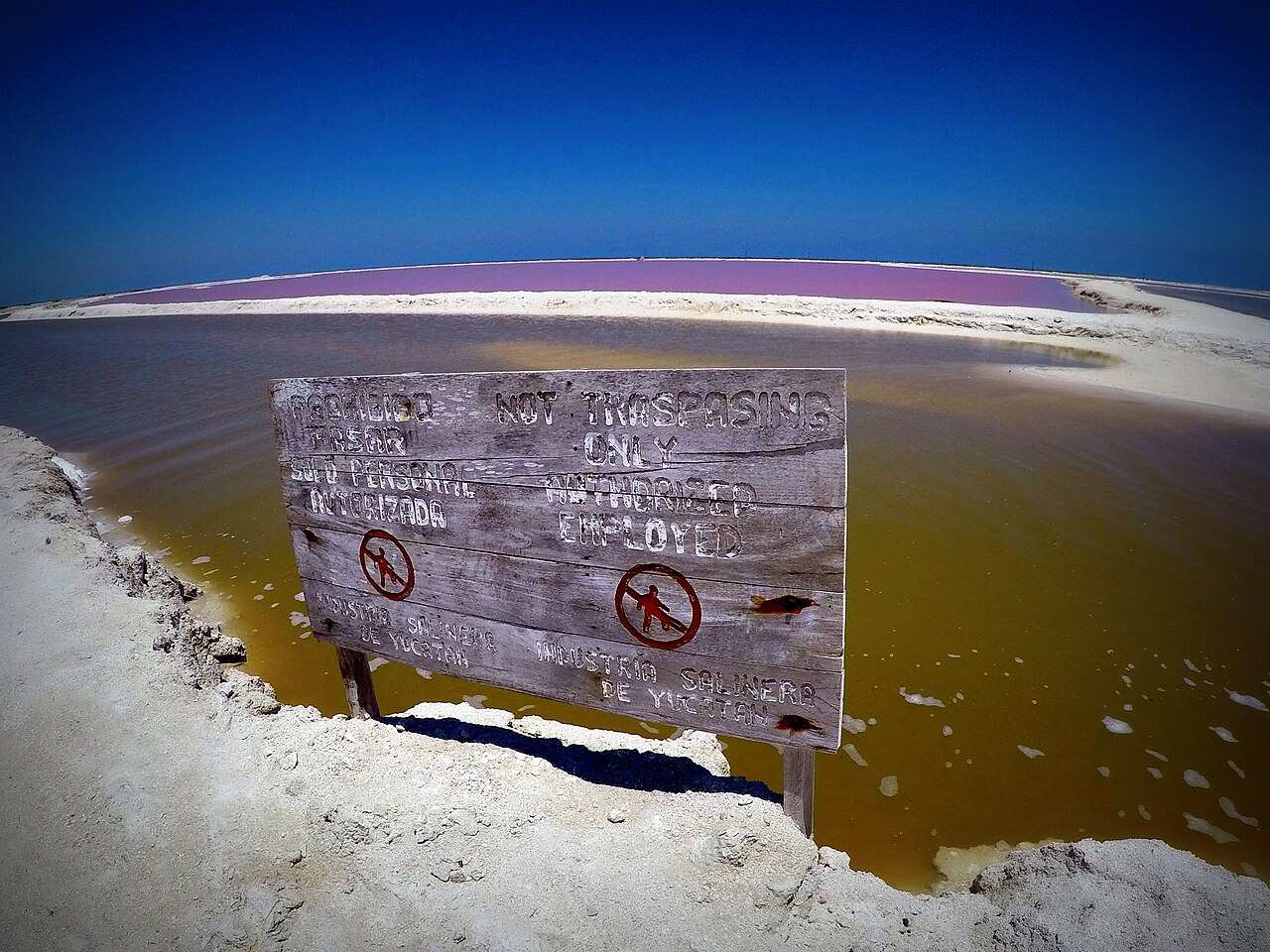 Las Coloradas salt ponds on Yucatán's north coast
Las Coloradas: what to expect
Las Coloradas is visually striking because shallow salt ponds can appear pink, coral or reddish under particular conditions. The colour changes with sunlight, cloud, water level and the organisms and minerals present. Do not judge the visit against a highly edited social-media image. Some days are vivid; others are subdued.
The salt industry is part of the landscape, and the ponds are not simply a natural swimming attraction. Follow signs, barriers and the instructions of local staff or guides. Stay on permitted paths, do not touch the water, and do not remove salt or other material. If the current access arrangement requires a local guide or paid viewing route, include that in your comparison.
Las Coloradas can be worthwhile as a short visual complement to the boat trip. It is less worthwhile if you are expecting a long natural walk or a beach day. If you want time on the Gulf coast, ask whether your chosen operator includes a beach stop and where it is; do not assume that a salt-pond visit provides the same experience.
GuideRio Lagartos & Coloradas: Safari flamingos & crocodiles plusRio Lagartos & Coloradas is a three‑hour eco‑safari in the Yucatán that takes visitors to the pink flamingo and crocodile zones, the lagoons of Las Coloradas, a beach and includes a clay‑exfoliation experience, with an educational component that lets guests interact with local wildlife. The tour is offered by GetYourGuide for $126 USD per person and lasts about three hours; the article does not specify opening hours or how to reach the site, nor does it detail any additional items such as transport or meals that might be included. Participants can expect to see large flocks of pink flamingos, observe crocodiles in their natural habitat, walk along the striking pink lagoons of Las Coloradas, relax on a nearby beach and finish with a clay‑exfoliation treatment. The experience is described as educational, allowing direct interaction with the wildlife. Because the article provides no specific logistical advice, travelers should verify transport arrangements and any timing constraints when booking, and confirm whether the price covers all activities mentioned.OpenFood and breaks
A full day on the north coast needs a real meal and regular water breaks. Ask whether lunch is included, whether there is a set menu or a choice, and whether dietary needs can be accommodated. If the tour description simply says “lunch,” confirm whether drinks, vegetarian food or children’s portions cost extra.
Avoid booking a schedule with no visible meal window. Eating hurriedly between a boat and a salt-pond stop makes the day harder, especially in hot weather. If you are traveling independently, carry a practical snack for the road but buy local food through legitimate businesses rather than accepting informal offers at restricted sites.
Río Lagartos is a fishing town, so seafood is part of the local food culture, but recommendations and opening days change. Ask your guide where locals are eating on your date rather than relying on an old list. If you have allergies, communicate them in Spanish as well as English and do not assume that a dish is safe because it looks simple.
Families, older travelers and accessibility
Children who enjoy boats and animals can have a very good day, but the schedule is long. Explain beforehand that wild animals may remain far away and that the boat is not an amusement ride. Bring shade, water and snacks, and ask about life jackets and boarding conditions. A private vehicle can make stops and breaks easier, though the boat itself may still require stepping onto a dock.
Older travelers should ask how far they need to walk from the vehicle to the boat, whether the dock has handrails, and how long they will be exposed to sun. A dedicated boat trip with transport may be more comfortable than a multi-stop route. If mobility is a concern, describe the exact needs to the operator before booking rather than relying on a generic accessibility label.
Families and mixed groups often do better with a clear priority. Wildlife-focused travelers can be frustrated by a long cenote visit, while swimmers may feel that a two-hour boat trip is too slow. A private itinerary or separate days may cost more, but it reduces conflict and makes the experience more enjoyable for everyone.
 Street scene in Valladolid, the inland base for many Río Lagartos day trips
 Valladolid plaza at night before an early Río Lagartos departure
Should you book ahead?
Book ahead when your dates are fixed, you need English-language guiding, you are traveling in a larger group, or you want a private boat. Advance booking also helps if your Valladolid accommodation is outside the central area and needs a coordinated pickup. Ask for written confirmation of the inclusions and cancellation terms.
You can sometimes arrange a boat after arriving in Río Lagartos, especially if you have a car and flexibility. This can be useful in unsettled weather because you can see the conditions first. The risk is losing the departure time you want or discovering that transport back to Valladolid makes an independent boat impractical.
Do not transfer money to an unverified contact based only on a copied social-media photograph. Use a recognizable booking platform, an established operator's current contact channel, or a recommendation from your accommodation that you can independently confirm. Keep the name of the boat meeting point and the person receiving you.
A practical one-day plan
A balanced itinerary begins with an early pickup in Valladolid, followed by the road journey to Río Lagartos and the boat portion while the group still has energy. After the reserve, take a proper break before continuing to Las Coloradas. Keep the salt ponds focused and respectful rather than trying to turn them into an all-day attraction. Return to Valladolid with enough margin that a small delay does not turn the final drive into a stressful race.
If a cenote is included, use it as the flexible stop. On a hot, clear day it may be welcome. On a rainy or delayed day, it may be the part that has to change. A reputable operator should be able to explain this without pretending that every stop is guaranteed.
For a more comfortable plan, stay one night near Río Lagartos. Take the boat without the long initial transfer, visit Las Coloradas when conditions suit, and continue to Valladolid or another base afterward. This option costs an extra night and requires more accommodation planning, but it gives the coast the time it deserves.
Common mistakes to avoid
The first mistake is treating Río Lagartos as a quick add-on from Valladolid. The distance is manageable, but the experience is not compact. Leave room for the road and the boat.
The second is choosing the cheapest listing without checking what “tour” means. It may be transport only, a shared boat with separate fees, or a route that spends little time in the reserve.
The third is expecting Las Coloradas to look exactly like an online photograph. Colour varies, and the ponds are not a swimming pool.
The fourth is scheduling Chichén Itzá, Ek Balam, a cenote and Río Lagartos in one heroic day without considering the return journey. A broad sampler can be useful, but it will not replace separate visits.
The fifth is assuming wildlife is guaranteed. Flamingos, crocodiles and birds are wild. Go for the landscape and the possibility of encounters, not a promised photograph.
The sixth is forgetting that Valladolid is inland. A Río Lagartos day is a coastal excursion from the city, not an activity within Valladolid. Pack for the heat and wind of the north coast, then expect to return to an inland evening environment.
Frequently asked questions
Is Río Lagartos a good day trip from Valladolid?
Yes, if you can give it most of a day and choose a tour with a clear boat component. It is a poor fit for a rushed morning or a schedule already packed with archaeological sites.
Is a private tour worth it?
It can be, especially for families, photographers or groups with different priorities. The value comes from transport control, communication and a better pace. Confirm that the boat guide is local and that private vehicle service does not mean a private boat automatically.
Are flamingos guaranteed?
No. Sightings depend on season, weather, tide, food and the birds’ own movements. Responsible operators describe possibilities rather than guarantees.
Can you swim at Las Coloradas?
Treat the salt ponds as a viewing landscape, not a swimming site. Follow current local rules and never enter restricted or industrial water. If swimming is offered on your tour, it should be at a separate permitted beach or cenote stop.
Is Río Lagartos better than Celestún for flamingos?
They are different reserve experiences on opposite sides of the state. Río Lagartos is the logical north-coast choice from Valladolid and combines naturally with Las Coloradas. Celestún is the practical west-coast choice from Mérida. Choose based on your base and route rather than trying to rank every sighting.
Can you visit without a tour?
Yes, most easily with a rental car or private driver plus a locally arranged boat. Independent travelers need to coordinate the road, boat departure, local fees and return journey. Public transport may be possible in stages but is less convenient for a timed wildlife outing.
The best choice for your Valladolid trip
Choose the dedicated boat trip if Río Lagartos is the reason you are going. Choose Río Lagartos plus Las Coloradas if you want the most coherent first visit to the north coast. Add a cenote only when you accept a longer day, and add Ek Balam only when variety matters more than slow exploration.
Whichever format you choose, judge the tour by its practical honesty: clear pickup details, a real explanation of the boat, transparent inclusions, sensible weather policies and respect for wildlife. The reserve does not need a rushed itinerary or an exaggerated promise. It rewards a morning of attention, a guide who knows when to pause, and enough time to notice that the coast is more than a pink photograph.
A final planning note
Before you confirm, ask the operator to write down the pickup time, boat arrangement, included fees, meal plan and cancellation policy. Save that information offline, bring water and sun protection, and leave your schedule flexible enough for weather. From Valladolid, Río Lagartos is a substantial but rewarding coastal day. The best tour is the one that gets you there safely, lets the reserve set the pace, and brings you back without making every other experience in Yucatán feel like a race.