Printable guide
Cenote Xkeken: Swimming, Access and Practical Tips
Updated
A practical guide to Cenote Xkeken near Valladolid — an underground cave cenote with dramatic stalactites, turquoise water and a narrow stone stairway descent. Includes costs, hours, how to get there and what to expect.

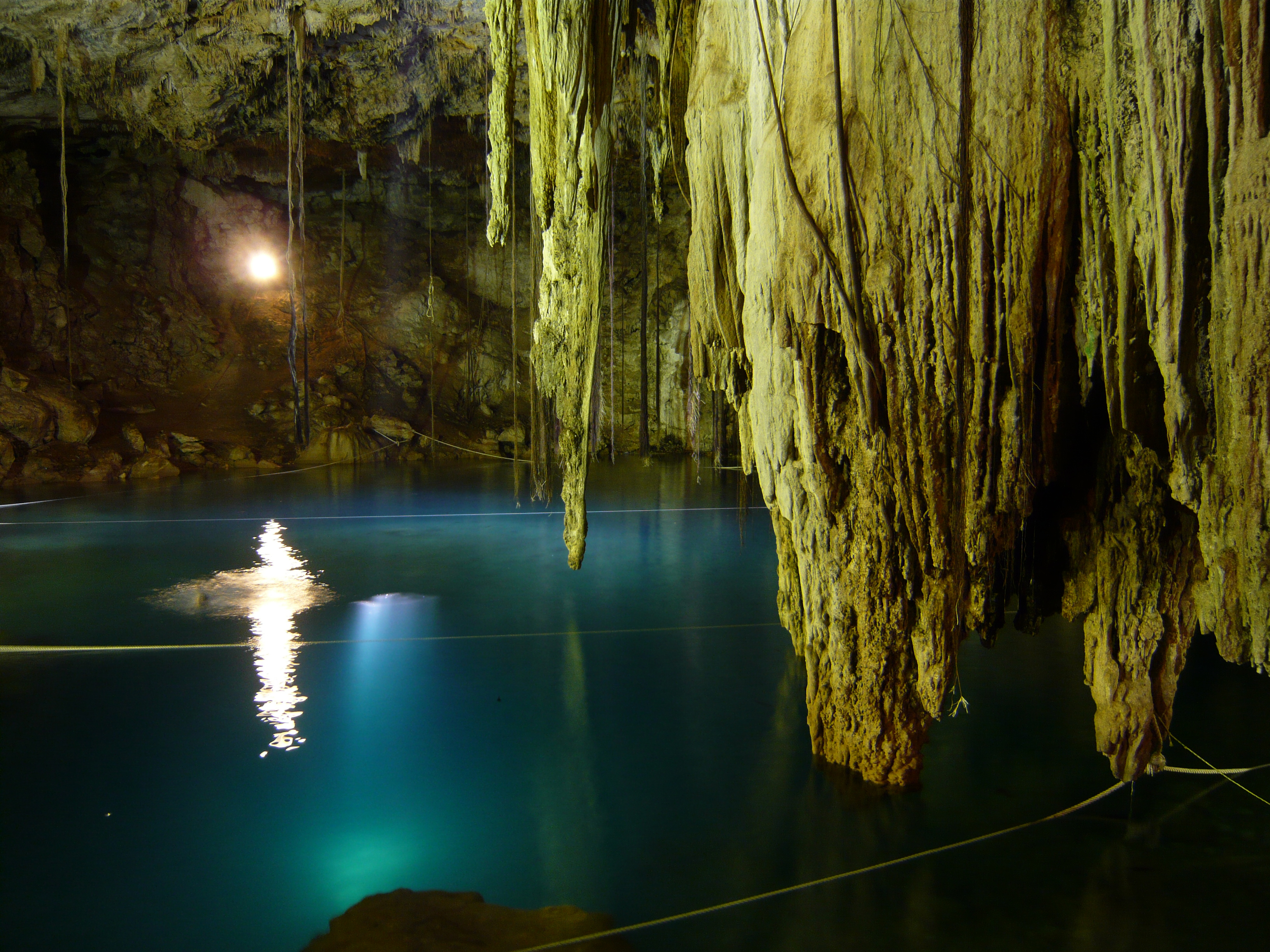
Cenote Xkeken sits in a limestone cave roughly 7 kilometres southeast of Valladolid's main plaza, close enough to visit as a half-day trip but far enough from the city centre that you will want to plan your transport. It is one of the most visually striking cave cenotes in eastern Yucatán — a near-enclosed cavern draped in stalactites, filled with clear turquoise water and lit by a single natural opening in the ceiling. If you have seen photographs of an underground pool ringed by rock formations that look like they belong in an adventure film, there is a good chance it was taken here.
The cenote is part of a pair. Its neighbour, Cenote Samula, sits a few hundred metres away and shares the same ticket office and parking area. The two are often marketed together as "Cenotes Dzitnup" (after the village), and a combined ticket covers both. This guide focuses on Xkeken specifically, but in practice most visitors end up seeing both since the entrance fee difference is small.
 Cenote Xkeken underground cave cenote near Valladolid, Yucatán
What to Expect Inside the Cavern
The descent into Cenote Xkeken is part of the experience. You enter through a narrow opening in the limestone and follow a stone stairway carved into the rock, which drops steeply into the cave below. The stairs can be uneven and slippery — take them slowly, especially if you are carrying children or camera gear. There are railings, but the passage feels tight and enclosed until you reach the bottom and the cavern opens up.
The pool itself is roughly 25 metres in diameter and reaches depths of around 20 metres in places, though much of it is shallower near the edges. The water is cool and refreshing — a welcome contrast to the humid air trapped inside the cave. A guide rope stretches across the cenote for anyone who wants to rest mid-swim. There are no jumping platforms, and diving is not permitted. Lifeguards are on duty during opening hours.
The stalactites are the main draw. They hang densely from some sections of the ceiling, and the single natural skylight sends a beam of sunlight into the water at certain times of day, shifting the colour of the pool from deep blue to bright turquoise. Small black fish live in the water and may nibble at your toes if you float still for long enough. The atmosphere is dim and enclosed — not claustrophobic, but far from the open-air feel of cenotes like Zací or Xlacah.
 Cenote Xkekén near Valladolid
The Legend of Xkeken
The name comes from the Mayan word for "pig." Local legend says a farmer noticed his pig kept disappearing into the bush and returning covered in mud, even during the dry season. He followed the animal one day and discovered the cenote. Whether or not the story is true, it is a useful reminder that many of the Yucatán's cenotes were first found by animals — or by people tracking them. The Maya held cenotes as sacred, using them both as freshwater sources and as ritual sites. Artefacts and remains have been recovered from cenotes across the region, though Xkeken is valued today primarily as a swimming destination rather than an archaeological one.
Getting There
Cenote Xkeken is located in the village of Dzitnup, off the Mérida–Valladolid highway about 3 kilometres before you reach Valladolid if you are driving from the west. From Valladolid's centre, it is roughly a 10-minute drive southeast.
By car or motorcycle: This is the simplest option. There is a large parking lot at the site. The road is paved for most of the way, with a short unpaved section as you approach the village. From Mérida, the drive takes about 1 hour and 45 minutes via the toll highway (cuota) or closer to 2 hours on the libre road.
By taxi: A taxi from Valladolid's main plaza to Cenote Xkeken costs around 80–120 MXN each way. Agree on the price before you get in, and confirm whether the driver will wait for you or you will need to arrange a return pickup. Some drivers will wait for an hour or two; others will not.
By bicycle: There is a dedicated bike path (cycle lane) running from Valladolid to the Dzitnup cenotes. The ride takes about 30 minutes each way and is mostly flat, shaded by trees along parts of the route. Bicycle rental in Valladolid costs around 80–100 MXN per day. This is a popular option in the dry season, but the afternoon heat between November and April can make the return ride uncomfortable if you are not used to it.
By colectivo: Colectivos and small buses run from Valladolid towards Dzitnup, but the schedule is irregular and the drop-off point may still require a walk of a kilometre or more to the entrance. If you are trying to keep costs low and are not in a hurry, ask at the colectivo stand near the main bus terminal for the current route.
 Entrance path down to Cenote Xkeken cave cenote in Dzitnup
Tickets, Hours and Costs
The entrance fee for Cenote Xkeken alone is 80 MXN for adults and 50 MXN for children. A combined ticket covering both Xkeken and Samula costs 125 MXN for adults and 80 MXN for children. Given the small price difference, most visitors opt for the combined ticket — the two cenotes are a short walk apart and each offers a different atmosphere.
Opening hours are generally 8:00 AM to 5:00 PM or 6:00 PM depending on the season and the operator. Arriving early gives you the best chance of having the cenote to yourself, or close to it. By mid-morning, particularly on weekends and during the high season (December to March), tour groups from Valladolid and Chichén Itzá begin to arrive and the cave can feel busy.
Cash only. There is no card machine at the entrance, and the nearest ATM is back in Valladolid's town centre. Bring small bills if possible — 100 and 200 peso notes are easiest for the ticket sellers to change.
Additional costs to budget for:
- Life jacket rental: around 50 MXN (mandatory for weak swimmers, optional for competent adults)
- Locker rental: around 20–30 MXN
- Snacks and drinks: available near the parking area; prices are modest

Facilities
The site is well set up for visitors. You will find:
- Changing rooms and outdoor showers (you are required to shower before entering the cenote)
- Lockers for valuables
- Toilets
- A small shallow pool for young children, separate from the main cenote
- A souvenir stand and snack vendors near the parking area
- The large car park mentioned earlier
The mandatory shower before entering is not optional — sunscreen, insect repellent and lotions are not allowed in the water because they damage the fragile cave ecosystem. If you have applied sunscreen during the day, rinse off thoroughly before getting in.
Swimming and Safety
The water is calm and there are no currents. Strong swimmers will have no trouble, but the depth (up to 20 metres in the centre) means weak swimmers should wear a life jacket. Children who are not confident in the water should stay in the shallow pool near the entrance or wear a life jacket in the main cenote.
The stone stairs are the main safety concern. They are steep and can be slick from water and humidity. Wear sandals with grip — flip-flops are not ideal. If you are bringing a camera or phone, a waterproof pouch or neck strap is useful since there is no dry place to set things down at the water's edge.
There is no jumping or diving at Xkeken. The guide rope across the pool is there for resting, not swinging. Lifeguards will tell you off if you try to climb on the stalactites or enter restricted areas of the cave.
Cenote Xkeken vs Cenote Samula
Since the two cenotes share a ticket office and most visitors see both, it is worth knowing the difference:
- Xkeken is the more enclosed of the two, with denser stalactite formations and a narrower entrance. The light beam through the ceiling opening is less dramatic than Samula's, but the overall atmosphere feels more like a proper cave.
- Samula has a wider opening in the roof and a more famous light beam effect. It is slightly larger and feels more open. If you only have time for one, Xkeken is the better choice for atmosphere; Samula is better for the classic "light beam in a cenote" photograph.
Neither is a substitute for the other. If you have two hours and the combined ticket, do both — start with Xkeken (it is the slightly more impressive of the two) and walk over to Samula afterwards.
Best Time to Visit
Go early. The site opens around 8:00 AM, and arriving within the first hour gives you the quietest experience and the best light. The sun beam through the ceiling is most visible in the late morning, roughly 10:00 AM to noon, depending on the time of year.
Weekdays are quieter than weekends. The busiest periods are the winter high season (December to March), the Easter week holidays, and Mexican national holidays. During the rainy season (May to October) the cenote is less crowded, but the access road can get muddy and the stairs more slippery.
Avoid the midday window (1:00–3:00 PM) if you dislike crowds — this is when tour buses from Chichén Itzá tend to arrive.
Who This Suits
Cenote Xkeken works well for:
- Families with children: The shallow children's pool, life jackets and lifeguards make this manageable for families. Young children who are nervous in deep water can stay in the shallow area while adults swim in the main pool.
- Photographers: The stalactites, turquoise water and light beam give you plenty to work with. A wide-angle lens helps in the confined space. Tripods are awkward on the stairs but usable on the platform at the water's edge.
- Travellers without a car: The bike path from Valladolid makes this one of the more accessible cave cenotes for those relying on bicycles or taxis.
It is less ideal for:
- Anyone with mobility limitations: The steep stone staircase is the only way in and out. There is no ramp or alternative access.
- Those who dislike enclosed spaces: The cave is fully enclosed aside from the small ceiling opening. If tight underground spaces bother you, an open or semi-open cenote like Zací or Xlacah will be more comfortable.
Practical Info at a Glance
| Detail | Info |
|---|---|
| Location | Dzitnup, 7 km southeast of Valladolid |
| Entrance fee | 80 MXN adult / 50 MXN child (single); 125 MXN adult / 80 MXN child (both cenotes) |
| Hours | ~8:00 AM – 5:00 PM |
| Transport from Valladolid | 10 min by car, 30 min by bike, taxi ~80–120 MXN |
| Cash or card | Cash only |
| Changing rooms / lockers | Yes |
| Life jackets | Available for rent (~50 MXN) |
| Diving / jumping | Not permitted |
| Children | Yes — shallow pool available |
| Accessibility | Stair access only — not suitable for mobility impairments |