Printable guide
Destination Weddings in Yucatán and Mérida: Haciendas, Venues and Planning Guide
Updated
A practical guide to planning a destination wedding in Mérida and Yucatán, including hacienda venues, weather, legal requirements, guest transport, budgets and wedding-weekend ideas.

Yucatán works particularly well for destination weddings built around historic architecture, warm evenings, regional food and several days spent together rather than a single formal event.
The usual base is Mérida. Guests can stay in the city, attend a welcome dinner in the historic centre and travel by organised shuttle to a hacienda for the ceremony and reception. Another option is to take over a hacienda hotel or private estate and keep the wedding party in one place.
Both approaches can work. The right choice depends less on photographs and more on transport, accommodation, heat, rain cover, accessibility and how much coordination the venue provides.
Mérida International Airport sits within the urban area, making arrivals relatively straightforward. Haciendas are then spread across the countryside, commonly requiring a further drive of 30 to 60 minutes. For groups, planned transfers are usually easier than asking guests to rent cars or arrange taxis individually.
Is Yucatán a good destination for a wedding?
Yucatán is worth considering when you want a wedding with a strong sense of place but do not want a conventional beach-resort package.
It is particularly suitable for couples interested in:
- Historic haciendas and colonial architecture
- Outdoor dinners and courtyard receptions
- Regional food and local craft
- A wedding weekend rather than a single-day event
- Cenotes, Maya sites and small-town excursions for guests
- Private venues with space for personalised production
- Keeping most guests together in Mérida
It is less suitable when most guests need an all-inclusive resort, direct beach access or a venue where every service is already bundled into one package.
Many haciendas provide the building and grounds but not the complete event infrastructure. Catering, lighting, furniture, sound, transport, floristry, generators, bathrooms and rain protection may all need to be arranged separately.
That flexibility can produce an individual wedding. It can also create more work than expected.
Mérida wedding or countryside hacienda?
The first decision is whether the celebration should be centred in Mérida or held primarily at a hacienda.
| Format | Works well for | Main drawback |
|---|---|---|
| Mérida hotel or mansion | Smaller weddings, easy guest movement and multi-venue weekends | Less privacy and less outdoor space |
| Private hacienda | Personalised weddings with strong visual character | More suppliers and transport coordination |
| Hacienda hotel | Couples wanting accommodation, catering and venue support together | Higher room commitments and less flexibility |
| Luxury countryside resort | Premium weddings with guests staying on-site | A substantially higher accommodation budget |
| Gulf Coast wedding | Informal beach celebrations and sunset events | Wind, humidity, limited premium accommodation and longer transfers |
Stay in Mérida and marry at a hacienda
This is the most adaptable format.
Guests stay in Centro, Santiago, Santa Ana, Paseo de Montejo or the northern hotel district. The couple can arrange a welcome dinner in Mérida before using coaches or vans to take everyone to the hacienda on the wedding day.
This works well because guests retain some independence. They can walk to restaurants, explore Mérida and choose accommodation at different price points.
The main challenge is the return journey. A countryside wedding should have scheduled shuttles, a clearly marked departure area and at least two return times. Do not assume taxis or app-based cars will be waiting outside a rural hacienda at midnight.
Keep the wedding party at a hacienda
A residential hacienda creates a more contained wedding weekend. Immediate family and close friends may stay on the property, while additional guests use nearby hotels or Mérida.
This is useful for welcome drinks, pool time, breakfasts and a quieter day after the wedding. It also reduces the feeling that the group is constantly travelling between venues.
Check the actual room count before committing. Some large-looking estates have relatively few bedrooms. A venue that accommodates 12 to 30 people may still require most guests to stay elsewhere.
Hold the wedding inside Mérida
Mérida has restored mansions, boutique hotels, courtyards, restaurants and larger hotels capable of hosting weddings.
A city wedding is easier for a shorter guest list, older relatives or anyone who does not want a rural transfer. It can also support a multi-venue plan: ceremony in one property, dinner in another and brunch the following morning.
Noise rules, street access, parking, delivery windows and nearby residents matter more in the city. Ask whether trucks can unload directly at the venue and when music must stop.
Staying in Mérida gives guests restaurants, museums and independent time between wedding events.
The main types of wedding venue in Yucatán
Private haciendas
Private haciendas offer the greatest creative freedom. They may have several gardens, old machine houses, arcades, pools, ruined chapels and broad lawns that allow each stage of the wedding to happen in a different space.
The ceremony might be held beneath trees, followed by drinks beside the main house and dinner in an old industrial courtyard.
The trade-off is that a private hacienda may operate as a venue rental rather than a hotel. You may need to bring in almost everything.
Ask specifically about:
- Covered areas
- Kitchen facilities
- Electrical capacity
- Backup generators
- Event bathrooms
- Supplier access
- Furniture included with the rental
- Mosquito treatment
- Music limits
- Cleanup
- Security
- Accommodation
- Final collection times
A beautiful property without a practical rain plan is not a complete wedding venue.
Hacienda hotels
Hacienda hotels normally provide accommodation, staffed kitchens, housekeeping and established event operations. They are easier for couples planning from abroad because fewer suppliers need to be assembled independently.
They may require room blocks, minimum stays, food-and-drink commitments or exclusive use of the property.
Request a full proposal rather than comparing venue fees alone. A higher initial quote may include services that would otherwise have to be contracted separately.
Luxury hacienda resorts
Resorts such as Chablé Yucatán combine restored architecture with private villas, restaurants, spa facilities and on-site event support.
This format suits couples who want the wedding and accommodation experience to function as one premium retreat.
It is not the best option when guests need a broad range of inexpensive rooms nearby.
Mérida mansions and courtyards
A restored city property can work well for approximately 20 to 80 guests, although capacity varies considerably.
These venues suit dinners, civil ceremonies, cocktail receptions and intimate weddings. They also make it easier to use Mérida’s restaurants and bars for the rest of the weekend.
Check whether the property is licensed for events rather than assuming every large rental house permits weddings.
Beach weddings
The Yucatán coast is quieter than the Riviera Maya, but it has less large-scale wedding infrastructure.
Progreso is the easiest coastal option from Mérida. Chicxulub Puerto and nearby beach-house areas provide private rentals, while Sisal, Celestún and El Cuyo feel more remote.
Beach weddings here are best kept relatively simple. Consider:
- Strong afternoon wind
- Sand access for older guests
- Limited shade
- Seasonal insects
- Salt air affecting equipment
- Fewer specialist suppliers near the venue
- Transport back to Mérida
- Backup space during storms
A beach ceremony followed by a reception in Mérida is possible, but it creates a long and fragmented day. A coastal welcome party or post-wedding lunch is often easier.
Cenote ceremonies
A cenote can be memorable for a private blessing, photographs or a small symbolic ceremony. It is not automatically a suitable reception venue.
Many cenotes have uneven steps, wet surfaces, limited changing facilities and little room for production equipment. Some are community-operated swimming sites rather than private event spaces.
Do not close or disrupt a public cenote without formal permission. Keep food, candles, floristry and sound equipment away from the water unless the operator explicitly allows them.
For most weddings, a cenote outing works better on the day before or after the ceremony. Read our guide to visiting cenotes before building one into the guest programme.
Haciendas to consider near Mérida
This is not a ranking. Each property suits a different type of wedding, and availability, capacities and commercial terms can change.
Visit shortlisted venues in person before signing a contract.
Hacienda Tekik de Regil
Hacienda Tekik de Regil is approximately 30 minutes from Mérida and is known for its formal gardens, decorative interiors, arches and large-scale event settings.
Best for: Larger, highly produced weddings with a formal hacienda setting.
Consider: Confirm which spaces are included, where guests will stay and how transport will operate after the reception.
Hacienda Itzincab Cámara
Hacienda Itzincab Cámara combines restored buildings, gardens, three pools and a ruined chapel setting. Its operator lists 14 rooms, capacity for up to 250 guests and a location approximately 45 minutes from Mérida.
Best for: Weddings needing several distinct spaces and some accommodation on-site.
Consider: Most guests will still require rooms elsewhere, so the transport plan remains important.
Hacienda Sac Chich
Hacienda Sac Chich mixes a restored henequen property with contemporary architecture, gardens and a large palm-lined lawn.
The property operates as a venue and rental home rather than a full-service wedding hotel. Its published wedding information requires a wedding planner and notes that catering and complete production are arranged separately. Confirm current capacity, minimum-stay requirements and pricing directly before booking.
Best for: Design-conscious weddings, smaller destination groups and couples who want control over suppliers.
Consider: The venue fee is only one part of the production budget.
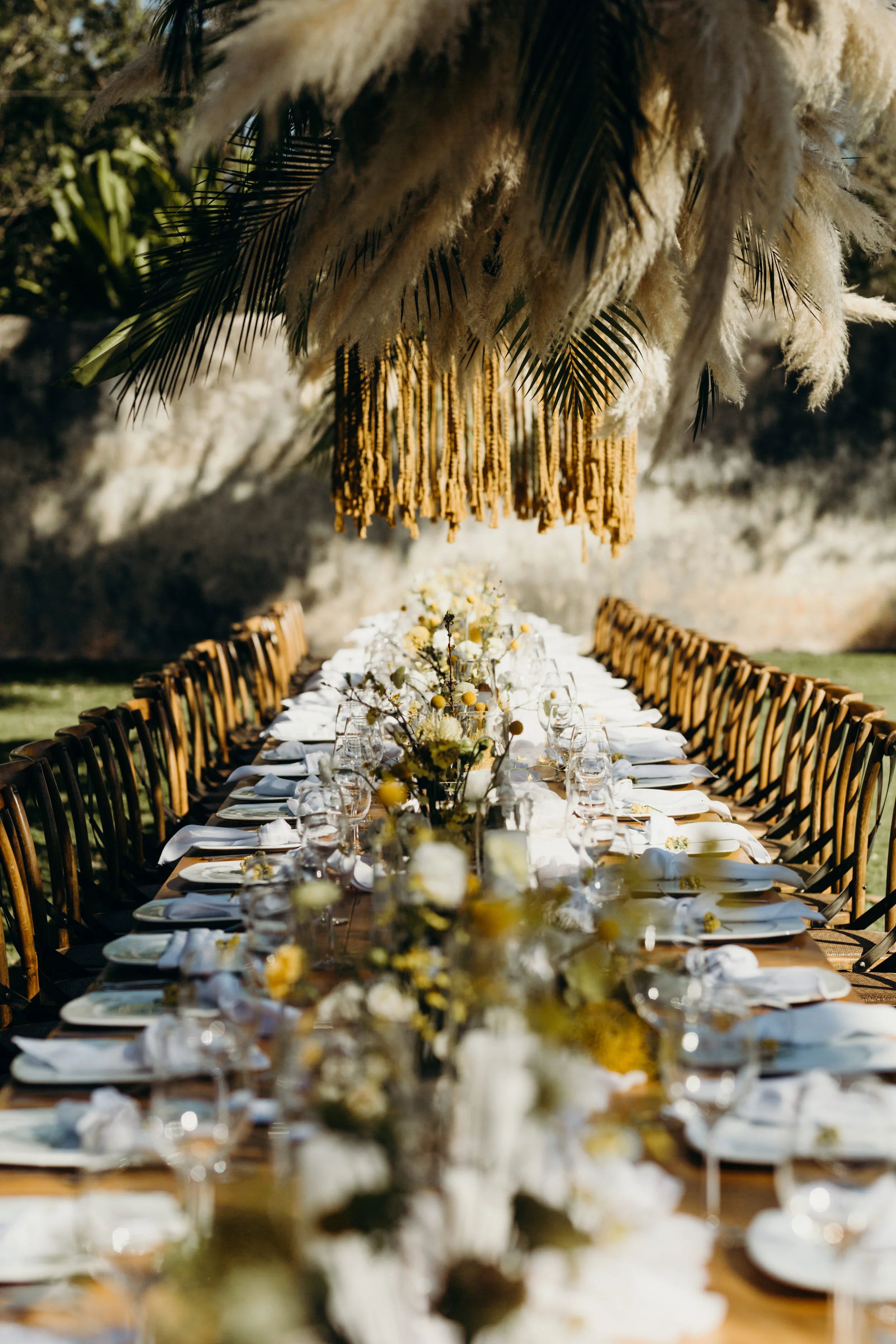
Private haciendas can provide a distinctive setting, but furniture, catering and production are not always included.
Hacienda Xcanatun
Hacienda Xcanatun sits on the northern side of Mérida, making it easier to reach than many rural estates.
The property combines hacienda character with hotel operations and several indoor and outdoor event spaces.
Best for: Couples wanting hotel support and relatively easy access to Mérida.
Consider: Ask about room-block terms, outside suppliers, exclusivity and where hotel guests not attending the wedding will be during the event.
GuideHacienda Xcanatún: Complete Guide to Staying Near MéridaHacienda Xcanatún is an eighteenth-century henequen estate turned luxury stay north of Mérida. This practical guide explains the setting, rooms, transport, day trips, dining decisions, and who should choose it.Open
Hacienda San José Cholul
Hacienda San José Cholul is a restored hacienda hotel east of Mérida, surrounded by gardens and traditional buildings.
Best for: Intimate, accommodation-led weddings with a quieter countryside atmosphere.
Consider: It is further from central Mérida than northern or southern suburban venues. Decide whether guests will stay on-site, in nearby properties or in the city.
Chablé Yucatán
Chablé Yucatán is a high-end resort near Chocholá built around a restored hacienda, private casitas, restaurants, gardens and spa facilities.
Best for: Premium multi-day weddings where the property itself is the principal guest experience.
Consider: Accommodation costs may be beyond some guests’ budgets. Discuss whether outside guests can stay in Mérida and attend by private transfer.
Historic character does not mean identical service
The word hacienda describes a broad range of properties.
One may be a fully staffed hotel. Another may be a private house with a lawn. Another may primarily function as an event venue. Some have restored machine buildings and extensive gardens; others feel more intimate.
Do not compare haciendas by photography alone.
Request written answers to the following:
- What is included in the venue fee?
- Is a professional wedding planner mandatory?
- Is catering exclusive or can you choose your own?
- How many guests can be seated under cover?
- Is the rain space attractive enough to use as the main plan?
- Does the venue have a generator?
- Are toilets permanent or rented?
- How many people can sleep on the property?
- What is the music cutoff?
- Are rehearsals, setup days and recovery brunches charged separately?
- Is there a corkage fee?
- Are taxes and service charges included?
- Who is responsible for cleaning and waste?
- What happens if severe weather prevents the event?
 Historic hacienda arcade near Mérida
The architectural character varies considerably between restored hotels, private homes and former working estates.
The best time of year for a wedding
November through February normally provides the easiest conditions for an outdoor wedding. The evenings are usually more comfortable, rainfall is less frequent and guests can explore during the day without the most intense heat.
March and early April can still work well, but daytime temperatures rise.
Late April and May are generally the hardest months for a formal outdoor event. The heat can be tiring before the ceremony even begins.
The wetter season broadly runs from May or June into October. Rain often arrives as a heavy afternoon or evening storm rather than continuous drizzle, but no planner should rely on it passing before dinner. Tropical storms can also affect the peninsula during this period.
Month-by-month wedding conditions
| Period | General conditions | Planning note |
|---|---|---|
| November to February | Drier and more comfortable | Strongest period for outdoor weddings |
| March | Warm, usually manageable | Provide shade and water |
| April | Increasingly hot | Use a later ceremony |
| May | Very hot, with growing rain risk | Air-conditioned preparation spaces are important |
| June to August | Hot, humid and storm-prone | A full covered plan is essential |
| September to October | Rain and tropical-weather risk | Use flexible contracts and contingency planning |
Whatever the month, schedule an outdoor ceremony in the late afternoon.
Avoid leaving guests seated in direct sun. Provide cold water before they reach their chairs rather than after the ceremony begins.
Rain planning
A token tent held in reserve is not enough.
Your backup plan should show:
- Where the ceremony moves
- Where cocktails take place
- Where dinner is served
- Whether the dance floor remains usable
- How guests move between covered areas
- Where suppliers protect sound and electrical equipment
- Whether rainwater collects on paths
- How vehicles reach the entrance
- When the decision to activate the backup plan must be made
Ask to see photographs of the venue during a real rainy-season event.
Clear-span tents, flooring and climate control can add considerably to the budget. Include them in the initial comparison rather than treating them as an optional late expense.
Heat, clothing and guest comfort
Yucatán remains warm after sunset.
Natural fabrics, lighter formalwear and practical footwear are sensible. Guests walking across lawns, gravel or old stone will struggle in narrow heels.
The wedding party should have access to an air-conditioned room close to the ceremony area. A distant hotel room is not useful once photographs and final preparations begin.
Useful provisions include:
- Parasols or shaded waiting areas
- Water stations
- Fans
- Insect repellent
- Hand towels
- A basket of flat shoes
- Transport for guests with reduced mobility
- A short ceremony
- A later dinner
Couples should also ask about mosquito treatment and whether it is carried out by the venue or the planner.
Legal marriage in Yucatán
A symbolic ceremony is the simplest option for most international couples.
You can complete the legal marriage in your home country and hold a personal ceremony in Yucatán without dealing with Mexican civil documentation. This also allows a friend, celebrant or family member to conduct the ceremony.
A civil marriage performed by the Registro Civil is legally recognised in Mexico, but international couples should confirm how the certificate will be recognised or registered in their own country.
Yucatán’s official requirements include a marriage application, birth certificates and current identification. A foreign birth certificate must be legalised or apostilled, with its corresponding translation into Spanish where required. The state also notes that the medical certificate used for the process has a validity of 15 working days.
At the time of writing, the official Yucatán procedure, last updated on 22 April 2026, lists the following fees:
- MXN 546 for a ceremony in a civil-registry office
- MXN 7,742 for an off-site ceremony in Mérida
- MXN 3,350 for an off-site ceremony elsewhere in Yucatán
Fees and requirements can change, so confirm them directly before booking travel or ordering documents.
Do not rely solely on a venue or overseas wedding website for legal advice. Contact the relevant civil-registry office and ask for a written checklist based on both partners’ nationalities and marital histories.
Religious weddings
A religious wedding is separate from the civil process.
Catholic parishes may require recent baptism and confirmation certificates, premarital preparation, interviews and permission for the marriage to take place outside the couple’s home parish.
Begin this process early. Historic churches may also limit decorations, music, photography and ceremony times.
A religious or symbolic ceremony does not automatically create a civil marriage.
Do you need a wedding planner?
For most hacienda weddings, yes.
A local planner is not only there to choose flowers. The planner coordinates suppliers, venue access, contracts, transport, weather decisions, power, furniture and the timing of a location that may be outside the city.
Some private venues make a planner mandatory. Hacienda Sac Chich, for example, requires one because the property provides the venue and lodging but not the complete wedding production.
When interviewing planners, ask:
- How many weddings they have produced at the exact venue
- Whether they receive commissions from suppliers
- How they handle bilingual communication
- Who attends setup and remains until breakdown
- Whether transport coordination is included
- How payments to local vendors are documented
- What happens when a supplier cancels
- How they manage hurricanes or severe weather
- Whether the quoted fee includes tax
- How often you receive budget updates
A planner familiar with a particular hacienda may prevent expensive mistakes involving power, access and rentals.
Building a realistic wedding budget
There is no useful single average cost for a Yucatán destination wedding.
A courtyard dinner for 30 guests and a produced hacienda wedding for 180 people are fundamentally different events.
Build the budget from separate categories:
| Category | What to include |
|---|---|
| Venue | Rental, taxes, security deposit and setup days |
| Accommodation | Couple’s stay, room commitments and staff rooms |
| Planning | Planner, assistants and wedding-day coordination |
| Food | Welcome event, wedding meal, late-night food and brunch |
| Drink | Alcohol, mixers, ice, glassware, staff and corkage |
| Production | Lighting, sound, generator, staging and dance floor |
| Rentals | Tables, chairs, linen, lounge furniture and crockery |
| Design | Floristry, stationery, signage and candles |
| Transport | Airport transfers, wedding shuttles and supplier vehicles |
| Weather | Tent, flooring, fans, air conditioning and rain cover |
| Ceremony | Civil officer, celebrant, church fees or musicians |
| Media | Photography, video and content production |
| Guest care | Welcome bags, childcare, medical support and accessibility |
| Service costs | Tax, gratuities, overtime and card or transfer fees |
Request prices in Mexican pesos whenever possible.
When a quote is in US dollars, ask which exchange rate will be used and when it becomes fixed. Currency movement during a year-long planning period can alter the final cost.
Keep a contingency fund of at least 10% to 15%. Countryside events frequently acquire extra transport, production or weather costs as the plan becomes more detailed.
Food and drink
Yucatecan food lends itself well to a wedding menu, but it should be handled with restraint rather than turning dinner into a list of regional dishes.
Possible elements include:
- Sopa de lima
- Panuchos or salbutes as cocktail food
- Sikil pak
- Cochinita or lechón
- Poc chuc
- Tikin xic
- Seasonal fruit
- Marquesitas as a late-night station
- Sorbet or chilled desserts suited to the heat
A late-night taco, torta or marquesita station is often more useful than another elaborate dessert table.
Ask how the caterer manages allergies, vegetarian meals and children’s food. Regional cuisine regularly uses citrus, pork, nuts, seeds and chilli, so dietary communication should be explicit.
For drinks, confirm:
- Whether alcohol can be supplied independently
- Corkage
- Ice production
- Drinking-water supply
- Glassware
- Bar staffing
- Last service
- Bottle removal
- Non-alcoholic options
- Hydration stations
The water served to guests and used for ice should be purified.
Transport for wedding guests
Transport is one of the most important parts of a Yucatán wedding.
Most guests do not need a rental car if they are staying in Mérida and attending organised events. In fact, asking a large group to drive independently can create parking problems and encourage guests to drive after drinking.
A good plan normally includes:
- Optional airport transfers
- One or two central Mérida pickup points
- Air-conditioned coaches or vans
- A transport coordinator at each pickup
- A vehicle for the wedding party
- An accessible option for older guests
- At least two return departures
- A final sweep vehicle
- Emergency contact details
- Clear instructions in both English and Spanish when needed
Read our Mérida airport guide before preparing the arrival notes for guests.
Do not spread guests across the whole city
Choose one or two accommodation zones.
Centro and Paseo de Montejo work well for guests who want restaurants and a walkable city experience. Northern Mérida has larger hotels, shopping centres and easier road access to some venues but feels less historic.
A mixed room block can work: one principal hotel plus a list of nearby boutique and budget alternatives.
Avoid placing the official pickup at a private rental with a narrow street or no space for a coach.
Accommodation planning
A destination-wedding room block should give guests choice without leaving them to search the entire city.
Provide:
- One dependable full-service hotel
- One characterful boutique option
- One lower-cost alternative
- Approximate distance from the pickup point
- Accessibility information
- Whether breakfast is included
- Cancellation terms
- A final booking date
Do not require every guest to stay at an expensive hacienda unless that expectation has been made clear before save-the-dates are sent.
For a broader overview of neighbourhoods and accommodation, use our Mérida travel guide.
A practical three-day wedding weekend
Yucatán works best when guests have time to settle in.
Thursday or Friday: arrivals
Keep the first evening informal.
A terrace drink, courtyard dinner or reserved area in a Mérida restaurant is enough. Guests may be arriving from different countries and should not be expected to attend a tightly scheduled event immediately after landing.
Friday: welcome event
Use Mérida for the welcome event even when the wedding is at a hacienda.
Possible formats include:
- Cantina-style dinner
- Courtyard reception
- Restaurant buyout
- Cocktail evening near Paseo de Montejo
- Guided Centro walk followed by dinner
- Small family meal with a larger drinks reception afterward
Keep speeches and formalities for the wedding day.
Saturday: wedding
A practical schedule might look like:
- 3:30 pm: transport begins
- 4:30 pm: guests arrive with drinks and shade available
- 5:15 pm: ceremony
- 5:45 pm: cocktails and photographs
- 7:15 pm: dinner
- 9:30 pm: dancing
- 11:30 pm: first return transport
- 1:00 am: final return transport
Exact sunset and travel time will vary by season and venue.
Sunday: brunch or recovery day
A hotel brunch is easiest.
A cenote or beach excursion sounds appealing, but many guests will not want an early departure after the reception. Make additional activities optional and start them late enough to be realistic.
Guest excursions
A destination wedding does not need a full guided itinerary.
Two or three well-chosen suggestions are enough.
Uxmal
Uxmal works well for guests interested in Maya history and architecture. It is easier as a dedicated outing than as a stop added to several other activities.
Go early for cooler weather.
GuideExploring Uxmal: Ancient Maya CityUxmal is a Puuc‑style Maya archaeological site in the hills southwest of Mérida, Yucatán, best visited as a day trip from the city. The site opens daily from 08:00 to 17:00 with the last entry around 16:00; the combined federal (INAH) and state (CULTUR) ticket costs roughly MXN 500–600 for foreign visitors and must be paid in cash or with an offline card, keeping both receipts. From Mérida the most flexible way to arrive is by car: take highway 261 south toward Muna/Santa Elena and follow the signs to Uxmal, a drive of about 1 hour 15 minutes in light traffic, with a modest parking fee at the entrance. Buses and colectivos also run the route but are slower and less suited to a tight day schedule, while guided tours provide transport, a licensed guide and optional add‑ons such as Kabah or the evening light‑and‑sound show. A typical visit lasts three to four hours, following the suggested circuit of Pyramid of the Magician, Nunnery Quadrangle, Ball Court, Governor’s Palace, House of the Turtles and Dovecote. Climbing is generally prohibited, but the small museum near the gate is included in the ticket price. Visitors should aim to be at the gate at opening to enjoy cooler temperatures and minimal crowds; shade is scarce, so bring a wide‑brimmed hat, high‑SPF sunscreen, at least two liters of water per person and sturdy shoes. Early morning light highlights the Puuc mosaics, while the late‑afternoon sun casts striking shadows on the Dovecote. If attending the night “Ecos de Uxmal” show, bring a light layer, bug spray and a small flashlight. Drones are not allowed and touching carvings is prohibited.Open
Cenote day
Choose a cenote with good stairs, changing rooms, life jackets and space for the expected group.
Private transport is easier than asking guests to navigate independently. Make clear who intends to swim and who is simply joining for lunch.
Izamal
Izamal is suitable for a slower half-day involving the historic centre, convent and lunch. It works particularly well for photographers and guests who do not want a physically demanding excursion.
GuideIzamal: The Yellow City GuideIzamal is a small colonial town painted yellow, located east of Mérida in central Yucatán, about one hour to one hour 15 minutes by road from Mérida Centro and roughly 1½ hours from Valladolid. It is most often visited as a half‑day or full‑day day trip from Mérida, using a rental car, private driver, or the cheapest option—a bus from Mérida’s Noreste/Oriente terminals; a Tren Maya connection exists but the station is not in the main plaza. The essential sights can be covered in 4–6 hours, or a full day if you include a leisurely lunch, extra photography time and a slower pace. Entry to the Convento de San Antonio de Padua is free (donations welcome) and the Kinich Kakmó pyramid can be climbed at no charge; the cost of the visit is therefore limited to transport, meals and any optional guide or carriage hire. Visitors should expect a walkable historic centre with a wide convent atrium, the climb of Kinich Kakmó (uneven stone steps, bring proper shoes and water), and the chance to wander yellow‑washed streets, small markets and craft shops. Early morning (before 10 am) or late afternoon (after 4 pm) offers softer light for photography and cooler temperatures; midday can be very hot and the stone of the pyramid becomes scorching. Dress modestly for the convent, bring a hat for the exposed atrium, and carry cash for meals—restaurants such as Kinich and Zamná serve traditional Yucatecan dishes, while smaller loncherías are cheaper but may not accept cards. Horse‑drawn carriages are available but should be used after checking the animal’s condition. The town’s layered Maya, colonial and modern character makes it a relaxed, family‑friendly alternative to larger archaeological sites.Open
Progreso
Progreso is the simplest beach trip from Mérida. It suits a relaxed lunch and time by the Gulf rather than a tightly programmed tour.
GuideProgreso Beach, Mexico: Malecón, Swimming, Food & Mérida Day TripsProgreso beach is a public Gulf‑side shoreline about 36 kilometres north of Mérida, reached by a straight highway or frequent Autoprogreso buses. The public beach has no entry fee and is best enjoyed in a 3–6‑hour window, though a full day is possible if side trips are added. By car the drive from the north side of Mérida takes 35–45 minutes and from the city centre 45–60 minutes; by bus the journey is 45–55 minutes. Parking is available on streets and in paid lots near the waterfront, while the bus terminal sits within walking distance of the Malecón. Facilities include restaurants, cafés, beach clubs, chair and umbrella rentals, restrooms, showers in some Blue‑Flag zones, convenience stores and pharmacies. Small vendors, chair rentals, taxis, tips and boat excursions usually require cash in pesos, although many restaurants accept cards. The Malecón is paved and partly ramped, making it more accessible than many Yucatán beaches. Visitors can expect a broad, sandy beach with shallow, calm water on most days, a lively promenade of eateries and vendors, and the world‑record‑long pier that can be viewed but not walked. Weekday mornings are quieter; Sundays, holidays and cruise‑ship days bring crowds. Bring swimwear, towel, sunscreen, a hat, sandals and a reusable water bottle, and be prepared for cash‑only payments at smaller stalls. For families, the nearby Museo del Meteorito offers a short indoor activity, and boat trips to El Corchito Ecological Reserve or Isla Columpios add mangrove and spring swimming if desired.Open
Mérida itself
Many guests will be happy with free time in Mérida.
Provide a short list of restaurants, museums, markets and walking routes instead of scheduling every hour. Destination weddings are tiring when guests have no independent time.
Weddings with children
Mérida and hacienda weddings can work well for families, provided practical arrangements are made.
Ask the venue about:
- Pool safety
- Open wells or water features
- Uneven stone
- Lighting along paths
- Air-conditioned rest space
- Baby-changing facilities
- Highchairs
- Children’s meals
- Early return transport
For larger weddings, hire professional childcare rather than informally asking relatives to supervise.
A staffed children’s room with food, quiet activities and somewhere to sleep can make the evening easier for both parents and children.
Accessibility
Historic venues were not built around modern accessibility standards.
A property may have gravel, steps, narrow doors, wet stone and long distances between the entrance, ceremony and toilets.
Arrange a site visit with the needs of specific guests in mind.
Ask whether:
- A vehicle can drop guests close to the ceremony
- Wheelchairs can cross the principal routes
- Accessible toilets are available
- Seating has arms and stable backs
- An air-conditioned room can be reached without stairs
- The rain plan remains accessible
Do not describe a venue as accessible simply because it has one ramp.
Working respectfully with Yucatán’s culture
Yucatán has a living Maya culture, not a decorative wedding theme.
Regional music, food, embroidery, flowers and craft can form part of the celebration when local participants are fairly paid and accurately represented.
Be cautious with ceremonies marketed as “ancient Maya rituals.” Ask who is conducting the ceremony, which community or tradition it comes from and whether the explanation being given to guests is authentic.
Do not use sacred language, clothing or symbols purely as props.
A thoughtful wedding might instead commission local embroidery, use regional ingredients, hire Yucatecan musicians or arrange a properly interpreted cultural experience for guests.
Common planning mistakes
Choosing a venue before counting bedrooms
A venue may look like a large hotel while accommodating only the immediate wedding party.
Underestimating transport
The event is not finished when the music stops. Every guest needs a dependable route home.
Treating the dry season as rain-proof
Outdoor weddings require a backup plan in every month.
Scheduling the ceremony too early
Direct afternoon sun is uncomfortable. Use the later part of the day.
Comparing only venue fees
A low venue fee may exclude furniture, bathrooms, catering, lighting, generators and staff.
Giving guests too many hotel choices
A concentrated group is easier to transport and creates a better wedding-weekend atmosphere.
Overprogramming the weekend
Guests need time to rest, eat independently and adjust to the heat.
Assuming the planner handles legal documents
Event planning and civil-registry work are separate responsibilities unless the contract explicitly says otherwise.
Planning timeline
12 to 18 months before
- Decide on Mérida, hacienda or resort format
- Estimate the realistic guest count
- Visit venues
- Hire a planner
- Reserve the venue
- Review accommodation capacity
- Confirm the rain strategy
- Send save-the-dates
9 to 12 months before
- Reserve principal suppliers
- Establish hotel options
- Plan transport
- Decide whether the ceremony will be legal or symbolic
- Begin religious paperwork when applicable
- Prepare a wedding website
6 to 9 months before
- Confirm catering and bar
- Select furniture and production
- Plan the welcome event
- Arrange guest excursions
- Review accessibility and childcare
- Begin clothing decisions with the climate in mind
3 to 6 months before
- Confirm room numbers
- Collect guest travel details
- Finalise shuttle routes
- Review legal documents
- Create the detailed rain plan
- Confirm menus and dietary requirements
Final month
- Reconfirm every supplier in writing
- Issue bilingual transport instructions
- Check guest arrivals
- Confirm civil or religious paperwork
- Review weather thresholds with the planner
- Prepare final payments in the agreed currency
- Assign a contact person who is not the couple
Who should choose Yucatán?
Choose Yucatán when you want a wedding grounded in architecture, food, local culture and time spent together.
It is particularly strong for couples who value:
- A historic or garden setting
- A private venue
- A three-day celebration
- Local food and design
- A city guests can explore independently
- A destination distinct from the Caribbean resort corridor
Look elsewhere when you need:
- A large all-inclusive room inventory
- A beach directly outside every guest room
- Minimal transport
- A standard wedding package with few outside suppliers
- Cool weather
- A venue that requires almost no local planning
Final advice
Begin with logistics, not décor.
Choose the season, guest count, accommodation plan and transport model before becoming attached to a particular courtyard or ceremony backdrop.
For most destination weddings, the easiest structure is:
- Guests stay in one part of Mérida.
- The welcome event takes place in the city.
- Organised transport takes everyone to a hacienda.
- Two or more return shuttles are provided.
- The following day remains relaxed and optional.
For the next step, use the Plan hub to compare itineraries, transport and practical resources already available.
For the next step, compare the Stay guides with the relevant destination guide.
The venue should provide the setting. The plan should make it comfortable.
Frequently asked questions
Is Mérida easy for international wedding guests?
Mérida has its own international airport within the urban area. Guests without a convenient route may connect through Mexico City, another Mexican hub or arrive through Cancún and continue overland.
For a large group, collect flight details and offer coordinated transfers rather than leaving every guest to organise the final journey independently.
How far are the haciendas from Mérida?
Many established wedding haciendas are approximately 30 to 60 minutes from the city, although some are closer and others are further away.
Test the route at the same time of day as the wedding.
Can we have a legal wedding in Yucatán?
Yes. A civil marriage can be conducted through the Registro Civil, but foreign documents may require apostilles, legalisation or Spanish translation. Confirm the precise requirements directly with the relevant office.
Is a symbolic ceremony easier?
Yes. Many international couples complete the legal process at home and hold a symbolic ceremony in Yucatán.
Do we need to rent cars for our guests?
Usually not. Guests staying in Mérida can use planned airport transfers and wedding shuttles.
What is the safest month for an outdoor wedding?
January and February normally provide some of the easiest weather, although no month is completely free from rain or unusual heat.
Can we marry during the rainy season?
Yes, but only with a real covered alternative, appropriate flooring and flexible production arrangements.
Are hacienda weddings always expensive?
Not always, but they are rarely simple venue-only events. Production, transport and rentals can make the complete cost higher than the initial venue quote suggests.
Can children attend?
Usually, but ask about pools, uneven surfaces, transport times and quiet indoor space.
Should we include a cenote excursion?
A cenote visit can work well as an optional pre-wedding or post-wedding activity. Choose an accessible site and do not schedule an early departure after a late reception.