Printable guide
Mérida to El Cuyo Private Transfer: What to Know Before You Book
Updated
Compare the practical ways to arrange a private transfer from Mérida to El Cuyo, including timing, road conditions, luggage, public transport alternatives and useful stops.

El Cuyo is one of the least complicated places in Yucatán once you arrive and one of the more complicated places to reach from Mérida without a car. The village sits on the northeastern coast, beyond Tizimín and the smaller settlement of Colonia Yucatán. The road journey crosses most of the state, and the final approach is rural enough that a private transfer can save a surprising amount of effort.
A private transfer is not the only way to travel. You can drive a rental car, take a bus to Tizimín and connect from there, or arrange a vehicle from a local operator. The right choice depends on your group size, luggage, arrival time, appetite for connections and plans after reaching the coast. This guide explains what to ask for, what the day usually feels like and when paying for a door-to-door vehicle is worth it.
El Cuyo is a coastal village in Yucatán, not a resort district in the Riviera Maya. Its appeal is the combination of a broad beach, a working village, wind and open space. It also works as a base for exploring the northern coast, including Río Lagartos and Las Coloradas, although those outings require separate planning. Do not book a transfer assuming every driver will also wait for a boat trip or sightseeing stop: agree on the service before paying.
The short answer
For most visitors, the choice looks like this:
| Option | Best for | Main drawback |
|---|---|---|
| Private transfer | Families, groups, late planners, heavy luggage and travellers who want door-to-door service | The total fare is higher than a bus ticket for one person |
| Rental car | Travellers continuing to Río Lagartos, Las Coloradas, Valladolid or cenotes | You manage driving, fuel, parking, insurance and the last rural roads |
| Bus via Tizimín | Solo travellers and budget-minded visitors with flexible schedules | At least one connection, more waiting and less convenient luggage handling |
| Shared or improvised taxi | People already in Tizimín who need the final leg | Availability, luggage space and price need to be confirmed locally |
The road distance is roughly 270 kilometres, depending on your Mérida starting point and the exact accommodation in El Cuyo. A direct vehicle commonly takes around three and a half to five hours in ordinary conditions. That is a planning range, not a promise. Traffic leaving Mérida, roadworks, rain, stops, the condition of the final road and the driver’s chosen route can all change the arrival time.
If you are travelling as a group, ask for the price of the complete vehicle rather than comparing it with one bus fare. A sedan or van shared among several people can make private transport reasonable, especially when the alternative involves taxis at both ends. If you are alone, compare the convenience against the cost and consider travelling to Tizimín by bus before arranging only the final leg.
Why use a private transfer?
The main benefit is not speed. A private vehicle reduces the number of decisions you have to make on a long travel day.
A driver can collect you at your Mérida hotel, apartment or agreed meeting point, load the luggage and take you to the accommodation in El Cuyo. You do not need to find a terminal, wait for a bus to fill, change vehicles in Tizimín or negotiate the last part of the journey after several hours on the road. That simplicity matters more in the heat, with children, after a flight or when you have large bags for a beach stay.
It also gives you control over the departure time. You can leave early enough to reach El Cuyo during daylight, stop for a meal or rest break, and arrive with time to settle in. A bus itinerary is tied to the operator’s schedule and may require a long wait at Tizimín. A private transfer is built around your requested pickup, although you should still confirm the exact time in writing.
There are limits. A private transfer does not automatically include a tour, guide, entrance fees or a return journey. The vehicle may be a sedan, SUV or van depending on the booking. A quoted “transfer” may mean a direct ride only, while another operator may offer optional stops. Ask before booking rather than assuming the cheaper quote includes the same service.
Compare current Mérida transfer options on GetYourGuide · See Mérida transport and excursion inventory on Viator
The route from Mérida to El Cuyo
The most useful route for planning is generally Mérida to Tizimín, then towards Colonia Yucatán and El Cuyo. Navigation apps may suggest alternatives, but the shortest-looking route is not always the easiest route for a visitor unfamiliar with the region. Tell the driver that El Cuyo is the final destination, not merely Tizimín or Río Lagartos, and confirm that the quote includes the complete journey.
The first part takes you out of Mérida and into the flatter inland landscape of Yucatán. It is a practical road trip rather than a scenic mountain drive: there are no dramatic changes in elevation, but the landscape changes from city traffic to towns, scrub, agricultural land and long stretches with fewer services.
Tizimín is the important inland transport point on this route. It is a working regional city and a useful place for fuel, food or a short break. You do not have to stop there on a direct transfer, but it is sensible to know where it falls in the journey. The final stretch beyond the main city is the part where travellers should be most conservative about timing and fuel.
Colonia Yucatán is another useful reference point before El Cuyo. Fuel and services become less predictable as you approach the coast, so ask the driver about the planned fuel stop if the vehicle is not starting with a full tank. Do not assume that a small coastal fuel point will operate like a large urban station or have the grade and payment method you want.
The last kilometres are the reason a door-to-door transfer can be valuable. El Cuyo is a small coastal community, and the streets around accommodation may be sandy, narrow or less familiar to drivers who only serve the main highways. Send the exact accommodation name, entrance instructions and a map pin before departure. If the property is outside the central village, confirm whether the vehicle can reach it directly.
 The beach at El Cuyo
How long should you allow?
Use a broad half-day window rather than planning around a precise arrival minute. A direct drive may be close to three and a half hours in good conditions, while a comfortable journey with a break can take four to five hours. If you have a dinner reservation, boat departure or activity booked in El Cuyo, leave more margin than the online map estimate suggests.
A morning departure is usually easier for this corridor. It gives you daylight for the rural final stretch, leaves room for a break and makes it less likely that a modest delay pushes your arrival into the evening. It also gives you time to check in, walk to the beach and buy anything you need in the village before the day is over.
An afternoon departure can work when you are already in Mérida and want a slower morning, but it is less forgiving. If you are travelling in the rainy season, include additional time for wet roads and reduced visibility. If your journey begins after a flight, do not schedule a transfer so tightly that a delayed landing or luggage problem creates pressure.
For a return transfer from El Cuyo to Mérida, work backwards from the important event rather than choosing the latest possible departure. Mérida traffic and airport connections require a buffer. If your onward flight leaves from Mérida, ask the operator to confirm the estimated arrival at the airport, not only the city centre. If you are continuing to another destination, provide the exact address and the latest acceptable arrival time.
What type of vehicle do you need?
The correct vehicle depends on people and luggage, not just passenger count. Two people with small bags can usually travel comfortably in a standard car. Two people with hard-shell suitcases, beach equipment and several backpacks may need more space than the minimum passenger capacity suggests.
For a family, ask whether a child seat is available and whether it must be requested in advance. Do not assume that a child seat is included because the website shows family transfers. Confirm the type of seat, the age or weight range and whether there is a separate charge.
For a group, request the vehicle model or at least the seating and luggage arrangement. A van that carries eight people may not hold eight large cases comfortably. If everyone is bringing kite equipment, surfboards, a stroller or diving bags, explain this before receiving the quote. Oversized equipment can change the vehicle requirement.
Air conditioning is important on this long route. Ask whether the quoted vehicle is air-conditioned and whether the service is private to your group. Some listings use “private transfer” to describe a private booking while offering different vehicle categories. Read the inclusions carefully and keep the confirmation available offline.
What to ask before booking
A reliable transfer conversation should answer practical questions in writing:
- Is the service direct from Mérida to the exact accommodation in El Cuyo?
- Is the price for the whole vehicle or per passenger?
- How many passengers and how much luggage are included?
- Is the vehicle private, or can another group be added?
- Is pickup available from a hotel, apartment or private address in Mérida?
- What is the meeting procedure if the accommodation is difficult to find?
- Is a child seat available if needed?
- Are tolls, fuel and the driver’s return journey included?
- Are stops permitted, and do they add time or cost?
- What is the cancellation and delay policy?
- How will the driver contact you on the day?
- Can the same operator arrange the return journey?
The question about tolls is less about finding a hidden charge than about comparing like with like. Two quotes may describe the same corridor but include different vehicle standards, waiting arrangements or stop policies. Ask for the final total and inclusions rather than choosing from a headline price alone.
Send the pickup address exactly as it appears in your accommodation confirmation. Mérida is a large inland city with many neighbourhoods and hotels, and a building name may not be enough for a driver. Include a phone number or messaging contact that works in Mexico, but do not rely on mobile data alone; save the confirmation and address offline.
Door-to-door pickup in Mérida
Most private operators will ask for the name and address of your accommodation. A hotel pickup is usually easier than a private apartment in a large development, where several entrances may share a similar name. Ask where the driver will wait and how long they will remain at the meeting point.
If you are staying in Centro, tell the operator whether the vehicle can stop directly outside the property. Historic streets can be busy, narrow or affected by temporary closures. The most convenient meeting point may be a nearby accessible street rather than the exact front door. Agree on that point before departure so you are not searching with luggage in the morning heat.
For a pickup from Mérida International Airport rather than the city, confirm that the provider serves the airport and whether the airport-to-El Cuyo fare is different. The airport is inland on the southern side of Mérida, so it is not the same pickup as a Centro hotel. Give the flight number only as additional information; the confirmed meeting point and contact procedure still matter.
If your transfer begins after a hotel check-out, ask whether luggage can remain in the vehicle during a planned stop. Do not leave passports, electronics or medication unattended. Keep valuables and important documents with you in a small cabin bag.
GuidePrivate Transfer from Mérida to Chichén Itzá: Comfortable, Door-to-Door ServiceLearn everything you need to know about booking a private transfer from Mérida to Chichén Itzá, including vehicle options, pricing, booking process, and tips for a smooth journey.Open
Stops worth considering
A direct transfer is often the best choice when you simply want to reach El Cuyo. Stops make sense only when they serve your route and do not turn a transfer into an exhausting sightseeing day.
Tizimín for a practical break
Tizimín is the natural stop if the group needs food, a bathroom, fuel or a cash withdrawal. It is also the point to reconsider the plan if the weather changes or the vehicle develops a problem. A short stop can make the long journey easier without adding a major detour.
Do not promise yourself a full city visit unless you have agreed on the time. Tizimín is not a quick roadside photo stop if you want to explore markets, churches or public spaces properly. For a simple transfer, use it as a service point and continue towards the coast.
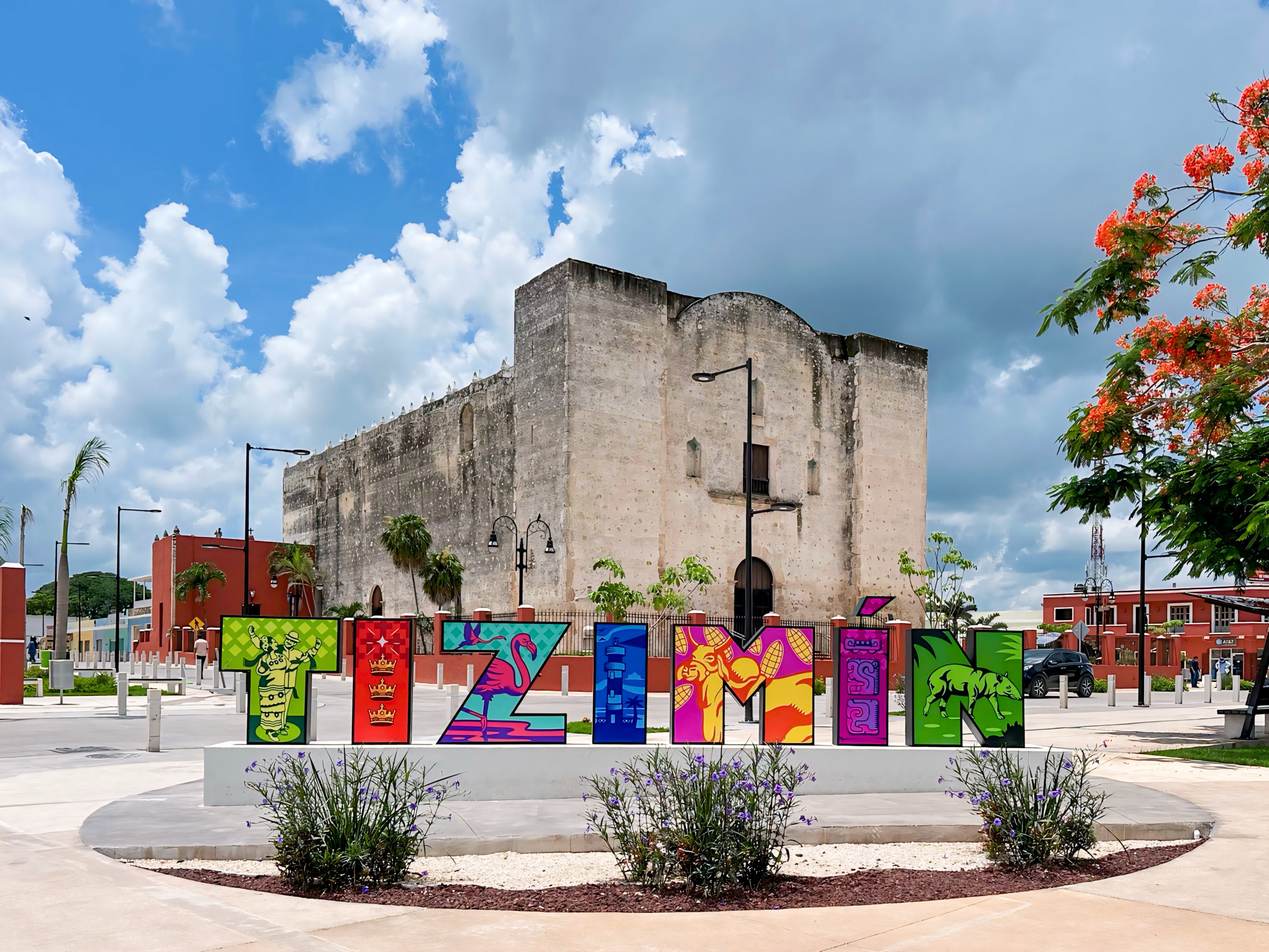
 The regional city of Tizimín in Yucatán
Río Lagartos or Las Coloradas
Río Lagartos and Las Coloradas are logical additions to a northern-coast itinerary, but they should be treated as separate destinations rather than casual stops. A transfer from Mérida to El Cuyo with a visit to the reserve, a boat trip and a return to the road may take far longer than a direct ride.
If you want to include either place, ask for a written itinerary and clarify whether the driver waits, whether a local boat or guide is included, and where you will sleep. Wildlife sightings are not guaranteed, and boat schedules, weather and local operating conditions can affect the day. Do not book a transfer on the assumption that flamingos will appear at a precise time.
 Flamingos and lagoon landscape in the Ría Lagartos Biosphere Reserve
Las Coloradas is known for its salt ponds and unusual colours, but the colour and access conditions can vary. It is a working salt-production landscape, not a swimming destination. Follow local instructions, remain in permitted areas and do not enter the ponds. If the site is important to your trip, consider sleeping on the northern coast instead of trying to combine every attraction with one long transfer.
GuideRío Lagartos Travel Guide: Flamingos, Boat Tours, Las Coloradas and Where to StayRío Lagartos is a tranquil fishing town on Yucatán’s north coast that serves as the main gateway to the Ría Lagartos Biosphere Reserve, a UNESCO‑recognized wetland famous for flamingo colonies, mangrove estuaries and crocodiles. There is no entry fee to the town; reserve access is usually included in boat tours, though some operators charge a small conservation fee of about 54 MXN on site. Shared or small‑group wildlife and Las Coloradas boat tours cost roughly $70–$95 USD per person, while private boats are priced per vessel for 2–4 hours. Boat tours run from 6:00 to 17:00 for daytime wildlife viewing, with night mangrove/crocodile tours offered around 19:30–21:30 for 1.5–2 hours. Cash in pesos is essential, as ATMs are unreliable and most businesses prefer cash. From Mérida the drive is 205–230 km and takes about 2.5–3 hours via Tizimín; from Cancún it is 225–255 km, roughly 3–3.5 hours; from Valladolid it is 105 km, about 1.5–2 hours. Buses go to Tizimín, then a local bus or colectivo reaches Río Lagartos. The pink salt ponds of Las Coloradas lie 24 km away, a 20–25 minute drive. A typical day includes a 2–4 hour boat safari through mangrove channels to see flamingos, herons, spoonbills, ospreys and, with luck, crocodiles, often with a beach stop and optional Mayan‑clay mud mask. Night tours let visitors watch crocodile eyeshine and nocturnal birds. Visitors should bring cash, sun protection, insect repellent, binoculars, a dry bag and a dark swimsuit for mud baths. Keep noise low, respect nesting zones, use life jackets, and avoid drones. Mid‑day is best for the pinkest hues at Las Coloradas, while early morning and late afternoon are optimal for wildlife. The dry season (December–April) offers comfortable weather; November nortes can bring wind and rougher water, so book morning departures when possible.Open
Cenotes and inland detours
A cenote detour can be attractive on a journey from Mérida, but most well-known cenote areas are not directly on the fastest line to El Cuyo. Adding one can make sense when you have a full day, a private driver and no fixed arrival deadline. It is less suitable when you have already spent several hours travelling or are carrying beach luggage.
Ask the driver to quote the detour separately. The extra charge may reflect additional distance, waiting time and the need to return to the main route. Do not assume that a driver who offers a direct transfer will also know the current access rules at every cenote. Entry, swimming conditions, life jackets and changing facilities vary by site and should be checked with the place itself.
Public transport via Tizimín
The bus alternative is possible, but it is a connection rather than a single direct service. Travellers generally go from Mérida to Tizimín and then continue from Tizimín to El Cuyo. The exact operator, departure pattern and terminal arrangements can change, so confirm current information locally or with the bus company before travelling.
This option suits people who are comfortable with uncertainty and travelling light. It can be good value, and it lets you see a practical part of Yucatán that many visitors skip. It is less comfortable with large suitcases, children who need predictable breaks or a late arrival in Tizimín.
The connection deserves a generous margin. A bus leaving Mérida late can affect the second leg, and the final service to El Cuyo may not wait for a delayed connection. Ask at the Mérida terminal about the complete route, where to change in Tizimín and whether luggage can be carried on the second vehicle. Save the information offline and carry enough Mexican pesos for local transport or a fallback taxi.
If the final bus has gone, staying overnight in Tizimín may be more sensible than trying to improvise a long rural taxi journey at night. You can also arrange only a private vehicle from Tizimín if a local operator is available. Confirm the price, passenger capacity and destination before loading your bags.
Public transport is not automatically the adventurous or more authentic choice. It is a useful option when the schedule fits, but the extra connection has a real cost in time and attention. Compare the complete journey, not just the first ticket.
Driving a rental car
A rental car gives you the most flexibility after reaching El Cuyo. It is a good choice for a wider circuit that includes Valladolid, Ek Balam, Río Lagartos, Las Coloradas, Tizimín or other coastal villages. It is less useful if you plan to spend several days on the beach and will leave the car parked.
The main benefit is control. You can leave Mérida early, stop in Tizimín, carry supplies and continue to another base without arranging a second transfer. You can also return to Mérida by a different route if the itinerary requires it. The trade-off is responsibility: you must understand the rental contract, insurance, fuel planning, parking and navigation.
Do not drive the final rural stretch quickly just because a navigation app gives a short estimate. Road surfaces, animals, bicycles, motorcycles, topes and unlit sections require attention. Daylight is preferable, particularly if you do not know the route. Fill the tank before the final approach and do not assume every coastal settlement has a convenient fuel station.
Ask your accommodation about parking before renting. El Cuyo has a small-village feel, and a property may have limited parking or a sandy entrance. A car is not a substitute for walking around the village or understanding local beach access. It is simply a tool for the longer distances.
Staying in El Cuyo
A private transfer is most useful when you are staying at least two nights. The road is long enough that a same-day return to Mérida would leave little time for the beach or village, and it would make the transfer feel like a transport exercise rather than a coastal visit.
Accommodation ranges from small guesthouses and apartments to more established coastal stays. Check the exact location, access road, air conditioning, power arrangements, kitchen facilities, cancellation policy and whether breakfast is included. Do not assume that a “beach” listing is directly on the sand; ask about the walking route and whether the property is inside the village or farther out.
Book the transfer only after confirming the accommodation dates. Send the correct property name and address to the driver. El Cuyo has similarly named rentals and small businesses, and a generic search result may not identify the right entrance.
Check current El Cuyo accommodation rates on Booking.com · Compare available El Cuyo stays on Trip.com
Should you sleep in Tizimín instead?
Tizimín can be a practical overnight break if you are travelling by bus, arriving late or building a longer inland-and-coast itinerary. It is not a replacement for El Cuyo if your priority is waking beside the beach, but it can remove pressure from the connection.
An overnight in Tizimín also works when you want to visit the city or need a dependable service point before continuing. The journey becomes two manageable days instead of one long transfer. Families may prefer this if the children handle shorter travel periods better than a single half-day road trip.
On the other hand, splitting the journey adds another hotel check-in and check-out. If a private vehicle can take you directly and the price is acceptable for the group, door-to-door travel may be simpler. Compare the cost of one transfer with a night, meals, taxis and the lost beach time.
Arrival in El Cuyo
Ask the driver to contact you shortly before arrival if mobile coverage is uncertain. Have the accommodation’s check-in instructions ready. Some small properties use a key safe, while others rely on a host meeting you. Confirm this before leaving Mérida, not when the vehicle is already outside the village.
Keep a small bag accessible with water, sunscreen, medication, identification, chargers and one change of clothes. The rest can stay in the luggage compartment. After several hours on the road, you do not want to unpack everything just to find a phone cable or a swimming layer.
El Cuyo is easier to enjoy when you slow down. Walk to the beach, watch the wind and let the village set the pace. Kitesurfing and other water activities depend on conditions, so avoid booking a tightly timed lesson on the same afternoon as a long road transfer. A flexible first evening is usually more comfortable.
The village is also a place where services can be more limited than in Mérida. Carry what you genuinely need, but do not arrive expecting a large-city shopping district. If you have a specific medication, dietary requirement or child-care item, buy it before leaving Mérida or Tizimín. Ask the accommodation what is available locally rather than assuming a delivery app will cover the coast.
Returning from El Cuyo to Mérida
Arrange the return transfer early, especially during weekends, holidays or periods when the village is busy. The return journey uses the same broad corridor, and the operator may need to plan the driver’s positioning. Confirm the pickup time, final destination and whether the quote includes Mérida airport or only the city.
If you are returning a rental car, check the vehicle drop-off hours before choosing a departure. If you are connecting to a flight, allow time for the airport approach and for unexpected road delays. A private driver can make the journey easier, but cannot control traffic, weather or a road closure.
If you are returning by bus, ask the accommodation or local terminal about the first practical connection from El Cuyo to Tizimín and then onward to Mérida. The earliest departure may be the only comfortable way to reach the city with a useful margin. Reconfirm the information locally because rural schedules are particularly vulnerable to change.
Which option is best for different travellers?
Couples with light luggage
A couple can choose any of the three main options. A private transfer is easiest when you value time and direct arrival. A rental car is better if El Cuyo is one stop in a circuit. The bus is the economical choice if your dates are flexible and you do not mind changing in Tizimín.
Families
Families usually benefit from a private transfer because the vehicle removes one connection and provides space for luggage. Request child-seat information, plan a break and keep snacks and water accessible. If the fare is too high, consider splitting the journey with an overnight in Tizimín rather than forcing an uncomfortable bus connection.
Solo travellers
A bus via Tizimín may be the most economical route. A private transfer can still make sense if you arrive at an awkward hour, have bulky equipment or find a reputable shared arrangement. Do not accept a long-distance ride from an unknown person who approaches you informally; use a booking channel or a clearly identified local operator.
Kitesurfers and active travellers
Tell the operator about boards, kites, bags and other bulky equipment before requesting a vehicle. A standard sedan may not be suitable. Consider whether you are staying long enough for the conditions to justify the journey, and keep the first afternoon flexible in case wind or weather changes.
Travellers combining El Cuyo with Río Lagartos
This is a natural regional pairing, but it deserves at least one overnight and a clear plan. A private transfer can move you between bases, while a local boat operator handles the lagoon activity. Do not ask one driver to guarantee wildlife sightings or assume the transfer includes a reserve tour.
A simple booking plan
Start by confirming your accommodation in El Cuyo and your preferred travel date. Then request two or three transfer quotes with the same information: number of passengers, luggage, pickup address, final address, requested departure time and whether you need a return journey.
Compare the total vehicle price, not only the cheapest headline number. Check the vehicle, air conditioning, luggage capacity, tolls, stop policy, cancellation terms and communication procedure. Ask whether the driver is taking your group directly or whether the service is shared.
Once booked, save the confirmation as a screenshot and keep the operator’s contact details in your phone. Send the driver your final accommodation information if it changes. On the morning of travel, confirm the pickup time and meeting point. A two-minute confirmation is easier than resolving a wrong address after departure.
Is a private transfer worth it?
It usually is for a family or group that wants a direct ride, for travellers with significant luggage and for anyone who values reaching a small coastal village without a connection. It is also useful when El Cuyo is part of a carefully timed itinerary and the cost can be divided among several passengers.
It may not be worth it for a solo traveller on a flexible budget who is comfortable with buses, or for a road-tripper who already needs a rental car for several days. In those cases, the bus or self-drive option may provide better overall value.
The practical test is simple: compare the complete door-to-door journey. Include terminal taxis, waiting time, luggage handling, the risk of missing the Tizimín connection and the value of arriving during daylight. If the private quote removes several difficult steps without stretching your budget, it is a sensible purchase. If the price is close to a rental car plus fuel and you want to explore the north coast, drive instead.
El Cuyo rewards travellers who allow the journey to be part of the plan. Leave Mérida with enough time, travel during daylight when possible, carry the essentials within reach and confirm every transfer detail in writing. For a group, a well-arranged private vehicle is the calmest way to make the long road to the beach; for a solo traveller, the bus via Tizimín remains a workable alternative when the schedule fits.