Printable guide
Best Progreso Cruise Excursions: Ruins, Cenotes, Flamingos & Beach Days
Updated
A decision-focused guide to Progreso cruise excursions: how the long pier and shuttle work, which ruins, cenotes, flamingo trips and beach days fit your time in port, and when to book versus go independently.

Progreso is the Gulf coast port for the Yucatán's greatest hits: Chichén Itzá, the colonial capital of Mérida, swimmable cenotes, wild flamingo estuaries and a long, calm beach that starts right where the pier meets town. It is also a port with an unusual shape. Your ship berths at the end of a roughly 6.5-kilometre pier — usually cited as the longest cruise pier in the world — and a free shuttle carries everyone the long way back to shore. That single logistical fact shapes every excursion decision you will make here.
This guide compares the realistic options for one day ashore: the headline ruins, the closest Maya site with a swim, inland cenote routes, Mérida's plazas, Celestún's flamingos, coastal combo tours, beach clubs and active options. Alongside each is the practical question that actually decides your day — how much port time the trip really consumes, whether a booked tour or independent transport makes more sense, and when the honest answer is to stay near the sand instead.
Quick answer: matching the excursion to your port day
Every Progreso call is different, so start with your ship's schedule rather than a wish list. The table below shows typical total durations from the shore-side terminal, including travel. Treat them as planning estimates and confirm against your ship's program.
| If you want | Realistic duration from shore | Best for |
|---|---|---|
| The famous Maya pyramids | Chichén Itzá — a full port day, roughly 2–2.5 hours each way on the road | First-timers on ships with long port days |
| Ruins plus a cenote swim, close by | Dzibilchaltún and Cenote Xlacah — roughly 5–6 hours | Almost anyone; the best balance of history and cooling off |
| Swimming in a real cenote | Inland cenote routes such as Santa Bárbara near Homún — roughly 7–8 hours | Swimmers and families who care more about water than stones |
| Colonial city atmosphere | Mérida — roughly 5–6 hours including the drive | Food lovers, architecture, an easy DIY day |
| Flamingos in the wild | Celestún boat trips — roughly 7–8 hours | Wildlife fans on ships staying into the evening |
| A bit of everything | Coastal combos (El Corchito, Xcambo, salt flats, flamingo viewpoints) — roughly 4–6 hours | Short port days and mixed-interest families |
| Doing very little, well | Beach club day pass or the malecón and public beach — 3 hours upward | Anyone who wants the easiest possible day |
Three quick pointers:
- Longest return on effort: Dzibilchaltún with a Cenote Xlacah swim. Close to port, genuinely interesting, and you finish in the water.
- Easiest half day: the malecón, the public beach and a long seafood lunch — no booking required.
- Think twice: Chichén Itzá on a short port day, and any itinerary involving the far coast. The distances are real, and buses do not negotiate with all-aboard times.
How the Progreso cruise pier actually works
Ships dock here; they do not tender. The Gulf shelf off Progreso is so shallow that the port authority built the pier roughly four miles out into the sea to reach deep water, which is why vessels berth at the pier head and passengers ride a shuttle bus along the causeway to the shore-side terminal. The ride takes around 15–20 minutes each way under normal traffic, and walking the pier is not permitted.
 The Progreso pier stretching into the Gulf of Mexico — among the longest piers in the world
A few practical consequences follow from that shape:
- Budget the shuttle twice. Any plan that ignores the ride in both directions loses 35–45 minutes of usable time. Add it to every estimate in this guide.
- Facilities at the pier head are basic. Expect minimal services where the ship docks; the shops, taxis and tour departures cluster at the shore side, where the pier meets the malecón.
- The town starts immediately. Once the shuttle drops you, central Progreso is flat and compact — beach to one side, the grid of streets and the market area just inland. Most town errands take minutes, not hours.
- Shuttles stop well before sailing. Service typically winds down about an hour before all-aboard (confirm the exact cutoff in your ship's daily program). Plan to be at the shore-side gate with comfortable margin, because a queue of two hundred passengers moves slowly.
One more quirk worth knowing: Progreso sits on Central Standard Time, the same zone as most US Gulf homeports such as Galveston and New Orleans. Ship time and local time usually match, but check the daily program anyway — excursion meeting times are printed in ship time.
How much time you really have in port
Most ships calling at Progreso arrive mid-morning and sail by early evening, though exact windows vary widely by line and itinerary (your boarding documents and daily program are authoritative). Work backwards from all-aboard rather than forwards from arrival.
A simple planning rule that keeps days stress-free: whatever your chosen excursion promises, subtract the two shuttle rides, then hold back 60–90 minutes of buffer before the last shuttle. What remains is your real day. A ship in port from 8:00 to 17:00 gives you roughly six usable hours onshore after the pier logistics — enough for Mérida, Dzibilchaltún, a coastal combo or a relaxed beach club, tight for Chichén Itzá, and not enough for the far coast.
Two timing details matter more than they look:
- Morning departures beat afternoon ones. Inland drives are cooler, ruin sites are emptier before midday, and wildlife boats see more in the early hours. If you can choose an excursion departure, take the earliest.
- Heat peaks hard. Progreso is breezy by Yucatán standards, but the interior sizzles from late morning. Shadeless archaeological zones are hottest exactly when midday tours reach them — hats, water and sunscreen are equipment, not suggestions.
Booked through the ship, or independent?
You have three ways to organise the day, and the right choice depends more on your risk tolerance than on price.
Ship excursions are the safe default. The operator tracks your ship, and if a tour runs late the ship waits — that guarantee has real value when your day depends on a two-hour inland drive. The trade-offs are group size, fixed itineraries and prices that include the cruise line's margin.
Independent tours booked through marketplaces — the same operators often run smaller vehicles, and listings from Progreso are built around the pier shuttle reality, with meeting points at the shore-side terminal. Compare current options on GetYourGuide's Progreso page and Viator's Progreso excursions, and check the stated return time against your all-aboard rather than trusting a generic "full day" label. Book only listings that state a timely return or free cancellation, and screenshot the meeting instructions before you sail.
Doing it yourself is genuinely viable for a few destinations from this port: the beach outside your door, Mérida by taxi or colectivo, and Dzibilchaltún by negotiated taxi. It stops being sensible for Chichén Itzá or Celestún on a port day, where a delayed bus or an argument over the return fare can cost you the ship. If you go independent anywhere, agree the full fare — including the return leg and any waiting time — before the vehicle moves.
Chichén Itzá: the headline ruins, and an honest look at the clock
Chichén Itzá is the excursion most Progreso cruisers dream about, and it deserves the reputation: El Castillo, the pyramid of Kukulcán, anchors a UNESCO World Heritage city that was among the largest in the Maya world, with the Great Ball Court, the Temple of the Warriors and the sacred cenote of the same water cult that still draws visitors across the peninsula.
 El Castillo, the pyramid of Kukulcán at Chichén Itzá
The honest part is the drive. From Progreso the site lies roughly two to two-and-a-half hours away each way on current roads, which turns the visit into a ten-hour door-to-door day with a couple of hours actually among the ruins. That math works fine when your ship docks early and sails late, and it fails badly when it doesn't. Before booking any Chichén excursion from this port, check three numbers: arrival time, all-aboard time, and the tour's promised return to the terminal. If the return lands inside your buffer, pick something closer instead — the ruins will hold, and the pier shuttle will not.
Practical notes for the day: the site is large, exposed and hot by late morning, so water, hats and real walking shoes matter. The main cluster of buildings around El Castillo involves no shade to speak of. Licensed guides add genuine value here — the astronomy and history encoded in the architecture are not self-evident — and most organised tours include one.
If the timing works, compare dedicated Chichén day trips on GetYourGuide and the Viator Chichén Itzá listings, then filter for Progreso departure and a return time that respects your ship. Cenote stops are commonly bundled with the ruins on this route, which softens the long drive considerably.
GuideComplete Guide to Chichén Itzá: Tickets, Hours, Tours, Cenotes & TipsChichén Itzá is the world‑famous Maya archaeological zone located near Pisté in the municipality of Tinum, Yucatán, and is typically accessed from Valladolid, Mérida, Cancún, Playa del Carmen or Tulum. The site is generally open daily from 08:00 to 16:00 with the last entry recorded at 15:00, although visitors should verify the exact hours before travelling. Admission is split between a federal INAH fee of MXN 105 and a state fee of MXN 592 for foreign adults (MXN 697 total) or MXN 205 for Mexican nationals (MXN 310 total); discounts may apply for children, students, seniors or Yucatán residents who present valid ID. Reaching the ruins takes about 40–45 minutes from Valladolid, 1.5–2 hours from Mérida, and 2.5–3 hours from Cancún or Playa del Carmen; travel can be done by rental car, taxi, colectivo or organized tour, with tours often including the entrance fee. A visit usually requires 2.5–4 hours for a quick overview, or 4–5 hours if the on‑site museum and a more relaxed pace are desired. Visitors are advised to arrive at opening to avoid the heat, crowds and vendor pressure that build up later in the morning. Early arrival provides cooler weather, better lighting for photos and shorter queues at El Castillo and the Sacred Cenote. Bring plenty of water, sun protection and cash in pesos; many tours bundle transport, guide services and cenote stops, so check the inclusions carefully. Staying overnight in Valladolid or Pisté makes an early start easier, while a guide is not mandatory but recommended for first‑time visitors who want contextual information.Open
Dzibilchaltún and Cenote Xlacah: the closest ruins with a swim
If Chichén Itzá is a campaign, Dzibilchaltún is a well-spent morning. The site lies south of Progreso — under an hour by road — and it rewards visitors with something the famous sites cannot: room to breathe. Dzibilchaltún was occupied for well over a thousand years and may have been among the largest cities of the peninsula at its height, but it sees a fraction of the coach traffic.
 Temple of the Seven Dolls at Dzibilchaltún, Yucatán
Its signature building, the Temple of the Seven Dolls — named for the clay figurines found in its altar — sits at the far end of a long sacbé, or raised white road, and is famous for alignments through its doors at the equinoxes. The site museum covers the city's long history, and opening hours vary seasonally (verify locally).
The real bonus is Cenote Xlacah, at the edge of the archaeological zone: a wide, open freshwater pool right beside the ruins where a swim after the stones is a proper Yucatecan tradition. Bring a swimsuit and a towel on any Dzibilchaltún excursion; the water is cool, clear and shallow at the edges, with deeper ledges further out.
For a single day that combines the site and a beach finish, there are tours built exactly for cruise days — this GetYourGuide Dzibilchaltún and beach combination runs from the Progreso pier area, and Viator lists a Dzibilchaltún ruins and beach break on the same logic. Both are the kind of excursion that ends with sand between your toes rather than a sprint for the shuttle.
GuideDzibilchaltún Guide: Ruins, Museo Ichkaantijoo and Visiting from MéridaDzibilchaltún is an ancient Maya archaeological site situated just north of Mérida, notable for its unique astronomical observatory and a cenote that can be swum in after touring the ruins. The entry fee is $65 MXN per person and the site is open daily from 8:00 AM to 4:30 PM. Guided tours are offered in both Spanish and English, though the article does not specify their cost or schedule. Visitors typically arrive by car or bus from Mérida; the short distance makes a half‑day visit sufficient to see the main attractions. The experience includes walking the Sacbe, an ancient Maya road, exploring the Temple of the Seven Dolls—famous for its equinox light display—visiting the on‑site museum, and swimming in the Sacred Cenote Xlacah. The best time to explore is early in the morning when temperatures are cooler, which also helps avoid the larger crowds that arrive later. Bring swimwear for the cenote and consider joining an English‑language guide if you want detailed historical context. Sun protection and water are advisable, as the site has limited shade along the pathways.Open
Cenote days inland: Santa Bárbara and the Homún route
For many travellers the cenotes — the freshwater sinkholes scattered across the Yucatán's limestone shelf — outshine any ruin, and Progreso sits closer to good ones than you might expect. The classic cruise-day route heads southeast towards Homún and the Cenotes Santa Bárbara, a family-run cluster of three very different pools in one leafy compound: one shallow and open, one deep and cavern-adjacent, one green and dramatic enough to justify jumping in slowly rather than literally.
 Cenote Santa Bárbara near Homún, Yucatán
Expect roughly an hour and a quarter of driving each way from the port area, stairs and ladders down into the water, cool temperatures that feel miraculous after the Gulf humidity, and house rules that matter: no standard sunscreen in the water anywhere in the cenote world — rinse off before swimming — and life vests for anyone who wants them. Local kitchens at such compounds turn out simple, excellent Yucatecan food, which turns a swim stop into a proper lunch stop.
Organised cenote excursions from Progreso bundle transport, entry fees and often a second or third cenote; typical port-day versions run seven to eight hours door to shore. Compare current options on GetYourGuide's Progreso listings — this Santa Bárbara cenote day is built around the compound described above — and on Viator's Progreso excursions page, where cenote-and-ruins combinations appear alongside pure swimming days.
Who this suits best: swimmers, families with children old enough to manage steps and deepish water, and anyone whose ideal Mexican memory is floating in cool blue water under a hanging root. Who it doesn't: travellers who want zero vehicle time — no cenote worth the name is walkable from the pier.
GuideCenote Hool Kosom Guide: Swimming, Prices and the Homún Cenote RouteA practical guide to Cenote Hool Kosom near Mérida, including swimming, current price guidance, opening hours, transport and nearby Homún cenotes.Open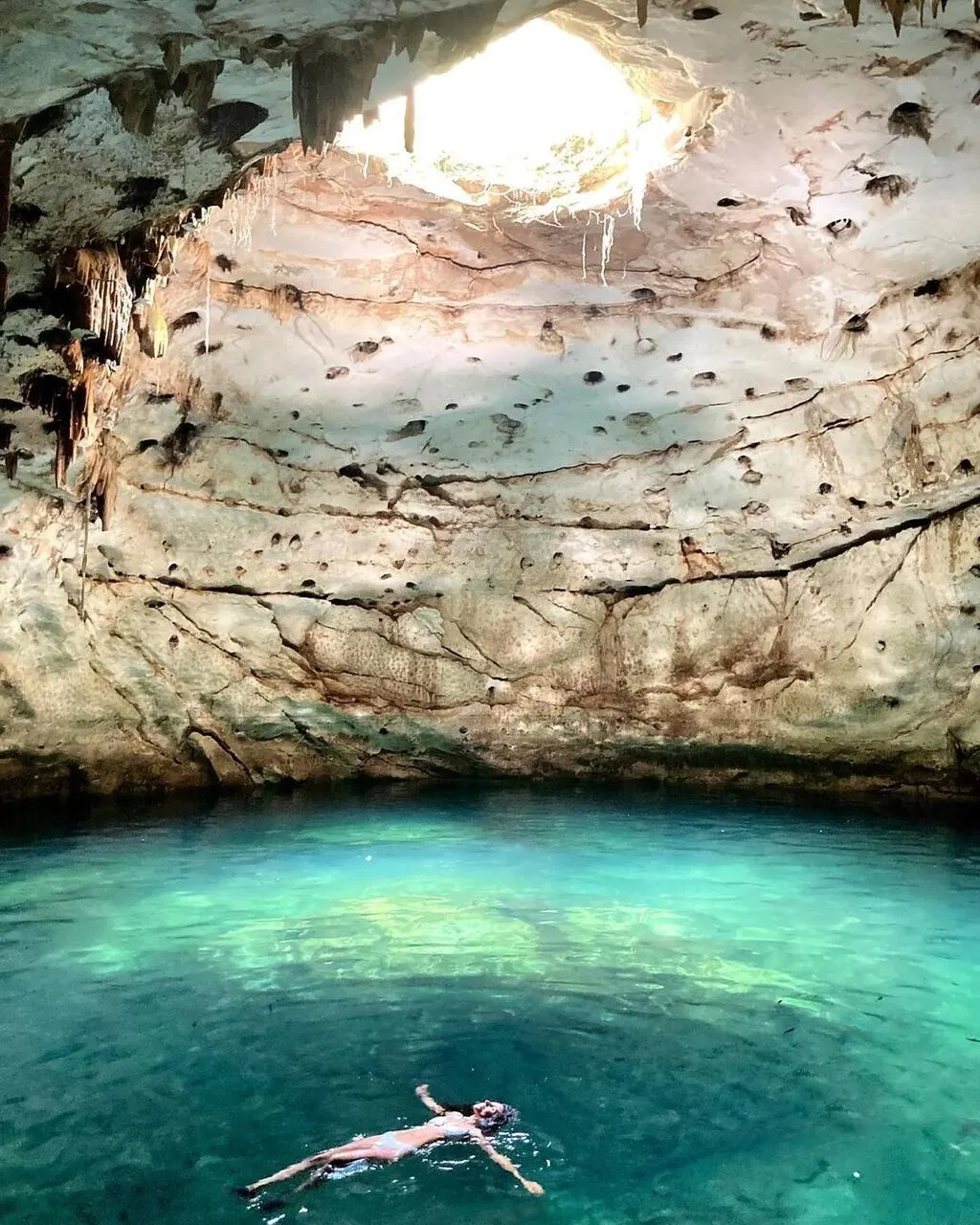
Mérida: the colonial capital, forty minutes inland
Mérida is the state capital of Yucatán and one of Mexico's great colonial cities, and from Progreso it is an easy, flat drive south of roughly 36 kilometres — about 40 minutes by car or bus when traffic behaves. For cruisers who have already had their fill of pyramids, it is arguably the best use of a day: plazas, cathedrals, markets and food without a single coach queue at a ticket gate.
 Plaza Grande in central Mérida, looking toward Mérida Cathedral
The natural core is the Plaza Grande — also called Plaza de la Independencia — ringed by the cathedral, the Casa de Montejo palace façade, the state government palace with its murals, and cafés under the arcades. From there, most first visits wander Calle 60 toward Parque Santa Lucía, browse the stalls of Mercado Lucas de Gálvez, and finish with cochinita pibil or a marquesita somewhere along the way. The city is inland — remember that any "waterfront" plans belong back in Progreso — but its squares and shaded streets handle heat better than open sites do.
You can DIY this day comfortably: taxis wait near the shore-side terminal, colectivos and buses run regularly between Progreso and central Mérida, and the city centre is walkable once dropped. Guided city tours exist too if you prefer context on arrival — check GetYourGuide's Mérida tours and Viator's Mérida listings, filtering for excursions that begin at the Progreso cruise terminal.
One caution applies to every Mérida plan: build the return trip into your math. Buses are frequent but not infinite, and Monday-to-Friday afternoon traffic on Highway 261 thickens towards evening. Leave the capital with more margin than feels necessary.
GuideMérida Travel Guide: What to Do, Where to Stay and How to Plan Your TripMérida is the capital of the Mexican state of Yucatán, located in the northwest part of the peninsula and known as “La Ciudad Blanca” for its bright limestone architecture. The city is served by Mérida International Airport (MID), a 15‑25 minute drive to the historic centre, and by ADO bus terminals that connect to Cancún, Valladolid, Campeche and other destinations; rideshare services such as Uber and inDrive operate throughout town, while a car is only needed for longer day trips to sites like Uxmal or Celestún. The guide suggests an ideal stay of three to five nights in the city, with day trips ranging from 45 to 90 minutes. No specific entry fees are listed, but visitors should budget for accommodation, meals, transport and optional tours. The article notes that tap water is not potable, so purified water should be purchased, and that most restaurants expect a 10‑15 % tip. Travelers can expect a walkable historic centre, Sunday “bici‑ruta” streets closed to cars, lively plazas with marimba music, and a culinary scene that ranges from market breakfasts to fine‑dining in restored mansions. The climate varies: December‑March offers the mildest weather, April‑May is very hot, June‑October brings rain and humidity, and November is a transition period. Recommended packing includes breathable clothing, a wide‑brim hat, reef‑safe sunscreen (to be rinsed before entering cenotes), comfortable walking shoes and insect repellent. Tips include planning activities for early mornings and evenings to avoid midday heat, using shaded arcades in the centre, staying hydrated, and bringing a reusable water bottle with electrolytes. Modest dress is advised for churches and cultural venues, and a small fan or portable cooler can make the hot season more comfortable.Open
Celestún flamingos: beautiful, wild, and watchful of the clock
Roughly an hour and a half southwest of Progreso lies Celestún, where the Ría Celestún estuary cuts through mangrove forest and one of Mexico's great flamingo congregations feeds in the shallows. Boat trips from the town's docks glide past feeding flocks, through mangrove channels and past freshwater springs; crocodiles, pelicans and dozens of resident bird species share the water. Flamingo numbers shift with season and water levels — sightings are common but never guaranteed, and the honest operators say so.
 Flamingos in the Celestún estuary, Yucatán
From a cruise ship, though, Celestún is a timing decision before it is a wildlife decision. Round-trip driving consumes about three hours, the boat adds another hour-plus, and lunch in town tempts everyone. That makes a full Celestún excursion realistic mainly for ships with long evenings in port. If your window is short, two closer alternatives deliver a taste of the same ecosystem: the coastal combo tours described below include flamingo-viewing stops much nearer Progreso, and the Uaymitún flamingo viewpoint along the coast east of town offers roadside birdwatching (access arrangements vary — verify locally).
If your ship's schedule does allow it, compare boat-trip excursions on GetYourGuide's Celestún listings and Viator's Progreso departure board, checking that transport from the cruise terminal is included — independent arrivals in Celestún need their own car or prearranged driver, which rarely fits a port day.
The coastal combo: Xcambo, El Corchito and the salt flats
Not every good excursion from Progreso requires a long inland drive. A family of "coastal combo" tours strings together the attractions along the coast road east and west of town, and they solve a specific problem: short port days that cannot afford Chichén Itzá but deserve more than a beach chair.
The usual ingredients:
- El Corchito ecological reserve. A short wooden-boat crossing through a mangrove canal delivers you to a small reserve famous for its tame-ish raccoons, its shaded trails and three swimmable cenotes plus natural springs. Rules are strict and worth respecting: no sunscreen in the water, no food on the islet, and large bags stored at the dock. The reserve has operated daily in recent years, roughly 8:00 to 17:00 with a modest entry fee (verify locally — arrangements change).
- Xcambo. A modest but atmospheric Maya site near the Telchac coast, once a salt-trade port connected to the flats by sacbé roads. It rarely crowds, and its setting among the old salt works explains the coastal economy that fed pre-Hispanic Progreso.
- The pink salt flats. Around Las Coloradas the coast turns famously pink where industrial salt evaporation ponds meet the sky — the same photogenic phenomenon that draws Instagram fleets to the far coast, sampled in miniature closer to town.
- Flamingo viewpoints. Depending on season and water, boats or roadside stops along the estuary east of Progreso can produce flamingo sightings without the Celestún drive.
A well-reviewed example of the genre is Viator's cenotes, flamingos, salt flats and Mayan ruins combo, which packs El Corchito, the Xtampu salt flats, Xcambo and a flamingo stop into a single port-friendly day; GetYourGuide runs comparable coastal itineraries from its Progreso page. Read the inclusions carefully — these combos vary in vehicle type, guide language and how long each stop gets.
If you would rather sample El Corchito on your own, it sits barely ten minutes from central Progreso toward Chicxulub, and our El Corchito guide covers the boat crossing, the three cenotes and the raccoon etiquette in detail.
Beach clubs and the malecón: doing nothing, properly
Some port days should end with a hammock, and Progreso makes that easy. The public beach begins effectively at the base of the pier: a wide, gently shelving Gulf beach with calm, shallow water, a palm-lined malecón for strolling, and palapa restaurants close enough that lunch and lounging blur together. The water here is usually calmer than the Caribbean side of the peninsula, though seaweed and the occasional rocky patch drift through — water shoes remove the guesswork.
 Visitors enjoying the beach at Progreso, Yucatán
For a fully managed version of the same day, the all-inclusive beach club day pass is the port's comfort institution. Silcer Beach Club east of the pier centre sells day passes that bundle the pool, loungers, kayaks, a Mexican buffet and an open bar, with round-trip transport from the cruise terminal on cruise days — Viator lists the same pass with the terminal pickup stated plainly. Similar club days operate along the shore toward Chicxulub and Uaymitún; whatever the brand, confirm the return shuttle schedule before your first cerveza, not after.
If you skip the clubs entirely, the town itself rewards a slow loop: the malecón and its seafood stands, the crab-shaped sculpture the port is fond of, the church and plaza a few blocks inland, and the Calle 80 market street where locals actually shop. Fresh shrimp cocktails and micheladas on the sand count as sightseeing here.
GuideBest Beach Clubs in Progreso, YucatánA practical guide to the beach clubs along Progreso's Malecón — what each one charges, what it offers, and who it suits best.Open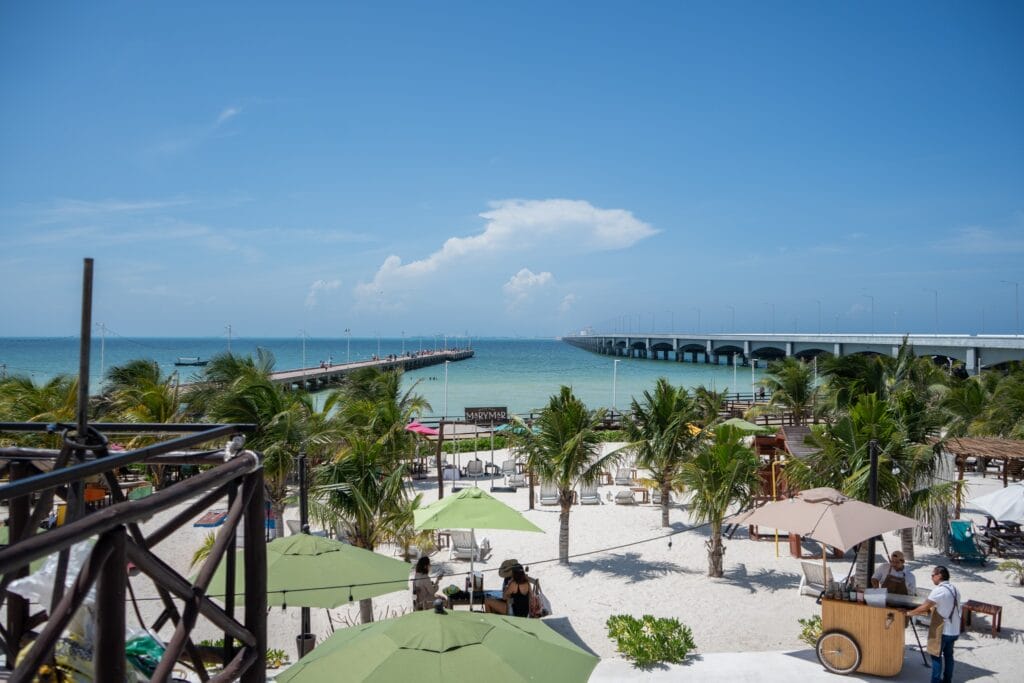
Active options: ATVs, kayaks and lagoons
Travellers who equate relaxing with rusting have options too. The most distinctive is an ATV excursion into the coastal backcountry: rides from the Progreso area cross dunes and scrub to abandoned henequen-era haciendas and ghost settlements, cool off in a lagoon, and typically finish at a beach club — GetYourGuide's ATV ghost-town excursion is a representative itinerary, and Viator's Progreso page carries the comparable active options. Expect dust, sun and a safety briefing; closed shoes matter more than courage.
Water sports cluster around the beach clubs: kayaks and paddleboards come with many day passes, kitesurfing schools operate along this coast in season, and the shallow, flat water makes the Gulf side forgiving for beginners. If your idea of history is a working fishing fleet rather than a pyramid, boat trips out of the port and estuary cruises fill that niche too — the same marketplaces list them beside the ATV tours.
What genuinely does not fit a cruise day
Two famous names deserve an honest warning rather than a booking link at the top of your list.
Las Coloradas, the full-scale pink-lake district on the remote north coast, lies two and a half to three hours from Progreso each way. Cruise-day tours exist, but they consume the entire call and leave nothing for weather or traffic delays. If the pink lakes are a priority, they belong on a land-based itinerary — our Las Coloradas guide explains why the light and the flamingos reward an overnight stay nearby.
Uxmal, the Puuc-hills masterpiece, sits roughly two and a quarter hours inland by current roads. It is a superb site — arguably the most elegant architecture in the Maya world — but the same math applies: a five-hour round trip for a two-hour visit only works when your ship practically lives in port. File it for a Mérida-based trip instead; the Uxmal tours on GetYourGuide and Viator's Uxmal listings are built around overnight travellers, not cruise clocks.
The pattern generalises: from a cruise port, the best excursion is rarely the most famous one — it is the best one that returns you to the terminal with an hour to spare.
Getting around independently
Independent travellers from this port have a workable, if unglamorous, toolkit:
- Taxis gather at the shore-side terminal and around the malecón. Fares to town are short hops; fares inland (Mérida, Dzibilchaltún) should be negotiated as round trips with waiting time included, agreed before departure.
- Colectivos — shared vans — run frequently between Progreso and Mérida along the highway from stops near the market streets, costing a fraction of a taxi. They leave when full, stop where flagged, and expect basic Spanish.
- Buses link the two cities comfortably for a few pesos' more than the colectivo; the Progreso bus station sits a few blocks inland from the pier area.
- Rental cars make little sense on a single port day — paperwork and pickup consume the morning — but they shine if you extend your stay.
- Walking covers all of central Progreso once the shuttle has delivered you; the town is flat, compact and oriented to the beach.
Whatever the mode, keep one rule sacred: know your last-shuttle time, add margin, and let every return plan bend around it.
Extending your stay before or after the cruise
A growing number of Gulf-coast cruises begin or end near enough to the Yucatán to justify a night or two here, and both natural bases reward it.
Progreso suits travellers who want to decompress by the water: a long beach walk, seafood lunches, flamingo viewpoints east of town and low-key evenings. It is a working port town rather than a resort strip, which is precisely its charm.
Mérida suits travellers who want culture first: museums, plazas, Yucatecan food culture and easy day trips to Uxmal or the cenote belt. It is forty minutes inland and works beautifully either side of a sailing.
Compare stays in Progreso on Booking.com · Progreso hotels on Trip.com, or in the capital via Mérida on Booking.com · Mérida hotels on Trip.com. Book refundable rates if your sailing date could shift.
Practical tips for the day ashore
- Carry pesos in small bills. US dollars are accepted at many tourist-oriented spots, but change comes in pesos and market vendors may not take cards at all. ATMs cluster in central Progreso.
- Sun discipline is the real itinerary. Hat, high-SPF sunscreen for land, and remember that cenotes ban sunscreen in the water entirely — swim before you lotion up.
- Hydration is not optional. The combination of sun, wind and walking deceives people; drink more than feels necessary, especially away from the coast.
- English thins out quickly beyond the terminal strip. A translation app and a few Spanish courtesies go far, particularly in markets.
- Safety is straightforward. Yucatán state consistently carries Mexico's lowest US State Department advisory level ("exercise normal precautions"), and the cruise zone is well-policed. Normal urban awareness applies; so does watching your step on uneven sidewalks.
- Accessibility reality: the pier shuttle and flat malecón make the town side very manageable at a slower pace, but archaeological sites involve steps, grass and stone that were built long before wheels. Beach-club days are the most accessible excursion category.
- Season shapes everything. The cruise calendar peaks November through April, when heat eases and rain is rare; summer calls are hot and humid with brief violent downpours. Whatever the month, mornings are the best hours anywhere inland.
FAQ
Is Progreso a tender port? No. Ships dock at the pier head, and a free shuttle bus carries passengers along the roughly four-mile pier to the shore-side terminal. You never walk the causeway, but you do ride it twice.
Can you walk into town from the ship? Not from the ship — the pier's length makes walking prohibited. Once the shuttle drops you at the shore side, central Progreso, the malecón and the public beach are all within a few minutes on foot.
Is Chichén Itzá realistic from a cruise call? Yes, when your ship arrives early and sails late: expect roughly two to two-and-a-half hours each way plus two hours at the site. If your promised return lands inside your safety buffer, choose Dzibilchaltún, Mérida or a coastal combo instead.
Do I need Mexican pesos? Pesos are strongly preferred outside the largest tourist venues, and small bills smooth every transaction. Cards work at established businesses; dollars get grudging acceptance and worse exchange rates.
Are the beaches swimmable? Generally yes — wide sand, shallow calm water. Occasional seaweed influxes and scattered rock shift with weather and season, which is why many regulars pack cheap water shoes.
What should I do if my ship only stays half a day? Stay local: the malecón loop, a palapa lunch, El Corchito by taxi and an afternoon on the sand fill a short call without ever putting the pier shuttle between you and the ship.
The bottom line
If you take one recommendation from this guide: match the excursion to your actual hours in port, not to the brochure's superlatives. On a long day, Chichén Itzá earns its drive. On a normal one, Dzibilchaltún with a Cenote Xlacah swim, or a coastal combo ending at El Corchito, delivers more Yucatán per hour than any coach sprint — and on every day, the beach at the foot of the pier is the fallback that never fails. Book whichever option states its return time plainly, guard your last-shuttle buffer, and let Progreso do what it does best: put the Maya world and the Gulf in the same unhurried day.