Printable guide
Progreso Vacation Rentals: Beach Houses, Condos and Booking Advice
Updated
A practical guide to vacation rentals in Progreso, Yucatán, including the Traditional Malecón, Centro, Chicxulub Puerto, Chelem and Chuburná Puerto, with advice on transport, seasons, pools, air-conditioning and booking.

Progreso and the coastal communities around it have a broad mix of vacation rentals, from apartments a few blocks behind the beach to large houses with pools facing the Gulf of Mexico.
The important decision is not simply which property looks nicest in the photographs. Where you stay along the coast changes the trip.
A condo close to Progreso's Traditional Malecón works well if you want restaurants, the beach and everyday services within walking distance. Chicxulub Puerto suits travelers who want more residential surroundings without going too far from town. Chelem and Chuburná Puerto are better for longer stays, groups and families who value a house and outdoor space more than being able to walk to a large choice of restaurants.
Transport matters just as much. Central Progreso is easy without a car. Once you move into the coastal villages, having a rental car makes everyday life considerably easier.
This guide compares the main areas and explains the practical details worth checking before you book.
Quick answer: where should you stay?
| Area | Good for | Main trade-off |
|---|---|---|
| Traditional Malecón | First visits, short stays, restaurants, car-free trips | Busier, especially on weekends and cruise days |
| Centro | Value, longer stays, local services | Usually several blocks from the beach |
| International Malecón and east Progreso | Seafront walks, quieter surroundings close to town | Less central for restaurants |
| Chicxulub Puerto | Families, beach houses, residential stays | A car or taxis make the stay easier |
| Chelem | Longer stays, houses with pools, village atmosphere | Smaller restaurant and shopping selection |
| Chuburná Puerto | Quiet beach stays, groups, self-catering | Car strongly recommended |
For a first trip of a few nights, central Progreso is usually the easiest choice.
For a week with children or a group of friends, look at Chicxulub Puerto or Chelem.
For a quiet longer stay where you are happy to cook, drive and spend most of your time around the house and beach, Chuburná Puerto becomes much more appealing.
Understanding Progreso's waterfront
It helps to understand that Progreso has more than one malecón.
The Traditional Malecón is the established central waterfront beside the town beach and close to the fiscal pier. This is the section most visitors associate with Progreso: restaurants, beach clubs, hotels, vendors and easy access into Centro.
The International Malecón, farther east, is a newer waterfront extension with recreation areas and a more open feel.
If a rental advertises itself simply as being "near the Malecón," check the map rather than assuming it is beside the central restaurant strip. A property toward the International Malecón can still have an excellent location, but it offers a different experience.
For more on the waterfront itself, see our guide to the Progreso Malecón.
Traditional Malecón: easiest for a first visit
 Progreso's long municipal pier reaching into the Gulf of Mexico, seen from the town beach
For a short stay, the central waterfront is difficult to beat for convenience.
You can walk to the beach in the morning, find restaurants without planning transport, reach pharmacies and shops in Centro, and return to the rental during the hottest part of the afternoon.
That matters more than it sounds. A beachfront house several kilometres outside town may look more appealing online, but a central apartment can produce an easier holiday if you plan to eat out most evenings.
The Traditional Malecón is also the most practical option for travelers arriving without a car.
The compromise is activity. Progreso is not a secluded resort town. It is a working port, a popular weekend beach destination for Mérida residents and a cruise destination. Central streets can become busy when a ship is in port and on Mexican holiday weekends.
Restaurants and music along the waterfront can also make some apartments noisier than their photographs suggest.
If sleep matters, look at the most recent guest reviews and check where the bedrooms are positioned. A sea-view living room with bedrooms facing a quieter rear street can be a better arrangement than having every room directly above the waterfront.
Centro: practical and usually better value
Move several blocks inland and the character changes quickly.
Centro is where you find Progreso's market, everyday restaurants, pharmacies, shops, banks and ordinary residential streets. Vacation rentals here tend to be apartments and town houses rather than large beachfront properties.
This area works particularly well if the beach is part of your trip rather than the entire reason for it.
You can walk to the waterfront from much of central Progreso, but you also have easier access to everyday services and transport.
When comparing properties, pay attention to the actual walking distance rather than descriptions such as "minutes from the beach." Ten minutes may be perfectly reasonable in the morning and much less attractive at two in the afternoon in Yucatán heat.
Air-conditioning is another important check. Confirm which rooms have AC rather than assuming the entire property is cooled.
For a couple spending three or four days exploring Progreso and using it as a base for nearby trips, a good Centro apartment can be more useful than paying extra simply to see the Gulf from the balcony.
International Malecón and east Progreso
East of the traditional waterfront, Progreso becomes progressively more residential.
The International Malecón gives this part of town its own seafront focus, while still keeping you close enough to central Progreso for restaurants and services.
This area can work well for travelers who want the waterfront but would rather not be directly in the busiest part of town.
Check distances carefully, however. "East Progreso" can describe anything from an easy walk from the Traditional Malecón to a property already approaching Chicxulub Puerto.
A few kilometres make very little difference in a car and a considerable difference on foot.
Chicxulub Puerto: beach-house territory without going too remote
 A beachfront house on the coast at Chicxulub Puerto, northeast of Progreso
Continue east and you reach Chicxulub Puerto.
This is one of the most useful alternatives to staying in Progreso itself. It feels more residential, has a long beachfront and carries a substantial stock of houses and apartments used by both local families and visitors.
Chicxulub also has its own basic infrastructure. You are not moving to an isolated strip of holiday homes: there are local shops, restaurants and a supermarket for everyday purchases.
Progreso still has the broader choice, so a car remains useful for larger grocery runs, restaurant nights and exploring farther along the coast.
For families, Chicxulub can be a particularly good compromise. You can find larger properties, pools and quieter streets while remaining reasonably close to Progreso.
The sea along this part of the coast is generally shallow, but conditions can change with wind, nortes and tropical weather. Treat it as a natural beach rather than a swimming pool, especially with young children.
If you are booking a beachfront house, ask whether there is direct sand access or whether a road, wall or neighbouring property sits between the house and the beach. Listing photographs can make those differences difficult to judge.
GuideChicxulub Puerto Guide: Beach, Pier, Crater History & Day Trip TipsChicxulub Puerto is a small Gulf‑coast town east of Progreso and north of Mérida, best known for its quiet pier, local seafood and its proximity to the Chicxulub impact‑crater story. The town has no entrance fee; the beach, pier and small restaurants are free to use. Opening hours are not specified, but services such as food stalls and the pier are available throughout the day. Getting there is easiest by rental car: drive north from Mérida to Progreso and continue east along the coast, allowing flexible timing for a sunrise walk or a sunset lunch. A private driver or a combination of bus/colectivo to Progreso followed by a taxi eastward are also possible, though rideshare return options can be unreliable. Visitors typically spend one to three hours walking the pier, snapping photos of the giant letters and monuments, and enjoying a brief beach break or seafood snack. A half‑day (about 3–4 hours including travel) is sufficient; a full day can be built by adding the Meteorite Museum in Progreso or other nearby coastal stops. Expect a modest, local beach with pale Gulf water, occasional seaweed after storms, and limited parking that fills up on weekends, so arrive early. Bring small‑bill cash because many stalls do not take cards and signal can be spotty. Early morning offers cooler weather and easier parking; late afternoon provides gentler light for walks. The water is swimmable when calm, but check conditions, watch for rocks and shells, and consider water shoes. The best months are November through March, while weekdays are quieter than weekends or holiday periods.Open
Chelem: good for a slower week on the coast
 Chelem beach on the Yucatán coast
West of Progreso, beyond Yucalpetén, Chelem has become a well-established option for vacation houses and longer coastal stays.
It is still a functioning village rather than a resort development. There are local shops, basic supermarkets, restaurants and everyday services, but the choice is much smaller than in Progreso.
That distinction makes Chelem particularly good for travelers who want to live at the rental rather than simply sleep there.
A house with a kitchen, shaded terrace and pool can work very well for a family staying a week. You can have breakfast at home, spend the morning on the beach, return during the heat and drive into Progreso when you want more choice for dinner.
For a two-night trip built around restaurants and sightseeing, central Progreso is usually easier.
For two weeks with books, children, groceries and nowhere urgent to be, Chelem begins to make much more sense.
A rental car is strongly recommended even though local transport exists. It gives you far more freedom for groceries, restaurants and day trips and removes the need to organize taxis every time you want to leave the village.
See our Chelem guide if you are considering staying there rather than Progreso itself.
GuideChelem, Yucatán: Complete Travel Guide to the Beach and MangrovesA practical guide to Chelem, Yucatán: how to reach this fishing village from Mérida and Progreso, what to do on the Gulf beach, how to explore the lagoon and mangroves, and when to stay overnight.Open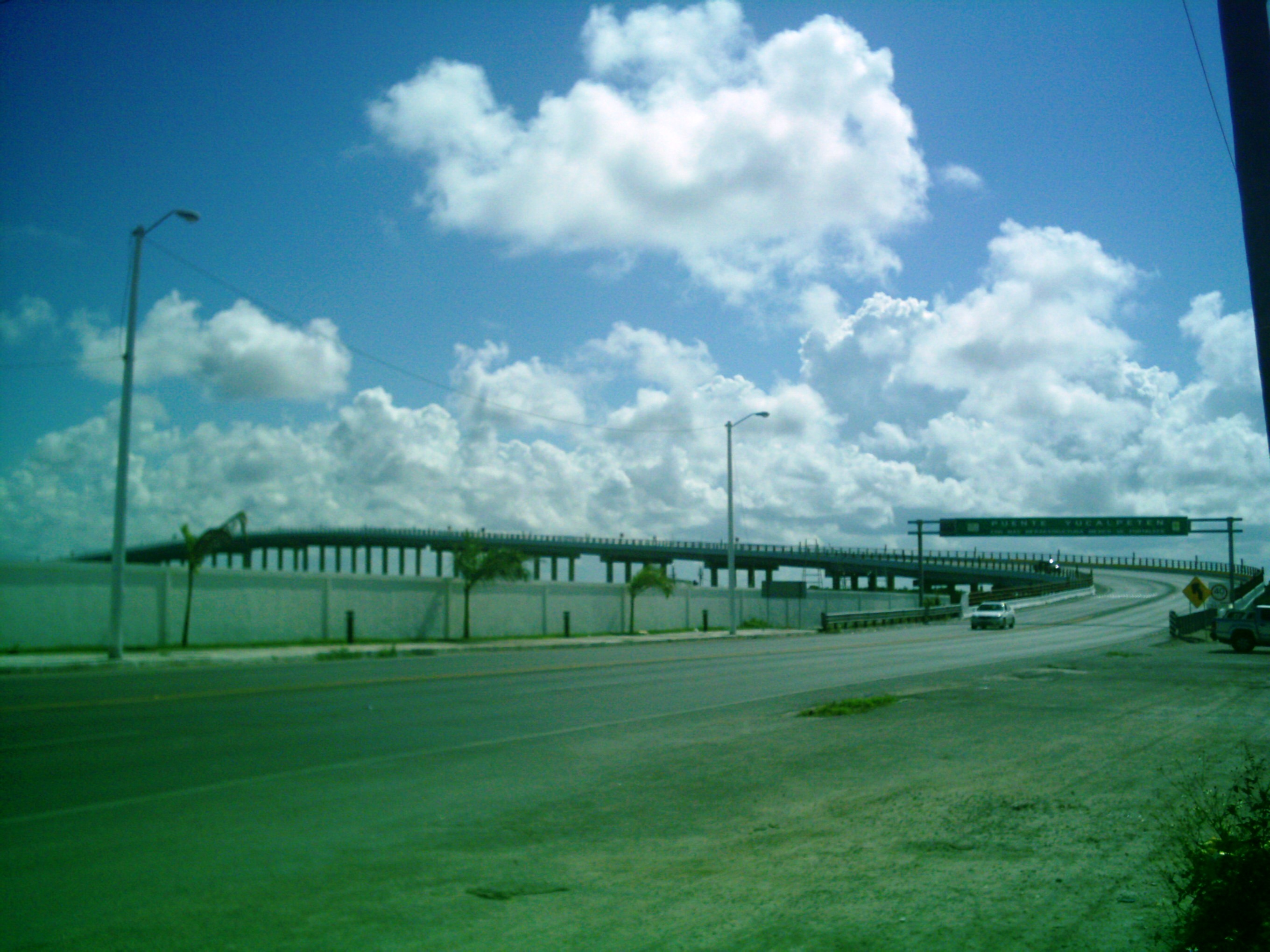
Chuburná Puerto: quieter and more self-contained
Continue west from Chelem and you reach Chuburná Puerto.
This is the quieter choice.
There are local businesses and places to eat, so you are not completely isolated, but travelers should expect fewer services than in Chelem and considerably fewer than in Progreso.
That can be exactly the appeal.
If the plan is to rent a larger house, buy groceries, spend long stretches around the pool or beach and drive when you want to go elsewhere, Chuburná can work very well.
It is less suitable if you want a holiday built around walking out each evening and choosing between several restaurants.
A car is the simplest solution here. Do your larger grocery shop in Progreso, use village stores when you need basics and treat the house as a destination in its own right.
GuideChuburná Puerto Guide: The Town, Coast, Las Dunas and Las IslasPlan a visit to Chuburná Puerto, a quiet fishing town west of Progreso with broad Gulf beaches, coastal dunes, mangrove waterways and boat trips to the shallow-water stops known locally as Las Islas.Open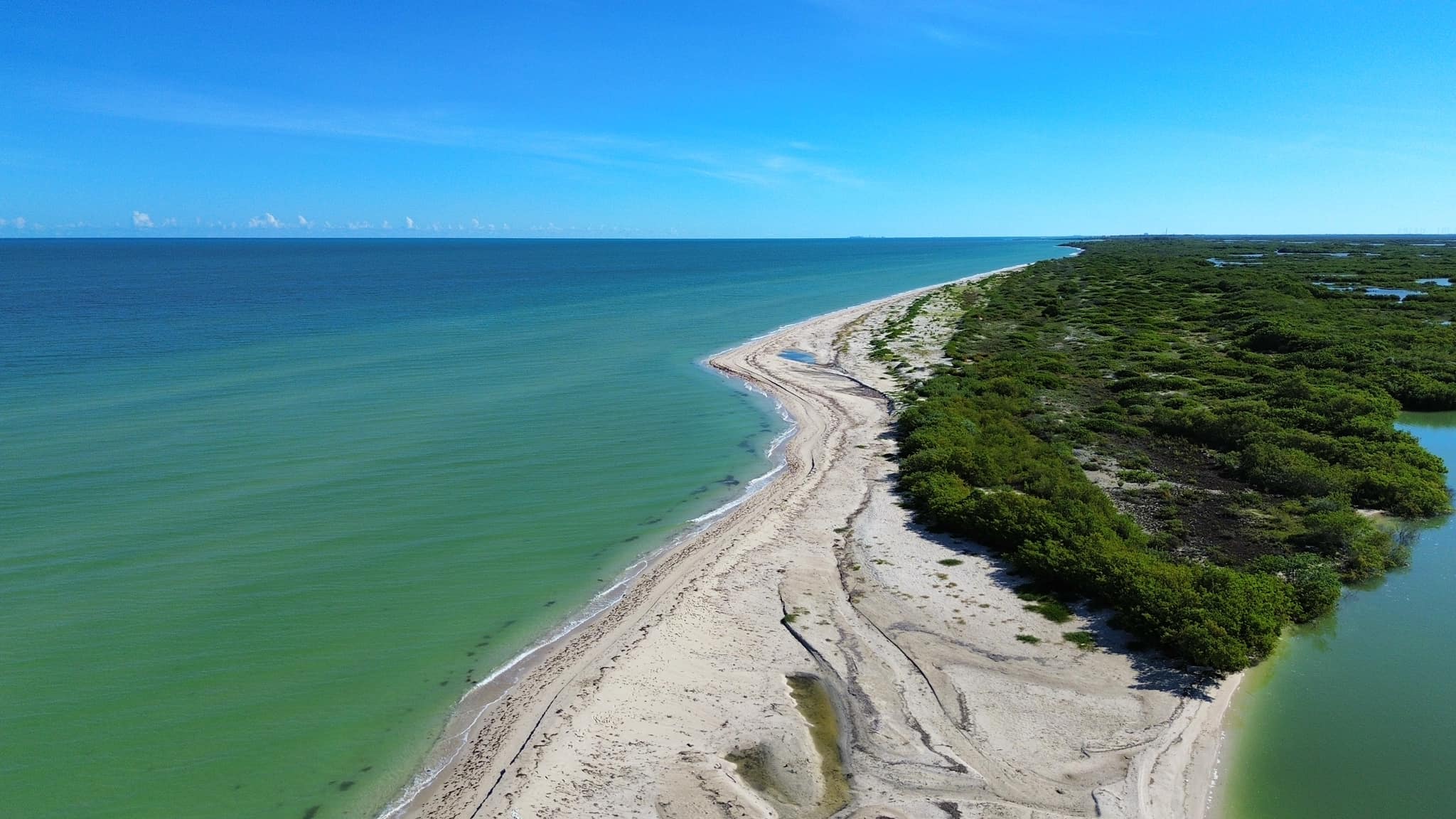
Yucalpetén: useful for specific trips
Between Progreso and Chelem sits Yucalpetén, centered on its sheltered harbour and marina activities.
Rentals appear around this area, but location matters greatly. Some properties offer convenient road access toward both Progreso and Chelem; others are positioned around working harbour infrastructure rather than a traditional beach setting.
This can suit anglers, boaters or travelers who specifically want access to the marina.
For a straightforward beach holiday, most first-time visitors will find Progreso, Chicxulub or Chelem easier to understand and compare.
What to check before booking
A good coastal rental needs to work in real life, not only in photographs.
Salt, heat, humidity and heavy seasonal use are hard on properties. A recently reviewed, carefully maintained house is worth more than a spectacular listing with old photographs.
Air-conditioning
Check exactly which rooms have air-conditioning.
Many coastal houses use individual mini-split units rather than central AC. It is common for bedrooms to be cooled while kitchens, hallways and living areas rely on fans and natural ventilation.
That can be perfectly comfortable if you know what you are booking.
For longer rentals, also check whether electricity is included without restrictions. Some monthly arrangements use an electricity allowance or charge high usage separately.
Do not assume.
Water system
Homes in and around Progreso are served by local water infrastructure, but individual houses commonly use storage tanks, cisterns and pumps to maintain supply and pressure.
What matters to a guest is whether the system works reliably.
Look for recent reviews mentioning shower pressure and water outages. If you are considering a longer stay, ask how the property's pump and storage system work and who you contact if something fails.
Pool
If the listing says "private pool," confirm that it belongs only to your unit.
In apartment developments, pools may be shared even when photographs make them look connected to one property.
Families with small children should also check whether the pool is physically separated from the house or terrace by a gate or barrier.
Do not assume a pool is heated. Most are not.
Bedrooms
"Sleeps eight" does not mean four private bedrooms.
Look at the bed configuration carefully. Sofa beds, bunk beds and open mezzanines can turn a comfortable four-person property into an ambitious eight-person one.
For groups, count actual bedrooms and bathrooms before looking at the advertised maximum occupancy.
Internet
If you need to work remotely, ask for recent speed information rather than relying on "Wi-Fi included."
Internet service in populated parts of the Progreso coast can be perfectly suitable for remote work, but the quality of the router and the individual property installation matters.
A fast connection in the living room is less useful if the signal disappears in the bedroom you planned to use as an office.
Parking
Central Progreso can become busy on weekends and holidays.
If you are renting a car, find out whether the property has private parking, a driveway or only street parking.
This matters less in Chelem or Chuburná, where many houses have their own space, but it is still worth confirming.
Recent condition
Read the newest reviews first.
Coastal buildings age quickly. Salt attacks metalwork, AC equipment works hard and outdoor furniture can deteriorate between seasons.
A property that received excellent reviews three years ago may not be the same property today.
Recent comments about cleanliness, maintenance and host responsiveness are more useful than a long-term average score.
Sargassum: ask about current conditions, not the calendar
 Sargassum seaweed washed up on a Progreso beach
Sargassum can reach the Yucatán coast, but Progreso does not follow a simple calendar where one group of months is always clear and another is always affected.
Wind, currents and individual weather systems can change conditions quickly.
That is important when choosing a beachfront rental.
A house can have a beautiful beach for much of the year and then experience a substantial arrival of seaweed. Another stretch of the coast may be much cleaner at the same time.
Municipal crews carry out beach-cleaning work, particularly in heavily used areas, but conditions and cleanup capacity differ along the coast.
The useful question is therefore not, "Is July a sargassum month?"
Ask your host:
- What does the beach look like now?
- Has sargassum been accumulating recently?
- Is this stretch regularly cleaned?
- Is there another nearby beach you would use if conditions change?
Recent local conditions are much more useful than a photograph taken when the property was first listed.
Weather and hurricane season
The Atlantic hurricane season runs from June through November.
A direct hurricane impact is not something most Progreso visitors will experience, but tropical systems elsewhere in the Gulf or Caribbean can still bring heavy rain, strong wind, rough seas and changes to transport.
For trips during the season, flexible booking conditions and appropriate travel insurance are sensible.
Winter generally brings more comfortable temperatures for walking and outdoor sightseeing, while summer is hotter and is particularly popular with families from Mérida spending time on the coast.
Christmas, New Year, Semana Santa and Mexican school-holiday periods can all produce higher demand.
Rather than relying on a fixed "high-season" formula, compare prices for your actual dates.
Getting from Mérida to Progreso
Progreso is straightforward to reach from Mérida.
By car, the journey is normally around 40 minutes depending on where you start in the city and current traffic. The highway is direct and does not require a toll.
If you are staying in central Progreso, a car is optional.
AutoProgreso operates the regular Mérida–Progreso bus service, with departures from Mérida Centro around Calle 62 between Calles 65 and 67. It is a practical option for travelers with manageable luggage who are staying near Centro or the Malecón.
Check the current timetable close to your travel date rather than planning around an old published schedule.
For families, groups or travelers arriving at Mérida airport with several bags, a pre-arranged private transfer can be easier, particularly if the rental is in Chicxulub, Chelem or Chuburná rather than central Progreso.
If you want help arranging the journey, Yucatán Guide can also help you compare a private transfer with renting a car for the stay.
Do you need a car?
The answer depends almost entirely on where you book.
Central Progreso
Usually no.
If you stay around the Traditional Malecón or Centro, you can walk to restaurants, shops and the beach. Taxis cover local journeys and AutoProgreso connects the town with Mérida.
Chicxulub Puerto
Not absolutely, but useful.
You can manage with taxis and local services, but a car makes supermarket runs, restaurant nights and trips into Progreso considerably easier.
GuideChicxulub Puerto Guide: Beach, Pier, Crater History & Day Trip TipsChicxulub Puerto is a small Gulf‑coast town east of Progreso and north of Mérida, best known for its quiet pier, local seafood and its proximity to the Chicxulub impact‑crater story. The town has no entrance fee; the beach, pier and small restaurants are free to use. Opening hours are not specified, but services such as food stalls and the pier are available throughout the day. Getting there is easiest by rental car: drive north from Mérida to Progreso and continue east along the coast, allowing flexible timing for a sunrise walk or a sunset lunch. A private driver or a combination of bus/colectivo to Progreso followed by a taxi eastward are also possible, though rideshare return options can be unreliable. Visitors typically spend one to three hours walking the pier, snapping photos of the giant letters and monuments, and enjoying a brief beach break or seafood snack. A half‑day (about 3–4 hours including travel) is sufficient; a full day can be built by adding the Meteorite Museum in Progreso or other nearby coastal stops. Expect a modest, local beach with pale Gulf water, occasional seaweed after storms, and limited parking that fills up on weekends, so arrive early. Bring small‑bill cash because many stalls do not take cards and signal can be spotty. Early morning offers cooler weather and easier parking; late afternoon provides gentler light for walks. The water is swimmable when calm, but check conditions, watch for rocks and shells, and consider water shoes. The best months are November through March, while weekdays are quieter than weekends or holiday periods.OpenChelem
Recommended.
There are enough village services for everyday needs, but having a car gives you much more flexibility.
GuideChelem, Yucatán: Complete Travel Guide to the Beach and MangrovesA practical guide to Chelem, Yucatán: how to reach this fishing village from Mérida and Progreso, what to do on the Gulf beach, how to explore the lagoon and mangroves, and when to stay overnight.OpenChuburná Puerto
Strongly recommended.
The attraction is partly the quieter location. A car lets you enjoy that quiet without feeling stranded by it.
GuideChuburná Puerto Guide: The Town, Coast, Las Dunas and Las IslasPlan a visit to Chuburná Puerto, a quiet fishing town west of Progreso with broad Gulf beaches, coastal dunes, mangrove waterways and boat trips to the shallow-water stops known locally as Las Islas.OpenGrocery shopping and drinking water
Progreso has the broadest grocery choice in the area, making it the logical place for a large shop if you are staying in one of the villages.
Chicxulub Puerto and Chelem also have supermarkets and local stores suitable for everyday groceries. Chuburná has local shops for basics, but visitors planning a longer self-catering stay may still prefer to stock up in Progreso.
Drinking water is commonly bought in 20-litre garrafones.
Ask your host whether the property includes a full bottle when you arrive and how replacements are normally handled. This is particularly useful if you check in late.
Where can you explore from Progreso?
A rental on the coast can also work as a base for several nearby trips.
El Corchito
The mangrove reserve of El Corchito is immediately outside Progreso and easy to combine with a beach day.
GuideEl Corchito Guide: Cenotes, Mangroves and Raccoons Near ProgresoEl Corchito is a cooperatively managed ecological reserve hidden in the mangroves just outside Progreso. Three freshwater cenotes, wild raccoons and a quiet boat ride through the wetlands make it a worthwhile half-day trip from Mérida or the coast.OpenDzibilchaltún
Dzibilchaltún lies inland between Mérida and Progreso, making it one of the easier archaeological sites to combine with a coastal stay when access and opening arrangements permit.
GuideDzibilchaltún Guide: Ruins, Museo Ichkaantijoo and Visiting from MéridaDzibilchaltún is an ancient Maya archaeological site situated just north of Mérida, notable for its unique astronomical observatory and a cenote that can be swum in after touring the ruins. The entry fee is $65 MXN per person and the site is open daily from 8:00 AM to 4:30 PM. Guided tours are offered in both Spanish and English, though the article does not specify their cost or schedule. Visitors typically arrive by car or bus from Mérida; the short distance makes a half‑day visit sufficient to see the main attractions. The experience includes walking the Sacbe, an ancient Maya road, exploring the Temple of the Seven Dolls—famous for its equinox light display—visiting the on‑site museum, and swimming in the Sacred Cenote Xlacah. The best time to explore is early in the morning when temperatures are cooler, which also helps avoid the larger crowds that arrive later. Bring swimwear for the cenote and consider joining an English‑language guide if you want detailed historical context. Sun protection and water are advisable, as the site has limited shade along the pathways.Open
Mérida
Staying in Progreso does not prevent you from visiting Mérida. The road connection is easy, and AutoProgreso makes day visits possible without a car.
If several Mérida nights are central to your plans, however, it usually makes more sense to divide the trip between the city and coast than commute repeatedly.
GuideMérida Travel Guide: What to Do, Where to Stay and How to Plan Your TripMérida is the capital of the Mexican state of Yucatán, located in the northwest part of the peninsula and known as “La Ciudad Blanca” for its bright limestone architecture. The city is served by Mérida International Airport (MID), a 15‑25 minute drive to the historic centre, and by ADO bus terminals that connect to Cancún, Valladolid, Campeche and other destinations; rideshare services such as Uber and inDrive operate throughout town, while a car is only needed for longer day trips to sites like Uxmal or Celestún. The guide suggests an ideal stay of three to five nights in the city, with day trips ranging from 45 to 90 minutes. No specific entry fees are listed, but visitors should budget for accommodation, meals, transport and optional tours. The article notes that tap water is not potable, so purified water should be purchased, and that most restaurants expect a 10‑15 % tip. Travelers can expect a walkable historic centre, Sunday “bici‑ruta” streets closed to cars, lively plazas with marimba music, and a culinary scene that ranges from market breakfasts to fine‑dining in restored mansions. The climate varies: December‑March offers the mildest weather, April‑May is very hot, June‑October brings rain and humidity, and November is a transition period. Recommended packing includes breathable clothing, a wide‑brim hat, reef‑safe sunscreen (to be rinsed before entering cenotes), comfortable walking shoes and insect repellent. Tips include planning activities for early mornings and evenings to avoid midday heat, using shaded arcades in the centre, staying hydrated, and bringing a reusable water bottle with electrolytes. Modest dress is advised for churches and cultural venues, and a small fan or portable cooler can make the hot season more comfortable.Open
Celestún
Celestún is possible as a separate day trip by car, particularly for travelers interested in the reserve and boat excursions, but it is far enough away that it deserves its own day rather than being treated as a quick outing.
GuideCelestún Travel Guide: Flamingos, Boat Tours, Beach & Things to DoCelestún is a working fishing town on the far western edge of Yucatán, where a wide Gulf beach meets the Ría Celestún Biosphere Reserve, famous for its flamingo habitat. The destination is about 90–110 km west of Mérida and requires roughly 1.5–2 hours each way by car; a rental car, private driver, organized tour or public bus can be used, with the bus being the cheapest but less flexible. A full‑day visit from Mérida is typical, beginning with a morning boat tour of the mangrove channels and reserve, followed by a long seafood lunch under a palapa and optional beach time. Boat tours are priced per boat rather than per person, include life jackets and usually cover flamingo viewing areas, mangrove passages and occasional stops at freshwater springs; English‑speaking guides are not guaranteed, so confirm in advance. The best flamingo season is November to February, especially December to February, though sightings vary daily. Visitors should expect a wide, soft‑sand beach with calm but sometimes murky water, a relaxed malecón with palapa restaurants, and more locals on weekends and holidays. Bring cash for small vendors, arrive early for cooler weather and better boat‑tour timing, and respect wildlife distance as flamingos are sensitive to close approaches.Open
Uxmal and Chichén Itzá
Both can be visited from the coast, but they involve a substantial inland journey.
If archaeology is the main purpose of the trip, Mérida or Valladolid makes a more efficient base. If you are already spending a week at the beach, one long day inland can still work.
GuideUxmal Travel Guide: Ruins, Tickets, Ruta Puuc & How to VisitUxmal is a Puuc‑style Maya archaeological site in the hills southwest of Mérida, Yucatán, best visited as a day trip from the city. The site opens daily from 08:00 to 17:00 with the last entry around 16:00; the combined federal (INAH) and state (CULTUR) ticket costs roughly MXN 500–600 for foreign visitors and must be paid in cash or with an offline card, keeping both receipts. From Mérida the most flexible way to arrive is by car: take highway 261 south toward Muna/Santa Elena and follow the signs to Uxmal, a drive of about 1 hour 15 minutes in light traffic, with a modest parking fee at the entrance. Buses and colectivos also run the route but are slower and less suited to a tight day schedule, while guided tours provide transport, a licensed guide and optional add‑ons such as Kabah or the evening light‑and‑sound show. A typical visit lasts three to four hours, following the suggested circuit of Pyramid of the Magician, Nunnery Quadrangle, Ball Court, Governor’s Palace, House of the Turtles and Dovecote. Climbing is generally prohibited, but the small museum near the gate is included in the ticket price. Visitors should aim to be at the gate at opening to enjoy cooler temperatures and minimal crowds; shade is scarce, so bring a wide‑brimmed hat, high‑SPF sunscreen, at least two liters of water per person and sturdy shoes. Early morning light highlights the Puuc mosaics, while the late‑afternoon sun casts striking shadows on the Dovecote. If attending the night “Ecos de Uxmal” show, bring a light layer, bug spray and a small flashlight. Drones are not allowed and touching carvings is prohibited.Open
When a vacation rental makes sense
Rentals are particularly useful for:
- families who want separate bedrooms
- groups sharing accommodation costs
- travelers staying for a week or longer
- people who prefer making breakfast at home
- travelers who want laundry facilities
- longer winter stays
- groups who want a private pool or outdoor space
They are less compelling for a one-night stop.
Cleaning fees, check-in arrangements and the lack of hotel services can outweigh the extra space when the stay is very short.
If you value daily housekeeping, reception staff, luggage storage and someone immediately available when something stops working, a hotel may suit you better.
See our where to stay in Progreso guide if you are still deciding between hotels and rentals.
Booking platforms and direct rentals
Vacation homes around Progreso appear across Airbnb, Vrbo, Booking.com and local property-management companies.
There is no need to commit to the first platform you search.
Compare the final price, not the headline nightly rate. Cleaning fees, platform charges and taxes can change the order once you reach checkout.
You can compare current apartment and vacation-home availability on Booking.com and check other platforms for houses that do not appear there.
Direct booking can make sense, particularly for repeat visitors and longer stays, but use the same care you would anywhere else. Check the management company's reputation, cancellation terms, payment method and exactly what is included.
For a first booking with an unfamiliar property, the protection and review history of a major platform can be worth paying for.
How long should you stay?
One or two nights: stay centrally. A Malecón or Centro property keeps logistics simple.
Three to five nights: central Progreso or Chicxulub both work well depending on whether you value restaurants or residential space.
One week: Chicxulub or Chelem becomes more attractive, particularly for families and groups.
Two weeks or longer: look closely at Chelem and Chuburná as well as Progreso. At this point kitchens, laundry, parking and comfortable living space matter much more than being beside the busiest part of the Malecón.
The bottom line
Choose the area before choosing the house.
If you want to walk to restaurants, shops and the beach, stay around the Traditional Malecón or Centro.
If you want more space while remaining close to Progreso, look at Chicxulub Puerto.
If the trip is built around a house, pool, beach and slower routine, Chelem offers a useful balance of village services and quieter surroundings.
If you want more peace and are comfortable driving for larger shops and more restaurant choice, consider Chuburná Puerto.
Then check the property itself: bedroom configuration, air-conditioning, electricity terms, pool privacy, water system, internet, parking and the newest guest reviews.
For beachfront stays, ask about current sea and sargassum conditions rather than relying on seasonal assumptions.
That approach is more reliable than choosing whichever listing has the brightest photographs — and it usually leads to a much easier week on the Yucatán coast.