Printable guide
Progreso vs Celestún: Which Beach Town Fits Your Yucatán Trip?
Updated
Progreso and Celestún sit at opposite ends of Yucatán's coast — one is a lively port with pier and services, the other a quiet fishing village wrapped in mangroves. Here's how to choose between them, or combine both into a coastal day.

Progreso and Celestún both draw travellers away from Mérida's inland heat, but they offer fundamentally different coastal experiences. Progreso is a working port town with a long pier, beach clubs, restaurants that serve you at your sand chair, and easy bus access from the city. Celestún is a quieter fishing village wrapped around a mangrove estuary, where the main event is a boat tour through flamingo-filled wetlands and the beach feels like something from a postcard no one has shared yet.
The right choice depends on what you want from a day at the coast. If you are travelling with kids and want calm water, amenities, and zero logistics stress, Progreso is the straightforward pick. If you are willing to drive farther for wildlife, empty beaches, and a slower pace, Celestún delivers something harder to find in Yucatán — and increasingly rare anywhere in coastal Mexico.
The Case for Progreso
 Progreso beach and pier
Progreso sits roughly 30 to 40 minutes north of Mérida, close enough that locals treat it as an extension of the city. The town runs along a long peninsula, with the Gulf of Mexico on one side and the mangrove-lined estuary of Chelem on the other. The defining feature is the pier — at just over 6.5 kilometres, it ranks among the longest in the world. Cruise ships dock at its far end, and a shuttle bus ferries passengers back to shore.
The beach itself is long, flat, and sandy, with shallow water that warms quickly. It is not the turquoise Caribbean you might be picturing. The Gulf side of Yucatán tends toward greenish-brown water, and the bottom can be rocky in places, particularly near the pier. Water shoes help. That said, for families with young children, the gentle slope and lack of strong currents make it manageable.
What Progreso lacks in pristine water, it makes up for in infrastructure. The Malecón — the waterfront promenade that runs along the beach — is lined with restaurants, beach bars, and shops. You can sit under a thatched palapa, order fried fish or a cold beer, and stay there for hours without moving. Vendors sell marquesitas and crafts. There are playgrounds, a carousel on the newer International Malecón, supermarkets, ATMs, pharmacies, and hospitals within reach.
Getting there is straightforward. Buses run regularly from Mérida's central bus terminal and from the Parque de la Mejorada area. The trip takes 30 to 45 minutes depending on traffic and your starting point. Taxis and private drivers charge in the range of 400 to 600 pesos each way, depending on the season and your negotiation. If you are staying in Mérida, Progreso works as a half-day trip — leave in the morning, spend four or five hours on the water, and be back in the city by late afternoon.
Cruise days change the atmosphere. When ships are in port, the beach and Malecón fill with visitors from abroad, vendors get more aggressive, and the town takes on a different energy. If you are not arriving on a cruise, check the port schedule and avoid those days if you want a quieter experience.
The Case for Celestún
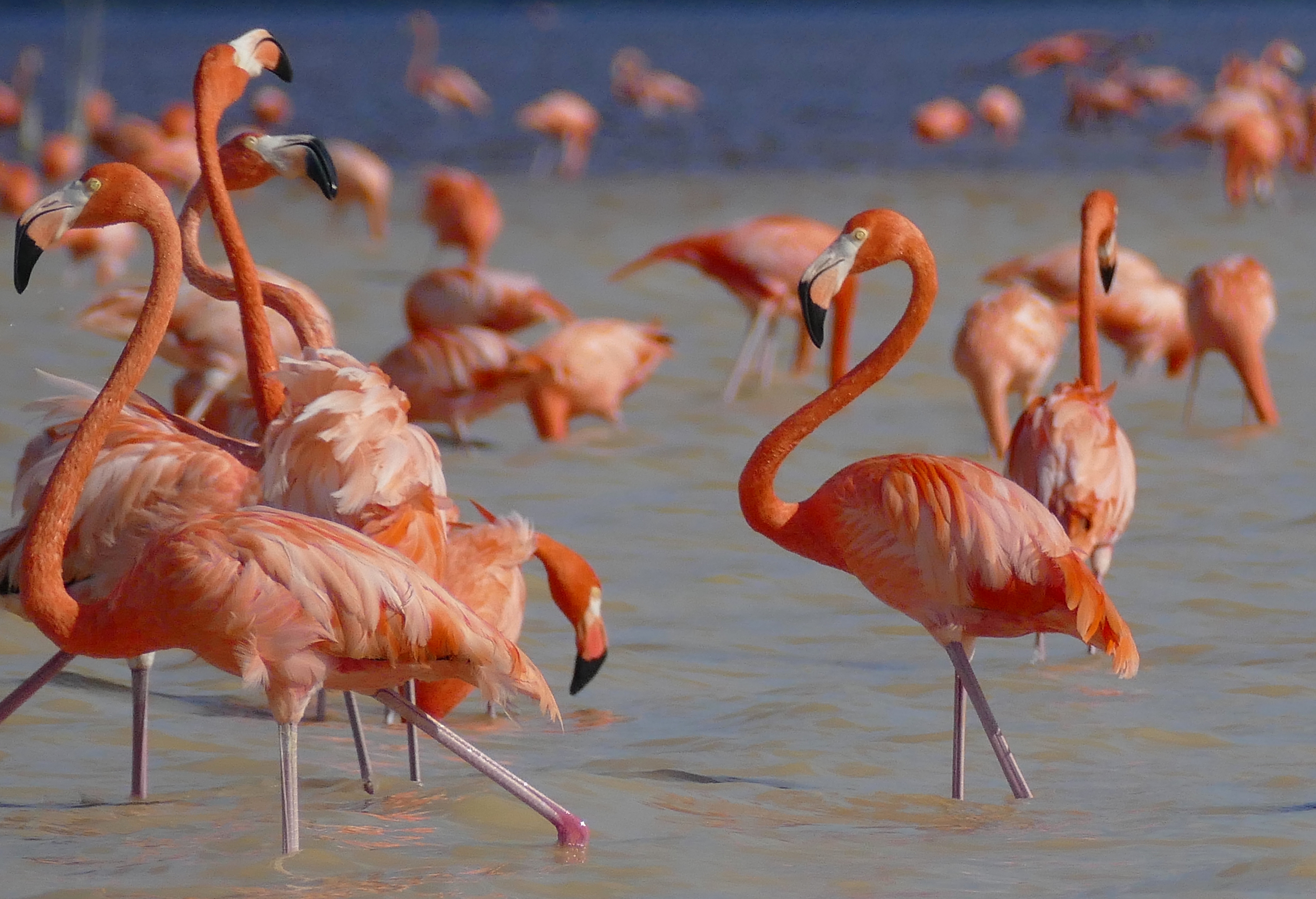 American flamingos in the Celestún Biosphere Reserve
Celestún sits on Yucatán's western coast, about 90 minutes to two hours west of Mérida depending on your pace and route. It is a small fishing village first and a tourist destination second. The town has a few streets, a central square, a malecón that is more modest than Progreso's, and a pace of life that matches the tide.
The draw here is the Ría Celestún Biosphere Reserve — a vast mangrove estuary where freshwater springs meet the Gulf of Mexico. The ecosystem supports over 300 bird species, but the stars are the Caribbean flamingos. Their numbers peak between November and April, when thousands of pink birds feed and nest in the lagoon. You can see them year-round, but the spectacle is at its height in the dry season.
The flamingo boat tour is the core experience. Local guides run small lanchas that carry six to ten passengers through mangrove channels, past freshwater springs, and into the feeding areas. A standard tour lasts about 90 minutes to two hours and costs in the range of 1,800 to 3,000 pesos per boat, depending on the season and group size. You can often split the cost with other visitors. Cash is the norm — cards are rarely accepted for boat tours.
Beyond flamingos, you may see pelicans, herons, roseate spoonbills, frigatebirds, and occasionally crocodiles sunning on mangrove roots. The boat usually stops at a freshwater spring where you can swim — a cool, clear contrast to the warm Gulf water.
The beach at Celestún is separate from the mangrove tour. The town has a long stretch of white sand that faces the Gulf. The water tends to be clearer than Progreso's, and the beach is far less crowded. During Easter week and summer holidays it fills with Mexican families, but for most of the year it is quiet. Seafood restaurants line the shore — ceviche, fried fish, and shrimp dishes are the standard offering.
Getting to Celestún requires a car or a tour. There is no direct bus service comparable to Progreso's frequency. The drive from Mérida takes about 90 minutes via the highway toward Umán and then west on the state road. The road is in good condition and well-signposted. Organised tours from Mérida typically include transport, the boat tour, and sometimes lunch, at a cost that varies by operator and group size. If you are renting a car, Celestún works as a full-day trip — leave early, do the boat tour in the morning when bird activity is highest, eat lunch on the beach, and drive back in the afternoon.
Head-to-Head Comparison
Distance from Mérida: Progreso wins for convenience. At 30 to 40 minutes, it is half the drive of Celestún. If you only have a morning or are travelling with people who do not want a long car ride, Progreso is the easier commitment.
Beach quality: Celestún has the edge. The sand is finer, the water is clearer, and the setting is more scenic. Progreso's beach is functional and long, but it faces the open Gulf and can be affected by seaweed and rocky patches.
Wildlife and nature: Celestún is the clear winner. The flamingo tour is one of the most distinctive wildlife experiences in Yucatán. Progreso has El Corchito, a small ecological reserve with cenotes and mangroves, but it is a side excursion rather than the main event.
Food and drink: Both towns serve excellent seafood, but Progreso has more variety and more options at different price points. Celestún's restaurants are fewer and more seasonal — some close during low season or on weekdays.
Infrastructure and accessibility: Progreso has supermarkets, ATMs, pharmacies, hospitals, and reliable public transport. Celestún has the basics — a few small shops, an ATM that is sometimes out of service, and limited medical facilities. If you need services or are travelling with specific needs, Progreso is the safer bet.
Crowds and atmosphere: Celestún is quieter for most of the year, though it fills during holidays. Progreso is livelier year-round and gets busy on weekends and cruise days. If you want solitude, Celestún is the better choice outside of peak holiday periods.
Family-friendliness: Progreso is easier with young children. The shallow water, short drive, and available amenities make it low-stress. Celestún works for families too, but the boat tour requires patience, the drive is longer, and the services are thinner.
Combining Both in One Day
It is possible to visit both towns in a single long day if you have a car and start early. The route forms a rough triangle: Mérida → Celestún (west) → Progreso (north and east) → Mérida. The total driving is about three hours spread across the day.
Start with the flamingo boat tour in Celestún — aim to be on the water by 8:00 or 9:00 AM when the birds are most active. After the tour, drive east along the coast toward Progreso. The road passes through small towns and past mangroves; the drive takes about an hour and a half. Arrive in Progreso for lunch, spend the afternoon on the beach or walking the Malecón, and drive back to Mérida in the early evening.
This works, but it is a full day with significant driving. If you have two days, spending one in each town is more relaxed and lets you experience both properly.
Practical Notes
Best time to visit: Both towns are most pleasant from November through April, when temperatures are lower and humidity is manageable. Celestún's flamingo numbers peak in this window. Progreso is year-round but can be uncomfortably hot in July and August, when it also fills with domestic tourists.
What to bring: Sunscreen, a hat, water shoes (especially for Progreso's rocky sections), cash in pesos, and insect repellent for Celestún's mangrove areas. Binoculars improve the flamingo tour significantly.
Cash vs card: Progreso has more card-accepting establishments, but cash is still useful for small vendors and beach rentals. Celestún is predominantly cash — do not rely on cards for boat tours or small restaurants.
Where to stay overnight: Progreso has a range of hotels, apartments, and guesthouses at various price points, making it easy to turn a day trip into an overnight stay without much planning. Celestún has a smaller selection — mostly cabañas and a few boutique properties. If you want more accommodation options, Progreso is the easier base. If you prefer a quieter night with fewer lights and sounds, Celestún works but requires booking ahead during peak periods.
Combining with other destinations: Progreso pairs well with a visit to the nearby Xcambo ruins or the pink salt lakes of Xtampu, both accessible as half-day side trips. Celestún combines naturally with a drive through the small towns of the western coast — Maxcanú, Hopelchén, or the route toward Campeche if you are travelling further afield.
Environmental considerations: Both towns sit in ecologically sensitive areas. In Celestún, choose boat guides who respect the flamingo feeding zones and avoid chasing or crowding the birds. In Progreso, be aware that seaweed (sargassum) seasonally affects the beach — this is natural and common across the Gulf coast, but it can impact the swimming experience between April and August. Check recent conditions before booking.
Neither town is objectively better than the other. Progreso is the accessible, amenity-rich beach day that works for almost any traveller. Celestún is the nature-focused escape that rewards the extra drive. Choose based on your priorities, or give yourself two days and do both.