Printable guide
Where to Eat Queso Relleno in Mérida: Restaurants, Cantinas and Yucatecan Classics
Updated
Find real queso relleno in Mérida: which traditional restaurants serve the stuffed Edam ball, why markets are the wrong place to look, how to order it, and how this Dutch-Maya dish became Yucatán's celebration food.

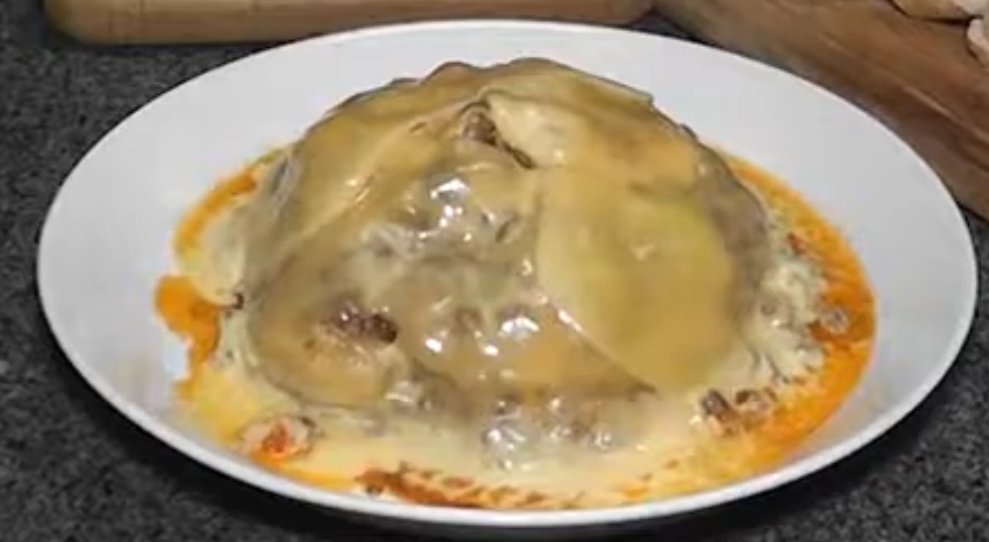
Queso relleno is the dish Yucatecans bring out when there is something to celebrate. A whole ball of Edam cheese — queso de bola, in local vocabulary — is hollowed out, packed with a sweet-spiced pork picadillo studded with raisins, olives, capers, almonds, and hard-boiled egg, then steamed until the rind turns soft and molten. It arrives bathed in two sauces at once: a pale, flour-thickened gravy called k'ool, and a bright tomato sauce, often with habanero somewhere in reach. No other plate on the peninsula tells the region's trading history so clearly. The cheese came from Holland; everything inside it comes from the Maya and mestizo kitchen.
Yet for travelers, queso relleno is strangely easy to miss. Unlike cochinita pibil stacked into morning tacos or panuchos fried at every market comedor, this is not street food and never was. You will not find it on a cart, and you should not go looking for it at breakfast. It belongs to midday and afternoon tables at traditional restaurants, to Sunday family gatherings, and to kitchens that plan a whole day around steaming one cheese correctly. Locals rank it among the most sophisticated dishes of the regional canon — some food writers call it the crown jewel of high Yucatecan cuisine — precisely because of that labor.
This guide sorts out where queso relleno actually fits into a Mérida visit. It explains the dish itself and its two sauces, untangles the difference between queso relleno, relleno negro, and relleno blanco, walks through the settings where the dish genuinely works — traditional dining rooms, a handful of cantinas, and made-to-order family kitchens — and warns you off the places where it disappoints. One geographic note first: Mérida is an inland capital, half an hour from the Gulf. This is a meal of market neighborhoods, plazas, and plain dining rooms arranged on a numbered street grid, not a beachfront scene. Save the coast for another day and eat where the cheese ball is taken seriously.
Quick answer: where should you eat your first queso relleno?
| Setting | Best for | What to expect |
|---|---|---|
| Traditional Yucatecan restaurant | A reliable first taste | Table service, printed menus, the dish prepared daily or to schedule |
| Chef-led cocina yucateca | A refined, contemporary take | Smaller rooms, careful plating, versions alongside modern dishes |
| Cantina botana spread | Grazing through several dishes at once | Rotating complimentary snacks; hearty stews appear on some days |
| Made-to-order or family table | The full ceremonial experience | Whole cheese balls prepared by advance arrangement, often weekends |
| Market comedor | Almost anything except this dish | Fast-fried antojitos dominate; queso relleno is rare and often mediocre |
If you want the shortest possible instruction: book yourself a midday comida at a traditional Yucatecan restaurant and order the queso relleno as your main. That is the setting where the dish has lived for generations, where the steaming is done properly rather than improvised, and where both sauces arrive the way they should. Everything else in this guide refines that decision.
What queso relleno actually is
Start with the shell. The base is a sphere of Edam-style cheese, the waxy red-rinded ball Mexicans call queso de bola. In Yucatán the traditional brand of choice has long been Gallo Azul, a locally familiar label of Dutch-style ball cheese, and cooks speak about particular brands the way bakers talk about flour. The top of the ball is sliced off like a lid, and nearly all of the interior is scraped out, leaving a thin cheese shell — and a bowl of grated cheese that will not be wasted.
The filling is picadillo: ground pork slowly fried with tomato, onion, garlic, sweet pepper, lard, cinnamon, and a splash of vinegar, then enriched with raisins, capers, green olives, chopped hard-boiled egg, sometimes almonds or nuts, and a whisper of nutmeg in some family recipes. The result tastes simultaneously sweet, salty, sour, and savory — the classic Yucatecan balance of old trade goods (dried fruit, capers, spice) folded into a Maya-Spanish kitchen. Cooks pack this picadillo back into the shell, cap the ball, wrap it in cloth or banana leaves, and steam it just long enough for the cheese to soften toward molten without collapsing. Timing is the entire craft. Underdone, the shell resists the fork; overdone, the ball slumps into the broth and the dish is lost.
Then come the two sauces, and both are non-negotiable. The white one is k'ool — you will see it spelled kool, k'ol, or k'óol on menus, and all of them refer to the same thing: a pale gravy thickened with wheat flour or corn masa, built on the broth where the meat cooked, seasoned with epazote, olives, and capers. It is cousin to a bechamel but distinctly local, and it exists independently of this dish — the same k'ool dresses relleno blanco, the cheese-less relative described below. Over or beside the k'ool goes a fried tomato sauce, usually blended with a mild xcatik chile and simmered down until dense. A wedge cut from the ball gets both sauces ladled over it, plus rice and warm tortillas alongside.
Portion logic matters more here than for any other Yucatecan antojito. Restaurants most often serve queso relleno as a wedge cut from a whole ball — generous, rich, and genuinely filling, since the cheese itself carries as much weight as the filling. One wedge with rice is a complete main course; order a starter like sopa de lima before it and pace yourself accordingly. Some kitchens present the entire ball to the table and carve it in front of everyone, which is the festive format families reserve for celebrations. If you are traveling solo or lightly hungry, look for a half portion or share one order between two people — it is one of the few Yucatecan plates where splitting is normal rather than disappointing.
Timing is equally un-Yucatecan compared with the rest of the street-food canon. Panuchos peak in the morning and marquesitas own the evening; queso relleno is comida, the big midday meal, and increasingly dinner at restaurants that hold it through the evening service. Kitchens prepare a limited number of balls per day because each one demands hours between the picadillo, the hollowing, and the steaming. Arrive at prime lunch hours and the dish is routine; arrive at 8 p.m. at a small fonda and it may simply be gone. When something on a menu matters to you this much, eat at Spanish mealtimes.
Queso relleno, relleno negro, and relleno blanco: the family tree
Menus around Mérida list three dishes that share one filling and confuse everyone. Understanding the family tree is worth five minutes, because it turns a bewildering menu into an ordering strategy.
The common ancestor is the picadillo — that sweet-savory ground pork stuffing with raisins, olives, capers, and egg. What changes is what surrounds it.
Queso relleno puts the picadillo inside the cheese shell and bathes everything in white k'ool plus tomato sauce. This is the classic version, and unless a menu says otherwise, this is what you are ordering.
Relleno negro abandons the cheese entirely. Turkey — sometimes with pork — is cooked in a dramatic jet-black sauce built from burnt chile recado, the toasted ancho-and-spice paste that gives the dish its color and its smoky depth. Slices of hard-boiled egg float in the dark broth. It looks alarming to first-time visitors and tastes deeply savory, nothing like the sweetness of queso relleno. It is also far more common than the white version; you will find relleno negro as a taco topping, a panucho garnish, and a full plate all over the city.
Relleno blanco (sometimes listed as quiles rellenos) keeps the picadillo and the two sauces but drops the cheese shell — the stuffing arrives in the white k'ool with tomato sauce over turkey or on its own. Because it skips the most laborious step, it appears slightly more often than full queso relleno, though still far less often than its black sibling. One traditional kitchen south of the centro grid has made serving relleno blanco something of a calling card (verify locally before making a special trip).
There are local variations beyond the big three. Some kitchens tint the dish toward queso relleno negro, folding the burnt-chile recado into the sauces or the filling for a darker, more intense plate — one respected abuela-led restaurant near Paseo de Montejo has become famous for exactly this version. In hunting season and in upscale dining rooms you may encounter queso relleno de venado, the same construction filled with venison picadillo. And the chile x'catic relleno applies the same stuffing to a slender local chile instead of a cheese ball — a lighter way to taste the picadillo if a whole wedge sounds heavy.
A practical ordering plan for a single comida: share one order of queso relleno between two people, add a small relleno negro taco so you can compare the dark and light branches of the family side by side, and let the table argue about which one deserves the crown. Locals hold strong opinions; both camps have a case.
How a Dutch cheese ball became Yucatán's celebration dish
The story of queso relleno begins at sea. Edam cheese — the compact, wax-coated spheres that ships could carry for months without refrigeration — traveled Caribbean trade routes from Holland throughout the colonial era. The strongest documented thread runs through Curaçao and the Dutch Antilles, where the dish now called keshi yena (literally "stuffed cheese" in Papiamento) took shape: the story locals tell there is that plantation households ate the soft interior of imported Edam balls and discarded the rinds, and enslaved cooks reclaimed those rinds, filling them with whatever meat and vegetables were at hand. Keshi yena remains an iconic dish of Aruba and Curaçao today, usually baked rather than steamed, with a spicier, less sweet filling than the Yucatecan version.
 Keshi yena, the stuffed Edam dish of Aruba and Curaçao that shares its origin story with Yucatán's queso relleno
From the islands the idea moved easily along shipping lanes to the Yucatan coast, where queso de bola had already won a permanent place in local affection. The red-waxed rounds resisted heat and humidity better than almost any other dairy, a serious virtue in a peninsula that lacked refrigeration well into the twentieth century, and henequén-era prosperity — the fiber boom that enriched Mérida around the turn of the last century — made imported luxuries routine on the tables of the city's new elite. Older residents still repeat romantic versions in which a shipwrecked cargo of cheeses came ashore and entered local kitchens by luck; charming, but historians treat it as legend rather than record. What is certain is that by the time the region's cookbooks and family recipes stabilized in the nineteenth and early twentieth centuries, the hollowed cheese ball was already festival food.
Food historians who study the regional canon point out that many signature Yucatecan dishes were probably born in rural towns before consolidating in cities like Mérida, Valladolid, and Ticul, and queso relleno fits that pattern. The Maya contribution is structural rather than decorative: the k'ool gravy descends from pre-Hispanic thickened broths, the recados and epazote belong to the peninsula's pantry, and the habit of wrapping foods in leaves and cooking them slowly in steam runs through the entire regional repertoire. The Spanish and Dutch contributions sit on top: pork, wheat flour, olives, capers, raisins, almonds, cinnamon. The dish is mestizaje you can taste with a spoon — which is exactly why Yucatecans treat it as identity food rather than everyday eating.
That status explains a modern reality travelers should plan around. Queso relleno remains a dish of occasions: Sunday lunches that stretch into late afternoon, birthdays, baptisms, homecomings. Families order whole balls days ahead from the cooks they trust. Restaurants institutionalized the tradition so visitors would not have to marry into it, but the celebratory logic survives in portion sizes, prices, and the quiet pride of the dining rooms that do it daily.
Traditional Yucatecan restaurants: where the dish lives
If you take one recommendation from this guide, make it this section. The traditional Yucatecan restaurant is queso relleno's natural habitat — rooms that prepare the picadillo, the k'ool, and the tomato sauce as daily work rather than as a stunt, and where the steamed cheese arrives exactly as a Yucatecan family would send it to the table.
Los Almendros is the institution most visitors meet first. Founded in the early 1960s and famous across Mexico for claiming the invention of poc chuc, the restaurant keeps a deep regional menu, and its live menu lists Queso Relleno de Izamal: Dutch ball cheese stuffed with pork picadillo, spices, raisins, olives, and capers, served in white k'ool and tomato sauce — the full orthodox construction. The name nods to the town often credited with strong versions of the dish. Los Almendros suits travelers who want the classic experience with every comfort intact: printed menus in Spanish and English, table service, room to bring a group, and a dining room accustomed to first-timers asking what everything is. It also runs an "uchbe'n" line of specialties prepared by advance order for celebrations — the made-to-order tradition formalized (ask when reserving if you want a whole ball).
Manjar Blanco approaches the same canon from the other direction: a compact dining room run by chef Miriam Peraza and her team of home-cook grandmothers, cooking regional dishes by hand the way they were made in family kitchens. The kitchen's celebrated version leans toward queso relleno negro, the variant touched with burnt-chile recado, and food writers repeatedly single it out alongside the house lomitos de Valladolid. The restaurant gained international attention through a Netflix appearance, so expect lines at peak hours; going at opening or mid-afternoon makes life easier. If you want to taste how the dish reads when the dark-sauce branch of the family gets hold of it, this is the room.
Cheen Cocina Yucateca, a small chef-led kitchen within walking distance of Paseo de Montejo and the main plaza, represents the younger generation: a short menu of regional standards executed with care, served in a space that feels closer to someone's house than to a restaurant group. Its queso relleno follows the classic template — stuffed queso de bola under the two sauces — and reviewers consistently describe it as one of the more distinctive plates in town. This is a good choice when you want the dish without committing to a large traditional dining room, or when your travel companions want modern preparations while you chase the classics.
A few practical notes apply across all three. Portions are substantial; sharing one order is normal and nobody will blink. Prices sit above street-food level but below fine-dining level — expect a main-course plate in line with other regional specialties on the same menu, and check the current carta rather than trusting any number printed years ago. Service at lunch rush moves at comida pace; order the whole meal when you sit down. And if queso relleno appears only as a weekend special at whichever room you choose, treat that as a scheduling problem worth solving: move your visit to the weekend.
What about the markets?
Mérida's markets are the city's great eating institutions, and after reading about panuchos and cochinita tortas you might reasonably assume queso relleno waits somewhere among the comedores of Lucas de Gálvez or San Benito. Mostly, it does not — and understanding why saves you a disappointing plate.
The market economy runs on speed. A comedor sells dozens of orders of fast-fried antojitos at midday because each panucho takes minutes from order to table and ingredients turn over daily. Queso relleno inverts every part of that equation: a whole ball costs real money in cheese, demands hours of preparation, serves several people, and holds badly once steamed. Market stalls that do offer it tend to reheat wedges rather than steam balls to order, and the difference shows — travelers who have tried the dish at park stalls report cheese gone hard and chalky instead of molten, and filling dried out around the edges.
 Parque de Santa Ana in central Mérida, whose food stalls serve fast antojitos better than slow-steamed dishes
None of which means you should skip the markets — it means you should eat them for what they do best. Lucas de Gálvez and San Benito, adjacent between Calles 54 and 56 near Calle 65, remain essential stops for cochinita by the kilo, salbutes, brazo de reina, recado pastes, and the general spectacle of the city feeding itself. The Santa Ana stalls at the foot of Paseo de Montejo are a pleasant evening stop for antojitos before a walk up the boulevard. Eat your fried things there, then give queso relleno the sit-down table it requires. Dividing the city's food this way — markets for speed, restaurants for ceremony — is exactly how locals organize their own week.
Cantinas: the queso relleno that surprises you
There is a fourth setting that most guidebooks miss: the cantina. Mérida's traditional cantinas — several of them operating for a century or more — run on the botana system, where each drink order brings complimentary snacks from the kitchen, and the kitchen's daily lineup can range from simple fried bites to genuinely serious regional stews. On the right day, in the right room, that lineup includes plates of queso relleno or its cheese-less cousin relleno blanco, cooked in house kitchens that take as much pride in their botanas as restaurants take in their menus.
 Queso relleno served as a cantina botana at Eladio's Bar, a classic cantina in central Mérida
The classic rooms cluster in and around the centro grid — Eladio's Bar among them, photographed more than once serving exactly this dish — and each publishes its botana schedule informally rather than formally (botanas rotate by day; ask what the kitchen is pouring alongside today). The honest way to use this section: treat cantina-hunting as its own activity on an afternoon when you want Mérida's old-city atmosphere anyway. Order a beer, see what arrives, and if the tray carries something extraordinary, cancel your dinner plans. The dish may be a smaller wedge than a restaurant portion, but the price of admission is a drink you were probably going to have.
Two cautions keep expectations calibrated. Botana quality is famously inconsistent between cantinas and even between days at the same one — the system rewards regulars who know the schedule. And cantina portions are snacks, not meals; the wedge of queso relleno that appears beside your cerveza is a bonus, not the full ceremonial plate. For the complete experience, keep your restaurant reservation regardless of what the afternoon brings.
Made to order: whole balls, Sundays, and family tables
The deepest version of queso relleno never appears on any menu. It happens in home kitchens on weekends, when a family has ordered a whole ball from the cook they trust — sometimes their own grandmother, sometimes a neighbor famous for it, sometimes a restaurant's by-order service — for a Sunday gathering that will outlast the afternoon. The ball arrives intact, is carved at the table with both sauces poured over, and disappears over hours of conversation. If a local friend invites you to Sunday lunch and mentions there will be queso relleno, rearrange your itinerary; this is the dish functioning at full ceremonial power, and no restaurant visit quite replicates it.
Travelers without Yucatecan grandmothers have two workable approximations. First, the by-order route: several traditional restaurants prepare whole balls for groups with advance notice, which turns a shared table into something close to the family format — ask when you reserve, ideally a day ahead (arrangements vary by kitchen; confirm locally). Second, cooking classes: Mérida's market-and-kitchen cooking schools periodically teach regional classics, and some instructors include queso relleno or its components — picadillo, k'ool, recados — among the day's dishes. Making it yourself once demystifies every element you will taste afterward, and the k'ool technique alone transfers to half the sauces on the regional canon.
One more tradition deserves a mention because it explains the dish's emotional weight: like much of the regional repertoire, queso relleno anchors the Day of the Dead season and other family observances, when tables fill with the foods that carry memory. Travelers visiting in late October and early November will notice rellenos of both colors appearing everywhere, alongside mucbil pollo and pibes. Timing a visit to overlap that season multiplies your chances of encountering the dish in its natural habitat.
How to order queso relleno like you have done it before
The vocabulary is small and worth learning. Queso de bola names the Edam-style ball itself; using it signals you know the dish. Picadillo is the sweet-savory filling. K'ool (kool, k'ol) is the white gravy — pronounce it roughly "koh-ohl" and move on; nobody expects perfection. If the menu lists only "queso relleno," that is the classic white-sauce version; "relleno negro" is the dark turkey stew, a different animal entirely despite the shared word.
Heat management is the second skill. Neither sauce is inherently fiery — the k'ool is gentle, and the tomato sauce usually rides mild xcatik chile rather than habanero — but the habanero salsa on the table is not decoration. Yucatecan salsas made from these small orange chiles, sometimes loosened into the onion-forward style called xnipec, sit far above most visitors' calibration. The correct move is universal: add a few drops to a corner of the plate, taste against the rich cheese, then decide. The sweetness of the picadillo actually benefits from careful heat; drowning the dish in habanero on the first bite wastes both.
Ordering rhythm follows comida customs. Sit down midday or early afternoon, order everything at once — soup or starter, main, drinks — and expect courses to arrive in sequence rather than all together. Tortillas come automatically with mains; rice typically accompanies queso relleno. Ask for media porción if you are eating alone and the kitchen offers one; many do not, which makes sharing the default solution. Pay at the table after the check arrives, tip around ten percent for good service, and do not rush: this is the meal locals linger over, and the dining room will be in no hurry either.
Finally, manage the leftover question honestly. A whole ball does not travel well and reheats imperfectly, which is why by-order balls exist mainly for groups. A restaurant wedge, though, finishes easily — plan portions so nothing walks out in a box.
Let a guide do the ordering: food tours and cooking classes
Travelers who want context along with the food have a straightforward option: Mérida's guided eating experiences. The city's food tours concentrate on the centro histórico and its market districts, and while street antojitos form the backbone of most routes, Yucatecan classics like queso relleno and relleno negro appear on tastings where the route includes a traditional dining room — check the current tour description before booking rather than assuming, since itineraries shift with the seasons and the vendors.
A guided loop solves several problems at once. Someone else navigates the markets' geography, translation happens naturally, portions arrive pre-negotiated so you can taste widely without over-ordering at stop one, and the guides explain dishes like k'ool and recado negro in context — which makes everything you eat afterward in the city more legible. Tours typically run mornings through evenings depending on the operator; evening routes catch the marquesita carts, daytime routes work the markets.
Compare current Mérida street-food tour options on GetYourGuide · See Mérida food experiences on Viator
Cooking classes are the other structured option, and for this dish arguably the better one: learning to build picadillo and k'ool from scratch converts you from spectator to participant. Market-to-table formats — shop the ingredients in the morning, cook and eat in the afternoon — remain the classic structure.
Browse Mérida cooking experiences on GetYourGuide · Compare cooking classes on Viator
Pairing the meal with a day in central Mérida
Queso relleno is centro food, and the smart move is building your day around the same grid so lunch lands exactly when the dish peaks. The geometry is simple. Plaza Grande sits at the heart of the colonial center, ringed by the cathedral — the oldest church on mainland Mexico soil — the Casa de Montejo, the Palacio de Gobierno with its Castro Pacheco murals, and the Palacio Municipal. Museums, the Lucas de Gálvez and San Benito markets, and the Santa Lucía and Santiago neighborhoods all fall within a walk of fifteen minutes or less.
 Bell tower of the Cathedral of San Ildefonso above Plaza Grande in Mérida
A template that works: spend the morning walking the plaza's monuments while the air is still tolerable, drift into the markets late morning for sightseeing (not this particular lunch), then sit down to comida at whichever traditional kitchen you chose around one or two o'clock. Afterward, retreat from the heat — museums, a hotel pool, or shade — until evening, then walk Paseo de Montejo as it lights up. The whole circuit fits inside the centro grid without a car; taxis and rideshares fill gaps cheaply, and the numbered-street system makes navigation forgiving once you accept that even addresses run north–south and odd addresses east–west.
Timing note for planners: Sunday changes the city's rhythm. Family tables claim the restaurants that serve celebration food best, some rooms close entirely, and the center fills with local families rather than tourists. If Sunday is your only shot at a specific kitchen, reserve; if you have flexibility, weekdays give you easier tables and Saturdays often carry the special-occasion menus anyway.
Where to stay for an eating-focused visit
Base yourself in or near the centro histórico and every restaurant, cantina, and market in this guide falls within walking distance. The colonial core puts you among converted mansions and small hotels steps from Plaza Grande; the Paseo de Montejo corridor adds grander avenue lodging still close to Cheen's neighborhood; Santa Ana and Santiago offer quieter park-side blocks with their own markets. Anything along the airport corridor or north of the city center adds a taxi dependency to every meal — fine for business travel, wrong for this trip.
Compare current Mérida stays on Booking.com · Check Mérida hotels on Trip.com
Rates swing with season — winter high season and Semana Santa command the top of the range — so compare the same dates across both platforms before booking, and read recent reviews for the two details that matter most here: functioning air conditioning and honest walking distances.
Common mistakes to avoid
- Looking for it at breakfast or in the street. Queso relleno is comida, not morning food, and it does not exist as street food. If your plan involves finding it before ten in the morning, the plan needs revising.
- Confusing relleno negro with queso relleno. They share a filling vocabulary and almost nothing else. Order the black stew expecting sweet stuffed cheese (or the reverse) and you will think the kitchen made a mistake.
- Eating it at a market stall. The steamed ball defies market economics; reheated wedges go hard and chalky. Give this dish a table.
- Ordering one wedge per person plus heavy starters. The dish is rich enough that a shared order plus soup satisfies most appetites. Over-ordering here wastes both money and the plate's impact.
- Drowning the first bites in habanero. Taste the balance of cheese, picadillo, k'ool, and tomato before calibrating the salsa. The dish is engineered around contrast, not heat.
- Assuming every traditional restaurant stocks it daily. Kitchens limit production because each ball takes hours. If the menu lists it only on weekends, work with that schedule instead of against it.
Frequently asked questions
Is queso relleno actually Mexican? It is Yucatecan — a regional creation that could only have happened where Dutch trade goods met a Maya-Spanish kitchen. The cheese is imported heritage; the construction, sauces, and filling are peninsula-born. Its closest relative is keshi yena from Curaçao and Aruba, which shares the origin story but not the recipe.
What does it taste like? Sweet-salty-savory all at once. The Edam rind turns soft and slightly sharp when steamed, the picadillo brings cinnamon-and-raisin sweetness against briny olives and capers, the k'ool adds mellow body, and the tomato sauce brightens everything. Think of a mole's complexity aimed in a sweeter direction.
Is it spicy? Not inherently. Both sauces are mild by construction; heat comes only from the table salsa. Add it gradually.
Can vegetarians eat anything like it? The classic is firmly pork-based, and the shell is meat-adjacent dairy at best for strict vegetarians. Some modern kitchens stuff the ball with plant-based fillings as specials (availability varies; ask), and x'catic chiles rellenos sometimes run vegetarian. This is not a dish to expect everywhere in meat-free form.
How much should I expect to pay? Restaurant wedges price alongside other regional mains — above street food, well below fine dining, varying by room. Whole balls for groups are quoted per kitchen. Check current menus rather than trusting printed numbers.
What if I cannot finish my portion? A wedge travels home better than a whole ball but still suffers on reheating. Order conservatively: share first, add more only if genuinely hungry.
Do I need reservations? For dinner at popular rooms and for any by-order whole ball, yes. Walk-in lunch at most traditional restaurants remains normal, though Manjar Blanco's fame can mean waits regardless of day.
Where else in Yucatán should I try it? Izamal has strong claim to the dish — Los Almendros names its version after the town — and Valladolid, Ticul, and the southern towns all keep family versions alive. If your route crosses those cities, ordering it there doubles as regional comparison.
The short version
Eat queso relleno the way Mérida does: as a proper midday comida in a traditional Yucatecan dining room, shared if necessary, under both its sauces, with the markets saved for fried things and the cantinas kept as a happy surprise. Los Almendros delivers the orthodox classic, Manjar Blanco shows what the burnt-chile variant can do, and Cheen proves the younger kitchens deserve a seat at the table. Learn two words — queso de bola and k'ool — arrive hungry at Spanish lunchtime, and let one of the peninsula's great celebration dishes explain three centuries of Yucatecan history between the first cut and the last wedge of cheese.