Printable guide
Tixkokob, Yucatán: Hammocks, History & Practical Town Guide
Updated
A practical guide to Tixkokob, one of Yucatán’s best-known hammock-making towns, including its history, workshops, market, church, transport from Mérida and routes with nearby Aké.
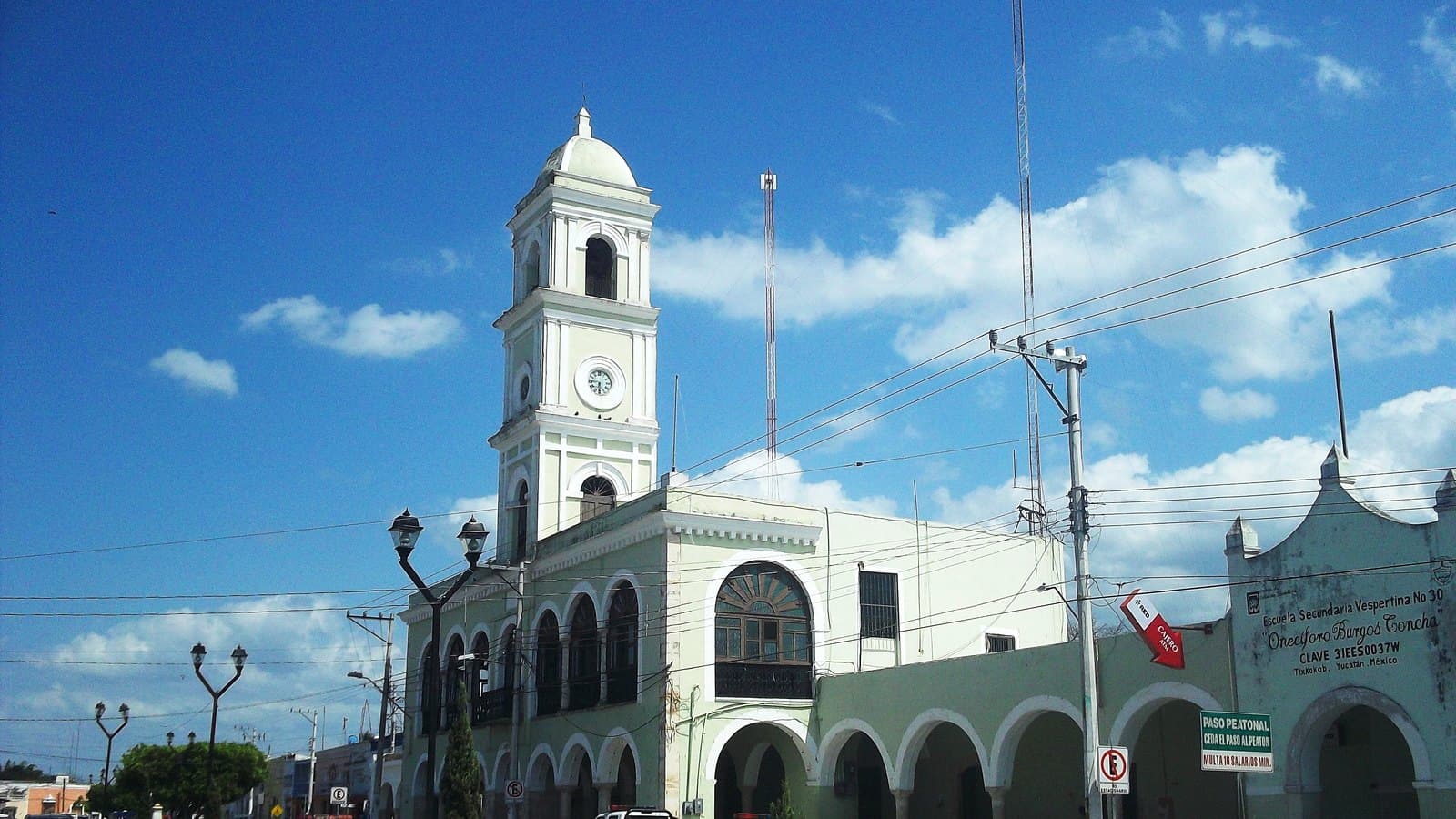
Tixkokob is a working Yucatecan town east of Mérida, known across the region for handmade hammocks.
This is not a polished sightseeing town in the style of Izamal or Valladolid. Its appeal is narrower and more local: family workshops, hammock shops, a busy morning market, a colonial-era parish, old henequen-country streets and easy access to the archaeological site of Aké.
Visit Tixkokob if you want to buy a hammock close to where it was made, learn what separates a good piece from a weak one, or add a craft stop to a quieter route through inland Yucatán.
For most travelers, two to three hours is enough for the town itself. With Aké, allow at least half a day. Go early if you want cooler weather, an active market and a better chance of finding artisans and shops at work.
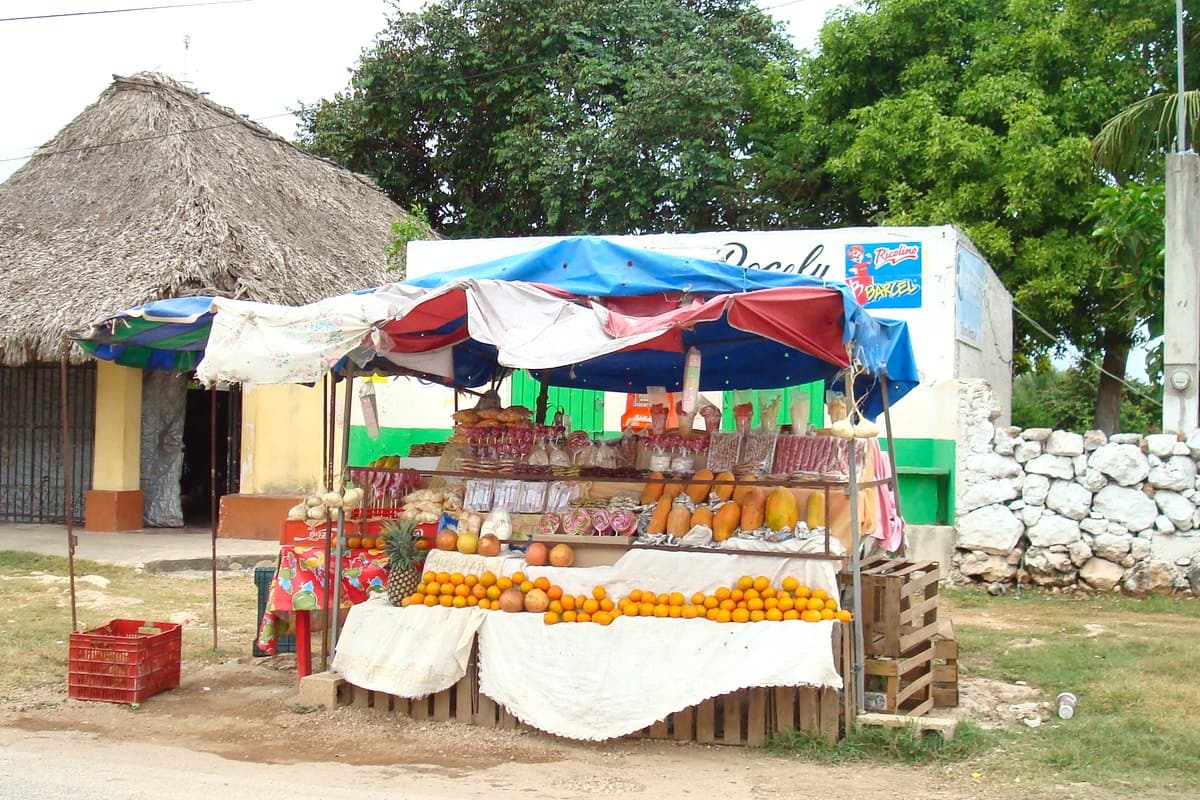 Fruit and snack stand in Tixkokob, Yucatán
Quick planning notes
| Detail | What to know |
|---|---|
| Best for | Hammock shopping, regional crafts, small-town culture, repeat Mérida visitors and quieter day trips |
| Not ideal for | Travelers wanting a major attraction, polished tourism infrastructure or a full day of sightseeing in one town |
| Time needed | 2–3 hours for Tixkokob; 5–7 hours with Aké |
| From Mérida by car | Usually around 30–45 minutes, depending on traffic and starting point |
| Best time to arrive | Between 8:30 am and 10:00 am |
| Car needed? | No for the town center; recommended for Aké, Motul or Izamal combinations |
| Public transport | Possible by regional bus or colectivo, but return points and times should be reconfirmed |
| Tren Maya | Tixkokob has a stop, but station transfers and fixed schedules may be less convenient than road transport |
| Payments | Bring cash in pesos; card acceptance is inconsistent |
| Family-friendly? | Yes for a short visit, but heat and uneven sidewalks require planning |
| Strongest combination | Tixkokob and Aké |
Is Tixkokob worth visiting?
Tixkokob is worth visiting if you have a genuine interest in hammocks, regional crafts or the quieter towns around Mérida.
The town does not offer a long checklist of museums and formal attractions. Its value comes from seeing a craft economy operating within ordinary town life. Hammocks are sold in small shops, produced in family spaces and discussed as practical household objects rather than decorative souvenirs.
Tixkokob works especially well for:
- Travelers buying a hammock for regular use
- People interested in textiles and traditional craft
- Repeat visitors who have already seen Yucatán’s larger destinations
- Families wanting an easy half-day outside Mérida
- Travelers combining the town with Aké
- Visitors looking for useful, locally made gifts
- People interested in the history of the henequen region
It is not the best option if you only have one or two days in Yucatán and have not yet visited Mérida Centro, Uxmal, Izamal, Valladolid or Chichén Itzá.
Tixkokob is modest. Come for the craft, the town and the route around it rather than expecting a major standalone attraction.
What Tixkokob is known for
Tixkokob is mainly known for hammock production.
Hammocks are woven in the town and in surrounding communities, often through family-based work rather than large industrial workshops. Shops may sell sleeping hammocks, hanging chairs, swings and smaller decorative pieces in cotton, nylon and other threads.
The town is also known for:
- Its colonial-era parish of San Bernardino de Siena
- A traditional municipal market
- Its place within Yucatán’s old henequen zone
- Its proximity to Aké
- Small-town food and everyday market life
- Its location on the route between Mérida and Izamal
- Its Tren Maya stop
Hammocks are the clearest reason to visit, but they make more sense when understood alongside the town’s longer history.
A short history of Tixkokob
Before the Spanish conquest, the area around Tixkokob formed part of the Maya jurisdiction commonly known as Ceh Pech.
One of the earliest colonial references to the settlement dates from the sixteenth century, when it entered the encomienda system established after the conquest. Like many towns in northern Yucatán, its present form developed through a mixture of older Maya settlement patterns, Spanish religious administration and agricultural estates.
The parish complex became a central part of town life during the colonial period. The main square, church, civic buildings and market still form the practical heart of Tixkokob today.
During the nineteenth and early twentieth centuries, the surrounding region became closely tied to the henequen economy. Henequen fibre — Yucatán’s former “green gold” — was processed into rope, sacks and industrial cordage for export.
The hammock tradition belongs to this wider landscape of fibre work, household production and regional trade, although most modern hammocks are not made from raw henequen. Cotton and synthetic threads are now common because they can be softer, lighter, more colourful and easier to maintain.
Tixkokob later became the administrative centre of its municipality. It remains a commercial and service town for nearby communities rather than a tourism-dependent destination.
That distinction matters. You are visiting a functioning town where craft production continues alongside schools, errands, mototaxis, market stalls and ordinary family life.
Why hammocks matter in Tixkokob
In Yucatán, a hammock is not merely garden furniture.
Many families sleep in hammocks every night. They suit the region’s climate, take up little floor space and can be moved, washed or stored more easily than a conventional bed. In older homes, hammock hooks are often built directly into masonry walls.
Although hammocks are now deeply associated with Yucatecan domestic life, historians do not generally describe them as a Classic-period Maya invention. Hammock use appears to have travelled from the Caribbean into parts of Mesoamerica before or around the early colonial period.
Over time, Yucatán developed its own distinctive weaving styles, sizes, threads and vocabulary.
In and around Tixkokob, hammock making became a household craft passed through families. Some makers specialise in weaving the body. Others are particularly skilled at forming the arms and hanging loops, where weak construction can cause an otherwise attractive hammock to fail.
The work requires patience. A large, tightly woven hammock can take days or longer to complete, depending on the material, size, pattern and number of hours available to the artisan.
How a Yucatecan hammock is made
A hammock is usually woven on a tall wooden frame or loom known as a bastidor.
The maker works back and forth across the frame, creating a flexible net from a continuous sequence of loops or knots. Unlike a solid cloth, the finished body must expand evenly under weight without producing hard pressure points.
The basic process includes:
- Preparing and organising the thread
- Setting the working width on the frame
- Weaving the main body
- Maintaining an even pattern and tension
- Forming reinforced edges
- Gathering the ends into arms
- Finishing the hanging loops
- Inspecting the hammock for uneven or weak areas
The body should stretch without opening into large irregular gaps. Both arms should appear balanced, and the hanging loops should feel dense enough to carry repeated weight.
The process looks simple when performed by an experienced maker. It is not. Consistent tension, speed and pattern come from repetition.
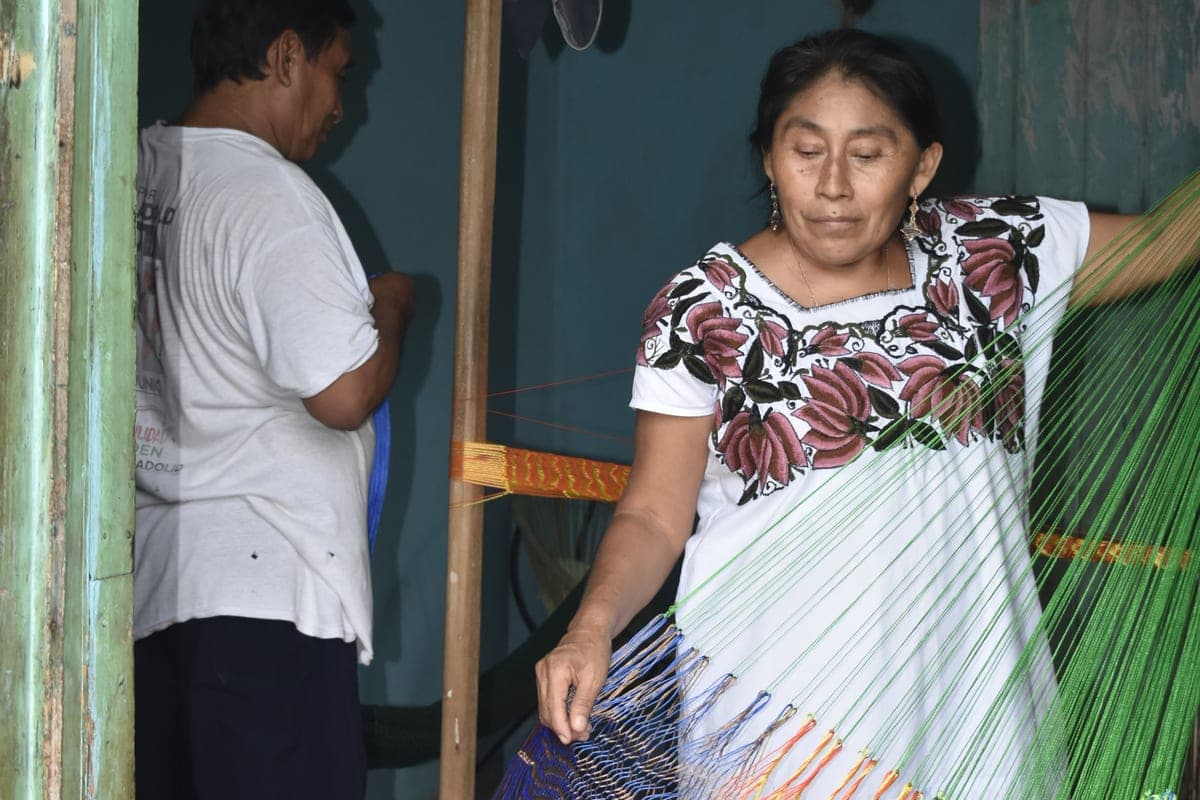 Yucatán hammock weaving on a wooden frame
Can you visit a hammock workshop?
Sometimes, but do not assume that every workshop is a formal visitor attraction.
Much of the work takes place in homes, courtyards or small family businesses. An open shop may have a frame in use, while another may only display finished hammocks. Production also depends on orders, family schedules and the day of the week.
Some sellers will happily explain the process or demonstrate part of the weave when they are not busy. Others may prefer to concentrate on their work.
A few basic rules make the visit easier:
- Ask before entering a working area
- Ask before photographing anyone
- Do not touch unfinished work without permission
- Avoid interrupting an artisan during a difficult section
- Buy something when a family has spent substantial time showing you the process
- Do not expect every maker to speak English
- Arrange ahead if seeing a demonstration is central to your trip
A local guide, driver or community contact is useful when you want a more structured introduction. They can confirm whether a workshop is receiving visitors and help with translation.
Where to buy hammocks in Tixkokob
Begin around the town centre.
You will find shops and small businesses on streets around the plaza, market and surrounding blocks. Some are obvious retail stores with hammocks displayed outside. Others are workshops or family properties with a smaller sign.
There is no need to buy from the first place you enter.
Visit at least two or three sellers so you can compare:
- Thread
- Weave density
- Overall size
- Arm construction
- Hanging loops
- Colour
- Price
- Whether the hammock was made locally
- Whether shipping is available
Some shops carry work from several makers. Others sell pieces produced within the same family.
Ask whether the hammock was woven in Tixkokob or in a nearby community. Regional production is spread across several towns and villages, and a well-made hammock from a neighbouring community is not inherently less authentic.
The useful question is not simply where it was made. It is who made it, what it is made from and whether the construction suits how you plan to use it.
How to choose a good hammock
A colourful pattern does not automatically mean good construction.
Before buying, ask the seller to open the hammock fully. It is difficult to judge size or weave quality while it is folded into a compact bundle.
Check the body
The woven body should look even from one side to the other.
Look for:
- Consistent loops
- No obvious thin bands
- No large accidental gaps
- Smooth changes between colours
- Enough material to spread under your body
- Edges that do not appear weaker than the centre
A very light hammock may be convenient for luggage, but it may also contain less thread. That does not always mean it is poor quality, but it should match your intended use.
Check the arms
The arms carry weight from the body into the hanging points.
They should be:
- Similar in length
- Evenly gathered
- Dense rather than sparse
- Free from loose or broken threads
- Properly joined to the body
Poorly made arms can create an uncomfortable pull or become the first part to fail.
Check the hanging loops
The loop or wrist at each end needs to withstand repeated friction against hooks, ropes or carabiners.
Look for a thick, clean finish. Ask whether the loops are reinforced and how the seller recommends hanging the piece.
Confirm the true size
Labels such as individual, matrimonial, queen and king are useful, but sizing is not perfectly standardised between makers.
A generous matrimonial hammock from one shop may feel larger than a lightly woven king from another.
Ask the seller to spread it out. When possible, sit or lie in the hammock before paying.
Ask how many people it is intended for
Do not rely only on the name.
Tell the seller whether the hammock is for:
- One adult
- Two adults
- A child
- Daily sleeping
- Occasional guests
- Outdoor use
- Indoor use
- A covered terrace
- A hanging chair frame
A maker can usually guide you toward a more suitable size and thread.
Cotton, synthetic thread or henequen?
Different materials suit different uses.
| Material | Advantages | Drawbacks | Best use |
|---|---|---|---|
| Cotton | Soft, breathable and comfortable against the skin | Heavier, absorbs moisture and takes longer to dry | Indoor sleeping and covered rooms |
| Nylon or synthetic thread | Light, durable, colourful and quicker to dry | Can feel warmer or less soft; quality varies | Terraces, travel and occasional outdoor use |
| Henequen or sisal fibre | Traditional appearance, strong regional connection and firm texture | Rougher, less common and not usually the softest sleeping option | Decorative, historical or specialised use |
| Mixed or specialty threads | Can balance softness, strength and colour | Material names may be used inconsistently | Depends on the exact blend |
Cotton is often the better choice for regular indoor sleeping.
A synthetic hammock may be more practical for a covered terrace, holiday rental or luggage because it is lighter and dries faster. It should still be protected from prolonged sun and rain.
Traditional henequen hammocks are less common than many visitors expect. If a seller describes a hammock as henequen, sisal, silk or another specialty fibre, ask exactly what the thread contains and how it should be cared for.
Useful questions to ask
A little Spanish makes hammock shopping easier.
- ¿Está urdida a mano? — Is it woven by hand?
- ¿Quién la hizo? — Who made it?
- ¿Está hecha aquí en Tixkokob? — Was it made here in Tixkokob?
- ¿De qué hilo es? — What thread is it made from?
- ¿Es de algodón o sintética? — Is it cotton or synthetic?
- ¿Qué tamaño es? — What size is it?
- ¿Para cuántas personas? — How many people is it for?
- ¿Me la puede abrir completa? — Can you open it fully for me?
- ¿Los brazos están reforzados? — Are the arms reinforced?
- ¿Cómo se lava? — How should it be washed?
- ¿Aceptan tarjeta? — Do you accept cards?
- ¿La pueden enviar? — Can you ship it?
- ¿Puedo tomar una foto? — May I take a photograph?
Do not worry about perfect pronunciation. A polite question and willingness to listen usually matter more.
Prices and payment
Hammock prices vary considerably.
The main factors are:
- Material
- Size
- Quantity of thread
- Weave density
- Complexity of the pattern
- Quality of the arms
- Whether it is ready-made or commissioned
- Whether shipping is included
- Whether you are buying directly from a maker or from a retailer
Avoid relying on old prices published online. Thread costs, labour and shop pricing change.
Bring cash in pesos. Some established shops may accept cards, transfers or digital payments, but small workshops may not.
Polite comparison is reasonable. Aggressive bargaining is not necessary. A well-made hammock can represent many hours of skilled work and should not be treated like a disposable souvenir.
When buying several hammocks, ask whether the shop has a package price or can include carrying bags. Let the seller decide whether a discount is possible.
Packing a hammock for the journey home
Hammocks are easier to transport than they look.
A folded hammock can usually fit inside a suitcase or large day bag. Synthetic pieces are especially light, while large cotton hammocks may be noticeably heavier.
Before buying, ask:
- The folded dimensions
- Approximate weight
- Whether a storage bag is included
- Whether the shop offers domestic or international shipping
- Whether care instructions are available
- Whether the hammock can be compressed without damaging the arms
Keep the hanging loops away from suitcase zippers and sharp objects. Do not cut ties or remove labels until you have confirmed which end belongs to which piece if you are buying several.
Natural fibre products may be subject to agricultural declaration rules in some countries. Check the rules of your destination before travelling with untreated plant fibre.
How to hang and sleep in a Yucatecan hammock
Measure the intended space before travelling to Tixkokob.
Bring the approximate:
- Distance between walls or posts
- Height of the proposed hanging points
- Type of wall
- Available diagonal space
- Number and weight of users
Do not install ordinary hooks into weak masonry and assume they will hold. Many Yucatecan homes have purpose-built hammock supports, but a modern home elsewhere may require suitable anchors, structural posts or professional installation.
A hammock should hang with a generous curve rather than being pulled tight like a rope.
To sleep comfortably, lie diagonally across the weave. This allows the body to open and produces a flatter sleeping position. Lying directly from end to end can make the hammock close around you and place more pressure on the back.
Ask the seller to demonstrate the correct position. It is one of the easiest and most useful parts of the buying experience.
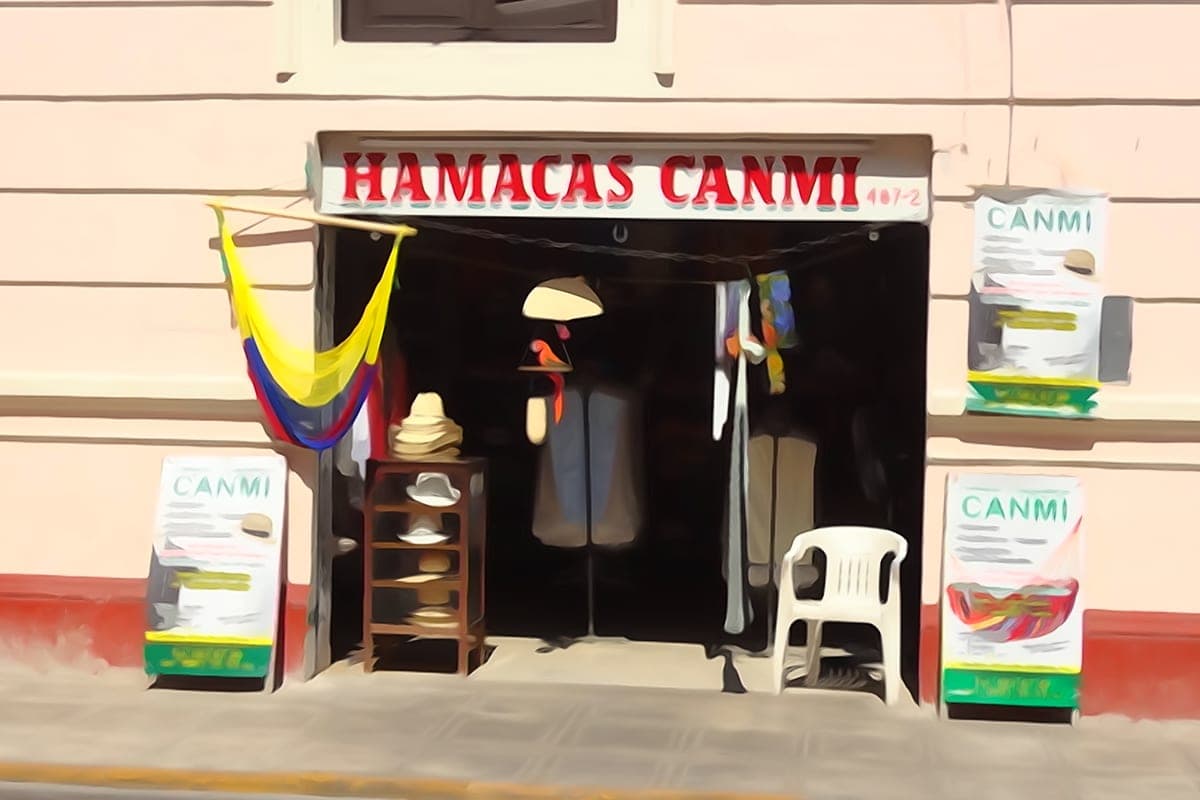 Yucatán hammock shop display
Things to do in Tixkokob
Tixkokob is small enough to explore without a complicated itinerary.
The main sights are concentrated around the centre, while individual workshops and shops may be spread across surrounding streets.
GuideBest Things to Do in Yucatán: What’s Actually Worth It on a First TripThe guide outlines the main activities and destinations that make up a Yucatán itinerary, all of which can be reached from the state capital Mérida or the colonial town of Valladolid. Mérida serves as the primary base because it offers a wide range of hotels, restaurants, museums and transport options; two full days are enough for a first impression, while three or four days allow a historic‑centre walk, a museum visit and one or two nearby day trips. Chichén Itzá, the most famous Maya site, lies 1½–2 hours north of Mérida by car; it can be visited by rental car, private driver, guided tour, bus or train plus local transfer and typically requires half to a full day. Uxmal, part of the Ruta Puuc, is also reached most easily by car or driver from Mérida and is best done as a full‑day outing. Cenote swimming is recommended in the Homún and Cuzamá areas for those staying in Mérida and in the surroundings of Valladolid for overnight guests; three cenotes make a comfortable day, with access by rental car, driver or organized tour. Izamal is a half‑day pueblo visit reachable by car, driver, bus or tour from Mérida, while Progreso offers a short, family‑friendly beach stop on the Gulf coast, reachable in under an hour by road. Visitors should plan to start early to avoid heat and crowds, bring water, sun protection and cash for entrance fees, and respect local customs such as showering before entering cenotes and using reef‑safe products only where allowed. Life jackets are often required at cenotes, and many sites have limited shade, so a hat and plenty of water are advisable. Private drivers provide the most flexible schedule, especially when combining ruins, cenotes and coastal stops in a single day.Open
Walk through the main square
The plaza is the natural place to begin.
It gives you a quick sense of the town: benches, shade, mototaxis, food sellers, municipal buildings and families moving through their daily routines.
The square is most comfortable in the morning or late afternoon. Midday can feel exposed and hot.
Use the plaza as an orientation point before walking to the church, market and hammock shops.
See the Palacio Municipal
The municipal building is one of the town centre’s main civic landmarks.
It is not a long attraction, but it helps define the square and gives you a useful meeting point if you are travelling with a driver.
Public buildings may be busy with normal municipal business. Be respectful around entrances and avoid blocking access while taking photographs.
Visit San Bernardino de Siena church
The parish complex dedicated to San Bernardino de Siena is Tixkokob’s principal historic building.
Its heavy stone walls and simple proportions belong to the same broad colonial tradition seen across northern Yucatán. The building remains an active religious space rather than a museum.
Enter quietly when the doors are open. Avoid walking around during Mass, baptisms, funerals or private parish activity unless you are participating respectfully.
Clothing does not need to be formal, but shoulders and behaviour should be appropriate for a functioning church.
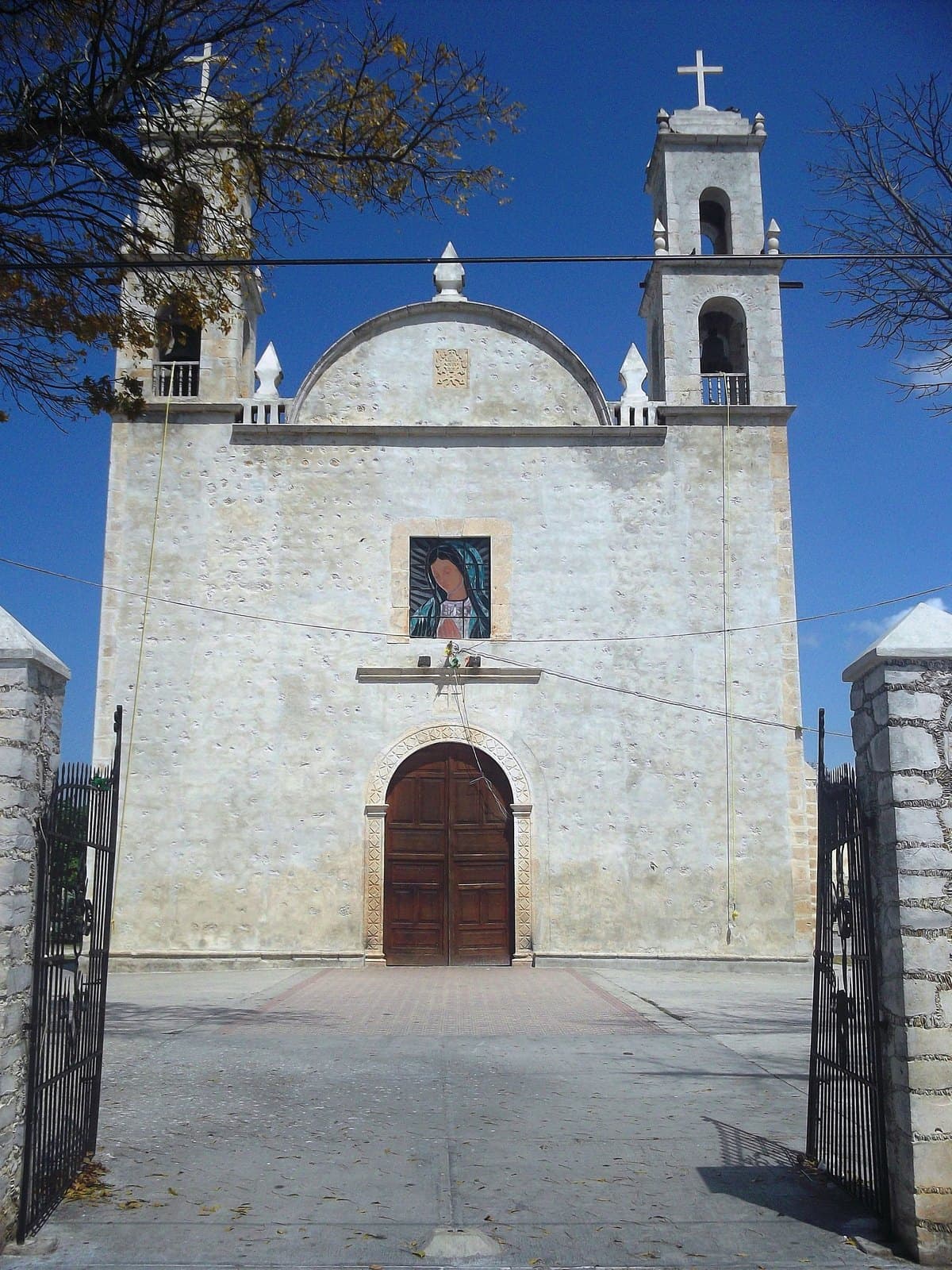 San Bernardino de Siena church in Tixkokob
Visit the municipal market
The market is strongest in the morning.
This is where to look for an inexpensive breakfast, fruit, drinks and simple Yucatecan food. The exact selection changes by day and hour.
You may find:
- Panuchos
- Salbutes
- Empanadas
- Tacos
- Cochinita pibil, particularly in the morning or on weekends
- Eggs and simple breakfast plates
- Fresh juices
- Aguas frescas
- Seasonal fruit
- Pan dulce
Bring small bills. Do not expect every stall to accept cards or provide an English menu.
The market is a better choice for local food than searching for a polished café. Keep expectations simple: plastic tables, quick service, heat, noise and practical meals.
Walk the surrounding streets
Tixkokob rewards a slow walk more than a rushed photo stop.
Around the centre, you will see old facades, modest shops, painted houses, bicycles, mototaxis and traces of the town’s henequen-era development.
Sidewalks can be narrow, interrupted or uneven. Watch for traffic when stepping into the street.
There is no need to wander far without a clear destination. Ask a shopkeeper or mototaxi driver when looking for a particular hammock business.
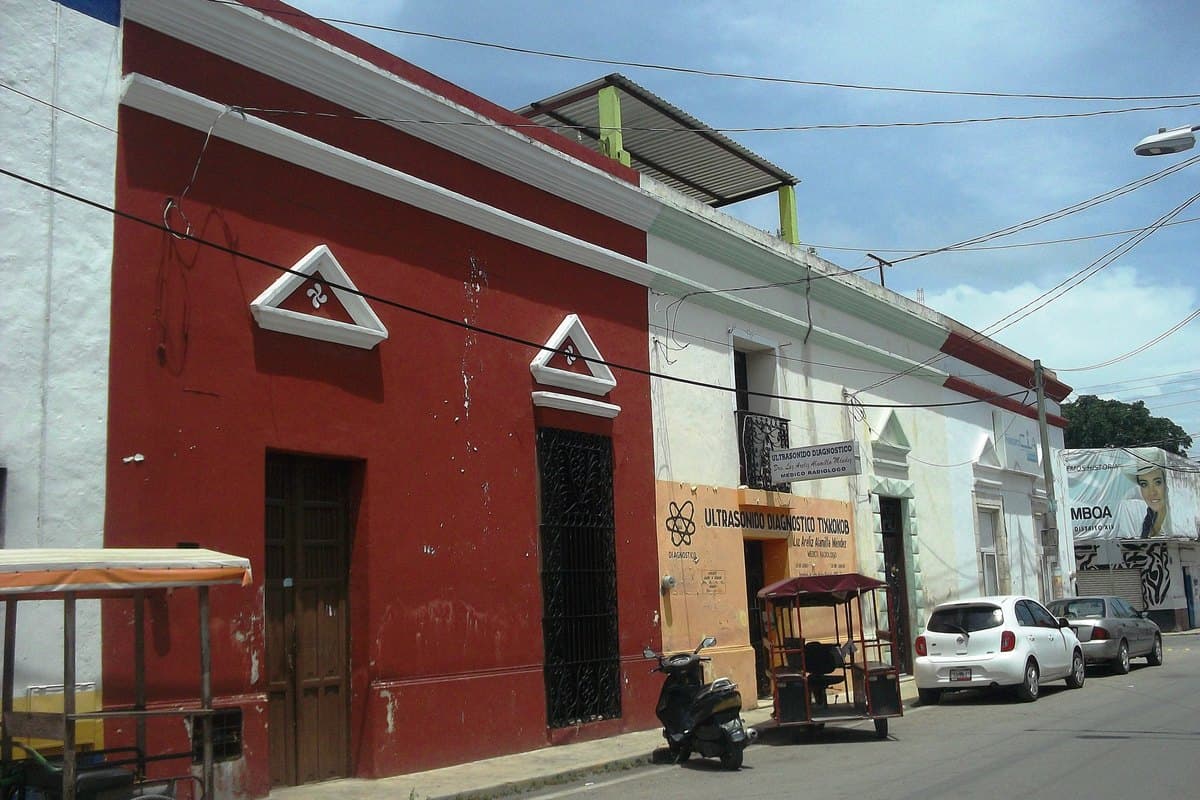 Painted facades and a mototaxi in Tixkokob
Look for local craft beyond hammocks
Hammocks are the main craft, but shops may also carry:
- Hanging chairs
- Woven swings
- Hammock straps
- Bags
- Table pieces
- Small decorative weavings
- Embroidered clothing
- Regional household goods
Check whether an item is locally produced rather than assuming everything displayed in town was made there.
A clear, polite question is enough.
A simple three-hour Tixkokob visit
This is the easiest plan for travelers coming from Mérida.
8:00 am — Leave Mérida
8:45 am — Arrive and park near the centre
9:00 am — Breakfast or drink at the market
9:45 am — Walk the plaza and see the church
10:15 am — Visit two or three hammock shops
11:15 am — Collect purchases and have a cold drink
11:45 am — Return to Mérida or continue to Aké
This route works well without turning the trip into a full day.
Opening patterns vary, so do not make the timetable rigid. If hammock shopping is your main purpose, contact a shop or workshop before leaving Mérida.
The best half-day route: Aké and Tixkokob
Aké is the strongest addition to a Tixkokob visit.
The archaeological zone sits within Tixkokob Municipality and is known for its broad platform crowned by rows of stone columns. The site also carries henequen-hacienda history and traces of the ancient raised road that once connected Aké toward Izamal.
A heat-conscious route is:
8:00 am — Arrive at Aké near opening time
9:30 am — Finish the archaeological visit
10:00 am — Travel to Tixkokob
10:30 am — Market, church and hammock shopping
12:30 pm — Lunch or return toward Mérida
Visiting Aké first keeps the most exposed archaeological walking in the cooler part of the morning.
This route is easiest with a rental car or private driver. Public transport between the two is less predictable, and arranging a return mototaxi from Aké may require local coordination.
Full-day route: Tixkokob, Aké and Izamal
Travelers with a car can continue east to Izamal.
A sensible order is:
Mérida → Aké → Tixkokob → Izamal → Mérida
This produces a varied day:
- Archaeology and henequen context at Aké
- Hammock craft and market life in Tixkokob
- Convent, pyramids and a broader restaurant choice in Izamal
It is a long day, especially in hot weather.
Do not spend too much time shopping in Tixkokob if Izamal is also a priority. Leave Mérida early and avoid scheduling the route around a strict lunch reservation.
This is not a good route to attempt by a series of local buses unless you are comfortable with waiting, changing plans and returning late.
GuideIzamal: The Yellow City GuideIzamal is a small colonial town painted yellow, located east of Mérida in central Yucatán, about one hour to one hour 15 minutes by road from Mérida Centro and roughly 1½ hours from Valladolid. It is most often visited as a half‑day or full‑day day trip from Mérida, using a rental car, private driver, or the cheapest option—a bus from Mérida’s Noreste/Oriente terminals; a Tren Maya connection exists but the station is not in the main plaza. The essential sights can be covered in 4–6 hours, or a full day if you include a leisurely lunch, extra photography time and a slower pace. Entry to the Convento de San Antonio de Padua is free (donations welcome) and the Kinich Kakmó pyramid can be climbed at no charge; the cost of the visit is therefore limited to transport, meals and any optional guide or carriage hire. Visitors should expect a walkable historic centre with a wide convent atrium, the climb of Kinich Kakmó (uneven stone steps, bring proper shoes and water), and the chance to wander yellow‑washed streets, small markets and craft shops. Early morning (before 10 am) or late afternoon (after 4 pm) offers softer light for photography and cooler temperatures; midday can be very hot and the stone of the pyramid becomes scorching. Dress modestly for the convent, bring a hat for the exposed atrium, and carry cash for meals—restaurants such as Kinich and Zamná serve traditional Yucatecan dishes, while smaller loncherías are cheaper but may not accept cards. Horse‑drawn carriages are available but should be used after checking the animal’s condition. The town’s layered Maya, colonial and modern character makes it a relaxed, family‑friendly alternative to larger archaeological sites.Open
Alternative route: Tixkokob and Motul
Tixkokob can also be combined with Motul.
Motul adds:
- Mercado 20 de Noviembre
- Huevos motuleños
- Felipe Carrillo Puerto history
- Elvia Carrillo Puerto history
- A larger Pueblo Mágico town centre
A useful order is Motul for breakfast, followed by Tixkokob for hammock shopping.
This pairing is less archaeological than Aké but stronger for food, town life and regional culture.
GuideMotul Pueblo Mágico Guide: Huevos Motuleños & Easy Mérida Day TripMotul is a newly designated Pueblo Mágico located northeast of Mérida in the former henequen region of Yucatán. It is most famous for huevos motuleños, a hearty Yucatecan breakfast, and for its ties to the political figures Felipe and Elvia Carrillo Puerto. A morning visit typically costs only the price of food, market purchases and any optional cenote entry; the article gives no fixed admission fees. The town centre is open all day, but the best time to go is early morning when the market is active and the streets are cooler. From Mérida the drive takes about 35–45 minutes, while a regional bus takes roughly one to one‑hour‑twenty minutes; a private driver or taxi is useful for reaching Cenote Sambulá or nearby coastal spots. The basic itinerary—breakfast at Mercado 20 de Noviembre, a walk around Parque Felipe Carrillo Puerto, a quick look at the Palacio Municipal and the Iglesia de San Juan Bautista—takes 2–3 hours; adding a swim at Cenote Sambulá or a coastal stop extends the day to 5–7 hours. Visitors should expect a working town with traffic, heat, uneven sidewalks and cash‑only stalls. Bring pesos for food, taxis and cenote entry, and ask for “huevos motuleños, por favor” to keep orders simple. Early arrival improves chances of a relaxed breakfast; the market and streets become busy later. If you plan to see the Carrillo Puerto museum or house, check opening hours locally as they can vary. For families, the cenote is suitable only if children are comfortable in water and adults can supervise closely. A car is not required for the town centre but makes side trips to the cenote, haciendas or the coast much easier.Open
How to get to Tixkokob from Mérida
Tixkokob lies east of Mérida and is one of the easier inland towns to reach.
By rental car
Driving is the simplest option.
From central Mérida, allow approximately 30–45 minutes, depending on where you begin, city traffic and road conditions. The journey is shorter from neighbourhoods on Mérida’s eastern side.
A car is particularly useful when you want to:
- Visit Aké
- Continue to Izamal or Motul
- Carry several hammocks
- Travel with children or older relatives
- Avoid waiting for regional buses
- Visit a workshop outside the central blocks
Use a live map for the final route. Watch for topes when entering towns and reduce speed around mototaxis, bicycles and market streets.
Parking is normally possible on streets around the centre. Do not block doorways, shop entrances, private driveways or market loading areas.
By regional bus or colectivo
It is possible to visit central Tixkokob without a car.
Regional buses and colectivos operate between Mérida and towns east of the city, but terminal locations, street pickup points and frequencies can change.
Before leaving Mérida, confirm:
- The current departure point
- Whether the vehicle goes directly to Tixkokob
- Approximate journey time
- Where you will be dropped off
- Where the return service leaves
- The time of the final practical return
This option works best when your plan is limited to the market, plaza, church and central hammock shops.
It becomes less convenient when adding Aké or another town. Do not assume a frequent evening service without asking locally.
By Tren Maya
Tixkokob has a Tren Maya stop on the route between the Mérida–Teya area and Izamal.
The train may be useful when its schedule aligns with your plans, but it is not automatically the easiest way to visit.
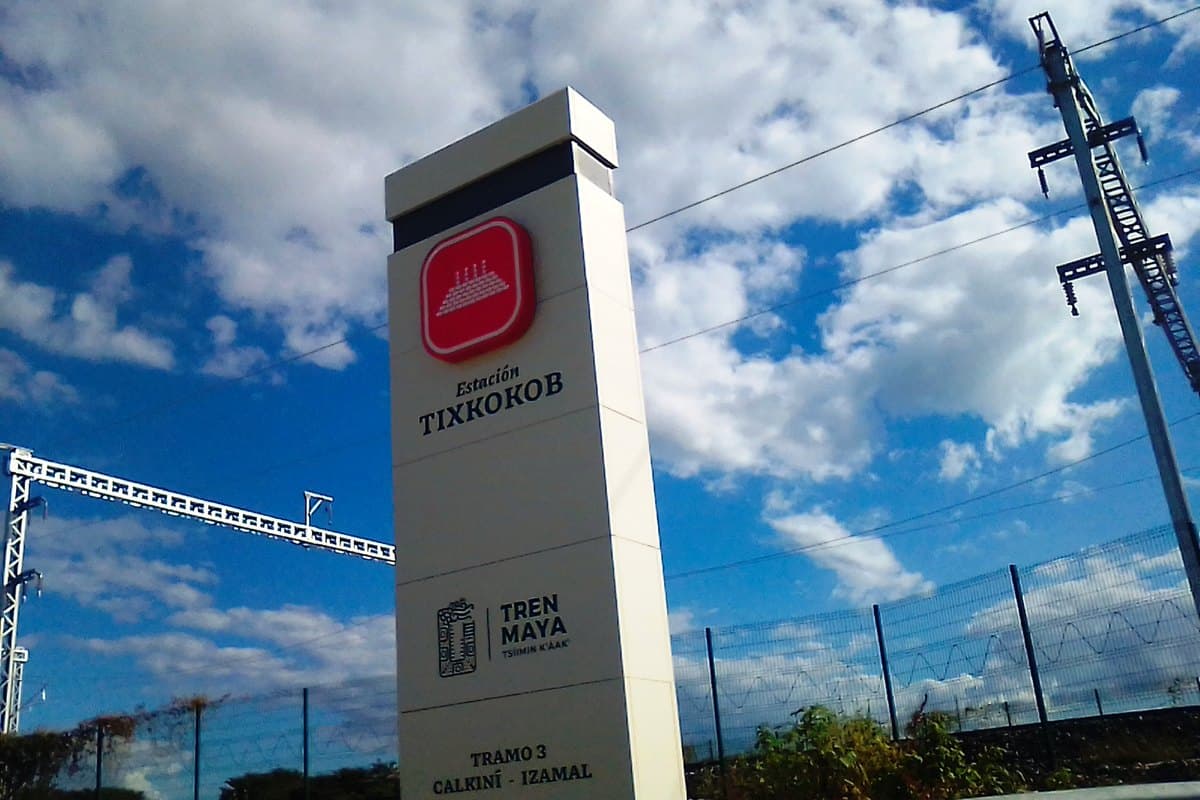 Tixkokob Tren Maya station
Consider:
- Mérida–Teya station is outside Mérida Centro
- You may need a taxi or other transfer at both ends
- Train schedules are fixed
- The station may not place you directly beside the shops you want
- A short road journey can be simpler door to door
Check the official schedule and ticket availability for your travel date. Do not rely on an old online timetable or fare.
Once you arrive, ask about a mototaxi if the centre or a workshop is not comfortably walkable from the stop.
By private driver
A private driver is the easiest option for a multi-stop route.
It is particularly useful for:
- Tixkokob and Aké
- Tixkokob, Aké and Izamal
- Craft-focused visits with a planned workshop
- Families carrying child equipment
- Older travelers
- Groups buying multiple hammocks
- Visitors uncomfortable driving in Mexico
For Tixkokob alone, a private driver may be more than you need. For Aké and two or three towns in one day, it can remove most of the transport friction.
Getting around Tixkokob
The central area is mostly walkable.
The plaza, market, church and several shops sit within a manageable area. The land is flat, but pavement quality varies.
Mototaxis are commonly used for short local journeys. They are useful for:
- Reaching a workshop away from the centre
- Returning to a bus or train stop
- Avoiding a long walk in midday heat
- Carrying larger purchases
Confirm the fare before setting off. For a return journey to an outlying workshop, ask whether the driver can wait or collect you at an agreed time.
Best time to visit
Morning is best.
Aim to arrive between 8:30 am and 10:00 am. This gives you:
- Cooler walking conditions
- More market activity
- A better chance of finding shops open
- Time to continue to Aké
- Less risk of afternoon rain during wet season
Midday is the least comfortable time. The combination of heat, concrete, limited shade and quiet streets can make the town feel slower than it does in the morning.
The hottest months are generally in spring and early summer. Rain becomes more common from late May into autumn, often developing later in the day.
Weekdays may give you a more ordinary working-town experience. Sundays can have more family and religious activity, but some businesses may reduce their hours.
How long to spend
Allow two to three hours for:
- The market
- The plaza
- The church
- Two or three hammock shops
- A short town walk
Allow four to six hours when adding Aké.
Allow a full day when continuing to Izamal or Motul.
Do not stretch Tixkokob into a full-day town visit unless you have arranged an extended workshop experience. Most travelers will get more from combining it with another nearby place.
Is Tixkokob family-friendly?
Tixkokob can work well for families as a short trip.
Children may enjoy the hammock colours, market snacks, plaza and seeing a loom in use. Aké can add more physical exploration for older children.
The main difficulty is heat.
Plan for:
- An early start
- Water
- Hats
- Short walking distances
- Frequent shade
- A vehicle or mototaxi when needed
- Close supervision near traffic
A stroller may be awkward on broken sidewalks, high curbs and narrow market passages. A carrier can be easier for younger children.
A workshop is still a working environment. Keep children away from loose thread, tools and unfinished frames unless invited closer.
Accessibility
Tixkokob is geographically flat, but it is not consistently accessible.
Possible difficulties include:
- Uneven sidewalks
- High curbs
- Missing curb cuts
- Narrow shop entrances
- Steps into older buildings
- Market congestion
- Limited accessible toilets
- Unpaved or rough workshop yards
Travelers with reduced mobility will have an easier visit with a driver who can stop close to each destination.
Ask about step-free access before arranging a private workshop. Do not assume a home-based workspace can accommodate a wheelchair.
Practical information
Cash
Carry pesos in small and medium denominations.
Cash is useful for:
- Market food
- Mototaxis
- Small hammock shops
- Workshop purchases
- Drinks
- Tips
- Archaeological entry when combining with Aké
Do not depend on finding a convenient ATM at the moment you need one. Withdraw money in Mérida when possible.
Language
English is not guaranteed.
A translation app and the short list of hammock questions above will cover most transactions. Sellers may use local terms for hammock parts, materials and sizes, so ask them to show you rather than relying only on vocabulary.
Toilets
Facilities may be available around the market, municipal buildings, restaurants or petrol stations, but standards vary.
Carry tissues and hand sanitiser. Use a restroom before leaving Mérida when travelling with children or anyone who needs predictable facilities.
Mobile signal
Mobile data generally works in town, but coverage can weaken inside thick-walled buildings or rural areas around Aké.
Save your return route and workshop contact details before setting off.
Heat
Heat is the most important practical issue.
Carry water even for a short visit. Wear breathable clothing and take the town slowly. Do not plan a long plaza walk between noon and 3:00 pm when an earlier visit is possible.
Rain
Afternoon rain can be sudden during wet season.
A small umbrella or light rain layer is useful. Protect cotton hammocks and other purchases from water before placing them in an open vehicle or mototaxi.
What to bring
Bring:
- Cash in pesos
- Water
- Hat or cap
- Sunglasses
- Sunscreen
- Comfortable shoes
- Translation app
- Phone battery or power bank
- Tape measure
- Measurements of your hanging space
- Foldable shopping bag
- Rain cover or plastic bag during wet season
- Workshop address or contact details
- Insect repellent when visiting Aké
A tape measure is particularly useful. It is easy to buy an attractive hammock and only later discover that the intended space is too short or the wall fittings are unsuitable.
What to avoid
Avoid arriving after lunch and expecting the market and workshops to be at their busiest.
Avoid buying a hammock without seeing it fully opened.
Avoid choosing only by colour.
Avoid assuming the largest size label always means the strongest hammock.
Avoid installing hooks into weak masonry without suitable hardware or professional advice.
Avoid photographing artisans inside their homes without asking.
Avoid expecting every family workshop to provide a free demonstration.
Avoid building a complicated Tixkokob–Aké–Izamal route around public transport unless you are prepared to wait and adapt.
Avoid making an unconfirmed local cenote essential to the day. Access, conditions and opening patterns can change.
Avoid comparing Tixkokob too directly with Izamal. Izamal is more visually immediate and contains more conventional visitor attractions. Tixkokob is better for a focused craft visit and a quieter town experience.
Who should visit Tixkokob?
Tixkokob is a good fit for:
- Craft and textile travelers
- People furnishing a home in Yucatán
- Visitors looking for a functional regional purchase
- Repeat Mérida visitors
- Families wanting a short outing
- Travelers interested in henequen-zone history
- People visiting Aké
- Photographers who prefer ordinary town life to staged attractions
- Travelers building a slower inland itinerary
Tixkokob may not be the best fit for:
- First-time visitors with very limited time
- Travelers seeking major museums
- Visitors wanting a polished shopping district
- People uncomfortable with simple markets or home workshops
- Anyone expecting guaranteed English-language demonstrations
- Travelers without flexibility around opening times
Do you need a tour?
You do not need a formal tour for the central town.
Independent travel is enough when your plan is:
- Visit the market
- Walk the square
- See the church
- Browse established hammock shops
- Return to Mérida
A guide or arranged visit becomes more valuable when you want to:
- Enter a working family workshop
- Speak directly with an artisan
- Understand construction techniques
- Commission a specific hammock
- Combine the town with Aké and henequen history
- Translate a detailed purchase
- Visit several producers
For quick route questions, the free Yucatán Guide WhatsApp assistant can help check whether your plan is realistic.
For the next step, use the Plan hub to compare itineraries, transport and practical resources already available.
FAQ
What is Tixkokob famous for?
Tixkokob is best known for handmade hammocks. The town and nearby communities have a long tradition of weaving sleeping hammocks, hanging chairs and related pieces in cotton and synthetic thread.
Is Tixkokob a Pueblo Mágico?
No. Tixkokob is a traditional municipal town rather than an officially designated Pueblo Mágico.
Its appeal is based on working craft traditions and local town life, not a large tourism programme.
How far is Tixkokob from Mérida?
Tixkokob is approximately 22 kilometres east of Mérida in a straight regional sense, although the exact road distance depends on your starting point.
By car, most travelers should allow around 30–45 minutes from Mérida.
Can I visit Tixkokob without a car?
Yes.
Regional buses or colectivos can take you toward Tixkokob, and the town also has a Tren Maya stop. The central market, church, plaza and some shops can be explored on foot.
A car or driver is much more convenient when adding Aké, Motul or Izamal.
Will I definitely see someone making a hammock?
No.
Hammock production often takes place in private homes or working family spaces. You may see a loom in use inside a shop, but demonstrations are not guaranteed.
Arrange a visit in advance when this is the main reason for your trip.
How much does a hammock cost?
There is no single standard price.
Cost depends on material, size, quantity of thread, construction quality, design and whether the piece is commissioned. Compare several hammocks and judge the body, arms and hanging loops rather than choosing only by price.
Is cotton or nylon better?
Cotton is usually softer and more comfortable for indoor sleeping.
Nylon or another synthetic thread is lighter, dries more quickly and may be more practical for a covered terrace or travel. It can also feel warmer against the body.
The better option depends on where and how the hammock will be used.
Can a hammock fit inside checked luggage?
Usually yes.
Even large hammocks fold down considerably. Cotton pieces are heavier, while synthetic hammocks are generally easier to carry. Ask the seller for a storage bag and approximate packed weight.
What should I combine with Tixkokob?
Aké is the strongest nearby combination.
Motul works well for breakfast and local history. Izamal can be added for a longer full-day route with more conventional sightseeing and restaurant choices.
Is Tixkokob better than Izamal?
Not for most first-time visitors.
Izamal has more striking architecture, pyramids, restaurants and developed visitor infrastructure. Tixkokob is the better choice when hammock making and local craft are the main interests.
How long should I spend in Tixkokob?
Two to three hours is enough for most travelers.
Add another two hours or more for Aké, including travel and the archaeological visit.
Final take
Tixkokob is not a town to visit for spectacle.
It is a useful, grounded stop for travelers who want to understand one of Yucatán’s most familiar household crafts and buy directly from people who know how a hammock should be made.
Go in the morning. Eat something at the market, walk the centre, inspect several hammocks carefully and ask questions before buying.
For a stronger day, visit Aké first while the weather is cooler and finish in Tixkokob with the workshops and shops. With that combination, the route connects three important layers of northern Yucatán: Maya history, the henequen landscape and a living family craft.