Printable guide
Crocodiles in Yucatán: Where They Live, Safety and Wildlife Tours
Updated
Yes, crocodiles live in parts of Yucatán. Learn where they are found, what warning signs mean, and whether beaches and cenotes are safe for swimming.
Quick Answer
Yes, there are crocodiles in Yucatán. They live mainly in wetlands: mangroves, coastal lagoons, estuaries, salinas and some freshwater areas. They are part of the ecosystem, not a reason to avoid Yucatán.
For most visitors, crocodiles are relevant in places such as Río Lagartos, San Felipe, Celestún, Sisal, El Palmar, San Crisanto, Dzilam de Bravo and other mangrove or lagoon areas along the north and west coasts. They are not normally part of the experience at busy Gulf beaches such as Progreso or Chicxulub Puerto, and they are not typical at managed cenotes near Mérida.
| Traveler question | Short answer |
|---|---|
| Are there crocodiles in Yucatán? | Yes, mainly in wetlands, mangroves, lagoons, and estuaries. |
| Are there crocodiles in Mexico? | Yes. Several coastal and wetland regions of Mexico have crocodile habitat. |
| Are crocodiles dangerous in Yucatán? | They are wild predators and deserve space. Risk is low when visitors avoid mangrove water, obey signs, and do not feed wildlife. |
| Is it safe to swim in Yucatán? | Usually yes at monitored beaches, hotel pools, and established cenotes; avoid swimming in mangrove channels and signed lagoon areas. |
| Where will tourists see warning signs? | Boat docks, biosphere reserves, mangrove boardwalks, lagoons, salinas, and some eco-tour areas. |
Where Crocodiles Are Most Relevant
The useful way to think about crocodiles in Yucatán is by habitat. If a place has mangroves, still lagoon water, fish-cleaning areas, salinas, or quiet wetland edges, treat it as possible crocodile habitat. If it is an established beach with open Gulf water, restaurants, lifeguard-style activity, and regular swimmers, crocodiles are much less likely to be part of the visitor experience.
| Area | Crocodile likelihood | Visitor context |
|---|---|---|
| Río Lagartos and San Felipe | Higher in mangroves and reserve waterways | Boat tours, flamingos, birding, night eye-shine tours |
| Celestún estuary | Possible in mangrove channels and backwaters | Flamingo tours, estuary loops, warning signs near docks |
| Sisal and El Palmar | Possible in wetlands behind the beach | Guided kayak, chalana or birding trips |
| San Crisanto and Dzilam de Bravo | Possible in canals, lagoons and freshwater pockets | Community mangrove tours and nature routes |
| Progreso, Chicxulub and Telchac swimming beaches | Low in normal swimming areas | Follow posted warnings, especially after storms or unusual wildlife reports |
| Popular visitor cenotes | Very low in managed swimming cenotes | Not typical crocodile habitat; follow site rules |
If you want wildlife without guessing, start with the broader wildlife in Yucatán guide and compare crocodile habitat with the best places to see flamingos in Yucatán. The strongest overlap is in protected wetland routes.
What You Need to Know
- Two species are relevant in Yucatán: Morelet’s crocodile, which is strongly associated with freshwater wetlands, and the American crocodile, which is more associated with brackish coastal habitats.
- Crocodiles are easiest to see with local guides in wetland destinations, especially Río Lagartos, San Felipe, Celestún, Sisal and San Crisanto.
- You should not swim in mangrove channels, lagoon edges, salinas or anywhere marked no nadar.
- Normal visitor beaches and managed cenotes are a different environment from crocodile habitat, but local signs always matter.
- The best wildlife tours keep distance, avoid feeding, and treat crocodiles as protected wild animals rather than attractions to provoke.
Keep these basics in mind and crocodiles become easier to understand: they are a wetland safety topic, a wildlife-tour possibility, and an important part of Yucatán’s coastal ecology.
Meet the Crocodile Species of Yucatán
Morelet’s Crocodile (Crocodylus moreletii)
Morelet’s crocodile is the species most associated with freshwater wetlands in the region. In Mexico, it occurs along the Gulf side of the country and the Yucatán Peninsula, and it is also found in Belize and Guatemala. In practical travel terms, think of quiet lagoons, marshes, mangrove-backed freshwater pockets and wetland reserves.
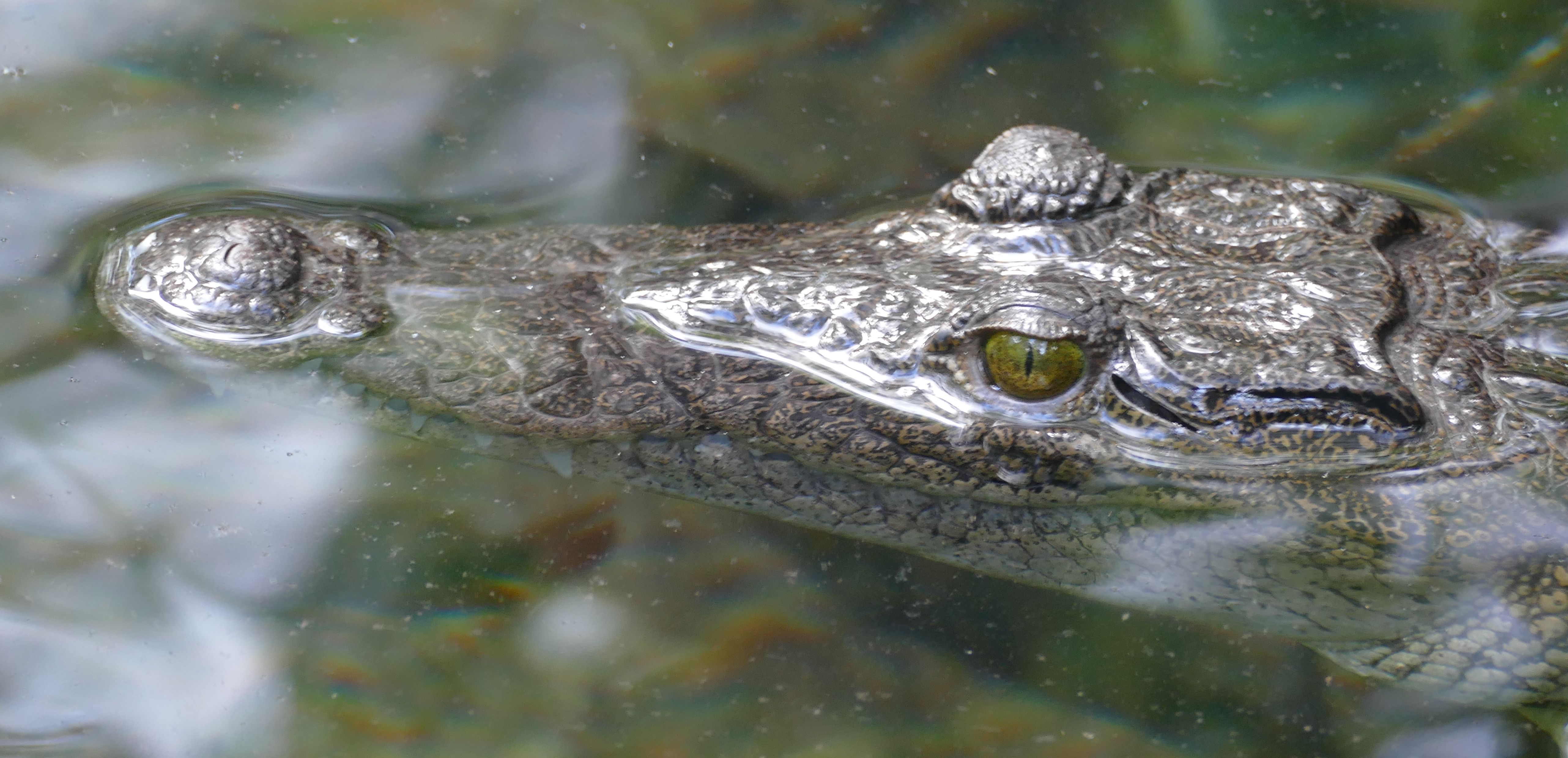
 Morelet’s crocodile (Crocodylus moreletii) at the water’s edge.
They have a broader snout than the American crocodile and are generally darker. Visitors are most likely to hear about them on wetland boat tours, where guides may point out juveniles resting near mangrove roots or adults moving along quiet banks.
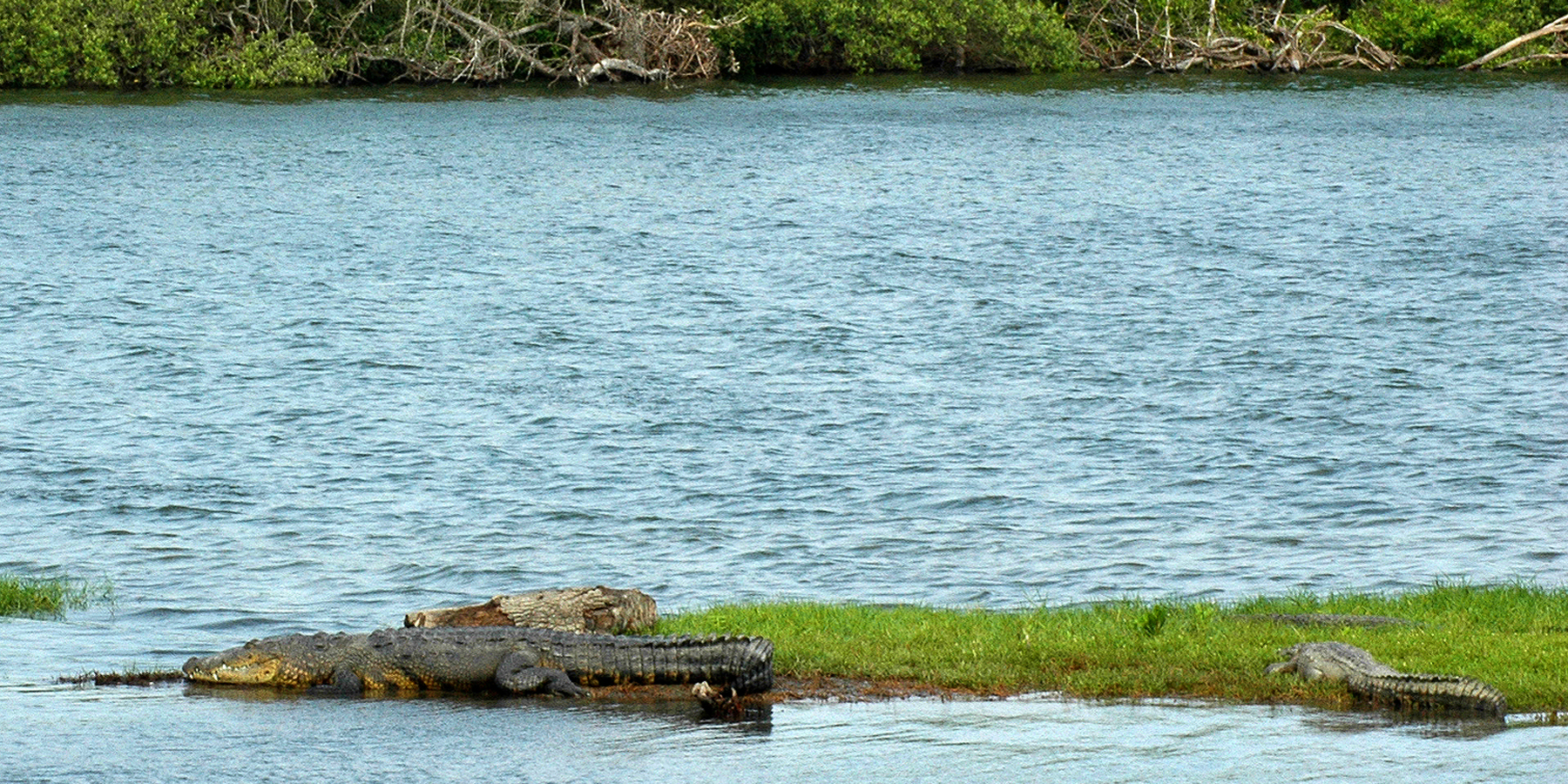 Morelet’s crocodile (Crocodylus moreletii) in Laguna del Carpintero.
American Crocodile (Crocodylus acutus)
The American crocodile is more strongly associated with brackish coastal environments: mangrove swamps, coastal lagoons, estuaries and the saltwater sections of rivers. It has a narrower snout and is generally more tolerant of saltwater conditions than Morelet’s crocodile.
For travelers, the species distinction matters less than the habitat distinction. If you are in a mangrove channel, estuary or quiet coastal lagoon, behave as if crocodiles may be present.
Habitats & Seasonal Patterns
Crocodile sightings follow the rhythm of water, heat and prey. In the wetter months, animals can move through more flooded habitat. In the drier, hotter part of the year, water levels may fall and animals may be easier for guides to locate along lagoon edges or banks.
- Mangrove estuaries: Río Lagartos, San Felipe and Celestún are the best-known visitor areas where crocodile habitat overlaps with boat tours.
- Wetlands behind beach towns: Sisal, El Palmar and San Crisanto are beach-adjacent places where the beach and the wetland should be understood as separate environments.
- Coastal lagoons and salinas: Quiet water away from the main swimming beach can be wildlife habitat.
- Freshwater pockets and seasonal pools: Morelet’s crocodiles may use freshwater wetland areas that do not look dramatic to visitors.
Sightings are never guaranteed. A good guide will usually explain where crocodiles have been seen recently, what water conditions are doing, and whether the tour is more about crocodiles, flamingos, birds, mangroves, or a mix of all four.
Planning Ethical Encounters
The best way to see crocodiles in Yucatán is with a local guide or community cooperative. This is safer for visitors and better for the animals. Good operators keep distance, avoid feeding, use quiet boat handling, and do not pressure wildlife for photos.
Plan to reserve tours at least a day in advance during busier periods. Most outings last around 90 minutes to two hours, though flamingo and mangrove tours can run longer depending on the route. Bring cash, insect repellent, sun protection and a dry bag. For photography, use a longer lens instead of asking the boat to get closer.
Top Observation Sites
- Río Lagartos and San Felipe: The strongest choices if crocodiles, flamingos, mangroves and birding are the priority.
- Celestún Estuary: A good option from Mérida when you want flamingos first, with possible crocodile sightings as part of the wider wetland experience.
- Sisal and El Palmar: Useful for travelers who want a quieter beach town plus wetlands, especially with a licensed guide.
- San Crisanto: Better for a calm mangrove outing than for guaranteed crocodile viewing.
- Dzilam de Bravo: More specialist and best approached with local guidance, especially if wildlife is the main reason for the trip.
If you are based in Mérida and want a broader wetland day rather than a crocodile-focused outing, compare Celestún flamingo tours that include mangrove access and reserve logistics.
When to Go & What to Expect
- Cooler dry season: More comfortable for visitors and better for general wildlife days.
- Late dry season and hot months: Crocodiles may be easier to spot in some wetland areas, but heat is more demanding.
- Rainy season: Water levels and storms can change routes. Mosquitoes are more noticeable, and operators may adjust timing.
- Dusk and night tours: These can be good for eye-shine viewing, but they should be guided. Do not explore mangroves after dark on your own.
Safety & Swimming Reality Check
Crocodiles are apex predators, but the visitor-safety rules are straightforward. The risky situations are predictable: entering murky mangrove water, ignoring no-swim signs, feeding wildlife, cleaning fish near the water, paddling at dusk without a guide, or treating a lagoon like a beach.
Where can you swim? Gulf beaches such as Progreso, Chicxulub, and Telchac feature shallow sandbars and constant human activity, conditions crocodiles usually avoid. Popular cenotes around Valladolid and Mérida are managed freshwater sinkholes, not mangrove habitat. For swimming-focused planning, compare the best cenotes in Yucatán and best beaches near Mérida instead of assuming all natural water works the same way.
Where Tourists See Crocodile Warning Signs
You are most likely to see crocodile or no-swimming signs in:
- Mangrove boat launches and reserve docks.
- Boardwalks and kayak routes inside wetlands.
- Lagoon edges near fishing areas or fish-cleaning stations.
- Salinas and quiet coastal backwaters away from the main beach.
- Eco-tour routes in Celestún, Río Lagartos, San Felipe, Sisal, San Crisanto, and Dzilam de Bravo.
Take those signs literally. They are usually placed where guides, cooperatives or local authorities know animals move.
- Never swim or paddle in mangrove creeks at dusk or night.
- Obey no nadar signs, even if the water looks calm.
- Keep food scraps and fish remains out of the water.
- Give crocodiles distance. Do not approach for a photo.
- Keep children and pets away from wetland edges.
- Tell your hotel, guide, cooperative or local authority if a crocodile appears in an unexpected busy swimming area.
Why Crocodiles Matter
Crocodiles are not just a warning-sign topic. They are part of the health of Yucatán’s wetlands. As top predators, they help keep aquatic food chains balanced, and their presence is one reason wetland tours should be treated as nature experiences rather than theme-park encounters.
Responsible tourism helps when it keeps money with local guides and gives communities a reason to protect mangroves, lagoons and nesting areas. It hurts when tours feed wildlife, crowd animals, use flash aggressively or turn crocodiles into a stunt.
Practical Information
- Best bases: Río Lagartos, San Felipe, Celestún and Sisal.
- Best transport: Rental car or private driver for flexibility; public transport works better for town-to-town travel than for wetland timing.
- Tour style: Ask whether the tour is birding-focused, flamingo-focused, crocodile-focused, or a general mangrove route.
- What to pack: Cash, insect repellent, light long sleeves, hat, water, dry bag and binoculars if you have them.
- For photos: Use a zoom lens and keep flash off unless your guide specifically says it is acceptable.
Remember to bring cash for community fees and tips. Many cooperatives operate in areas without reliable card terminals, and small bills make local payments easier.
Related Experiences
- Wildlife in Yucatán State: What to See and Where to Go
- Best Place to See Flamingos in Yucatán
- Río Lagartos Complete Visiting Guide
- Sisal, Yucatán: Pueblo Mágico Beach Guide
- Best Beaches Near Mérida
- Best Cenotes in Yucatán
Frequently Asked Questions
Are crocodiles common on Yucatán’s beaches? No. They prefer sheltered lagoons, mangrove creeks and wetland edges. On normal beach days, visitors are much more likely to deal with sun, wind and sea conditions than crocodiles.
Are beaches and cenotes safe from crocodiles? Normal visitor beaches and managed cenotes are usually not crocodile habitat. The places to avoid are murky mangrove channels, lagoon edges with warning signs, and quiet backwaters at dusk or night.
Do night tours use spotlights that disturb crocodiles? Some tours look for eye-shine with lights. Choose operators that keep viewing brief, avoid chasing animals, and do not feed crocodiles.
Can I photograph crocodiles up close? Use a long lens. Do not ask guides to crowd an animal for a phone photo, and avoid drones in protected or sensitive wildlife areas.
What happens if heavy rain cancels my tour? Operators may delay, shorten or reschedule routes when wind, rain or water levels make the trip unsafe or unproductive.
Bottom Line
Crocodiles in Yucatán are real, but they are not everywhere. They belong to wetlands, mangroves, lagoons and estuaries. For swimmers, the practical rule is simple: use established beaches and cenotes, and stay out of signed or murky wetland water. For wildlife travelers, go with a responsible local guide and treat the sighting as a privilege rather than a guarantee.