Printable guide
Valladolid Travel Guide: What to Do, Where to Stay and How to Plan Your Trip
Updated
A practical Valladolid travel guide covering how many days to stay, local history, neighbourhoods, hotels, food, cenotes, transport and day trips to Chichén Itzá, Ek Balam and eastern Yucatán.

Valladolid is one of the most useful places to stay in eastern Yucatán. It gives you a walkable historic centre, regional food, several neighbourhoods with their own character and easy access to Chichén Itzá, Ek Balam, cenotes and the roads connecting Mérida with Cancún and the Riviera Maya.
The city is smaller and quieter than Mérida, but it should not be treated only as a lunch stop on the way to Chichén Itzá. Valladolid has enough history, architecture, food and ordinary local life to justify at least two nights.
Most first-time visitors should stay two or three nights. Two nights is enough for the town and one major excursion. Three nights gives you time for Chichén Itzá, Ek Balam or a cenote route without turning every day into a race.
You do not need a car for Valladolid itself. A rental car or private driver becomes useful when you want to explore cenotes, villages and archaeological sites outside the city.
 A colonial street in Valladolid, Yucatán
Valladolid at a glance
| Question | Practical answer |
|---|---|
| Is Valladolid worth visiting? | Yes, especially for history, food, cenotes and easier access to Chichén Itzá and Ek Balam |
| How many days do you need? | Two nights for a simple visit; three nights for a more comfortable regional base |
| Do you need a car? | No for the centre; useful for cenotes, ruins and villages |
| Is Valladolid walkable? | The historic centre is compact, but heat and uneven pavements matter |
| Best area for a first visit | Centro, Candelaria or the area between the plaza and Calzada de los Frailes |
| Best time to visit | November to March for more comfortable walking weather |
| Hottest period | Usually April and May |
| Rainier period | Generally June to October |
| Best for | Culture, history, food, couples, families, photographers and inland road trips |
| Less suitable for | Beach holidays, large-city nightlife and resort-focused trips |
| Main bus operator | ADO, with other regional services also using Valladolid |
| Tren Maya station | Roughly 5 km north of the historic centre |
| Cash or card? | Cards are common at hotels and established restaurants; carry pesos for markets, taxis and cenotes |
| Best nearby ruins | Chichén Itzá and Ek Balam |
| Best nearby swimming | Zací, Oxman, Suytun, Xkekén, Samulá and several rural cenotes |
| Typical stay | Two or three nights between Mérida and the Caribbean coast |
Is Valladolid worth visiting?
Valladolid is worth visiting when you want more than a quick photograph of a colonial plaza.
It is a functioning regional city with markets, schools, churches, workshops, restaurants and residential barrios. Tourism is important, but the centre has not become a single-purpose visitor district. Local families still use the main square in the evening, people travel into the city from surrounding communities for work and commerce, and Maya language and identity remain present in everyday life.
The strongest reason to stay is the combination of town and region. Valladolid is pleasant on its own, but its location makes it particularly useful.
You can walk through the centre in the morning, rest during the hottest hours and visit a cenote in the afternoon. The next day, you can reach Chichén Itzá before many buses arrive from the coast.
Valladolid is a good choice for
- Travelers visiting Chichén Itzá independently
- People who want a smaller alternative to Mérida
- Visitors interested in Maya and colonial history
- Travelers planning several cenote swims
- Couples looking for a quiet inland stop
- Families wanting a manageable town with regional excursions
- Photographers who prefer early mornings and quieter streets
- Food travelers interested in eastern Yucatán
- Road trips between Mérida, Cancún, Tulum and the Riviera Maya
- Travelers who want access to Ek Balam, Temozón, Uayma and Río Lagartos
Valladolid may not be the right choice for
Valladolid is inland. There is no beach, sea breeze or resort strip.
It is also much smaller than Mérida. There are good restaurants and attractive hotels, but the city does not offer the same range of museums, nightlife, modern services or neighbourhood dining.
Heat is another consideration. The historic centre is compact, but midday walking can become tiring. A hotel with air conditioning and a usable pool is worth considering from March through October.
Valladolid is also not the best base for western Yucatán. Choose Mérida for Uxmal, the Ruta Puuc, Progreso, Celestún and a larger city experience.
Choose Valladolid for eastern Yucatán, Chichén Itzá, Ek Balam and nearby cenotes.
Why Valladolid works as an eastern Yucatán base
Valladolid sits between Mérida and the Caribbean coast, close to some of the most visited inland destinations in the peninsula.
That position allows you to reach major sites earlier in the day and with less driving than travelers coming from Cancún, Playa del Carmen, Tulum or Mérida.
It also gives you a practical place to return to. Instead of spending the evening beside a highway attraction, you can eat in town, walk around the plaza and sleep in a central hotel.
Day trips that make sense from Valladolid
| Destination | Approximate road time | Best for |
|---|---|---|
| Cenote Suytun | 10–15 minutes | Photography and short visits |
| Cenote Oxman | 10–20 minutes | Swimming and a relaxed half-day |
| Xkekén and Samulá | 10–20 minutes | Underground cave cenotes |
| Uayma | 20–30 minutes | Church architecture and a quiet village stop |
| Ek Balam | 30–40 minutes | Maya ruins and a less crowded archaeological visit |
| Temozón | 30–40 minutes | Longaniza and a practical food stop |
| Chichén Itzá | 40–50 minutes | Major Maya archaeology |
| Cenote Hubiku | 30–45 minutes | Developed cenote facilities |
| Cobá | 1.5–2 hours | A transfer-day archaeological stop toward Tulum |
| Río Lagartos | 1.5–2 hours | Boat trips, mangroves and wildlife |
| Las Coloradas | Around 2 hours | Salt landscapes and a longer nature route |
| Izamal | Around 1.5–2 hours | Better as a stop between Valladolid and Mérida |
Times vary with your starting point, road conditions and stops.
Do not assume that every destination shown within an hour on a map is easy by public transport. A car or private driver becomes increasingly useful when combining two or three rural stops.
For a broader answer on whether the city fits your route, read our guide to whether Valladolid is worth visiting.
A brief history of Valladolid
Valladolid is commonly described as a colonial city. That is only one layer of its history.
The Spanish town was established over an existing Maya political and urban landscape. Its later development was shaped by Indigenous resistance, Franciscan expansion, regional commerce, war and revolution.
Understanding those layers makes the churches, barrios and street plan easier to read.
Before Valladolid: the Maya town of Zací
Before the Spanish relocation of Valladolid, the present site was associated with the Maya settlement known as Zací, also written as Saki' in modern Maya orthography.
The name is commonly interpreted as “white hawk.”
Zací was connected to the Cupul Maya territory of eastern Yucatán. It was not an empty site waiting for a colonial town. It had its own population, political importance and built environment.
When the Spanish settlement was moved here, structures from the Maya town were dismantled and their stone reused in the new colonial buildings.
This pattern can also be seen elsewhere in Yucatán. Spanish churches, civic buildings and houses were often built over Indigenous spaces using stone taken from pre-Hispanic structures.
The result is not two completely separate histories. Modern Valladolid occupies the same landscape.
GuideCenote Zací Guide: How to Visit Valladolid’s In-Town CenoteCenote Zací is an urban, semi‑open limestone cenote located in central Valladolid, about an 8–12‑minute walk east of the main plaza on Calle 36 between Calles 37 and 39. It is open during daylight hours, typically from around 9:00 am to 5:00 pm, though visitors should confirm the exact times on the day of travel. Admission costs MXN 150 for adults and MXN 75 for children; cash in pesos is recommended as card acceptance may vary. No car is needed if you are staying in Valladolid, and the walk from the plaza is flat though sidewalks can be uneven; from Mérida the drive takes roughly two hours, making the cenote best combined with other Valladolid attractions. A visit usually lasts between 45 minutes and two hours and includes access to the pool, the stone steps and pathways, and the on‑site restaurant area. Swimming is allowed, but the water is deep, so confident swimmers, life jackets for children, and careful supervision are advised. Bring a swimsuit, towel, sandals or water shoes with grip, and a dry bag for valuables; avoid sunscreen, oils or glass bottles in the water. Expect a busy, managed environment with slippery stone surfaces, and plan for cooler mornings or late afternoons to avoid heat and crowds. The cenote pairs well with nearby sites such as the main plaza, San Servacio Church, Mercado Municipal and Calzada de los Frailes, making it a convenient stop in a day exploring Valladolid.Open
What this means for visitors
Maya history is not confined to Chichén Itzá or Ek Balam.
It continues through language, food, embroidery, religious practice, agriculture, family connections and movement between Valladolid and surrounding communities.
You may hear Yucatec Maya in the market, encounter Maya-derived words in local Spanish and see traditional clothing used as everyday formal or practical dress.
Valladolid is not merely a gateway to Maya sites. It remains part of living Maya Yucatán.
The Spanish foundation and relocation
The Spanish town of Valladolid was founded in 1543 under Francisco de Montejo “the Nephew.”
Its original location was at Chauac-Há, farther to the north and east. Spanish settlers complained about mosquitoes, humidity, illness and difficult conditions.
In 1545, the town was moved to the site of Zací.
The new settlement was laid out around a central square, following the political and religious structure used in other colonial towns. Church, government and elite property were placed around the plaza.
The present city still follows that basic pattern.
 The main square of Valladolid at night
San Bernardino and the Franciscan city
The Convent of San Bernardino de Siena was built during the 16th century in the barrio of Sisal.
Its thick walls, battlements and defensive appearance make it look partly like a religious complex and partly like a fortress. That appearance reflected the unstable conditions of conquest and colonization.
The convent helped extend Franciscan authority into eastern Yucatán. Religious conversion, education and colonial administration were closely connected.
Calzada de los Frailes linked the central Spanish settlement with the convent complex. The street remains one of the clearest physical connections between Valladolid’s historic core and the barrio of Sisal.
Today it is lined with restored houses, cafés, shops and small hotels. Its current visitor-friendly appearance should not obscure its original colonial purpose.
 The former Convent of San Bernardino de Siena
Valladolid and the Maya Social War
Valladolid was one of the central places in the conflict conventionally known as the Caste War of Yucatán, beginning in 1847.
The older name can make the conflict sound like a simple clash between racial groups. It was also a struggle over land, labour, taxation, political power and the treatment of Maya communities. For this reason, it is sometimes described as the Maya Social War.
Manuel Antonio Ay, a Maya leader from Chichimilá, was arrested and executed in Valladolid in 1847. His death helped accelerate an uprising that had already been developing under severe economic and political pressure.
Valladolid was attacked and taken during the conflict. Residents fled, buildings were damaged and control of the city changed as the war spread through eastern and southern Yucatán.
The wider conflict continued for decades and transformed communities across the peninsula.
This history is not always obvious when walking through the restored centre. Museo San Roque and serious local guides can provide more context than a simple architectural tour.
The first spark of the Mexican Revolution
On 4 June 1910, Valladolid was the site of an armed uprising against the political order of Porfirio Díaz.
In Yucatán, the event is remembered as the Primera Chispa de la Revolución, or First Spark of the Revolution.
The uprising occurred before Francisco I. Madero’s better-known national call to arms later in the year. It was suppressed, but it became an important part of Valladolid’s civic identity.
Visitors will see references to heroes, revolution and local resistance in public monuments, museum displays and official descriptions of the city.
Valladolid in the modern era
Modern Valladolid is the main commercial and service centre for a large part of eastern Yucatán.
Its growth has extended beyond the small colonial core. Residential neighbourhoods, schools, hospitals, shops and roads surround the historic districts.
Tourism has also changed the centre. Restored houses now operate as hotels, restaurants and boutiques. Calzada de los Frailes has become a design and shopping corridor. Cenotes and archaeological sites support a large network of drivers, guides and small businesses.
Valladolid became part of Mexico’s Pueblo Mágico tourism programme in 2012.
The designation brought greater visibility, but Valladolid remains a lived-in city rather than an open-air museum.
Living culture, not a colonial backdrop
The strongest visits move beyond pastel walls.
Look for:
- Yucatec Maya spoken in markets and family businesses
- Embroidered huipiles and other regional clothing
- Local food traditions tied to maize, achiote, sour orange and recados
- Neighbourhood churches still used for worship and fiestas
- Families gathering in parks after sunset
- Vendors arriving from surrounding communities
- Traditional crafts sold beside modern Mexican design
- Regional music, dance and religious celebrations
- Food linked specifically to Valladolid, Temozón and eastern Yucatán
Ask before photographing people, market stalls, ceremonies or artisans at work.
Colourful façades are attractive, but they are often private homes.
Quick practical facts about Valladolid
Language
Spanish is the main working language.
Yucatec Maya is also spoken in Valladolid and throughout surrounding communities. English is common in many central hotels, tour businesses and visitor-oriented restaurants, but it should not be assumed in markets, taxis or small shops.
A few polite Spanish phrases make daily interactions easier.
Currency and payments
The local currency is the Mexican peso.
Cards are normally accepted at established hotels, restaurants and larger shops. Carry cash for:
- Markets
- Street food
- Taxis
- Colectivos
- Small craft purchases
- Public toilets
- Parking
- Cenotes
- Village restaurants
- Tips
- Small museums and community sites
Carry smaller notes. Rural businesses may not have change for large bills.
Use bank-operated ATMs where possible. Decline dynamic currency conversion if an ATM offers to charge you directly in pounds, dollars or another home currency at its own rate.
Drinking water
Do not drink untreated tap water.
Hotels usually provide purified water or sell bottled water. Ice in established restaurants is generally made from purified water.
Carry water while walking. Valladolid’s compact size can make visitors underestimate the heat.
Electricity
Mexico uses Type A and Type B plugs, similar to those used in the United States and Canada.
Travelers from the United Kingdom and much of Europe will usually need a plug adapter. Check whether individual devices accept the local voltage before connecting them.
Mobile service and Wi-Fi
Mobile coverage is generally straightforward in Valladolid.
Hotels and cafés commonly provide Wi-Fi, but speed and reliability vary. Do not assume a small historic hotel has the same connection quality as a modern business property.
Travelers who need to work should ask the hotel for a recent speed test and confirm whether the signal reaches the room.
Street layout
Central Valladolid follows a numbered grid.
Navigation is relatively simple, but street numbers repeat and addresses may be written using cross streets. Check the full address rather than relying only on a business name.
Some pavements are narrow, high or uneven. Traffic may pass close to the pavement, particularly outside the most restored streets.
Typical daily rhythm
Valladolid works best early and late.
A sensible day is:
- Breakfast and outdoor sightseeing in the morning
- Museum, long lunch, pool or rest during the hottest hours
- Cenote or shorter outing later in the afternoon
- Plaza, dinner and a walk after sunset
Markets are livelier in the morning. The central square becomes more social in the evening.
Do not plan continuous outdoor walking from late morning through mid-afternoon in the hottest months.
When is the best time to visit Valladolid?
For most travelers, November through March offers the easiest weather for walking, archaeological sites and outdoor meals.
This is also a popular period. Hotels can fill during Christmas, New Year, Easter, long weekends and school holidays.
Valladolid is warm throughout the year. Even winter days can feel hot in direct sun.
Valladolid by season
| Period | What to expect | Best for | Main drawback |
|---|---|---|---|
| November to March | Generally more comfortable and drier | Walking, ruins, first visits and road trips | Higher hotel demand |
| April to May | Very hot, often before the heaviest rains | Pool hotels and quiet mornings | Difficult midday conditions |
| June to August | Humid, greener and rainier | Cenotes and slower trips | Heat, storms and mosquitoes |
| September to October | Wetter and more weather-sensitive | Flexible cultural trips | Greater risk of disruption |
| Christmas and Easter | Domestic and international travel peaks | Festivals and family travel | Crowds and higher demand |
November to March
This is the easiest period for a first visit.
Mornings and evenings are more comfortable, making it easier to walk between the plaza, Calzada de los Frailes and San Bernardino.
Cold fronts can occasionally bring cooler air, rain or wind. A light layer is useful on air-conditioned buses and during unusual cool evenings.
April and May
April and May are usually the most difficult months for heat.
Choose a hotel with reliable air conditioning. A pool is also valuable, but check photographs carefully. Some boutique hotel pools are designed more for appearance than proper swimming.
Begin early, return to the hotel after lunch and avoid scheduling exposed ruins in the middle of the day.
June to August
Rain becomes more common, although it does not necessarily fall all day.
Heavy afternoon showers can interrupt cenote visits, road trips and outdoor dining. Streets may temporarily hold water after intense rain.
The countryside becomes greener, and swimming feels particularly welcome. Carry insect repellent, but apply it only after leaving cenotes rather than immediately before entering the water.
September and October
These months fall within the more weather-sensitive part of the year.
Monitor official forecasts when tropical systems are developing. Rain can affect roads, archaeological sites, boat trips and train or bus connections even when Valladolid is not directly hit by a major storm.
Flexible bookings are useful.
GuideSeptember 2026 Events in Mérida: Independence Day, Concerts & Cultural NightsA practical guide to September 2026 events in Mérida, including Independence Day celebrations, the September 16 parade, major concerts, traditional weekly events and cultural performances.Open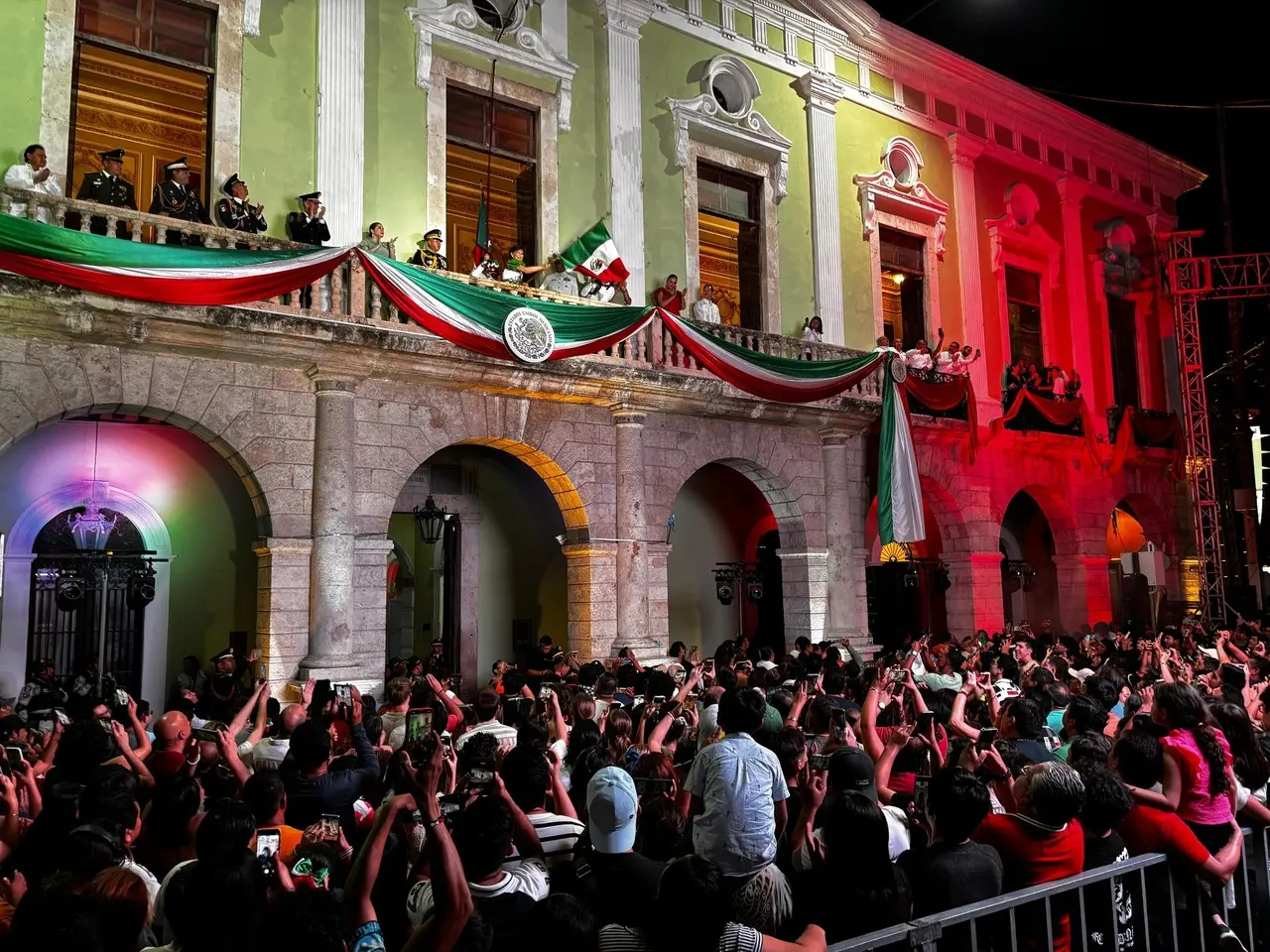
What to pack for Valladolid
Bring:
- Lightweight, breathable clothing
- Comfortable walking shoes
- Sandals or water shoes with grip
- Hat and sunglasses
- Refillable water bottle
- Sunscreen for general sightseeing
- Insect repellent
- Swimwear
- Quick-dry towel
- Dry bag or waterproof phone pouch
- Small umbrella or rain layer in wetter months
- Light layer for air-conditioned coaches
- Portable battery
- Small cash wallet
- Electrolytes if you struggle with heat
Many cenotes require visitors to shower before swimming and do not allow sunscreen, oils or repellent in the water.
Churches remain active places of worship. Bring clothing that allows you to enter respectfully.
How many days do you need in Valladolid?
Two nights is the best minimum for most visitors.
Three nights is better when you want to use Valladolid as a base rather than treating it as a stopover.
Half a day
A half-day gives you only an introduction.
Focus on:
- Main square
- San Servacio
- Palacio Municipal if open
- Calzada de los Frailes
- San Bernardino or Cenote Zací
Do not attempt the town, Chichén Itzá and several cenotes in the same half-day.
One full day
One full day is enough for the historic centre and one nearby activity.
A sensible plan is:
- Plaza and San Servacio early
- Museo San Roque or Casa de los Venados
- Lunch
- Afternoon rest
- Calzada de los Frailes
- San Bernardino
- Evening in the plaza
Add Cenote Zací only if current access and swimming arrangements work with your schedule.
Two days and one night
This is workable for a short road trip.
Use one day for Chichén Itzá and a cenote. Use the following morning for Valladolid itself before continuing to Mérida or the coast.
The drawback is that you see much of the city around arrival and departure times.
Three days and two nights
This is the strongest basic visit.
It allows:
- One arrival day in Valladolid
- One full ruins or cenote day
- One slower morning for museums, barrios and food
You can visit Chichén Itzá without sacrificing the whole town.
Four days and three nights
Three nights gives Valladolid room to work as a regional base.
A balanced stay could include:
- One Valladolid day
- One Chichén Itzá and cenote day
- One Ek Balam, Uayma or Temozón day
- Unhurried evenings in town
This is particularly useful for families, photographers and travelers who do not want to change hotels frequently.
Five nights or more
A longer stay suits travelers who want:
- Multiple cenote routes
- Río Lagartos and Las Coloradas
- Cobá on a transfer day
- Smaller villages
- Cooking or craft experiences
- Rest days between excursions
- A quieter base than Mérida or the Riviera Maya
After several days, consider whether distant places still make sense as round trips. Río Lagartos may deserve an overnight stay if wildlife and the coast are major priorities.
How to get to Valladolid
Valladolid is reached by coach, car, private transfer and Tren Maya.
There is no commercial airport in the city. Most international visitors arrive through Cancún or Mérida.
Arriving from Mérida
Valladolid is roughly two to two and a half hours from Mérida by road, depending on your route, traffic and starting point.
Options include:
- ADO coach
- Rental car
- Private transfer
- Tren Maya
- Organized excursion
ADO works well when you are staying centrally and do not need a car immediately.
A private transfer is useful when you have luggage, children or plans to stop at Chichén Itzá, Izamal or a cenote along the way.
For a door-to-door option, see our guide to a private transfer between Mérida and Valladolid.
Arriving from Cancún
Cancún and Valladolid are also around two to two and a half hours apart by road in normal conditions.
Compare the full journey from Cancún Airport, not only the distance shown on a map.
You may need to account for:
- Time leaving the airport
- Waiting for a coach
- Connections through Cancún
- Luggage handling
- Station transfer in Valladolid
- Time-zone differences between Quintana Roo and Yucatán
Quintana Roo and Yucatán do not always display the same local time. Check the time zone when moving between Cancún, Tulum and Valladolid, particularly for tours and transport departures.
Arriving from Playa del Carmen or Tulum
Direct and connecting coaches operate on regional routes, but frequency and journey patterns change.
Tulum is commonly around one and a half to two hours from Valladolid by car. Playa del Carmen normally takes longer.
A rental car or private transfer becomes useful if you want to stop at Cobá, Punta Laguna or cenotes between the coast and Valladolid.
Do not add too many stops on a transfer day while carrying luggage. A parked vehicle full of visible bags is an unnecessary risk.
Arriving by ADO coach
ADO is one of the easiest ways to reach Valladolid without driving.
The central bus terminal is within walking distance of many Centro hotels. A short taxi may still be worthwhile in strong heat or with luggage.
Coach travel works well when:
- Valladolid is part of a Mérida–Cancún route
- You are staying centrally
- You plan to use tours or taxis for excursions
- You do not want a one-way rental fee
- You are traveling alone
- You are uncomfortable driving in Mexico
Book important journeys ahead during Christmas, Easter and long weekends.
Bring a light layer. Air-conditioned coaches can feel cold.
Arriving by rental car
A car is the easiest option for independent cenote and village routes.
The roads around Valladolid are generally manageable, but watch for:
- Speed bumps when entering towns
- Motorcycles
- Bicycles
- Animals
- Unlit vehicles after dark
- Narrow village streets
- Sudden stops
- Roadworks
- Heavy rain
- Informal parking areas
Avoid unnecessary driving after dark on unfamiliar rural roads.
If your hotel is central, ask where to park before arrival. A property may advertise parking but use a separate lot several blocks away.
Do not leave luggage, cameras or electronics visible in the car.
Arriving by Tren Maya
Valladolid is served by the Tren Maya network.
The station is roughly 5 km north of the historic centre. It is not a practical walking arrival point for most visitors, especially with luggage.
You will need a taxi, shuttle or prearranged transfer between the station and town.
The train can make sense as part of a wider peninsula route, but it is not automatically better than ADO. Compare:
- Departure time
- Total journey time
- Ticket price
- Luggage rules
- Station location
- Transfer cost
- Connection reliability
- Your hotel’s distance from the bus terminal
Check the current timetable and station-transfer arrangements shortly before travel.
Arriving by private transfer
A private transfer is useful for:
- Families
- Groups
- Late or early arrivals
- Travelers with substantial luggage
- Older relatives
- Limited mobility
- Multi-stop transfer days
- Travelers connecting Valladolid with Chichén Itzá or cenotes
A driver is more expensive than a coach, but it can turn a travel day into a useful route.
Agree in advance on:
- Pickup location
- Luggage capacity
- Child-seat needs
- Waiting time
- Included stops
- Admission fees
- Parking
- Final destination
- Overtime charges
A transfer is not automatically a guided tour. Ask whether the driver is also a licensed guide if historical interpretation matters.
Getting around Valladolid
The historic centre is walkable.
You do not need a car for the plaza, San Servacio, Museo San Roque, Casa de los Venados, Calzada de los Frailes, San Bernardino and many restaurants.
Transport becomes necessary for most cenotes and archaeological sites.
GuideGetting Around Yucatán State: Complete Transport Guide for Mérida, Valladolid, Cenotes, Ruins & BeachesThe guide explains how to move around Yucatán state, whose main hubs are Mérida in the west and Valladolid in the east, with popular side‑destinations such as Progreso, Sisal, Celestún, Izamal, Uxmal, the Ruta Puuc and numerous cenote towns. For most travelers the cheapest and simplest inter‑city option is an ADO or first‑class bus; these run regularly between Mérida, Valladolid, Progreso and other towns. Public buses are also useful for short trips inside Mérida, especially the newer Va y Ven system, though they are less convenient with luggage, children or tight schedules. Taxis, Uber and DiDi operate city‑wide and are recommended for airport transfers, evening rides and trips to the bus or train stations. The airport is close to the city centre and can be reached by authorized taxi, private transfer, rideshare or, for light‑bag budget travelers, an airport bus that follows a set timetable. Renting a car in Mérida—either at the airport or in town—is advised for days when you need flexibility, such as visiting Uxmal, the Ruta Puuc, Homún or Cuzamá cenotes, Celestún, Sisal, San Crisanto or multi‑stop hacienda tours. A private driver or guided tour offers the same freedom at a higher price but removes the need to navigate traffic, topes and rural roads. Walking is practical only in central Mérida’s historic districts; sidewalks can be uneven and midday heat is intense from March through September, so early‑morning or evening walks are best. Overall the recommendation is to match the transport mode to the day’s agenda: buses for town‑to‑town moves, a car or driver for scattered rural attractions, and taxis or rideshare for short urban trips.Open
Walking
Valladolid is flat and compact.
The main difficulties are:
- Heat
- Limited shade
- Uneven pavements
- High kerbs
- Narrow walkways
- Cobblestones
- Traffic passing close to pedestrians
- Poor drainage during heavy rain
A walk that looks short on a map can feel much longer at 1pm.
Walk in sections. Return to your hotel during the hottest period rather than trying to complete the entire centre in one circuit.
Taxis
Taxis are widely used for local journeys and cenote trips.
For an out-of-town journey, agree on:
- Total fare
- One-way or return service
- Waiting time
- Number of stops
- Pickup location for the return
- Whether the driver will remain at the site
Do not assume you can easily find a return taxi at every rural cenote.
Ask your hotel for a current fare range before leaving.
Colectivos
Colectivos can be useful for budget travel to Chichén Itzá, Ek Balam and nearby communities.
Departure points may be informal, and vehicles usually leave when enough passengers arrive. Routes, stands and prices can change.
Colectivos work best when:
- You speak some Spanish
- You are flexible with timing
- You carry little luggage
- You are visiting one destination
- You are comfortable asking where to board
They are less useful for a carefully timed multi-stop day.
Cycling
Valladolid is flat enough for cycling, and some nearby cenotes can be reached by bicycle.
However, distance is not the only concern. Heat, traffic, road shoulders and the return journey matter.
Cycling can work for:
- Confident riders
- Early departures
- Short routes
- Travelers accustomed to warm weather
- People carrying enough water
It is not a good option for complete beginners in the hottest months.
Wear a helmet, use lights and avoid returning on unfamiliar roads after dark.
Scooters and motorcycles
Scooter and motorcycle rentals provide flexibility but add risk.
Use them only if you already have riding experience. Check brakes, tyres, lights, helmets and insurance before leaving.
Do not learn to ride on a rural Yucatán road.
Driving in the centre
A car is more useful outside Valladolid than inside it.
Centro has:
- One-way streets
- Narrow entrances
- Limited parking
- Delivery vehicles
- Motorcycles
- Pedestrians stepping into the road
- Hotels without on-site garages
Park once and walk where possible.
Valladolid with limited mobility
Valladolid can be challenging for wheelchairs and travelers with limited mobility.
The centre is flat, but accessibility is inconsistent. Pavements may be narrow, broken or interrupted by steps. Restored colonial buildings frequently have raised entrances and no lift.
Cenotes can be particularly difficult. Cave cenotes may involve steep, wet stairs, low light and slippery surfaces.
Before booking, ask hotels for specific information about:
- Step-free entrance
- Ground-floor rooms
- Door width
- Bathroom layout
- Shower access
- Grab rails
- Distance from reception
- Pool access
- Parking location
Do not rely only on the word “accessible.”
Door-to-door transport and a private driver can make the trip considerably easier.
Where to stay in Valladolid
For a first visit, stay in or near the historic centre.
The closer you are to the plaza, Calzada de los Frailes or Candelaria, the easier it will be to walk to dinner and return to the hotel during the hottest hours.
The right location depends on whether you value central access, quiet, parking or a larger pool.
Valladolid areas by travel style
| Area | Best for | Main advantage | Main drawback |
|---|---|---|---|
| Main square and Centro | First visits and short stays | Maximum convenience | Traffic, bells and evening noise |
| Candelaria | Budget stays and quieter streets | Walkable with a neighbourhood feel | Slightly farther from San Bernardino |
| Calzada de los Frailes | Couples, design and evening walks | Attractive route between centre and Sisal | Visitor-facing prices |
| Sisal and San Bernardino | Quiet stays and convent access | Calmer evenings | Longer walk to some central restaurants |
| Santa Ana and Zací area | Market access and local activity | Close to Cenote Zací | Less polished streets |
| San Juan | Residential atmosphere | Quieter and less tourist-facing | Fewer visitor services |
| Edge of town | Drivers, families and larger properties | Parking and space | Taxis needed for dinner |
| Countryside outside Valladolid | Retreat stays | Gardens, quiet and pools | Poor choice without transport |
Main square and Centro
Centro is the easiest location for a short visit.
You can walk to:
- San Servacio
- Palacio Municipal
- Museo San Roque
- Casa de los Venados
- Cenote Zací
- Calzada de los Frailes
- Restaurants and cafés
- The ADO terminal
The main drawbacks are noise and parking.
Rooms facing the plaza may hear traffic, church bells, events and late-night activity. Ask whether your room faces an interior courtyard if you sleep lightly.
Candelaria
Candelaria is one of the most practical areas for travelers who want to remain central without staying directly on the main square.
The barrio has its own church and park. It also provides reasonable access to the bus station and central restaurants.
Budget accommodation and small guesthouses are common in this area.
Check the exact block. A property described as Candelaria may still require a longer walk than expected.
Calzada de los Frailes and Sisal
The Calzada connects Centro with San Bernardino.
This is the most visually polished part of Valladolid and a good location for couples, photographers and travelers who like boutique hotels.
You will find:
- Restored façades
- Cafés
- Restaurants
- Clothing and design shops
- Fragrance and homeware businesses
- Small hotels
- Easy access to San Bernardino
Prices are often higher than in more local parts of Valladolid.
The area can also feel more visitor-facing than the market districts and residential barrios.
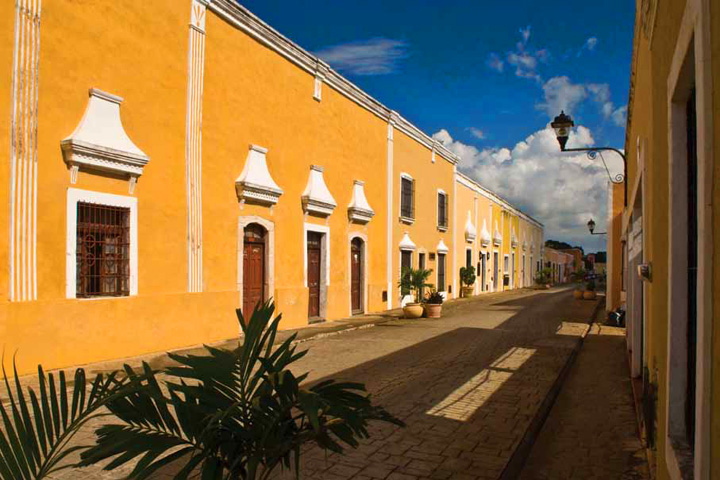 Calzada de los Frailes in Valladolid, Yucatán

Santa Ana and the Zací area
Santa Ana sits east of the central square and includes the municipal market area and Cenote Zací.
This is useful for travelers interested in morning food, local commerce and a less polished view of the city.
The streets can feel busier and more practical than Calzada de los Frailes.
Choose this area when proximity to local activity matters more than boutique atmosphere.
GuideSanta Ana, Mérida: Neighborhood & Park GuideA practical guide to Santa Ana in Mérida: the church, park, market, historic streets, nearby Paseo de Montejo, food, events, walking routes, transport, and where the neighborhood fits in a Yucatán trip.Open
San Juan
San Juan is quieter and more residential.
It suits repeat visitors, longer stays and travelers who want some distance from the busiest visitor streets.
There are fewer obvious attractions and fewer English-speaking services.
A bicycle, taxi or willingness to walk becomes more useful.
Staying outside the centre
Outlying hotels may offer:
- Larger pools
- Gardens
- Parking
- Bigger rooms
- Quieter nights
- Retreat-style facilities
The trade-off is transport.
A room outside town can become inconvenient if every meal requires a taxi. This is particularly important at night, when you may prefer to walk back from dinner.
Valladolid hotels to consider
These are examples by travel style rather than a fixed ranking. Ownership, policies, facilities and quality can change, so check recent reviews and exact room details before booking.
Hotel Mesón del Marqués
Mesón del Marqués sits directly on the main square.
Its strength is location. It works well for short stays, travelers arriving by bus and people who want restaurants and evening activity immediately outside.
The central position also means potential noise. Ask about room location if that matters.
Hotel Posada San Juan
Posada San Juan is a small boutique option in the historic area.
It suits travelers looking for a quieter, more personal property rather than a large hotel.
Check current child policies, room access and parking arrangements before booking.
Le Muuch Hotel Boutique
Le Muuch is a design-focused boutique stay within walking distance of the centre.
It is better suited to travelers who value the hotel atmosphere, pool and interior spaces rather than using the room only for sleep.
Confirm current age policies, room size and whether the exact room receives natural light.
Casa Quetzal
Casa Quetzal is near San Bernardino and the quieter end of Calzada de los Frailes.
It works well for travelers who want convent access and a calmer setting.
The walk to the main square is manageable, but it is not as immediate as staying directly in Centro.
Hostel Candelaria
Hostel Candelaria is a longstanding budget option near the Candelaria area.
It can suit solo travelers and people who want shared spaces or simple accommodation near the bus station.
Check current room types, air conditioning and noise expectations.
Zentik Project
Zentik Project sits outside the most walkable central zone and is better understood as a destination property.
It may suit couples or travelers who want to spend time at the hotel itself.
It is not the most practical choice for a first visit without transport. Confirm current age policies, restaurant arrangements and distance from the centre.
What to check before booking
Do not choose a hotel solely from photographs of the courtyard.
Ask:
- Does the room have reliable air conditioning?
- Is the pool large enough to swim in?
- Is breakfast included?
- Is parking on-site?
- Is the room on the ground floor?
- Does the property have a lift?
- Does the room face the street?
- Are children accepted?
- Is reception staffed late?
- Can the hotel arrange taxis before sunrise?
- Is purified drinking water provided?
- Does Wi-Fi work inside the room?
A beautiful colonial property can still have small windows, weak air conditioning, steep stairs or street noise.
Understanding Valladolid’s barrios
Valladolid is easier to appreciate when you see it as a collection of barrios rather than one central plaza.
Each historic district developed around a church, park or local institution.
| Barrio | What to look for | When to visit |
|---|---|---|
| Centro | Main square, San Servacio, civic buildings and restaurants | Morning and evening |
| Sisal | San Bernardino and the end of Calzada de los Frailes | Early morning or late afternoon |
| Candelaria | Church, park and accommodation | Morning or early evening |
| Santa Ana | Market, Cenote Zací and local commerce | Morning |
| Santa Lucía | Church, park and residential streets | Late afternoon |
| San Juan | Church, park and quieter neighbourhood life | Morning or near sunset |
Do not try to visit every barrio as a checklist.
Choose two or three and walk slowly.
A practical walking route
A good first walk is:
- Begin at Parque Francisco Cantón Rosado
- Visit San Servacio
- Cross to Palacio Municipal
- Walk toward Casa de los Venados or Museo San Roque
- Continue through Las Cinco Calles
- Walk Calzada de los Frailes
- Finish at San Bernardino
- Rest or eat near Sisal
- Return to the plaza after sunset
This route is more comfortable in the morning or late afternoon.
In strong heat, split it into two separate walks.
Best things to do in Valladolid
Valladolid does not require a packed attraction schedule.
Its strongest experiences combine a few historic sites with food, neighbourhood walks, a cenote and time in the plaza.
Spend time in the main square
Parque Francisco Cantón Rosado is the social centre of Valladolid.
The square is surrounded by San Servacio, municipal buildings, restaurants, shops and arcades.
Come early for a quieter view of the architecture. Return after sunset when families, vendors and visitors gather.
The curved “tú y yo” chairs are a familiar feature of public squares across Yucatán.
This is a working public space, not only a sightseeing stop. Sit for a while rather than walking through only to take a photograph.
Visit Iglesia de San Servacio
San Servacio dominates the south side of the main square.
The church seen today reflects several periods of construction and reconstruction. Its towers provide the visual centre of Valladolid.
Enter quietly when the church is open. Avoid sightseeing during Mass, weddings or funerals.
Dress respectfully and do not use flash near worshippers.
 Iglesia de San Servacio in central Valladolid
See the Palacio Municipal
The municipal palace stands beside the square.
Its interior murals present scenes from Valladolid’s history, including conquest, conflict and revolution. They are useful, but they should be understood as civic interpretations rather than neutral historical accounts.
When upper access is open, the balcony provides one of the clearest views across the plaza toward San Servacio.
This is normally a short visit rather than a full museum experience.
Opening and access arrangements may change around government activity and public events.
Visit Casa de los Venados
Casa de los Venados is a private house containing a large collection of Mexican folk art.
The collection includes ceramics, sculpture, textiles, religious imagery and work from several regions of Mexico.
The property is also worth seeing for its courtyard and domestic architecture.
Visiting arrangements are usually structured rather than completely open-ended. Tour times, donations and access policies can change, so confirm the current schedule before arriving.
This is one of the stronger cultural stops in Valladolid for travelers interested in folk art and Mexican design.
 The courtyard at Casa de los Venados
Visit Museo San Roque
Museo San Roque provides a compact introduction to local history.
The building has served several purposes over time, and the exhibits commonly touch on archaeology, colonial history, regional conflict and Valladolid’s revolutionary identity.
It is not a large museum. Allow around an hour, depending on what is open.
The museum is more useful after reading a little about Zací and the Maya Social War. Without that context, some displays may feel brief.
Check current hours before making a special journey.
 Museo San Roque in Valladolid
Walk Calzada de los Frailes
Calzada de los Frailes connects the central districts with San Bernardino.
It is Valladolid’s most photographed street, with colourful façades, restored houses and small businesses.
Walk it in the morning or late afternoon. Midday light is harsh, and the heat reflected from the road can be tiring.
The Calzada is now one of the city’s main visitor corridors. Expect:
- Boutique prices
- Design shops
- Cafés
- Restaurants
- Small hotels
- Fragrance and clothing businesses
- More polished façades than in surrounding barrios
It is worth walking, but it does not represent the whole city.
Look beyond the main street into Sisal, Santa Ana and Candelaria if you want a broader view of Valladolid.
GuideCalzada de los Frailes: Valladolid’s Most Beautiful StreetA practical guide to walking Calzada de los Frailes in Valladolid, Yucatán, with its history, colorful façades, shops, convent, photo stops, timing, transport, and nearby places to combine.OpenVisit San Bernardino de Siena
The former Convent of San Bernardino de Siena is one of the most important buildings in Valladolid.
The complex includes a church, former convent spaces and the remains of a hydraulic system connected to the cenote beneath the site.
Its defensive appearance, thick walls and large scale make it different from the smaller neighbourhood churches.
Go early or late. The open space around the convent becomes exposed during the middle of the day.
Allow time to walk around the building rather than viewing it only from the road.
Evening video mapping or cultural presentations have operated at different times. Schedules can change, so check locally rather than relying on an old weekly programme.
See Las Cinco Calles
Las Cinco Calles is a small junction where several streets meet near the route toward Calzada de los Frailes.
The intersection is visually attractive and helps explain the transition between Centro and Sisal.
It is not a major attraction requiring a separate journey. Include it naturally while walking toward San Bernardino.
Traffic still uses the surrounding streets. Take photographs from the pavement and remain aware of vehicles.
Swim or walk at Cenote Zací
Cenote Zací is one of Valladolid’s most unusual features: a large, semi-open cenote close to the urban centre.
Its location makes it valuable for travelers without a car. You can reach it on foot from many central hotels.
Zací has experienced periods of closure, redevelopment and changing swimming arrangements. Check current opening, entry and swimming access before building your day around it.
When swimming is allowed:
- Wear shoes with grip
- Follow life-jacket rules
- Shower first
- Do not enter wearing sunscreen or repellent
- Keep valuables secure
- Move carefully on wet steps
- Do not jump unless an official area is clearly open
Zací is convenient rather than remote. Expect an urban setting and more local visitors on weekends.
For more detail, read our Cenote Zací guide.
 Cenote Zací in Valladolid
Visit the municipal market
Mercado Municipal Donato Bates Herrera is one of the better places to see Valladolid functioning as a regional centre.
Go in the morning.
You can find:
- Fruit and vegetables
- Meat and longaniza
- Tortillas
- Prepared food
- Spices and recados
- Household goods
- Clothing
- Small local businesses
Markets are not styled visitor attractions. Expect heat, noise, close passages and strong smells.
Bring small notes. Ask before photographing vendors.
A market breakfast works well before a day trip, but do not leave too late if Chichén Itzá or Ek Balam is your priority.
Explore Valladolid’s churches
San Servacio and San Bernardino receive most of the attention, but neighbourhood churches help explain the older structure of the city.
Consider visiting:
- Nuestra Señora de la Candelaria
- Santa Ana
- Santa Lucía
- San Juan de Dios
These are active community churches.
Their value lies partly in the surrounding park and neighbourhood, not only the building.
Visit respectfully and avoid entering during private services unless invited.
Shop for crafts and regional design
Valladolid offers a mixture of local craft, regional textiles and visitor-oriented design.
You may find:
- Embroidered huipiles
- Table linen
- Bags and rebozos
- Leather goods
- Ceramics
- Honey
- Fragrances
- Decorative homeware
- Contemporary Mexican clothing
Not everything sold in Valladolid is made locally.
Ask:
- Where was this made?
- Who made it?
- Is the embroidery done by hand or machine?
- Is the textile from Valladolid or another region?
- Is the item produced by a cooperative?
- How should it be washed or stored?
Hand embroidery should cost more than machine-made work. Extremely low prices usually reflect different production methods rather than an unexpected bargain.
 Textiles and handmade goods in Valladolid
Visit a melipona bee experience
The Valladolid area has experiences focused on melipona bees, native stingless bees with deep importance in Maya culture.
Xkopek is one of the better-known examples near the city.
A visit may include:
- Bee biology
- Traditional honey use
- Regional plants
- Maya knowledge
- Tasting
- Walking through a natural area
This suits families, nature travelers and visitors who want something other than another cenote.
Check language availability, tour times and whether advance booking is required.
Bees are stingless, but people with severe allergies should still discuss the visit with the operator.
Free and low-cost things to do
Valladolid can be enjoyed without an expensive attraction schedule.
Good free or low-cost activities include:
- Sitting in the main square
- Entering San Servacio when open
- Walking Calzada de los Frailes
- Exploring Candelaria, Sisal and San Juan
- Visiting neighbourhood churches
- Walking around San Bernardino
- Browsing the market
- Looking at civic murals when accessible
- Evening people-watching
- Photographing public architecture
- Visiting small public museums when admission is free or modest
The main costs are often food, transport and heat management rather than entrance tickets.
What to eat in Valladolid
Food is one of the strongest reasons to stay overnight.
Valladolid sits within the cooking traditions of eastern Yucatán. The flavours are based around maize, pork, turkey, sour orange, achiote, charred chiles, pumpkin seed and regional spice mixtures.
Do not eat every meal at restaurants facing the main square.
A useful food plan includes:
- A market or street-food breakfast
- A traditional regional lunch
- A lighter dinner
- One more polished restaurant
- Snacks or marquesitas around the plaza
For a broader introduction, read our Yucatán food guide and guide to the Yucatecan dishes worth trying.
Essential Valladolid and eastern Yucatán dishes
Lomitos de Valladolid
Lomitos are pieces of pork cooked in a tomato-based sauce, often served with boiled egg.
The dish is closely associated with Valladolid.
It is simple, filling and less heavily spiced than some visitors expect.
Longaniza de Temozón
Longaniza is particularly associated with nearby Temozón.
The sausage is seasoned, smoked and served in tacos, tortas or larger plates.
Valladolid is one of the easiest places to try it, but a stop in Temozón provides better geographic context.
Escabeche oriental
Escabeche oriental usually combines roasted poultry with an acidic broth, onion and regional spices.
It is strongly associated with eastern Yucatán.
The flavour is tangy rather than aggressively hot.
Relleno negro
Relleno negro uses a dark recado made from charred chiles and spices.
It may be served with turkey, pork and a meatball containing boiled egg.
The black colour comes from the recado. The dish is smoky and complex rather than simply spicy.
Cochinita pibil
Cochinita pibil is pork marinated with achiote and sour orange, then cooked slowly.
It is commonly eaten in the morning, especially on Sundays.
Go early. Good cochinita stalls can sell out.
Lechón al horno
Lechón is roast pork, often served in tacos or tortas.
The crisp skin is especially prized.
Like cochinita, it is commonly a morning food rather than a late dinner.
Papadzules
Papadzules combine tortillas, boiled egg, pumpkin-seed sauce and tomato sauce.
They are a useful meat-free option, although preparation may still involve animal products depending on the kitchen.
Panuchos and salbutes
Panuchos are fried tortillas filled with black beans and topped with meat and vegetables.
Salbutes use a lighter fried tortilla without the bean filling.
Both are best eaten immediately.
Marquesitas
Marquesitas are crisp rolled wafers cooked on a griddle.
The classic Yucatán combination includes Edam-style cheese, sometimes with chocolate, caramel or fruit spread.
They are commonly sold around parks in the evening.
Where to eat in Valladolid
Restaurant hours and ownership change. Check the latest opening information before making a special journey.
Mercado Municipal
The market is useful for breakfast, fruit, juices and casual local food.
Go early and choose a stall with steady turnover.
This is the least polished option and one of the more useful for understanding everyday Valladolid.
La Palapita de los Tamales
La Palapita de los Tamales is known for regional tamales and casual food.
It can work for breakfast or a lighter meal.
Popular varieties may sell out, so earlier is better.
El Atrio del Mayab
El Atrio sits beside San Servacio and is convenient for a central traditional meal.
The setting is visitor-oriented, but the location works well for first-time travelers who want regional dishes without leaving the square.
Expect central prices.
Restaurante El Mesón del Marqués
The restaurant at Mesón del Marqués is another convenient central option.
Its courtyard setting and broad menu make it useful for groups and families with different preferences.
This is not where to look for an undiscovered neighbourhood meal. Its advantage is location, reliability and a menu that introduces several Yucatecan dishes.
Yerbabuena del Sisal
Yerbabuena sits near San Bernardino.
It is useful for lighter meals, breakfast, juices and vegetarian-friendly options.
It works naturally before or after visiting the convent.
Conato 1910
Conato 1910 offers a more contemporary evening meal with references to regional history and cooking.
It can suit travelers who want something more polished after several casual meals.
Check reservations during busy periods.
Ice cream, coffee and evening snacks
Valladolid has several cafés, gelato shops and dessert businesses in the centre and along Calzada de los Frailes.
Use these for a heat break rather than building a full itinerary around one fashionable café.
After dinner, the plaza is the easiest place to find marquesitas and simple snacks.
How to eat well without overspending
- Eat the main meal at lunch
- Use the market for one breakfast
- Try cochinita or lechón early
- Carry small cash
- Avoid ordering every meal directly on the square
- Ask whether prices include tax
- Check whether card payments carry a minimum
- Use habanero cautiously
- Do not schedule a heavy lunch immediately before swimming
- Drink more water than you think you need
A market breakfast, traditional lunch and light evening meal usually provide a better introduction than three formal restaurant bookings.
Best cenotes near Valladolid
Valladolid is one of the strongest cenote bases in Yucatán.
The challenge is choosing the right cenote, not finding one.
Some cenotes are designed around photography. Others are better for swimming. Some have full restaurants, changing rooms and large parking areas. Others are rural and require more planning.
For detailed comparisons, read our guide to the best cenotes near Valladolid.
Quick cenote comparison
| Cenote | Best for | Approximate time from Valladolid | Main consideration |
|---|---|---|---|
| Zací | Travelers without a car | In town | Check current swimming access |
| Suytun | Photography | 10–15 minutes | Can feel organized around the photo |
| Oxman | Swimming and a longer stop | 10–20 minutes | Popular with groups |
| Xkekén | Cave atmosphere | 10–20 minutes | Wet stairs and enclosed space |
| Samulá | Underground cavern | 10–20 minutes | Often paired with Xkekén |
| Saamal | Developed facilities | 10–20 minutes | Tour-group atmosphere |
| Chichikan | Families and organized facilities | 10–20 minutes | More structured visitor experience |
| X’Canché | Ek Balam combination | 30–40 minutes | Best with the archaeological site |
| Hubiku | Facilities and group visits | 30–45 minutes | Less intimate than rural cenotes |
| Palomitas and Agua Dulce | Countryside cenote day | 40–50 minutes | Car or driver strongly recommended |
Opening hours, prices and life-jacket rules change. Confirm directly before building a tight schedule.
Cenote Suytun
Suytun is known for its underground platform and shaft of light.
It is one of the most photographed cenotes in the region.
Choose it when the visual experience matters more than a long swim. It can feel staged or crowded when visitors are waiting for the same photograph.
Light conditions change by season, weather and time of day.
Go early for fewer people. Go closer to the strongest light window only if you accept the likelihood of larger crowds.
 Cenote Suytun near Valladolid

Cenote Oxman
Oxman sits at Hacienda San Lorenzo Oxman.
The open cenote, hanging roots and swimming facilities make it one of the better all-round options near Valladolid.
It suits:
- Couples
- Groups
- Families with confident swimmers
- Travelers who want to remain for several hours
- People combining lunch and swimming
It is easier by car, taxi or private driver.
Packages and included food credits can change. Confirm what the admission actually includes before paying.
 Swimming at Cenote Oxman

Xkekén and Samulá
Xkekén and Samulá are close together near Dzitnup.
Both provide the enclosed cave-cenote experience many travelers expect from inland Yucatán.
The stairs can be damp and uneven. Light is limited, and the enclosed environment may not suit people who dislike caves.
Visiting both is convenient, but one may be enough if you are also swimming elsewhere that day.
 Cenote Xkekén near Valladolid
 Cenote Samulá near Valladolid

X’Canché
Cenote X’Canché is commonly combined with Ek Balam.
This is one of the most efficient archaeology-and-swimming combinations from Valladolid because the cenote is close to the archaeological zone.
Transport arrangements inside the site area can change. Confirm current access, bicycle or local-transfer options and closing time when you arrive.
Do not leave the cenote too late if you still have to return to Valladolid by taxi or colectivo.
Which cenote should you choose?
Choose based on your actual priority.
- No car: Zací, if open for swimming
- Photography: Suytun
- Longer swim: Oxman
- Cave experience: Xkekén or Samulá
- Family facilities: Oxman, Saamal or Chichikan
- Ek Balam day: X’Canché
- Quieter countryside route: Palomitas or Agua Dulce
- Chichén Itzá day: Choose a cenote west of Valladolid rather than driving back and forth
Two cenotes in one day is normally enough.
Three can work with a car, but the experience often becomes repetitive.
Cenote safety and etiquette
- Shower before entering
- Follow life-jacket rules
- Do not use sunscreen or repellent in the water
- Wear footwear with grip
- Move slowly on steps
- Do not jump unless clearly permitted
- Keep children within reach
- Never assume water is shallow
- Avoid swimming alone
- Follow staff instructions
- Do not touch formations
- Take all rubbish with you
- Carry cash
- Bring dry clothes for the drive back
Cenotes are not swimming pools. Depth, visibility, access and rescue arrangements vary.
Best day trips from Valladolid
Valladolid’s main advantage is the concentration of strong excursions nearby.
Do not try to complete all of them in one stay. Choose the routes that fit the rest of your trip.
Chichén Itzá
Chichén Itzá is the best-known archaeological site near Valladolid.
Staying in Valladolid allows you to reach the entrance before many long-distance excursions from Cancún, Playa del Carmen and Tulum.
Leave early.
Bring:
- Water
- Hat
- Comfortable shoes
- Sun protection
- Small cash
- Identification if required for a discount
- Patience for ticketing and security
Shade is limited in exposed areas.
A licensed guide is useful when you want historical and architectural context. Without one, read about the site before arriving rather than relying only on signs.
Chichén Itzá can be visited by:
- Rental car
- ADO or regional bus
- Colectivo
- Taxi
- Private driver
- Organized tour
For detailed planning, read our Valladolid to Chichén Itzá guide and full Chichén Itzá visitor guide.
 Chichén Itzá, west of Valladolid

Ek Balam
Ek Balam is smaller, quieter and closer to Valladolid than Chichén Itzá.
The site is known for the Acropolis and its preserved stucco decoration.
For many visitors, Ek Balam is easier to absorb. You can spend more time looking at architectural details without moving through the same scale of crowds.
Current climbing access can change for conservation and safety reasons. Do not plan the visit around the assumption that every structure will be climbable.
Ek Balam combines naturally with:
- Cenote X’Canché
- Temozón
- Uayma
- A quieter afternoon in Valladolid
A rental car or driver is simplest. Colectivos and taxis can also work, but confirm the return plan.
Read our full Ek Balam guide.
GuideEk Balam Guide: Climbing the Acropolis and Swimming Cenote XcanchéA complete guide to visiting Ek Balam in Yucatán: climb the Acropolis for jungle views, see the preserved stucco carvings, and cool off in Cenote Xcanché. Includes entrance fees, transport from Valladolid, and practical tips.Open
Uayma
Uayma is a small town north-west of Valladolid known for its distinctive church.
The reconstructed façade uses red and white decorative patterns that make it visually different from the plain stone churches found elsewhere in the region.
Uayma is not a full-day destination.
Combine it with:
- Ek Balam
- Temozón
- A rural cenote
- A slow drive back to Valladolid
Go for architecture, photography and a short village stop.
Dress respectfully and remember that the church remains part of local religious life.
Temozón
Temozón is associated with longaniza.
It works as a food stop before or after Ek Balam.
This is a practical town rather than a polished attraction. Bring cash and keep expectations simple.
Ask where the longaniza was produced and whether it can be packed safely if you plan to transport it.
Do not leave meat unrefrigerated in a hot car.
GuideTemozón: Smoked Meats, Wood Shops & Ek Balam BaseTemozón is a small town a short drive north of Valladolid in the Yucatán, known for its smoked pork sausages and longaniza displayed along the main street and for a concentration of woodworking and furniture showrooms, with the Ek Balam archaeological zone and the community‑run cenotes X’canché and Hubiku only minutes away. The town itself is free to visit and the shops generally operate from 9 am to 6 pm, though hours can vary. Ek Balam is open daily 8 am–5 pm (last entry around 4 pm) and charges foreign adults about $561 MXN (INAH $100 plus a $461 state fee) and Mexican nationals about $227 MXN, with free entry for many locals on Sundays. Cenote X’canché costs roughly $170 MXN and Hubiku about $100 MXN for swimming only, with a separate buffet charge if desired. Cash in Mexican pesos is required; cards are rarely accepted at the small shops. A typical visit lasts four to six hours for the meat and furniture strip plus a cenote, or a full day if Ek Balam is added. Visitors can expect to order smoked meats by weight, eat them on‑site with tortillas and salsas, browse custom cedar and hardwood furniture, explore the climbable Maya ruins with jungle views, and then cool off in either the semi‑open X’canché (reached by a 1.5 km path) or the closed‑cavern Hubiku with its buffet. The town centre is flat but sidewalks are uneven, and the cenotes have stairs. Recommended transport is a car or frequent taxis/colectivos from Valladolid (12–14 km, 15–20 min); Ek Balam is another 14 km beyond Temozón. Bring small‑bill cash, swimwear, water shoes, sun protection and a reusable bottle; ask for mixed meat platters, confirm price per kilo, keep two receipts for Ek Balam, rinse before swimming and avoid non‑biodegradable sunscreen.Open
Río Lagartos
Río Lagartos is a longer day from Valladolid but remains realistic with an early start.
The main activity is a boat trip through the protected wetland area.
Depending on season and conditions, you may see:
- Flamingos
- Herons
- Pelicans
- Cormorants
- Raptors
- Mangroves
- Crocodile habitat
- Salt landscapes
Wildlife sightings are never guaranteed.
Choose a responsible operator who keeps distance from birds and does not pressure animals for photographs.
Bring sun protection. Boat exposure can be intense even when the air feels breezy.
GuideRío Lagartos Travel Guide: Flamingos, Boat Tours, Las Coloradas and Where to StayRío Lagartos is a tranquil fishing town on Yucatán’s north coast that serves as the main gateway to the Ría Lagartos Biosphere Reserve, a UNESCO‑recognized wetland famous for flamingo colonies, mangrove estuaries and crocodiles. There is no entry fee to the town; reserve access is usually included in boat tours, though some operators charge a small conservation fee of about 54 MXN on site. Shared or small‑group wildlife and Las Coloradas boat tours cost roughly $70–$95 USD per person, while private boats are priced per vessel for 2–4 hours. Boat tours run from 6:00 to 17:00 for daytime wildlife viewing, with night mangrove/crocodile tours offered around 19:30–21:30 for 1.5–2 hours. Cash in pesos is essential, as ATMs are unreliable and most businesses prefer cash. From Mérida the drive is 205–230 km and takes about 2.5–3 hours via Tizimín; from Cancún it is 225–255 km, roughly 3–3.5 hours; from Valladolid it is 105 km, about 1.5–2 hours. Buses go to Tizimín, then a local bus or colectivo reaches Río Lagartos. The pink salt ponds of Las Coloradas lie 24 km away, a 20–25 minute drive. A typical day includes a 2–4 hour boat safari through mangrove channels to see flamingos, herons, spoonbills, ospreys and, with luck, crocodiles, often with a beach stop and optional Mayan‑clay mud mask. Night tours let visitors watch crocodile eyeshine and nocturnal birds. Visitors should bring cash, sun protection, insect repellent, binoculars, a dry bag and a dark swimsuit for mud baths. Keep noise low, respect nesting zones, use life jackets, and avoid drones. Mid‑day is best for the pinkest hues at Las Coloradas, while early morning and late afternoon are optimal for wildlife. The dry season (December–April) offers comfortable weather; November nortes can bring wind and rougher water, so book morning departures when possible.Open
Las Coloradas
Las Coloradas is known for industrial salt ponds that can appear pink under certain light and water conditions.
It is not a natural swimming lagoon and should not be treated as a beach.
Access rules, viewpoints and tour arrangements can change. Follow current instructions and do not enter restricted salt-production areas.
The colour is affected by light, season, water conditions and the operation of the salt works. Do not expect every visit to match heavily edited photographs.
Combine Las Coloradas with Río Lagartos rather than driving there only for one photograph.
GuideLas Coloradas, Yucatán: Pink Lakes Complete Visitor GuideA practical guide to Las Coloradas, Yucatán: how the pink salt ponds work, when the colors are strongest, what access is like, how to combine the visit with Río Lagartos, and which route suits your trip.Open
Cobá
Cobá is in Quintana Roo and works best as a transfer-day stop between Valladolid and Tulum.
The archaeological zone is spread through forest, giving it a different atmosphere from Chichén Itzá.
Rules regarding bicycles, local transport and climbing have changed at different times. Confirm current conditions before arrival.
Cobá is less efficient as a round-trip day if you are already planning Chichén Itzá and Ek Balam.
Izamal
Izamal can be reached from Valladolid, but it is usually better as a stop while traveling to or from Mérida.
A Valladolid–Izamal–Valladolid round trip adds unnecessary driving for most short stays.
Use Izamal as part of a westbound transfer day:
- Leave Valladolid
- Stop in Izamal
- Have lunch
- Continue to Mérida
This avoids backtracking.
GuideIzamal: The Yellow City GuideIzamal is a small colonial town painted yellow, located east of Mérida in central Yucatán, about one hour to one hour 15 minutes by road from Mérida Centro and roughly 1½ hours from Valladolid. It is most often visited as a half‑day or full‑day day trip from Mérida, using a rental car, private driver, or the cheapest option—a bus from Mérida’s Noreste/Oriente terminals; a Tren Maya connection exists but the station is not in the main plaza. The essential sights can be covered in 4–6 hours, or a full day if you include a leisurely lunch, extra photography time and a slower pace. Entry to the Convento de San Antonio de Padua is free (donations welcome) and the Kinich Kakmó pyramid can be climbed at no charge; the cost of the visit is therefore limited to transport, meals and any optional guide or carriage hire. Visitors should expect a walkable historic centre with a wide convent atrium, the climb of Kinich Kakmó (uneven stone steps, bring proper shoes and water), and the chance to wander yellow‑washed streets, small markets and craft shops. Early morning (before 10 am) or late afternoon (after 4 pm) offers softer light for photography and cooler temperatures; midday can be very hot and the stone of the pyramid becomes scorching. Dress modestly for the convent, bring a hat for the exposed atrium, and carry cash for meals—restaurants such as Kinich and Zamná serve traditional Yucatecan dishes, while smaller loncherías are cheaper but may not accept cards. Horse‑drawn carriages are available but should be used after checking the animal’s condition. The town’s layered Maya, colonial and modern character makes it a relaxed, family‑friendly alternative to larger archaeological sites.Open
Suggested Valladolid itineraries
These plans are deliberately moderate.
Heat, meals, transport and swimming take longer than they appear on a map.
One day in Valladolid
Use this when you are passing through and want the city itself rather than a rushed ruins combination.
Morning
- Breakfast in Centro or at the market
- Main square
- San Servacio
- Palacio Municipal
- Museo San Roque or Casa de los Venados
Midday
- Regional lunch
- Return to the hotel or rest in shade
Late afternoon
- Las Cinco Calles
- Calzada de los Frailes
- San Bernardino
Evening
- Dinner
- Main square after sunset
- Marquesita or ice cream
Do not add Chichén Itzá unless Valladolid is only a brief lunch and evening stop.
Two days and one night
Day one
- Arrive before lunch
- Check in
- Explore Centro
- Walk Calzada de los Frailes
- Visit San Bernardino
- Dinner and evening plaza
Day two
- Leave early for Chichén Itzá
- Visit one cenote
- Continue to Mérida or the coast
This works best with a car, driver or pre-planned transport.
Three days and two nights
Day one
- Arrive and check in
- Main square
- San Servacio
- Calzada de los Frailes
- San Bernardino
- Dinner
Day two
- Chichén Itzá at opening
- Cenote after the ruins
- Rest in Valladolid
- Evening meal
Day three
- Market breakfast
- Museo San Roque or Casa de los Venados
- Cenote Zací if operating
- Continue to the next destination
This is the best simple plan for a first visit.
Four days and three nights
Day one
- Valladolid centre
- Calzada de los Frailes
- San Bernardino
Day two
- Chichén Itzá
- One cenote
- Quiet evening
Day three
- Ek Balam
- X’Canché
- Temozón or Uayma
Day four
- Market
- Museum or barrio walk
- Continue onward
This gives you enough time to understand Valladolid without giving up the regional sights.
Five days and four nights
Use Valladolid as a proper eastern Yucatán base.
A balanced stay could include:
- One Valladolid day
- One Chichén Itzá day
- One Ek Balam and Temozón day
- One Río Lagartos and Las Coloradas day
- Slow mornings and free evenings
This schedule works best with a car or driver.
Do not add a cenote to every day. Leave time for meals, laundry, swimming at the hotel and rest.
Valladolid with children
Valladolid can work well for families.
The centre is compact, evenings are relaxed and swimming breaks make historical days easier.
Choose a hotel with:
- Reliable air conditioning
- A practical pool
- Family rooms
- Breakfast
- Ground-floor access
- Secure parking if driving
- Easy restaurant access
Good family activities include:
- Main square after sunset
- San Bernardino
- Museo San Roque
- Melipona bee experience
- Developed cenotes
- Ek Balam
- Market fruit and simple snacks
- Marquesitas in the evening
Be careful around cenotes. Steps may be wet, steep or unguarded. Life jackets should be used whenever available, especially for children.
Chichén Itzá can be difficult at midday with young children. Arrive early and keep the visit focused.
Valladolid for couples
Valladolid suits couples who want a quieter stop between larger destinations.
A simple couples plan is:
- Small boutique hotel
- Late-afternoon Calzada walk
- Dinner in Centro
- Early archaeological visit
- Cenote swim
- Slow final morning
Stay near Calzada de los Frailes or San Bernardino for a calmer evening atmosphere.
A private driver can simplify one full day of ruins, food and swimming.
Valladolid for solo travelers
Valladolid is manageable for solo visitors because the centre is compact and long-distance bus connections are useful.
Stay centrally.
Without a car, focus on:
- Main square
- San Servacio
- Museo San Roque
- Casa de los Venados
- Calzada de los Frailes
- San Bernardino
- Cenote Zací
- Group excursions
- Colectivos for one-destination trips
Confirm return transport before leaving for a rural cenote.
Use ordinary caution at night and avoid walking alone on unfamiliar outer streets after activity has quietened.
Valladolid for photographers
The best light is generally early morning and late afternoon.
Useful subjects include:
- San Servacio
- Main square
- Municipal palace balcony
- Calzada de los Frailes
- San Bernardino
- Neighbourhood churches
- Uayma
- Suytun
- Xkekén and Samulá
- Ek Balam
- Markets and crafts, with permission
Do not block doorways or use private homes as sets.
Ask before photographing people.
A tripod may not be allowed inside museums, churches or archaeological sites.
How Valladolid fits into a larger route
Valladolid works best as part of a broader Yucatán itinerary.
Mérida to Valladolid to Cancún
This is one of the simplest routes across the peninsula.
A sensible order is:
- Mérida
- Izamal as an optional transfer stop
- Valladolid
- Chichén Itzá
- Cenote
- Cancún or Riviera Maya
This avoids returning west after visiting eastern Yucatán.
Cancún to Valladolid to Mérida
This route works well after arriving through Cancún Airport.
A practical flow is:
- Transfer from Cancún to Valladolid
- Stay two or three nights
- Visit Chichén Itzá and cenotes
- Continue to Mérida
- Use Mérida for Uxmal, Progreso and western Yucatán
It creates a gradual transition from the coast into the interior.
Tulum to Valladolid to Mérida
This route works particularly well by car or private transfer.
Possible stops include:
- Tulum
- Cobá
- Valladolid
- Ek Balam or Chichén Itzá
- Mérida
Do not attempt Tulum, Cobá, multiple cenotes and Valladolid sightseeing in one day with luggage.
Choose one main stop.
Valladolid to Río Lagartos
A northbound route can include:
- Valladolid
- Ek Balam
- Temozón
- Río Lagartos
- Las Coloradas
This is better as a route with an overnight near the coast when wildlife is a major priority.
Returning to Valladolid the same day is possible but creates a longer drive.
GuideBest Río Lagartos Tours from Valladolid: Flamingos, Las Coloradas and WildlifeCompare the best ways to visit Río Lagartos from Valladolid, from a local boat trip to a full-day route with Las Coloradas, wildlife and a cenote.Open
Valladolid versus Mérida
Choose Valladolid when you want:
- Chichén Itzá early
- Ek Balam
- Nearby cenotes
- A smaller city
- A two- or three-night stop
- Easier eastern Yucatán routes
Choose Mérida when you want:
- More museums
- More restaurants
- Nightlife and public events
- Uxmal and Ruta Puuc
- Progreso and the Gulf coast
- Modern hospitals and larger-city services
- A base for a week or more
Many Yucatán trips are stronger with both.
Valladolid versus Tulum
Choose Valladolid for:
- Inland history
- Chichén Itzá
- Ek Balam
- Regional food
- Lower-key evenings
- Colonial and Maya context
Choose Tulum for:
- Caribbean beaches
- Coastal cenotes
- Diving
- Resort and beach-club infrastructure
- Access to southern Quintana Roo
Valladolid is generally easier for an inland cultural stop. Tulum is better when the sea is central to the trip.
Common mistakes to avoid
Visiting only for lunch
A lunch stop provides a view of the main square but misses the city’s best hours.
Valladolid is calmer in the morning and more social after sunset.
Stay overnight when the route allows.
Trying to see everything in one day
Chichén Itzá, Ek Balam, several cenotes and Valladolid do not belong in one comfortable day.
One archaeological site plus one cenote is enough.
Choosing a hotel too far out without transport
A cheaper room can become inconvenient when every dinner requires a taxi.
Check the exact map location.
Underestimating the heat
Valladolid’s compact centre still becomes tiring in direct sun.
Rest at midday.
Choosing a cenote only from photographs
A visually famous cenote may be busy, highly managed or less suitable for swimming.
Choose according to your real priority.
Assuming Tren Maya arrives downtown
The station is outside the historic centre.
Include the final taxi or shuttle in your timing and budget.
Leaving luggage in the car
Move luggage into the hotel before sightseeing.
Do not leave bags visible during a cenote, restaurant or archaeological stop.
Relying on old opening hours
Cenotes, museums, video mapping, churches and privately operated attractions can change their schedules.
Check shortly before visiting.
Treating Valladolid as a stage set
People live behind the colourful façades.
Respect homes, churches, markets and community spaces.
Forgetting the time-zone change
Yucatán and Quintana Roo may show different local times.
Check departure times when traveling between Valladolid and Cancún, Playa del Carmen or Tulum.
When to use a tour, driver or trip planner
Use a tour when you want historical interpretation, structured timing and transport included.
Use a private driver when you want flexibility, especially for:
- Chichén Itzá and a cenote
- Ek Balam, Temozón and Uayma
- Rural cenote routes
- Río Lagartos and Las Coloradas
- Transfer days with luggage
- Families and groups
Use independent transport when you are comfortable checking schedules, arranging return journeys and changing plans when necessary.
For quick route questions, use the free Yucatán Guide WhatsApp assistant.
For the next step, compare the Stay guides with the relevant destination guide.
For the next step, use the Plan hub to compare itineraries, transport and practical resources already available.
The main decision is not whether private transport is more comfortable. It usually is. The question is whether the time saved justifies the cost for your group.
Valladolid FAQ
Is Valladolid safe for tourists?
Most visits to central Valladolid are straightforward.
Use normal precautions:
- Keep valuables secure
- Avoid displaying large amounts of cash
- Use known taxis or hotel-arranged transport
- Do not leave luggage in cars
- Avoid quiet outer streets late at night
- Check current road and weather conditions
- Keep copies of important documents
The historic centre is generally active in the evening, especially around the plaza.
Can you visit Valladolid as a day trip from Mérida?
Yes, but it is a long day if you also add Chichén Itzá or cenotes.
A focused day trip can work. An overnight stay is better.
Can you visit Valladolid from Cancún?
Yes.
Travel time is usually around two to two and a half hours by road, depending on your exact starting point and traffic.
Check the time-zone difference.
Is Valladolid worth staying overnight?
Yes.
One night lets you see the plaza after day-trip groups leave. Two or three nights provide a much better visit.
Do you need a rental car?
No for the town itself.
A car is useful for multiple cenotes, Ek Balam, Uayma, Temozón and Río Lagartos.
Can you visit Chichén Itzá without a tour?
Yes.
You can use a car, bus, colectivo, taxi or private driver. A guide is not mandatory but can make the site easier to understand.
How far is Chichén Itzá from Valladolid?
The road journey is usually around 40 to 50 minutes.
This is one of the main reasons to stay in Valladolid.
How far is Ek Balam from Valladolid?
Ek Balam is generally around 30 to 40 minutes away by road.
What is the best cenote near Valladolid?
There is no single best choice.
Choose:
- Zací for convenience
- Suytun for photography
- Oxman for a longer swim
- Xkekén or Samulá for caves
- X’Canché with Ek Balam
- Palomitas or Agua Dulce for a countryside route
Is Cenote Zací open for swimming?
Access and swimming arrangements have changed at different times.
Check current official or local information before visiting.
Is Valladolid good without a car?
Yes, when you stay centrally and keep the plan focused.
Use walking for the town and buses, colectivos, tours or taxis for one-destination excursions.
Is Valladolid suitable for children?
Yes, with sensible pacing.
Choose a pool hotel, avoid the hottest hours and take extra care on cenote steps.
Is Valladolid wheelchair accessible?
Only partly.
The centre is flat, but pavements, kerbs and historic entrances are inconsistent. Confirm exact hotel and attraction access before booking.
Should you use ADO or Tren Maya?
ADO is often simpler for travelers staying in Centro because the bus terminal is central.
Tren Maya may suit a wider railway itinerary, but the station requires onward transport.
Compare the complete journey rather than only the time spent on the vehicle.
Can you use Valladolid as a base for Río Lagartos?
Yes, but it is a long excursion.
Leave early and consider an overnight near the coast when birding or wildlife is a major priority.
Is Valladolid better than Mérida?
Neither is better for every trip.
Valladolid is smaller and better positioned for Chichén Itzá, Ek Balam and eastern cenotes.
Mérida offers more city culture, restaurants, museums and access to western Yucatán.
How much cash should you carry?
Carry enough pesos for taxis, food, small admissions and unexpected card problems.
Use a hotel safe or secure storage rather than carrying the full trip budget.
Is Valladolid a Pueblo Mágico?
Yes. Valladolid joined Mexico’s Pueblo Mágico tourism programme in 2012.
The designation is useful for understanding its tourism profile, but the city’s value comes from its history, regional role and living culture rather than the label alone.
Final advice
Valladolid is most useful when you allow it to be more than a pause between the coast and Chichén Itzá.
Stay two nights if you can. Stay three when you want Ek Balam, several cenotes or a slower pace.
Walk early. Rest during the hottest hours. Return to the plaza after sunset. Choose one archaeological site and one cenote for a full excursion day rather than trying to collect every stop.
Use a car or driver when the route becomes rural. Stay central when traveling by bus. Check current access before relying on Cenote Zací, a museum or an evening presentation.
Used this way, Valladolid becomes one of the easiest places from which to understand eastern Yucatán: not simply a colonial town, but a living Maya and regional city surrounded by ruins, villages, food traditions and water beneath the limestone.