Printable guide
Best Things to Do in Valladolid, Yucatán
Updated
From colonial churches and cenotes to Mayan ruins and cobblestone streets, here is a practical guide to the best things to do in Valladolid, Yucatán.

Valladolid is one of the most rewarding small cities in Yucatán State. It is compact enough to explore on foot, rich enough in history to fill several days, and well positioned for day trips to some of the region's most significant Maya ruins and cenotes. Founded in 1543 by Francisco de Montejo "El Sobrino," the city still carries the atmosphere of a colonial capital, with painted casonas, quiet churches, and a central plaza that functions as the living room of the city.
The Historic Centre and Plaza Francisco Cantón
The heart of Valladolid is the Parque Francisco Cantón Rosado, the main square shaded by large trees and framed by the Church of San Servacio on its north side. This is where the city gathers in the evenings — families strolling, vendors selling marquesitas and elotes, and locals sitting on benches after the heat of the day eases.
The Church of San Servacio overlooking the main plaza in Valladolid, Yucatán
The Church of San Servacio (also called San Gervasio) dominates the plaza. Construction began shortly after the city's founding in 1543, and the church has been remodeled several times since, most notably after a violent incident in the 18th century prompted a complete reconstruction. Its facade still faces west, following colonial tradition, and the interior is worth a quick visit for its simplicity and quiet.
From the plaza, you can walk to most of the city's central attractions within ten minutes. The streets around the square are lined with brightly painted colonial buildings housing cafés, restaurants, and shops selling local handicrafts — huipiles, hammocks, and handwoven palm hats.
GuideMérida Expands Community Tourism Beyond the Historic CentreMérida is developing community-run tourism in its surrounding comisarías, opening new ways to experience Maya beekeeping, rural cycling, farms, crafts and local food beyond the historic centre.Open
Calzada de los Frailes
Two blocks south of the plaza, the Calzada de los Frailes is one of the most photogenic streets in Yucatán. Built in the 16th century by Franciscan friars as a devotional path connecting the city centre to the indigenous neighbourhood of Sisal, it is now a cobblestone walkway lined with pastel-coloured colonial houses, small cafés, art galleries, and craft shops.
The street ends at the Convent of San Bernardino de Siena, a massive Franciscan complex whose stone walls and arched corridors speak to the scale of early Spanish missionary efforts in the region. The convent grounds are open to visitors and offer a quiet contrast to the busier centre. Walk the Calzada in the late afternoon when the light softens and the street is at its most peaceful.
At the far end of the Calzada, look for the intersection known as "Las Cinco Calles" — five streets converging in a star pattern — and the historic mansion that once belonged to Don Marcial Vida, a local merchant connected to the pre-revolutionary uprising of 1910.
Cenote Zací
Right in the centre of Valladolid, Cenote Zací is one of the few semi-open cenotes located within a city. The name comes from the Maya word for "white hawk," the same name given to the pre-Hispanic settlement on which Valladolid was built. The cenote's partially collapsed ceiling lets in natural light, illuminating waters that shift between emerald green and turquoise depending on the time of day.
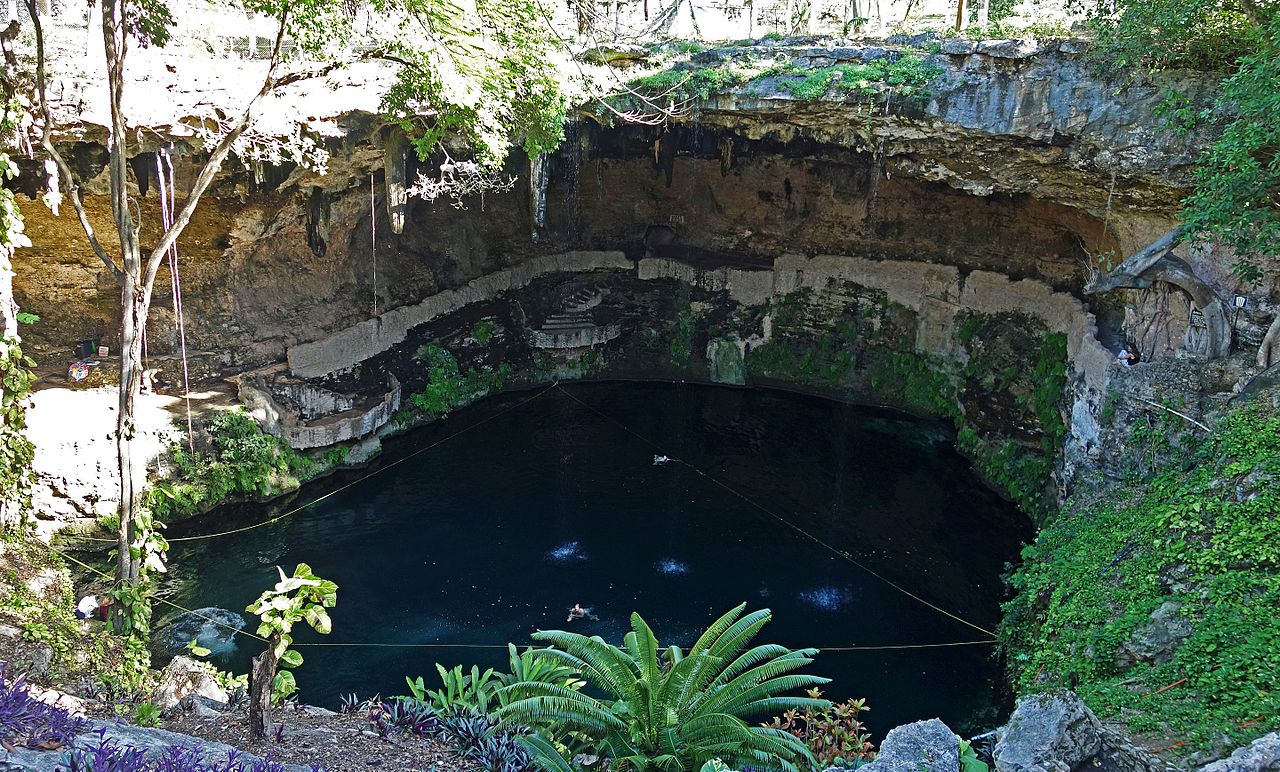 Cenote Zací in the centre of Valladolid, Yucatán
Entry costs around 150 MXN (approximately 8 USD). The site has stairs for safe water access, a rope across the cenote for less confident swimmers, and a restaurant overlooking the pool. Life jackets are mandatory and included with admission. The cenote is open daily, typically from 9:00 to 17:00, though hours can vary.
Cenote Zací gets busy, especially in the afternoon. Go in the morning for fewer people and cooler temperatures. The water is not the clearest you will find in the region — its urban location and heavy use contribute to that — but the convenience and atmosphere make it a worthwhile stop, particularly if you are travelling with children or do not have transport to more remote cenotes.
For a quieter swimming experience, consider the cenotes outside town: Suytun, Oxman, and Xkeken are all within 15 to 20 minutes by car or colectivo and offer more dramatic settings.
GuideCenote Zací Guide: How to Visit Valladolid’s In-Town CenoteCenote Zací is an urban, semi‑open limestone cenote located in central Valladolid, about an 8–12‑minute walk east of the main plaza on Calle 36 between Calles 37 and 39. It is open during daylight hours, typically from around 9:00 am to 5:00 pm, though visitors should confirm the exact times on the day of travel. Admission costs MXN 150 for adults and MXN 75 for children; cash in pesos is recommended as card acceptance may vary. No car is needed if you are staying in Valladolid, and the walk from the plaza is flat though sidewalks can be uneven; from Mérida the drive takes roughly two hours, making the cenote best combined with other Valladolid attractions. A visit usually lasts between 45 minutes and two hours and includes access to the pool, the stone steps and pathways, and the on‑site restaurant area. Swimming is allowed, but the water is deep, so confident swimmers, life jackets for children, and careful supervision are advised. Bring a swimsuit, towel, sandals or water shoes with grip, and a dry bag for valuables; avoid sunscreen, oils or glass bottles in the water. Expect a busy, managed environment with slippery stone surfaces, and plan for cooler mornings or late afternoons to avoid heat and crowds. The cenote pairs well with nearby sites such as the main plaza, San Servacio Church, Mercado Municipal and Calzada de los Frailes, making it a convenient stop in a day exploring Valladolid.Open
Chichén Itzá
Valladolid is the closest major town to Chichén Itzá, the UNESCO World Heritage site and one of the New Seven Wonders of the World. The ruins are approximately 40 kilometres east of Valladolid, a drive of about 45 minutes by car or bus.
 El Castillo at Chichén Itzá, the iconic step pyramid in Yucatán
Chichén Itzá was a major Maya city from roughly 600 to 1200 CE, and the site covers several square kilometres. The centrepiece is El Castillo (the Temple of Kukulcán), a 30-metre step pyramid with 365 steps representing the solar year. Other key structures include the Great Ball Court, the Observatory (El Caracol), the Temple of the Warriors, and the Sacred Cenote.
Practical details: The site opens at 8:00 and closes at 17:00. Arrive at opening time — tour buses start arriving around 10:00, and the site becomes crowded and hot by midday. Entry for foreigners is approximately 614 MXN (around 35 USD). There are no bathrooms inside the complex, so use the facilities at the entrance. Bring water, sunscreen, a hat, and sturdy sandals. Tripods, drones, and professional camera equipment require a permit and fee.
From Valladolid, you can reach Chichén Itzá by rental car, taxi (around 400–500 MXN each way), or by colectivo from the bus station (significantly cheaper, around 50–80 MXN). Many visitors combine the ruins with a stop at Cenote Ik Kil, which is on the route between the two.
GuideComplete Guide to Chichén Itzá: Tickets, Hours, Tours, Cenotes & TipsChichén Itzá is the world‑famous Maya archaeological zone located near Pisté in the municipality of Tinum, Yucatán, and is typically accessed from Valladolid, Mérida, Cancún, Playa del Carmen or Tulum. The site is generally open daily from 08:00 to 16:00 with the last entry recorded at 15:00, although visitors should verify the exact hours before travelling. Admission is split between a federal INAH fee of MXN 105 and a state fee of MXN 592 for foreign adults (MXN 697 total) or MXN 205 for Mexican nationals (MXN 310 total); discounts may apply for children, students, seniors or Yucatán residents who present valid ID. Reaching the ruins takes about 40–45 minutes from Valladolid, 1.5–2 hours from Mérida, and 2.5–3 hours from Cancún or Playa del Carmen; travel can be done by rental car, taxi, colectivo or organized tour, with tours often including the entrance fee. A visit usually requires 2.5–4 hours for a quick overview, or 4–5 hours if the on‑site museum and a more relaxed pace are desired. Visitors are advised to arrive at opening to avoid the heat, crowds and vendor pressure that build up later in the morning. Early arrival provides cooler weather, better lighting for photos and shorter queues at El Castillo and the Sacred Cenote. Bring plenty of water, sun protection and cash in pesos; many tours bundle transport, guide services and cenote stops, so check the inclusions carefully. Staying overnight in Valladolid or Pisté makes an early start easier, while a guide is not mandatory but recommended for first‑time visitors who want contextual information.Open
Regional Food and Drink
Valladolid has a strong food scene rooted in traditional Yucatecan cuisine. The Mercado Municipal is the place to eat like a local — look for cochinita pibil, salbutes, panuchos, and sopa de lima, all served at simple stalls with plastic tables and a constant flow of customers.
For a sit-down meal, several restaurants along the plaza and Calzada de los Frailes serve regional dishes in more comfortable settings. La Joyita Cantina, a local favourite with swinging doors and a blue-painted interior, is a good spot for an afternoon beer and free botanas (bar snacks). Yerbabuena, across from the convent, is well regarded for breakfast and tamales.
Try marquesitas from street vendors — thin rolled crepes filled with Nutella, cajeta, or the traditional combination of Edam cheese and jam. They cost around 20–30 MXN and are a staple of evening walks through the centre.
Getting There and Getting Around
Valladolid is approximately 160 kilometres east of Mérida (about 2 hours by car or ADO bus) and roughly 40 kilometres west of Chichén Itzá. The ADO bus terminal is located centrally, and direct buses run regularly from Mérida, Cancún airport, and other Yucatán State destinations.
Within Valladolid, the historic centre is walkable. For cenotes and ruins outside town, colectivos (shared vans) and taxis are readily available. A rental car gives you the most flexibility for day trips, but it is not essential if you are comfortable with public transport and occasional private transfers.
GuideBook Transport in Yucatán: Your Guide to Getting AroundLearn how to book and use every major transport option in Yucatán State, from ADO buses and colectivos to private transfers, rental cars, taxis, Uber, and the Tren Maya. Find current prices, booking methods, safety tips, and advice on choosing the right mode for your trip.OpenWhen to Visit
The dry season (November to April) offers the most comfortable temperatures for exploring. May through October is hotter and more humid, with afternoon rain common. The city's patron saint festival, Fiesta de San Servacio, takes place around June 23 and fills the plaza with music, dance, and food — worth planning around if you enjoy local celebrations.
Valladolid rewards travellers who slow down. It is not a city to rush through on the way to the ruins. Spend at least two nights, walk the streets in the early morning and late afternoon, eat at the market, and let the city's pace set yours.