
Mérida’s visitor experience has traditionally been concentrated around the Plaza Grande, Paseo de Montejo and the neighbourhoods surrounding the historic centre.
That is beginning to change.
Through the Mérida Comunitaria programme, the municipal government is supporting small tourism projects in the comisarías and subcomisarías surrounding the city. These include melipona bee sanctuaries, rural cycling routes, artisan workshops, agroecological farms, nature reserves and community food experiences.
The aim is not simply to create another circuit of attractions. It is to help locally managed projects receive training, equipment, promotion and connections with tour operators while keeping more tourism income within the communities themselves.
For travellers, this creates a different way to understand Mérida: not only as a colonial city, but as a municipality that includes rural settlements, Maya families, working farms, old hacienda routes and stretches of low forest beyond the urban ring road.
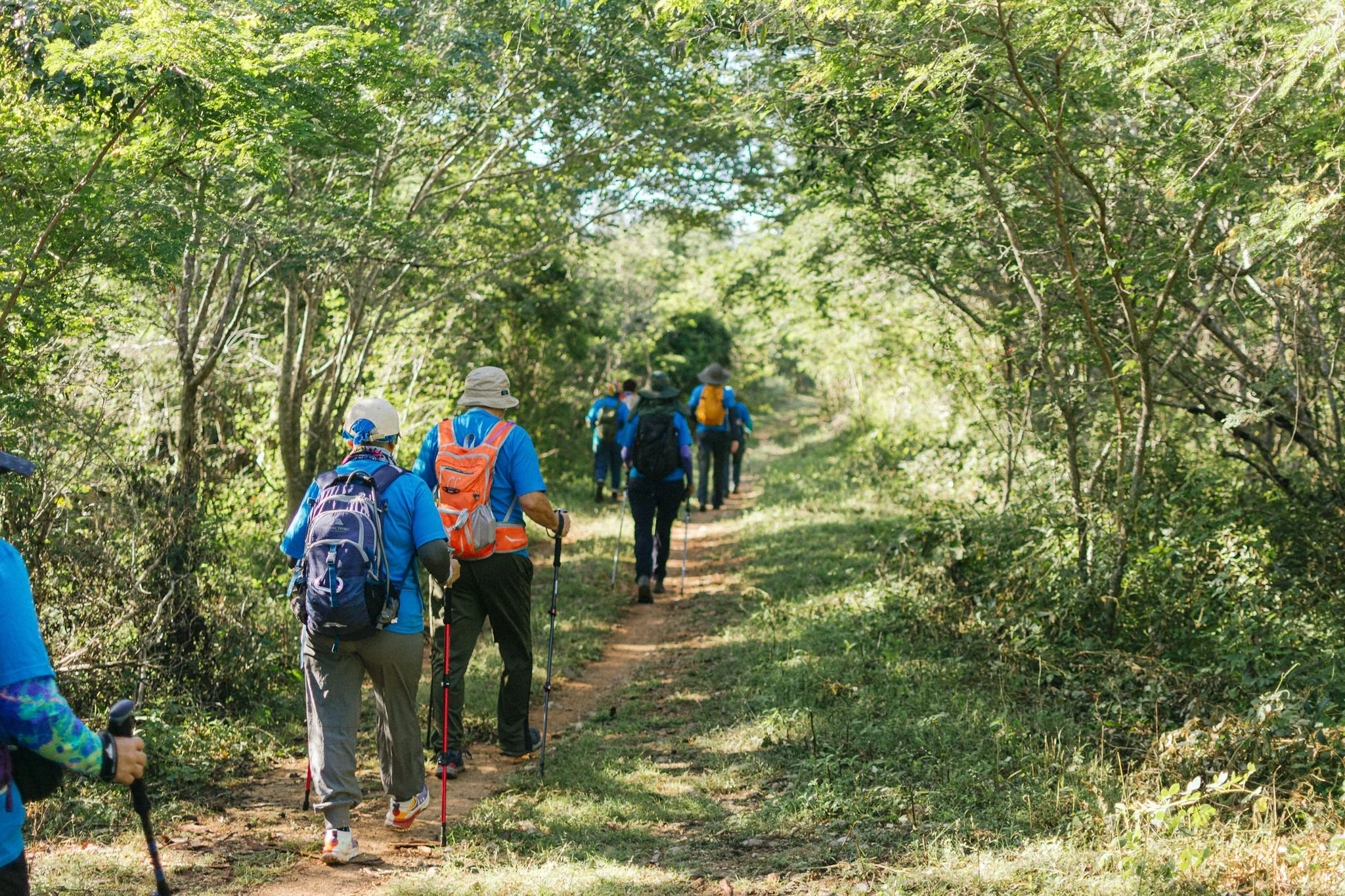 Walkers following a shaded rural trail through the Yucatán forest on Camino del Mayab
Rural trails south of Mérida form part of a growing network of community-led experiences. Photo: Camino del Mayab / Andrea Cinta.
What is Mérida Comunitaria?
Mérida Comunitaria is a municipal programme designed to strengthen tourism projects operating in Mérida’s comisarías and subcomisarías.
Its first generation began as a pilot in August 2025. Ten projects received support through training in areas such as visitor service, first aid, accounting, formal business registration, branding, English and community organisation.
Practical assistance included bicycles, helmets, signs, beekeeping supplies, tools, binoculars, lamps, tables and other equipment suited to each project.
The original group included initiatives in:
- Xcunyá
- San Pedro Chimay
- Chablekal
- Tamanché
- San José Tzal
- Dzityá
- Molas
A second generation was opened in 2026, extending the programme to additional community tourism businesses. The new intake placed greater emphasis on traditional cooking, embroidery, hammock making, crafts and other forms of living cultural knowledge.
This matters because community tourism can easily become a label placed on an ordinary commercial tour. Here, the programme is intended to strengthen projects already rooted in the municipality’s communities.
What travellers can experience
The projects vary considerably. Some are short visits that can be added to a morning outside Mérida. Others are longer rural experiences requiring several hours and advance coordination.
Melipona bee experiences
Several participating projects focus on the stingless melipona bee, which has deep ecological, culinary and cultural importance in Yucatán.
Visitors may see traditional hives, learn how colonies are cared for and taste small amounts of melipona honey. The experience is generally more educational than theatrical and works well for families, gardeners and travellers interested in Maya food traditions.
Participating projects have included:
- Kuchil Kaab in Xcunyá
- Meliponario Lol Bé in Chablekal
- Melipona Guardiana in Tamanché
These are not large visitor attractions with continuous admission. Contact or reserve before travelling.
Rural cycling around Xcunyá
Rutas Xcunyá offers cycling experiences along rural roads and old paths north of Mérida.
Some routes explore the landscape around Xcunyá, while evening outings may continue toward Misnebalam, an abandoned former hacienda settlement often described locally as a ghost town.
This is better for reasonably confident cyclists than for visitors expecting a gentle city-bike tour. Ask about the route length, road surface, lighting and return time before booking.
Wear closed shoes and carry water. Evening rides can be cooler, but mosquitoes become more active after sunset.
Farms and agrotourism
Community farms allow visitors to see a side of Mérida that is largely invisible from the centre.
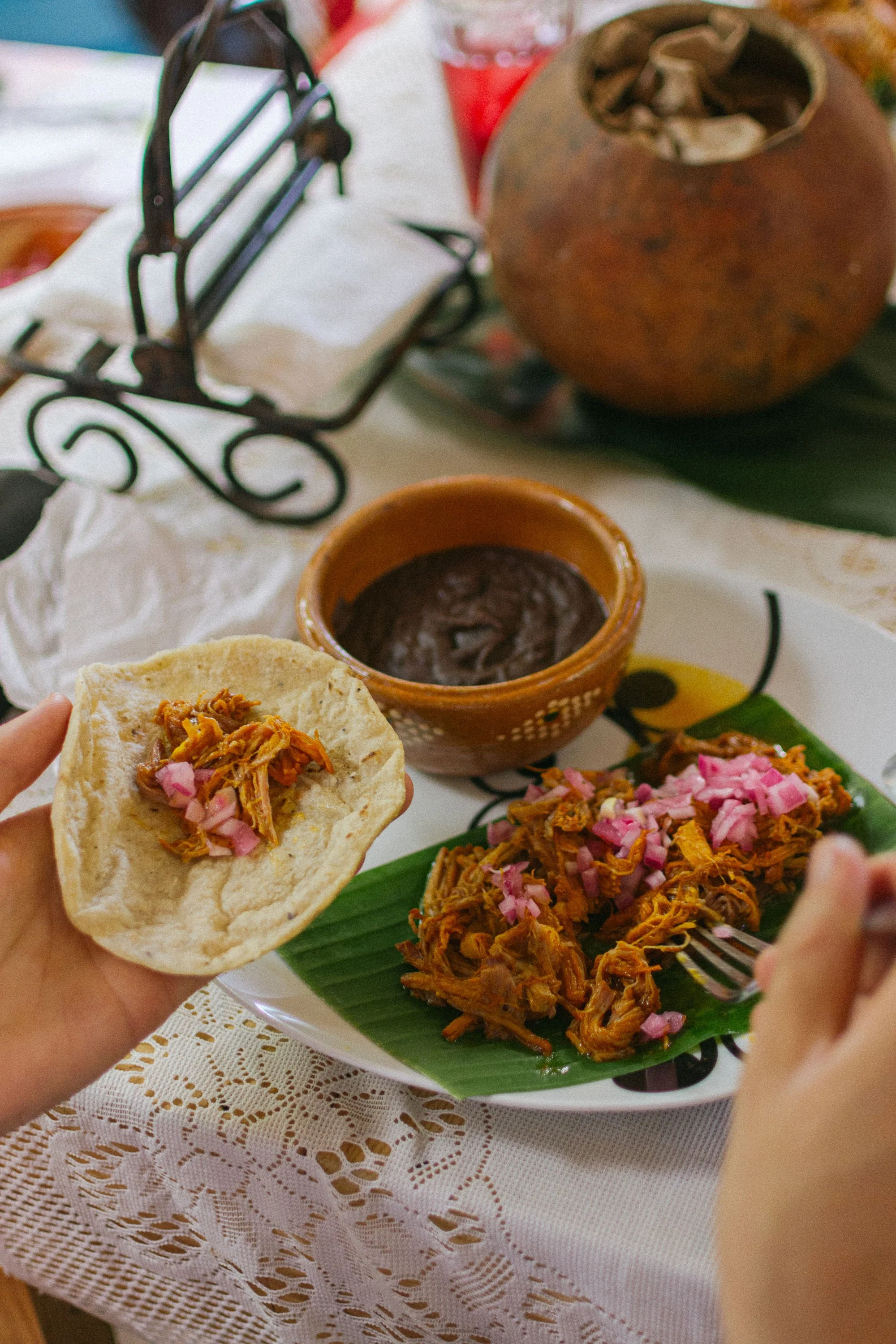 Traditional food served along the Camino del Mayab
Meals prepared locally are an important part of several rural and community-run experiences. Photo: Camino del Mayab / Andrea Cinta.
Experiences may include walking through orchards and milpas, collecting eggs, feeding farm animals, learning about meliponiculture, harvesting vegetables or eating food prepared with ingredients grown on the property.
Current or first-generation projects include:
- Rancho San Antonio in Tamanché
- Rancho Agrotours in San José Tzal
- El Encuentro in San Pedro Chimay
Rancho San Antonio, for example, has promoted Saturday visits lasting roughly three to five hours, with farm activities and food available separately. Published schedules and prices should be treated as approximate because small projects may adjust their availability.
These visits suit families particularly well, provided children are comfortable around animals and outdoor conditions.
Go early if you want cooler weather. There may be limited shade between farm areas.
Nature and birdwatching
Bioparque Pak’al K’aax in San Pedro Chimay offers trails, wildlife observation, birdwatching and camping in an area of regenerating forest.
This is not a polished wildlife park. The appeal lies in walking through a locally managed natural space and observing the plants, birds and small animals that live around Mérida.
It is worth considering for:
- birdwatchers with a free morning
- families looking for a simple nature activity
- travellers interested in conservation projects
- visitors who want to spend time outside the city without driving several hours
Morning is the sensible time to visit. Bird activity is generally better, temperatures are lower and afternoon rain is less likely to interrupt the walk during the wet season.
Stone and wood workshops in Dzityá
Dzityá is already known for its annual Tunich craft fair, but its workshops operate throughout the year.
The Maya Contemporánea cooperative connects visitors with local stone and wood artisans. Visits may include a workshop tour, an explanation of the production process and an opportunity to buy directly from makers.
This works well as a short cultural outing rather than a full-day excursion. Allow around one hour for the organised experience, plus additional time if you want to explore several workshops independently.
Dzityá is close enough to combine with northern Mérida, the Gran Museo del Mundo Maya or lunch elsewhere in the city.
Camino del Mayab from Molas
Camino del Mayab is the most ambitious project associated with the programme.
 Swimming in a cenote during a Camino del Mayab journey
Camino del Mayab links community visits with cenotes, former hacienda landscapes and old rural paths. Photo: Camino del Mayab / Andrea Cinta.
The wider route uses old railway lines, rural paths, haciendas and Maya communities south of Mérida. Rather than visiting one attraction, travellers move through a connected landscape with community accommodation, meals and locally guided activities.
In July 2026, Mérida also supported the first Gran Caminata del Mayab, scheduled from 23 to 26 July. The event offered a 110-kilometre, four-day route and a shorter 60-kilometre, two-day option passing through areas including Molas, Yaxnic and San Antonio Tzacalá.
The organised walk is an endurance event, not an ordinary sightseeing tour. Travellers who are interested in Camino del Mayab but do not want to walk long distances should look for shorter community visits or a custom route.
Is community tourism outside Mérida worth it?
It can be, particularly for travellers who have already allowed enough time for the historic centre.
These experiences provide context that the central museums and restored mansions cannot offer. You see where food is grown, how regional crafts are made and how families are attempting to build small tourism businesses without leaving their communities.
They are most suitable for:
- repeat visitors to Mérida
- families seeking educational activities
- travellers interested in food production and crafts
- birdwatchers and nature travellers
- people who prefer small-scale experiences
- visitors comfortable making advance reservations
They are less suitable for travellers with only one day in Mérida. A first-time visitor should normally prioritise the historic centre, Paseo de Montejo and one or two major museums before travelling into the comisarías.
How to arrange a visit
Do not assume that every project operates with fixed public opening hours.
Many are family businesses, cooperatives or working farms. Reservations may be handled by telephone or WhatsApp, and English availability can vary.
Before leaving, confirm:
- the meeting point
- the exact start time
- the total duration
- the current price
- whether food is included
- whether cards are accepted
- whether the activity continues in rain
- whether transport is provided
- the language of the tour
Carry cash in small denominations. Mobile signal and card terminals are not always reliable outside central Mérida.
Official project listings are being added to the Visit Mérida website, although availability should still be confirmed directly.
Do you need a car?
For most visitors, a rental car or private driver is the easiest option.
Some comisarías are connected by local buses or colectivos, but transport is generally designed for residents rather than tourists. Stops may be poorly marked, departure times can be irregular and the final project may be some distance from the centre of the community.
A car is particularly useful when combining two experiences, such as:
- Dzityá and Xcunyá
- Chablekal and Tamanché
- San Pedro Chimay and San José Tzal
- Molas and communities along Camino del Mayab
Arrange a driver when visiting a farm, nature reserve or cycling project with a fixed finishing time. Ride-hailing coverage can become limited outside the urban area, and obtaining a return vehicle may be harder than arriving.
How long should you allow?
A simple artisan or melipona visit may take one to two hours once transport is included.
Farm experiences usually require half a day. Camino del Mayab activities may occupy a full day or form part of a multi-day itinerary.
A practical schedule would be:
- leave Mérida between 7:30 and 8:30 am
- visit one principal community project
- add a second short stop only if it is nearby
- return for a late lunch or early afternoon rest
Avoid building an itinerary around three or four different communities in one day. Distances may look short on a map, but local roads, meeting arrangements and activity times add up.
What to bring
Community tourism around Mérida is generally informal and outdoors.
Bring:
- drinking water
- sun protection
- insect repellent
- closed or secure shoes
- light clothing
- a hat
- cash
- a small reusable bag for purchases
During the rainy season, carry a compact rain layer and keep electronics protected. Rural paths may become muddy after heavy weather.
Ask before photographing people, homes, workshops or ceremonial objects. Buying honey, food or crafts directly is one of the simplest ways to ensure that your visit provides an immediate benefit.
A more complete picture of Mérida
The expansion of community tourism does not replace the historic centre. It makes the wider municipality easier to understand.
Mérida’s cathedral, markets and museums remain the natural starting point. The comisarías add another layer: bees kept in shaded family plots, limestone worked in village workshops, vegetables harvested for a shared meal and old paths connecting communities that existed long before the modern city reached them.
The programme is still developing. Information, prices and booking systems are not yet as standardised as they are for established attractions. That requires more preparation from the visitor, but it also helps keep the experiences small and locally controlled.
For the next step, use the Plan hub to compare itineraries, transport and practical resources already available.


