
If you are choosing between Celestún and Río Lagartos for flamingos, the most important question is not which reserve is more beautiful. Both are beautiful. The useful question is which one fits your route, travel season, patience, and idea of a good wildlife day.
Celestún is the easier choice from Mérida. It is a western Gulf Coast town with a protected estuary, a long beach, and boat trips through mangroves and shallow feeding areas. It works well as a full day from the state capital and gives a mixed group something to do after the wildlife outing.
Río Lagartos is usually the better choice from Valladolid or eastern Yucatán. It is a small fishing town on the north coast, close to the Ría Lagartos Biosphere Reserve, Las Coloradas, San Felipe, and the road toward El Cuyo. Its boat trips can feel more like a dedicated nature expedition, especially when you stay overnight and take an early departure.
Neither reserve can guarantee a particular number of birds. Flamingos are wild. Their position changes with water levels, food, wind, tide, weather, breeding activity, and the time of year. A good decision gives you the best conditions without turning a living wetland into a promise of a perfect photograph.
The short answer
Choose Celestún when:
- you are staying in Mérida;
- you want the simplest day trip to a flamingo reserve;
- your group wants flamingos, mangroves, and a Gulf beach in one outing;
- you are traveling with children or people who prefer a clear, manageable day;
- you are visiting in the cooler months and want to follow the western coast toward Sisal or Campeche afterward.
Choose Río Lagartos when:
- you are staying in Valladolid, Tizimín, or the northern Yucatán coast;
- your route already includes Las Coloradas, San Felipe, or El Cuyo;
- you care about birdwatching beyond flamingos;
- you want to spend a night near the reserve and take a sunrise or early-morning boat;
- you are visiting during the part of the year when larger concentrations are more often reported in the eastern reserve, while accepting that conditions vary.
Choose neither as a rushed day trip from Mérida if you have only a few hours. Celestún is the more realistic Mérida outing. Río Lagartos is geographically possible with a private vehicle, but the long road can leave you with less time and more fatigue than the birds deserve.
 American flamingos gathered in the Celestún Biosphere Reserve, Yucatán
Celestún and Río Lagartos are not interchangeable stops
Both destinations protect coastal wetlands on the Yucatán Peninsula. Both have mangroves, shallow lagoons, resident and migratory birds, fishing communities, and boat operators who know the local water. Both are associated with American flamingos, the large pink birds that move between feeding and nesting areas across the peninsula.
The visitor experience is different because the geography is different.
Celestún sits on the western coast, where the Ría Celestún wetland meets the Gulf. The town is compact and oriented toward the estuary, beach, fishing, and day visitors. A typical visit has a simple rhythm: travel from Mérida, take a boat through mangrove channels and shallow water, possibly visit a freshwater spring or other reserve feature, then eat or walk on the beach.
Río Lagartos sits on the northern coast beside a much wider network of wetlands. A local boat can include flamingo habitat, mangrove channels, open lagoon, birdwatching areas, and sometimes other coastal features depending on the route and current conditions. The town is a quieter overnight base than Celestún, and the surrounding area is usually treated as a regional route rather than one self-contained beach day.
That difference matters. Celestún is easier to understand and arrange on a first visit. Río Lagartos rewards travelers who can give the coast more time and connect several northern stops without trying to do everything between breakfast and dinner.
GuideCelestún Beach Guide: Flamingos, Boat Tours & How to Visit from MéridaCelestún is a working fishing town on the far western edge of Yucatán, where a wide Gulf beach meets the Ría Celestún Biosphere Reserve, famous for its flamingo habitat. The destination is about 90–110 km west of Mérida and requires roughly 1.5–2 hours each way by car; a rental car, private driver, organized tour or public bus can be used, with the bus being the cheapest but less flexible. A full‑day visit from Mérida is typical, beginning with a morning boat tour of the mangrove channels and reserve, followed by a long seafood lunch under a palapa and optional beach time. Boat tours are priced per boat rather than per person, include life jackets and usually cover flamingo viewing areas, mangrove passages and occasional stops at freshwater springs; English‑speaking guides are not guaranteed, so confirm in advance. The best flamingo season is November to February, especially December to February, though sightings vary daily. Visitors should expect a wide, soft‑sand beach with calm but sometimes murky water, a relaxed malecón with palapa restaurants, and more locals on weekends and holidays. Bring cash for small vendors, arrive early for cooler weather and better boat‑tour timing, and respect wildlife distance as flamingos are sensitive to close approaches.Open
Which one is better in each season?
Season is useful, but it should not be treated as a calendar guarantee. Flamingos move. Local guides may report different conditions within the same month. Weather can change the water and the visibility in a single morning.
A broad pattern helps with planning. Celestún is commonly associated with its strongest flamingo concentrations during the cooler, drier part of the year, especially from late autumn into winter. Río Lagartos is often a stronger choice for larger eastern-coast concentrations during spring and summer. The transition is not a switch that happens on one exact date, and birds remain possible in both reserves throughout the year.
November through February
These months are often the most comfortable for a wildlife day. Mornings can be cooler, the light is useful for photography, and the western reserve at Celestún is commonly a strong choice for travelers hoping to see large groups of flamingos.
Celestún also makes sense in this period because the beach is a pleasant second act after the boat. The water may be calm, the town is easy to walk, and an overnight stay can give you a quieter morning before the day-trip traffic arrives.
Río Lagartos remains worthwhile. If it is already on your route, do not abandon it just because you are traveling in winter. The reserve has more to offer than a single flock, and bird variety, mangrove scenery, crocodiles, and the northern coast can make the outing rewarding even when flamingos are dispersed.
March through July
Spring and early summer can favor Río Lagartos for travelers whose priority is seeing larger concentrations in the eastern wetlands. This is also a period when heat becomes a major planning factor. An early boat is more comfortable than a late-morning departure, and a night near the coast can be more valuable than trying to drive from a distant base before sunrise.
Celestún still works during these months, especially if Mérida is your base. Expect warmer conditions and build the day around shade, water, light clothing, and a realistic return schedule. A smaller flock does not mean a failed visit; the mangrove route and other birds remain part of the experience.
August through October
These months can bring rain, humidity, changing wind, and less predictable road and water conditions. Morning travel is usually easier to plan than an afternoon departure because showers often develop later, although there is no guarantee.
Choose the reserve that fits your route rather than making a long detour solely for a seasonal prediction. Ask a current local operator what they have been seeing in the previous few days. Their answer is more useful than an old social-media photograph or a listing that uses the same “thousands of flamingos” phrase year-round.
If you only have one possible date
Book the reserve that is closest to your overnight base. The cost and environmental impact of a long detour are not automatically justified by a forecast. Give yourself a boat departure with enough time, avoid packing the day with unrelated stops, and treat the birds as the variable part of the outing.
Celestún: the better choice from Mérida
Celestún is the practical choice for most travelers sleeping in Mérida. The town lies west of the inland capital, and the drive is long enough for a full-day outing but straightforward enough to organize as a rental-car day or an organized excursion.
The reserve boat is the center of the visit. Depending on the current arrangement, tours may leave from a town dock or an entrance area connected to the estuary. The route can include open shallow water, narrow mangrove channels, bird habitat, and a freshwater spring. Ask which route is operating that day because local departure points and conditions can change.
The important distinction is between a complete tour from Mérida and a local boat ride in Celestún. A Mérida tour may include transport, the boat, a guide, and sometimes lunch or beach time. A local boat requires you to solve the drive, arrival, parking, ticketing, and return journey yourself. Neither is automatically better.
A complete excursion is easier when you are traveling without a car, have no interest in negotiating local logistics, or want a guide to coordinate the boat. Driving independently is more flexible for a couple or family who want to stay overnight, spend time on the beach, or continue toward Sisal or the western side of Yucatán.
Compare current Celestún flamingo tours on GetYourGuide · See Celestún wildlife options on Viator
GuideCelestún Beach Guide: Flamingos, Boat Tours & How to Visit from MéridaCelestún is a working fishing town on the far western edge of Yucatán, where a wide Gulf beach meets the Ría Celestún Biosphere Reserve, famous for its flamingo habitat. The destination is about 90–110 km west of Mérida and requires roughly 1.5–2 hours each way by car; a rental car, private driver, organized tour or public bus can be used, with the bus being the cheapest but less flexible. A full‑day visit from Mérida is typical, beginning with a morning boat tour of the mangrove channels and reserve, followed by a long seafood lunch under a palapa and optional beach time. Boat tours are priced per boat rather than per person, include life jackets and usually cover flamingo viewing areas, mangrove passages and occasional stops at freshwater springs; English‑speaking guides are not guaranteed, so confirm in advance. The best flamingo season is November to February, especially December to February, though sightings vary daily. Visitors should expect a wide, soft‑sand beach with calm but sometimes murky water, a relaxed malecón with palapa restaurants, and more locals on weekends and holidays. Bring cash for small vendors, arrive early for cooler weather and better boat‑tour timing, and respect wildlife distance as flamingos are sensitive to close approaches.OpenWhat the Celestún boat experience is like
The scenery changes gradually. You may begin in a broad, bright stretch of water, then enter mangrove corridors where the boat slows and the trees close around you. Flamingos can be scattered across the shallows or gathered in a more obvious pink line. Other likely subjects include pelicans, herons, cormorants, frigatebirds, egrets, and spoonbills.
A freshwater spring or “ojo de agua” may be included in the route. Whether you swim depends on the conditions, the current itinerary, and your preference. Bring a change of clothes if you plan to enter the water, but do not assume every trip includes the same stop.
Some routes also mention a petrified forest or other reserve features. Ask exactly what the boat includes rather than relying on a generic tour name. The reserve is large enough that two visits marketed as “flamingo tours” can feel different.
The boat is not a zoo vehicle. It may slow down at a respectful distance, circle a feeding area, or continue if the birds are moving. A responsible guide will not chase a flock for a closer photograph. You may get a better view by waiting quietly and watching the group’s behavior instead of asking the crew to pursue it.
Celestún after the boat
The beach gives Celestún an advantage for mixed-interest groups. You can eat seafood, walk the Gulf shore, rest in the shade, or spend time in the town without adding another long transfer. The beach is not a guaranteed picture of Caribbean turquoise; Gulf water color changes with weather, sediment, wind, and season. Its value is the combination of coast and reserve, not a promise of a particular shade.
If you have energy, a walk through the town can be enough. Celestún is a working fishing community, and its appeal is strongest when you do not treat it as an amusement park with a checklist of attractions. Leave room for a slow lunch and an unhurried return.
Who should choose Celestún?
Celestún is especially suitable for first-time wildlife visitors, families, couples staying in Mérida, travelers without a car, and anyone who wants a reserve plus beach in one day. It is also the sensible choice when your Yucatán route continues west toward Sisal or Campeche.
It is less suitable if your main goal is a dedicated multi-day birding trip in the eastern wetlands, or if you are already staying near Valladolid and would need to backtrack across the state.
Río Lagartos: the better choice from Valladolid and the north
Río Lagartos is a stronger geographic decision for travelers based in Valladolid or moving through northern Yucatán. It is not a convenient substitute for Celestún when you are staying in Mérida. The two reserves are on opposite sides of the state’s northwestern and northeastern coastal routes.
The town itself is small and quiet. There is a waterfront, working fishing activity, simple accommodation, and a dock culture shaped by local boat trips. The best reason to stay is not nightlife. It is the chance to sleep near the reserve, take an early boat, and avoid turning a wildlife outing into a road marathon.
A Río Lagartos boat may cover a broad route through mangroves and lagoons. Depending on the operator, water level, wind, and season, the trip can focus on flamingos, other birds, crocodiles, mud, salt landscapes, or the wider reserve. Confirm the route before paying. A short town ride and a dedicated reserve excursion are not the same product.
Compare Río Lagartos boat and wildlife tours on GetYourGuide · See Río Lagartos experiences on Viator
 Río Lagartos town and wetlands on Yucatán’s north coast

What the Río Lagartos boat experience is like
Río Lagartos often feels more open-ended than Celestún. You may spend longer looking across wide water before entering a mangrove channel. The reserve supports a broad range of wetland life, so the guide’s work is not limited to finding one pink flock.
Flamingos can appear in groups that stretch across the shallows, but the distance may be greater than you expect. Bring binoculars if you have them. A camera with a long lens is useful, but the landscape is worth experiencing without looking through a screen for the entire trip.
Other sightings can include herons, egrets, pelicans, cormorants, frigatebirds, hawks, and crocodiles. A crocodile sighting is never guaranteed, and it should not be encouraged through feeding or unsafe approaches. The reserve’s value is the ecosystem, not a wildlife scorecard.
Early morning is usually the most comfortable time to go. It can offer softer light and more active bird behavior, but “sunrise tour” does not guarantee a closer flock. Ask the operator about the actual meeting time, boat duration, shade, passenger capacity, and whether the price is per person or per boat.
Río Lagartos and Las Coloradas
Many visitors combine Río Lagartos with Las Coloradas. The route makes geographic sense, but the two stops are different.
Río Lagartos is a protected wetland visited by boat. Las Coloradas is associated with salt production and shallow ponds whose colors change with sunlight, salinity, water conditions, and the organisms present. The pink can be vivid or muted on the day of your visit. The ponds are not a swimming attraction, and access around working areas is controlled.
A combination day is useful for travelers with limited time. It is not the best format for a serious birding morning, a leisurely meal, and careful landscape photography. If flamingos are your reason for traveling, put the boat first and treat Las Coloradas as the flexible addition.
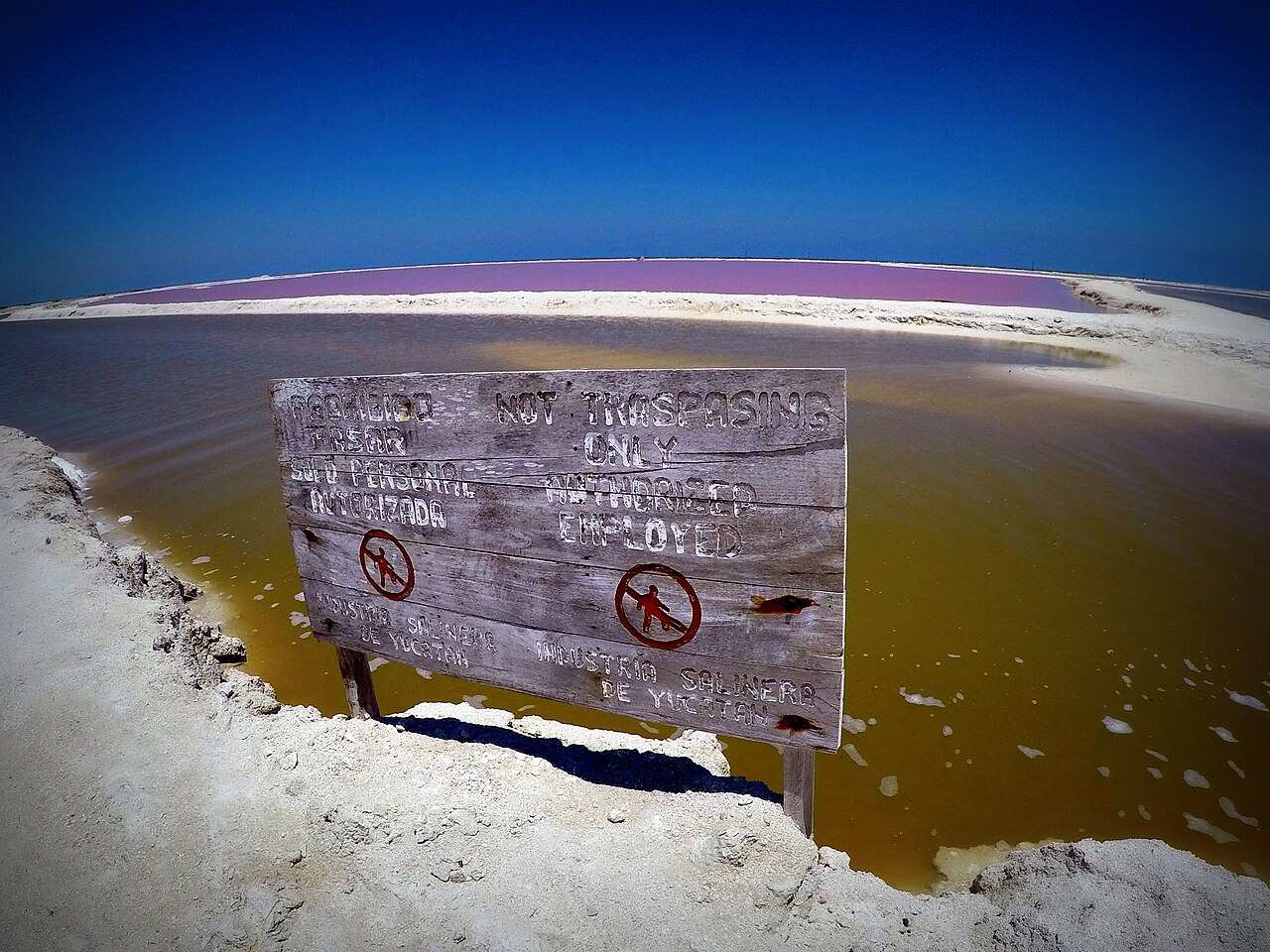 The salt ponds of Las Coloradas on Yucatán’s north coast
Browse current Las Coloradas and Río Lagartos activities on GetYourGuide · Compare north-coast experiences on Viator
GuideRío Lagartos Travel Guide: Flamingos, Boat Tours, Las Coloradas and Where to StayRío Lagartos is a tranquil fishing town on Yucatán’s north coast that serves as the main gateway to the Ría Lagartos Biosphere Reserve, a UNESCO‑recognized wetland famous for flamingo colonies, mangrove estuaries and crocodiles. There is no entry fee to the town; reserve access is usually included in boat tours, though some operators charge a small conservation fee of about 54 MXN on site. Shared or small‑group wildlife and Las Coloradas boat tours cost roughly $70–$95 USD per person, while private boats are priced per vessel for 2–4 hours. Boat tours run from 6:00 to 17:00 for daytime wildlife viewing, with night mangrove/crocodile tours offered around 19:30–21:30 for 1.5–2 hours. Cash in pesos is essential, as ATMs are unreliable and most businesses prefer cash. From Mérida the drive is 205–230 km and takes about 2.5–3 hours via Tizimín; from Cancún it is 225–255 km, roughly 3–3.5 hours; from Valladolid it is 105 km, about 1.5–2 hours. Buses go to Tizimín, then a local bus or colectivo reaches Río Lagartos. The pink salt ponds of Las Coloradas lie 24 km away, a 20–25 minute drive. A typical day includes a 2–4 hour boat safari through mangrove channels to see flamingos, herons, spoonbills, ospreys and, with luck, crocodiles, often with a beach stop and optional Mayan‑clay mud mask. Night tours let visitors watch crocodile eyeshine and nocturnal birds. Visitors should bring cash, sun protection, insect repellent, binoculars, a dry bag and a dark swimsuit for mud baths. Keep noise low, respect nesting zones, use life jackets, and avoid drones. Mid‑day is best for the pinkest hues at Las Coloradas, while early morning and late afternoon are optimal for wildlife. The dry season (December–April) offers comfortable weather; November nortes can bring wind and rougher water, so book morning departures when possible.OpenWho should choose Río Lagartos?
Río Lagartos is best for travelers who enjoy a quieter base, birdwatchers, photographers, couples with a flexible route, and people who want to connect several northern destinations. It is particularly convenient if you are already planning Valladolid, Tizimín, Las Coloradas, San Felipe, or El Cuyo.
It is less suitable for a single quick outing from Mérida, travelers who dislike long road days, and groups whose main priority is an easy beach afternoon with many services nearby.
Boat tours: what to compare before booking
A listing can use the same words as another listing while offering a very different day. Compare the practical details, not only the photograph on the booking page.
GuideCelestún Beach Guide: Flamingos, Boat Tours & How to Visit from MéridaCelestún is a working fishing town on the far western edge of Yucatán, where a wide Gulf beach meets the Ría Celestún Biosphere Reserve, famous for its flamingo habitat. The destination is about 90–110 km west of Mérida and requires roughly 1.5–2 hours each way by car; a rental car, private driver, organized tour or public bus can be used, with the bus being the cheapest but less flexible. A full‑day visit from Mérida is typical, beginning with a morning boat tour of the mangrove channels and reserve, followed by a long seafood lunch under a palapa and optional beach time. Boat tours are priced per boat rather than per person, include life jackets and usually cover flamingo viewing areas, mangrove passages and occasional stops at freshwater springs; English‑speaking guides are not guaranteed, so confirm in advance. The best flamingo season is November to February, especially December to February, though sightings vary daily. Visitors should expect a wide, soft‑sand beach with calm but sometimes murky water, a relaxed malecón with palapa restaurants, and more locals on weekends and holidays. Bring cash for small vendors, arrive early for cooler weather and better boat‑tour timing, and respect wildlife distance as flamingos are sensitive to close approaches.OpenIs it a local boat or a complete excursion?
A local boat means you reach the coast independently and pay for or join the water outing there. This can be flexible and economical for a group with a car, but you need a backup plan for delays and weather.
A complete excursion normally coordinates transport from Mérida, Valladolid, or another base. It may include the local boat, but do not assume that it does. Read the inclusions and ask if the boat fee is separate.
Is the boat shared or private?
Boat prices in small coastal communities are often structured around the boat rather than a simple per-person ticket. A shared boat spreads the cost and can be social. A private boat gives you more control over pace and stops, but it does not control the birds.
Ask for the maximum number of passengers. “Small group” is not a consistent technical term.
How long is the water route?
A short ride near the town is not equivalent to a longer reserve route through mangroves. Find the approximate duration and the main areas visited. If the listing promises flamingos, crocodiles, mangroves, a spring, a beach, and a salt route in a short window, expect some parts to be brief.
What happens in bad weather?
Wind and rain can change the water conditions. Ask whether the operator reschedules, refunds, shortens the route, or continues with a different itinerary. Do not wait until the dock to discover that your return transport is fixed and the boat has been delayed.
Is the trip suitable for your group?
Boat boarding may involve a dock, steps, uneven ground, or a narrow seat. Ask about shade, life jackets, transfer distance, and whether children must sit in a particular position. Give clear information about mobility needs before booking.
Check Celestún day-trip availability from Mérida on GetYourGuide · Compare Mérida-area wildlife tours on Viator
Where to stay for each reserve
You do not need to sleep on the coast to visit either reserve, but an overnight changes the experience.
Staying in Celestún
Celestún has a small supply of guesthouses, hotels, apartments, and beach-oriented accommodation. The choice is narrower than in Mérida, and weekday availability can vary. Book ahead if you are traveling during school holidays, Easter, or a busy weekend.
An overnight lets you arrive without rushing, take a boat early, and keep the afternoon for the beach or town. It also makes sense if Celestún is part of a route toward Sisal or Campeche. The trade-off is fewer services and dining choices than the capital. Carry enough cash and do not assume every small establishment accepts cards.
Check current Celestún accommodation on Booking.com · Compare Celestún stays on Trip.com
Staying in Río Lagartos
Río Lagartos is an even stronger case for an overnight when the boat is your priority. The town is close to the reserve, and an early start is easier when you are not driving from Valladolid or another distant base. Accommodation is limited, so check current availability before building a detailed route around it.
This is a quiet base. Choose it for the reserve, the coast, and the chance to slow down rather than for a long list of evening activities. If you want more restaurants, shops, or transport options, Valladolid or Tizimín may feel easier, but the early boat then requires more planning.
Check current Río Lagartos accommodation on Booking.com · Compare Río Lagartos stays on Trip.com
Getting there without making the wildlife day miserable
From Mérida to Celestún
A rental car gives you the most control. Leave early, allow time for the road, and confirm the current boat departure point before you arrive. An organized day tour is simpler when you do not want to drive or coordinate local tickets.
Public transport can be possible, but a bus-based day requires checking the current departure and return schedule rather than relying on an old article. The boat and beach do not move at the same speed as a fixed return bus. If you miss the planned connection, your simple wildlife day becomes a much longer one.
From Valladolid to Río Lagartos
A rental car or private driver makes the northern route easier. Organized tours can work well for travelers who want transport, the boat, and Las Coloradas coordinated in one product. If you use public transport, check the current connections to the coast and leave margin for the boat schedule.
Do not plan a tight same-day connection to a flight or long-distance bus after the tour. Weather, local ticketing, a slower boat departure, or a lunch stop can all move the return time.
From Mérida to Río Lagartos
This is the least efficient pairing of base and reserve. It can be done with a private vehicle or a carefully organized tour, but the distance means that the day should be treated as a major excursion. If the eastern reserve is a priority, move your overnight base toward Valladolid or the north coast instead of adding hours of return driving.
From Valladolid to Celestún
The reverse problem applies. Celestún is a western-coast destination, so it is most natural from Mérida or a westward route. You can reach it from Valladolid, but the drive reduces the time available for the reserve and beach. Choose it when the route already points west, not because a map makes the two reserves look close.
What to bring
Keep the kit simple:
- water in a reusable bottle;
- a hat and lightweight, long-sleeved clothing;
- binoculars if birdwatching matters to you;
- a dry bag or plastic pouch for phone and camera;
- cash in Mexican pesos for small operators and food stalls;
- comfortable sandals or shoes that can handle a dock and wet ground;
- insect protection for time near mangroves, applied according to local reserve rules;
- a small towel and change of clothes if swimming is part of the confirmed route;
- a power bank if you are using your phone for maps and photography.
Ask about sunscreen before boarding. Protected wetlands have rules designed to protect the water and the food chain. Some operators may ask you to avoid sunscreen or use only an approved mineral product during the boat portion. Long sleeves, a hat, and shade are often the easiest solution.
Avoid bringing loud speakers, drones, disposable plastic, or food intended to attract wildlife. Do not feed birds or crocodiles. Keep your voice low when the boat is near a flock, and follow the guide’s instructions about distance.
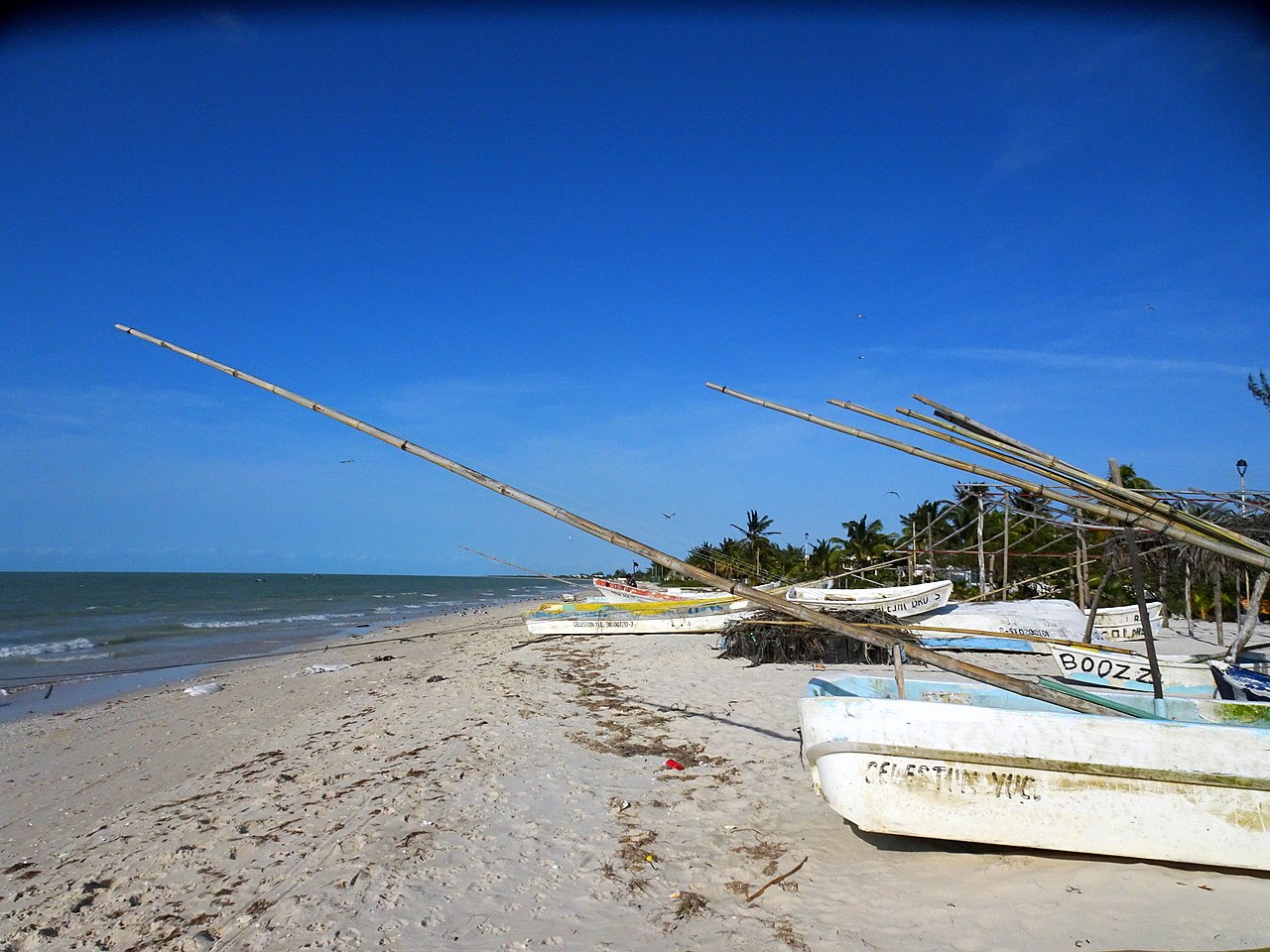 Beach in Celestún, Yucatán, on the Gulf Coast
Photography without turning the trip into a chase
Flamingos are difficult subjects because they are bright against bright water, often far away, and constantly moving their heads into shallow water to feed. A long lens helps. So does patience.
Shoot early or late when the sun is lower, but remember that the best light is not always the best bird location. Keep exposure under control when pink feathers catch direct sun. Photograph the shape of the flock, reflections, mangroves, and the boat wake as well as individual birds.
Do not insist that the boat approach closer. Chasing birds can make them spend energy flying or swimming away, disrupt feeding, and spoil the experience for everyone. A photograph that shows the wetland honestly is better than a close-up obtained by disturbing it.
If your main goal is photography, consider an overnight at the reserve. You can choose an early boat, avoid the pressure of a same-day return, and accept that one morning may be cloudy or the flock distant. A second chance is more valuable than a promise in a tour title.
What if you do not see a huge flock?
This is the question every wildlife traveler should answer before leaving the hotel. The correct response is not to judge the whole reserve by one dramatic image.
Both Celestún and Río Lagartos contain mangrove, lagoon, coastal, and beach habitats. A boat can reveal changing water, roots, bird calls, fishing activity, and species you did not expect. Flamingos may be scattered, silhouetted, far across the lagoon, or absent from the section you visit that morning. That is disappointing if flamingos are your only objective, but it does not mean the local guide failed.
Increase your odds by choosing the reserve that fits the season and route, traveling early, allowing enough time, checking recent local reports, and avoiding an overstuffed itinerary. None of those actions can control a wild bird.
Can you visit both?
Yes, but visiting both only makes sense for a traveler who genuinely enjoys wetlands or has a longer Yucatán route.
A sensible plan is to place Celestún on a Mérida or western-coast segment and Río Lagartos on an eastern or northern segment. Give each its own morning rather than trying to cross the state between two boat departures. This also lets you compare the landscapes without turning the trip into a contest.
A short trip should choose one. If you are based in Mérida, choose Celestún. If you are based in Valladolid and heading north, choose Río Lagartos. If you have a week or more and wildlife is a central interest, an overnight in both can work, with the road route planned around the coast rather than as repeated returns to Mérida.
A practical decision table
| Your situation | Better choice | Reason |
|---|---|---|
| Two nights in Mérida and one free day | Celestún | The direct coastal day is easier to organize |
| Valladolid to north-coast road trip | Río Lagartos | It sits naturally on the eastern route |
| Flamingos plus a beach afternoon | Celestún | The town combines reserve and Gulf beach simply |
| Flamingos plus Las Coloradas | Río Lagartos | The salt ponds are on the same broad north-coast route |
| Birdwatching and quiet overnight | Río Lagartos | More time near a broad wetland system |
| No car, first Yucatán visit | Celestún tour from Mérida | More complete organized options from the capital |
| Family with small children | Celestún, if the road is manageable | Simpler day and easier post-boat options |
| Photographer with flexible dates | Either, with an overnight | Extra time matters more than a fixed destination label |
| Short visit in winter | Celestún is often the simplest bet | Cooler season commonly suits the western reserve |
| Spring or early summer eastern route | Río Lagartos | Seasonal conditions can favor the area, subject to local reports |
The final choice
Choose Celestún if your trip is built around Mérida and you want a well-shaped day: boat, mangroves, flamingos, beach, food, and back to the city or an overnight on the coast. It is the better all-round introduction to Yucatán’s wetlands.
Choose Río Lagartos if your route is already moving through Valladolid and northern Yucatán, or if you want to give wildlife more space in the itinerary. Stay nearby when you can, take the early boat, and add Las Coloradas only after protecting time for the reserve.
The best flamingo visit is the one that respects the route and the animals. Pick the reserve you can reach without rushing, leave room for changing conditions, and let the wetland be more than a background for a photograph.
Frequently asked questions
Are flamingos guaranteed in Celestún or Río Lagartos?
No. Both reserves are known for flamingos, and sightings are common, but the birds move with food, water, weather, season, and disturbance. A responsible operator will describe likely conditions rather than guarantee a flock size.
Is Celestún closer to Mérida than Río Lagartos?
Yes. Celestún is the natural western-coast day trip from Mérida. Río Lagartos is on the north coast in eastern Yucatán and is better connected to Valladolid, Tizimín, Las Coloradas, and El Cuyo.
Which reserve is better for children?
Celestún is usually easier for a family day from Mérida because transport, the boat, and beach time can be combined without as much road complexity. Río Lagartos can also work well, especially with an overnight, but ask about boat duration, shade, boarding, and the return schedule.
Can I swim during a flamingo tour?
Some Celestún routes include a freshwater spring, but it depends on the current itinerary and conditions. Do not assume swimming is included. Río Lagartos tours may focus on wildlife and may not include a swimming stop. Confirm before booking and bring a change of clothes only when it is relevant.
Is Las Coloradas part of Río Lagartos?
Las Coloradas is near Río Lagartos on the north-coast route, but it is a separate salt-production landscape rather than the same boat-based wetland experience. It is commonly combined with Río Lagartos, but protect enough time for the flamingo tour first.
Should I stay overnight?
An overnight is worthwhile when wildlife is a priority, especially in Río Lagartos, where it makes an early boat easier. Celestún also benefits from a night if you want a quieter beach and do not want to rush from Mérida. For a simple first visit, a full-day Celestún trip from Mérida is enough.
Can I visit either reserve without a tour?
Usually, independent travelers can drive to the coastal town and arrange or join a local boat, but current departure points, ticketing, routes, and schedules should be confirmed locally. An organized tour removes much of the transport coordination. The right choice depends on whether you value flexibility or a predictable day.
What is the most responsible way to see flamingos?
Use an authorized or established local operator, keep a respectful distance, do not feed birds, follow reserve rules about sunscreen and waste, avoid drones unless explicitly permitted, and accept that wildlife may not appear on demand. The reserve is a living habitat, not a staged show.
Is one reserve more authentic than the other?
That depends on what you mean by authentic. Both are working coastal communities and protected wetlands. Celestún feels more accessible from Mérida and more immediately organized around a combined beach-and-boat day. Río Lagartos feels quieter and more connected to a wider northern route. Neither needs to be marketed as undiscovered to be worth visiting.
Can I see flamingos year-round?
Flamingos can be present in both reserves throughout the year, but numbers and locations change. Choose the season and reserve that fit your route, then confirm recent conditions with a current local guide rather than relying on a fixed month-by-month guarantee.
What if I care more about birds than flamingos?
Río Lagartos may suit you better because the wider reserve experience can include many wetland species and a more dedicated wildlife route. Celestún is also excellent for birdwatching, especially when you allow the boat trip to be about the whole ecosystem rather than only the largest pink flock.
Can I combine a flamingo tour with a cenote or Maya site?
You can, but distance matters. A northern route may combine Río Lagartos with Las Coloradas, a cenote, or an inland site, but every extra stop reduces time in the reserve. From Mérida, Celestún combines more naturally with the beach or a western-coast stop. Put the boat first when flamingos are the reason for the day.
Which one should I choose for a first trip to Yucatán?
Choose Celestún if Mérida is your base. Choose Río Lagartos if Valladolid or the north coast is already on your route. You will have a better day by selecting the geographically sensible reserve than by crossing the state for a seasonal prediction that cannot control wild birds.
That is the useful answer: Celestún is the easier first flamingo day from Mérida, while Río Lagartos is the stronger wildlife route for eastern and northern Yucatán. Both are worth visiting when the reserve, not a guaranteed photograph, is the reason you go.

