

Choosing where to stay in Yucatán is less about finding one perfect town and more about choosing the right base for the kind of trip you want.
 Mérida, Yucatán, Mexico
Mérida is the easiest choice for first-time visitors. Valladolid is better for ruins, cenotes, and a slower colonial-town stay. Progreso and the Emerald Coast work for beach time, especially if you want a simple seaside break from Mérida. Celestún is for nature and quiet. Izamal suits travelers who want a small-town feel. Hacienda stays are better for slow travel, romance, and people with a rental car or private driver.
This guide breaks down the main places to stay in Yucatán, who each one suits, what to watch for, and how to combine them into a practical route.
Quick answer: best places to stay in Yucatán
If this is your first trip, stay in Mérida for at least part of the journey. It gives you the widest choice of hotels, restaurants, museums, markets, day trips, private drivers, and onward transport.
For a simple first-time route, consider:
- Mérida for culture, food, city walks, and day trips
- Valladolid for Chichén Itzá, cenotes, Ek Balam, and a quieter pace
- Progreso or the Emerald Coast for beach time close to Mérida
- Celestún for flamingos, mangroves, and a slower nature stay
- Izamal for a small Pueblo Mágico stay between Mérida and Valladolid
- Uxmal or a nearby hacienda for ruins, countryside, and a quieter night outside the city
Most travelers do best with two bases rather than trying to see the whole state from one hotel.
Mérida: best overall base for first-time visitors
Mérida is the most practical place to stay in Yucatán. It has the best mix of hotels, restaurants, museums, nightlife, markets, medical services, transport, and day-trip options.
 A Yucatecan breakfast spread in Mérida
Stay here if you want a comfortable base with plenty to do in the evening after your day trips.
Mérida works well for:
- First-time visitors to Yucatán
- Families who want restaurants and services nearby
- Travelers without a rental car
- Food-focused trips
- Cultural trips
- Day trips to Uxmal, cenotes, haciendas, Izamal, Progreso, and Celestún
The main drawback is that Mérida is not beside the beach. It is also a real city, so traffic, heat, noise, and parking can be part of the experience.
GuideMérida Travel Guide: What to Do, Where to Stay and How to Plan Your TripMérida is the capital of the Mexican state of Yucatán, located in the northwest part of the peninsula and known as “La Ciudad Blanca” for its bright limestone architecture. The city is served by Mérida International Airport (MID), a 15‑25 minute drive to the historic centre, and by ADO bus terminals that connect to Cancún, Valladolid, Campeche and other destinations; rideshare services such as Uber and inDrive operate throughout town, while a car is only needed for longer day trips to sites like Uxmal or Celestún. The guide suggests an ideal stay of three to five nights in the city, with day trips ranging from 45 to 90 minutes. No specific entry fees are listed, but visitors should budget for accommodation, meals, transport and optional tours. The article notes that tap water is not potable, so purified water should be purchased, and that most restaurants expect a 10‑15 % tip. Travelers can expect a walkable historic centre, Sunday “bici‑ruta” streets closed to cars, lively plazas with marimba music, and a culinary scene that ranges from market breakfasts to fine‑dining in restored mansions. The climate varies: December‑March offers the mildest weather, April‑May is very hot, June‑October brings rain and humidity, and November is a transition period. Recommended packing includes breathable clothing, a wide‑brim hat, reef‑safe sunscreen (to be rinsed before entering cenotes), comfortable walking shoes and insect repellent. Tips include planning activities for early mornings and evenings to avoid midday heat, using shaded arcades in the centre, staying hydrated, and bringing a reusable water bottle with electrolytes. Modest dress is advised for churches and cultural venues, and a small fan or portable cooler can make the hot season more comfortable.Open
Best areas to stay in Mérida
Centro Histórico is best if you want old buildings, plazas, museums, cantinas, markets, and walkable evenings. It is atmospheric and practical, but some streets can be noisy.
Santa Lucía and Santa Ana are good choices for travelers who want restaurants, boutique hotels, galleries, and a polished central location.
Santiago is a little more residential and works well for longer stays, families, and travelers who want a quieter base while still being close to the center.
Paseo de Montejo is useful if you want elegant architecture, wider streets, and easier access to the northern part of the city.
North Mérida is better for modern hotels, malls, hospitals, business travel, and travelers with a car. It is less atmospheric, but it can be more comfortable and practical.
How long to stay in Mérida
For most travelers, 3 to 5 nights is a good start. This gives you time for the city itself plus one or two day trips.
Stay longer if you want to explore slowly, work remotely, take food tours, visit markets, or use Mérida as your main base for the whole trip.
Valladolid: best for ruins, cenotes, and a slower colonial town
Valladolid is one of the most useful bases in eastern Yucatán. It is closer than Mérida to Chichén Itzá, Ek Balam, many cenotes, and the road toward Quintana Roo.
 Valladolid, Yucatán
Stay here if your trip is focused on ruins, swimming, photography, and slower evenings.
Valladolid works well for:
- Chichén Itzá at opening time
- Ek Balam
- Cenote days
- Travelers coming from Cancún, Tulum, or Playa del Carmen
- Couples and families who want a walkable town
- People who prefer smaller towns to big cities
The drawback is that Valladolid has fewer restaurants, fewer hotel styles, and less nightlife than Mérida. It is pleasant, but it is not a large city.
GuideValladolid Travel Guide: What to Do, Where to Stay and How to Plan Your TripValladolid is a small colonial town in eastern Yucatán, roughly halfway between Mérida and Cancún and within an hour’s drive of Chichén Itzá and Ek Balam. The guide suggests staying two nights for most itineraries, with three nights better for families or those who want to visit several cenotes or make day trips to Río Lagartos, Las Coloradas or Cobá. Getting there is easy by rental car, ADO bus, Tren Maya or private driver; the bus station is central, while the train station lies outside the historic centre and requires a taxi or shuttle. Within the town the historic centre, Calzada de los Frailes and the main square are all walkable, but a car, taxi, colectivo, bicycle or scooter is needed for most cenotes and ruins. Typical activities include a morning walk around the main square, visiting Iglesia de San Servacio and the municipal palace, strolling the colourful Calzada de los Frailes, and touring the Convent of San Bernardino de Siena. Cenote Zací, just outside the centre, offers a convenient swim; the local market provides cheap breakfast and snacks. Visitors should plan to start early at ruins and cenotes to avoid the heat, bring cash in small bills, wear grip sandals for cenote water, and respect church dress codes. In the hotter months (April‑May) a hotel with a pool is advisable, and the most comfortable weather is from November to March.Open
Best areas to stay in Valladolid
Stay near the main plaza if you want restaurants, cafés, shops, and evening walks nearby.
Stay a little outside the center if you want a quieter hotel, garden setting, pool, or easier parking.
A pool is useful here. Valladolid gets hot, and a midday swim can make the day much easier.
How long to stay in Valladolid
For most travelers, 2 or 3 nights is enough. One night can work if you only want to visit Chichén Itzá early, but two nights gives the town more breathing room.
Progreso: best easy beach base near Mérida
Progreso is the easiest beach town to reach from Mérida. It is not the most dramatic beach in the peninsula, but it is practical, local, and close.
 The Gulf coast at Progreso
Stay here if you want a simple beach break without driving far from Mérida.
Progreso works well for:
- Families
- Longer stays near the sea
- Travelers who want a casual beach town
- People combining Mérida with a few nights on the coast
- Visitors who prefer convenience over remote beaches
The main drawback is that Progreso can feel busy on weekends, holidays, and cruise-ship days. The water and beach conditions can vary with wind and season.
GuideProgreso Beach, Mexico: Malecón, Swimming, Food & Mérida Day TripsProgreso beach is a public Gulf‑side shoreline about 36 kilometres north of Mérida, reached by a straight highway or frequent Autoprogreso buses. The public beach has no entry fee and is best enjoyed in a 3–6‑hour window, though a full day is possible if side trips are added. By car the drive from the north side of Mérida takes 35–45 minutes and from the city centre 45–60 minutes; by bus the journey is 45–55 minutes. Parking is available on streets and in paid lots near the waterfront, while the bus terminal sits within walking distance of the Malecón. Facilities include restaurants, cafés, beach clubs, chair and umbrella rentals, restrooms, showers in some Blue‑Flag zones, convenience stores and pharmacies. Small vendors, chair rentals, taxis, tips and boat excursions usually require cash in pesos, although many restaurants accept cards. The Malecón is paved and partly ramped, making it more accessible than many Yucatán beaches. Visitors can expect a broad, sandy beach with shallow, calm water on most days, a lively promenade of eateries and vendors, and the world‑record‑long pier that can be viewed but not walked. Weekday mornings are quieter; Sundays, holidays and cruise‑ship days bring crowds. Bring swimwear, towel, sunscreen, a hat, sandals and a reusable water bottle, and be prepared for cash‑only payments at smaller stalls. For families, the nearby Museo del Meteorito offers a short indoor activity, and boat trips to El Corchito Ecological Reserve or Isla Columpios add mangrove and spring swimming if desired.Open
Where to stay in Progreso
Stay near the malecón if you want restaurants, beach access, and easy walking.
Stay farther east or west if you want a quieter rental house or apartment. This is better with a car.
How long to stay in Progreso
A 1 or 2-night stay works well as a beach add-on from Mérida. Longer stays are better for travelers who want a low-key rental, slow mornings, and fewer plans.
The Emerald Coast: best for quieter beach rentals
The Emerald Coast refers to the stretch of beach towns east and west of Progreso, including places such as Chicxulub Puerto, Telchac Puerto, San Crisanto, and nearby coastal villages.
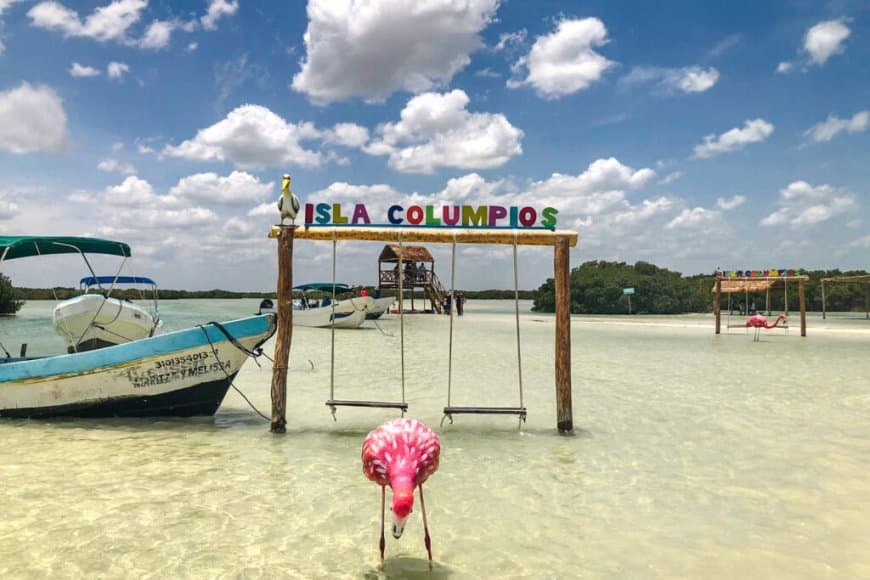 Shallow-water islands near Chuburná Puerto
This area is better for travelers who want a quieter beach stay and do not need many services within walking distance.
It works well for:
- Families renting a beach house
- Groups
- Slow coastal stays
- Travelers with a rental car
- People who want a simple, local beach rhythm
This is not the easiest choice without a car. Restaurants, shops, and services can be spread out.
How long to stay on the Emerald Coast
Stay 2 to 4 nights if you want real downtime. For one night, Progreso is usually simpler.
Celestún: best for nature, birds, and quiet
Celestún is a small coastal town west of Mérida, known for its biosphere reserve, mangroves, boat trips, and birdlife. It is one of the best places in Yucatán for travelers who want nature more than nightlife.
 Celestún coastline, Yucatán
Stay here if you want quiet evenings, seafood, beach walks, and an early boat trip.
Celestún works well for:
- Wildlife travelers
- Birdwatchers
- Couples looking for quiet
- Families who like nature
- Travelers with a rental car or private driver
- A slow overnight after visiting the reserve
The drawback is that Celestún is small. Hotel options are limited, service can be simple, and evenings are very quiet.
GuideCelestún Travel Guide: Flamingos, Boat Tours, Beach & Things to DoCelestún is a working fishing town on the far western edge of Yucatán, where a wide Gulf beach meets the Ría Celestún Biosphere Reserve, famous for its flamingo habitat. The destination is about 90–110 km west of Mérida and requires roughly 1.5–2 hours each way by car; a rental car, private driver, organized tour or public bus can be used, with the bus being the cheapest but less flexible. A full‑day visit from Mérida is typical, beginning with a morning boat tour of the mangrove channels and reserve, followed by a long seafood lunch under a palapa and optional beach time. Boat tours are priced per boat rather than per person, include life jackets and usually cover flamingo viewing areas, mangrove passages and occasional stops at freshwater springs; English‑speaking guides are not guaranteed, so confirm in advance. The best flamingo season is November to February, especially December to February, though sightings vary daily. Visitors should expect a wide, soft‑sand beach with calm but sometimes murky water, a relaxed malecón with palapa restaurants, and more locals on weekends and holidays. Bring cash for small vendors, arrive early for cooler weather and better boat‑tour timing, and respect wildlife distance as flamingos are sensitive to close approaches.Open
How long to stay in Celestún
Most travelers only need 1 night. Stay 2 nights if you want to slow down and spend time by the beach.
You can visit Celestún as a day trip from Mérida, but staying overnight makes the day feel less rushed.
Izamal: best small-town stay between Mérida and Valladolid
Izamal is a calm Pueblo Mágico known for its yellow buildings, convent, pyramids, and slower pace. It sits between Mérida and Valladolid, which makes it useful as a stop in a larger route.
 Izamal, Yucatán, Mexico
Stay here if you want a quiet small-town night rather than another city hotel.
Izamal works well for:
- Culture-focused travelers
- Photographers
- Couples
- Slow road trips
- Travelers driving between Mérida and Valladolid
- People who enjoy quiet evenings
The main drawback is that Izamal is small. You do not need many nights here unless you want to rest.
GuideIzamal: The Yellow City GuideIzamal is a small colonial town painted yellow, located east of Mérida in central Yucatán, about one hour to one hour 15 minutes by road from Mérida Centro and roughly 1½ hours from Valladolid. It is most often visited as a half‑day or full‑day day trip from Mérida, using a rental car, private driver, or the cheapest option—a bus from Mérida’s Noreste/Oriente terminals; a Tren Maya connection exists but the station is not in the main plaza. The essential sights can be covered in 4–6 hours, or a full day if you include a leisurely lunch, extra photography time and a slower pace. Entry to the Convento de San Antonio de Padua is free (donations welcome) and the Kinich Kakmó pyramid can be climbed at no charge; the cost of the visit is therefore limited to transport, meals and any optional guide or carriage hire. Visitors should expect a walkable historic centre with a wide convent atrium, the climb of Kinich Kakmó (uneven stone steps, bring proper shoes and water), and the chance to wander yellow‑washed streets, small markets and craft shops. Early morning (before 10 am) or late afternoon (after 4 pm) offers softer light for photography and cooler temperatures; midday can be very hot and the stone of the pyramid becomes scorching. Dress modestly for the convent, bring a hat for the exposed atrium, and carry cash for meals—restaurants such as Kinich and Zamná serve traditional Yucatecan dishes, while smaller loncherías are cheaper but may not accept cards. Horse‑drawn carriages are available but should be used after checking the animal’s condition. The town’s layered Maya, colonial and modern character makes it a relaxed, family‑friendly alternative to larger archaeological sites.Open
How long to stay in Izamal
Stay 1 night if it fits your route. You can also visit as a day trip from Mérida.
Uxmal and the Ruta Puuc: best for ruins and countryside
Uxmal is one of the most impressive archaeological sites in Yucatán, and the surrounding Ruta Puuc area is quieter than Chichén Itzá. Staying nearby lets you visit the ruins early and avoid some of the heat.
 Uxmal in southern Yucatán
Stay near Uxmal if you want archaeology, countryside, and a slower night outside Mérida.
This area works well for:
- History-focused travelers
- Photographers
- Road trips
- Couples
- Travelers who prefer quiet hotels
- People combining Uxmal with Kabah or other Ruta Puuc sites
The drawback is that there are fewer restaurants and services nearby. This area is much easier with a rental car or private driver.
GuideRuta Puuc Guide: Uxmal, Kabah, Sayil, Xlapak and LabnáThe Ruta Puuc is a 60 km archaeological corridor south of Mérida that links the UNESCO‑site Uxmal with the nearby Puuc‑style ruins Kabah, Sayil, Xlapak and Labná, with optional stops at Oxkintok and the Loltún Caves. Most sites open daily from 8:00 to 17:00 with the last entry at 16:00; Uxmal follows the same schedule and adds an evening light show on selected nights. 2025 entry fees are MXN 556 for foreign visitors to Uxmal (Mexican residents MXN 252) and MXN 80 – 75 for the smaller sites; the light show costs roughly MXN 459‑748. Admission is free on Sundays for Mexican residents with ID, and children, students, teachers, seniors and people with disabilities often receive exemptions, though state fees may still apply at Uxmal. Cash in pesos is required, as card acceptance is limited. From Mérida the route is most easily done by self‑drive: take Highway 261 south about one hour to Uxmal, then continue southeast to Kabah (≈22 km), Sayil (9.5 km), Xlapak (5 km) and Labná (3.4 km). Public buses run to Uxmal and a Sunday loop bus visits several sites; organized day tours are also available. A typical one‑day loop takes roughly 2‑3 hours at Uxmal and 45‑90 minutes at each of the other main sites, allowing a full circuit in about six to seven hours. Visitors should expect short drives, light jungle trails, minimal shade and basic facilities at the smaller sites; Uxmal provides restrooms, lockers and vendors. Bring at least 2 L of water per person, a sun hat, sturdy shoes, cash for tickets and snacks, and a biodegradable sunscreen. Start early to avoid the heat, obey climbing restrictions, and be prepared for speed bumps and occasional wildlife on the road. An evening light show at Uxmal is possible if tickets are bought in advance.Open
How long to stay near Uxmal
Stay 1 night if Uxmal is a major focus of your trip. Otherwise, visit as a day trip from Mérida.
Hacienda stays: best for slow travel, romance, and quiet
A hacienda stay can be one of the most memorable ways to experience Yucatán, but it is not right for every traveler. Many haciendas are outside cities or small towns, so you should think carefully about transport and meals.
 Hacienda Tabi, Yucatán, Mexico
Stay at a hacienda if you want quiet, architecture, gardens, pools, history, and a slower pace.
Hacienda stays work well for:
- Couples
- Honeymoons
- Families who want space
- Small groups
- Luxury travelers
- Travelers with a rental car or private driver
- People who want rest rather than constant movement
The drawback is location. Some haciendas are not walkable to restaurants or shops. You may need to eat on-site or arrange transport.
GuideBest Haciendas to Visit in Yucatán StateHacienda Sotuta de Peón, located about an hour’s drive north of Mérida, is presented as the best overall first‑time hacienda visit. The half‑day experience includes a guided tour of restored buildings, henequén fields, old machinery, a narrow‑gauge rail‑cart ride and usually a cenote swim. It is most easily reached by rental car, private driver or organized tour; the article advises arriving early for cooler weather and fewer crowds. Visitors should bring swimwear, a towel, sandals, cash and a change of dry clothes, and be prepared for a structured, family‑friendly itinerary rather than a quiet, self‑guided stop. Hacienda Yaxcopoil, on the Mérida‑Uxmal route, functions as a historic museum. A 1–2‑hour visit showcases preserved interiors, machinery and arches, making it attractive to photographers and history enthusiasts. Access is also by rental car or private driver, and the site fits well into a day trip that continues to Uxmal, Kabah or Muna. No swimming or luxury amenities are offered. Hacienda Mucuyché, also reachable by car or driver, combines a half‑day hacienda tour with cenote swimming. Reservations are recommended, especially in peak season, and visitors should bring swimwear, water shoes and possibly a life jacket. The focus is leisure and water activity rather than deep historical interpretation.Open
How long to stay at a hacienda
Stay 1 or 2 nights as part of a larger Yucatán route. Longer stays can work if your goal is rest.
Beach vs city: which is better?
For most first-time visitors, it is better to stay in Mérida first, then add the beach if you have enough time.
Yucatán’s beaches are calmer and more local than the big resort zones of Quintana Roo. They are good for slow days, seafood, family rentals, and simple sea air. They are not usually the best choice if you want polished nightlife, large resorts, or turquoise Caribbean-style water.
Choose Mérida if you want restaurants, culture, museums, markets, and day trips.
Choose the coast if you want quiet mornings, beach walks, and a slower rhythm.
Choose Valladolid if ruins and cenotes are your priority.
Best place to stay without a car
Stay in Mérida Centro if you do not have a rental car. It gives you the easiest access to taxis, buses, tours, restaurants, and private drivers.
Valladolid can also work without a car if you stay near the center and use taxis or tours for cenotes and ruins.
Beach towns are harder without a car unless you stay very close to the malecón in Progreso.
If you do not want to drive, plan fewer bases and use trusted transfers, guided day trips, or private drivers for the days that need more movement.
Best place to stay with a rental car
 A rural highway in Yucatán
With a rental car, you have more flexibility. You can stay outside the center, choose quieter hotels, visit cenotes early, and combine towns more easily.
Good car-friendly bases include:
- North Mérida
- Santiago or Santa Ana with confirmed parking
- Valladolid hotels outside the main plaza
- Hacienda stays
- Emerald Coast rentals
- Uxmal-area hotels
Always confirm parking before booking in historic centers. Streets can be narrow, and not every beautiful old hotel has easy parking.
Best places for families
Families usually do well in Mérida, Valladolid, Progreso, or a beach rental on the Emerald Coast.
Mérida is best for restaurants, medical services, and easy logistics. Valladolid is better for cenotes and shorter drives to ruins. Progreso is simple for beach time. A beach rental works well for families who want space and do not need hotel service.
Look for:
- A pool
- Parking
- Air conditioning
- Easy breakfast
- Walkable restaurants or a kitchen
- Short driving days
- Shade and rest time in the afternoon
Yucatán is hot for much of the year. A hotel pool is not a luxury detail here. It can change the whole day.
Best places for couples
Couples often like Santa Lucía or Santa Ana in Mérida, central Valladolid, Izamal, or a hacienda stay.
For a more cultural trip, choose Mérida and Valladolid. For a quieter romantic stay, choose a hacienda or a small hotel outside the busiest streets.
Avoid building a trip that is too packed. Yucatán rewards slower travel, especially in the heat.
Best places for budget travelers
Budget travelers should start with Mérida Centro or Valladolid. Both have guesthouses, simple hotels, hostels, affordable food, and bus access.
Progreso can also be affordable, especially outside peak holiday periods, but transport and food choices may be less varied than Mérida.
To keep costs down:
- Stay central and walk more
- Use buses between major towns
- Choose a hotel with breakfast or a kitchen
- Group day trips by region
- Avoid changing hotels too often
- Travel outside major Mexican holiday periods
Best places for luxury travelers
Luxury travelers should look at boutique hotels in Mérida, restored haciendas, and selected countryside or beach properties.
Mérida is best if you want design hotels, fine dining, galleries, and private experiences. Haciendas are better if you want quiet, space, and a sense of place.
For premium trips, it is worth arranging a private driver, especially for ruins, cenotes, and hacienda routes. It makes the day easier and avoids losing time with parking, navigation, and long drives.
Best two-base itineraries
Mérida and Valladolid
This is the easiest cultural route for most travelers.
Use Mérida for food, museums, Uxmal, Izamal, Progreso, and haciendas. Use Valladolid for Chichén Itzá, Ek Balam, and cenotes.
This route works well for 5 to 7 days.
GuideMérida Travel Guide: What to Do, Where to Stay and How to Plan Your TripMérida is the capital of the Mexican state of Yucatán, located in the northwest part of the peninsula and known as “La Ciudad Blanca” for its bright limestone architecture. The city is served by Mérida International Airport (MID), a 15‑25 minute drive to the historic centre, and by ADO bus terminals that connect to Cancún, Valladolid, Campeche and other destinations; rideshare services such as Uber and inDrive operate throughout town, while a car is only needed for longer day trips to sites like Uxmal or Celestún. The guide suggests an ideal stay of three to five nights in the city, with day trips ranging from 45 to 90 minutes. No specific entry fees are listed, but visitors should budget for accommodation, meals, transport and optional tours. The article notes that tap water is not potable, so purified water should be purchased, and that most restaurants expect a 10‑15 % tip. Travelers can expect a walkable historic centre, Sunday “bici‑ruta” streets closed to cars, lively plazas with marimba music, and a culinary scene that ranges from market breakfasts to fine‑dining in restored mansions. The climate varies: December‑March offers the mildest weather, April‑May is very hot, June‑October brings rain and humidity, and November is a transition period. Recommended packing includes breathable clothing, a wide‑brim hat, reef‑safe sunscreen (to be rinsed before entering cenotes), comfortable walking shoes and insect repellent. Tips include planning activities for early mornings and evenings to avoid midday heat, using shaded arcades in the centre, staying hydrated, and bringing a reusable water bottle with electrolytes. Modest dress is advised for churches and cultural venues, and a small fan or portable cooler can make the hot season more comfortable.OpenMérida and Progreso
This is best if you want city plus beach without much movement.
Stay in Mérida first, then finish with a night or two near the sea.
This route works well for 4 to 6 days.
GuideMérida Travel Guide: What to Do, Where to Stay and How to Plan Your TripMérida is the capital of the Mexican state of Yucatán, located in the northwest part of the peninsula and known as “La Ciudad Blanca” for its bright limestone architecture. The city is served by Mérida International Airport (MID), a 15‑25 minute drive to the historic centre, and by ADO bus terminals that connect to Cancún, Valladolid, Campeche and other destinations; rideshare services such as Uber and inDrive operate throughout town, while a car is only needed for longer day trips to sites like Uxmal or Celestún. The guide suggests an ideal stay of three to five nights in the city, with day trips ranging from 45 to 90 minutes. No specific entry fees are listed, but visitors should budget for accommodation, meals, transport and optional tours. The article notes that tap water is not potable, so purified water should be purchased, and that most restaurants expect a 10‑15 % tip. Travelers can expect a walkable historic centre, Sunday “bici‑ruta” streets closed to cars, lively plazas with marimba music, and a culinary scene that ranges from market breakfasts to fine‑dining in restored mansions. The climate varies: December‑March offers the mildest weather, April‑May is very hot, June‑October brings rain and humidity, and November is a transition period. Recommended packing includes breathable clothing, a wide‑brim hat, reef‑safe sunscreen (to be rinsed before entering cenotes), comfortable walking shoes and insect repellent. Tips include planning activities for early mornings and evenings to avoid midday heat, using shaded arcades in the centre, staying hydrated, and bringing a reusable water bottle with electrolytes. Modest dress is advised for churches and cultural venues, and a small fan or portable cooler can make the hot season more comfortable.OpenMérida and Celestún
This is good for travelers who want culture plus nature.
Spend most of your time in Mérida, then add one quiet night in Celestún for the reserve, beach, and seafood.
This route works well for 4 to 5 days.
GuideMérida Travel Guide: What to Do, Where to Stay and How to Plan Your TripMérida is the capital of the Mexican state of Yucatán, located in the northwest part of the peninsula and known as “La Ciudad Blanca” for its bright limestone architecture. The city is served by Mérida International Airport (MID), a 15‑25 minute drive to the historic centre, and by ADO bus terminals that connect to Cancún, Valladolid, Campeche and other destinations; rideshare services such as Uber and inDrive operate throughout town, while a car is only needed for longer day trips to sites like Uxmal or Celestún. The guide suggests an ideal stay of three to five nights in the city, with day trips ranging from 45 to 90 minutes. No specific entry fees are listed, but visitors should budget for accommodation, meals, transport and optional tours. The article notes that tap water is not potable, so purified water should be purchased, and that most restaurants expect a 10‑15 % tip. Travelers can expect a walkable historic centre, Sunday “bici‑ruta” streets closed to cars, lively plazas with marimba music, and a culinary scene that ranges from market breakfasts to fine‑dining in restored mansions. The climate varies: December‑March offers the mildest weather, April‑May is very hot, June‑October brings rain and humidity, and November is a transition period. Recommended packing includes breathable clothing, a wide‑brim hat, reef‑safe sunscreen (to be rinsed before entering cenotes), comfortable walking shoes and insect repellent. Tips include planning activities for early mornings and evenings to avoid midday heat, using shaded arcades in the centre, staying hydrated, and bringing a reusable water bottle with electrolytes. Modest dress is advised for churches and cultural venues, and a small fan or portable cooler can make the hot season more comfortable.OpenValladolid and the Riviera Maya
This works well if you are arriving through Cancún or Tulum and want to add a Yucatán inland stay.
Use Valladolid for ruins and cenotes before continuing to the coast.
This route works well for 4 to 7 days, depending on how much beach time you want.
GuideValladolid Travel Guide: What to Do, Where to Stay and How to Plan Your TripValladolid is a small colonial town in eastern Yucatán, roughly halfway between Mérida and Cancún and within an hour’s drive of Chichén Itzá and Ek Balam. The guide suggests staying two nights for most itineraries, with three nights better for families or those who want to visit several cenotes or make day trips to Río Lagartos, Las Coloradas or Cobá. Getting there is easy by rental car, ADO bus, Tren Maya or private driver; the bus station is central, while the train station lies outside the historic centre and requires a taxi or shuttle. Within the town the historic centre, Calzada de los Frailes and the main square are all walkable, but a car, taxi, colectivo, bicycle or scooter is needed for most cenotes and ruins. Typical activities include a morning walk around the main square, visiting Iglesia de San Servacio and the municipal palace, strolling the colourful Calzada de los Frailes, and touring the Convent of San Bernardino de Siena. Cenote Zací, just outside the centre, offers a convenient swim; the local market provides cheap breakfast and snacks. Visitors should plan to start early at ruins and cenotes to avoid the heat, bring cash in small bills, wear grip sandals for cenote water, and respect church dress codes. In the hotter months (April‑May) a hotel with a pool is advisable, and the most comfortable weather is from November to March.OpenBest three-base itineraries
Mérida, Valladolid, and the coast
This is a balanced Yucatán route.
Start in Mérida for culture and food. Continue to Valladolid for ruins and cenotes. Finish with Progreso, Celestún, or the Emerald Coast for slower beach time.
This works well for 7 to 10 days.
Mérida, Uxmal, and Valladolid
This is better for history-focused travelers.
Stay in Mérida, spend one night near Uxmal or in a hacienda, then continue to Valladolid for Chichén Itzá, Ek Balam, and cenotes.
This works well for 6 to 8 days.
GuideValladolid Travel Guide: What to Do, Where to Stay and How to Plan Your TripValladolid is a small colonial town in eastern Yucatán, roughly halfway between Mérida and Cancún and within an hour’s drive of Chichén Itzá and Ek Balam. The guide suggests staying two nights for most itineraries, with three nights better for families or those who want to visit several cenotes or make day trips to Río Lagartos, Las Coloradas or Cobá. Getting there is easy by rental car, ADO bus, Tren Maya or private driver; the bus station is central, while the train station lies outside the historic centre and requires a taxi or shuttle. Within the town the historic centre, Calzada de los Frailes and the main square are all walkable, but a car, taxi, colectivo, bicycle or scooter is needed for most cenotes and ruins. Typical activities include a morning walk around the main square, visiting Iglesia de San Servacio and the municipal palace, strolling the colourful Calzada de los Frailes, and touring the Convent of San Bernardino de Siena. Cenote Zací, just outside the centre, offers a convenient swim; the local market provides cheap breakfast and snacks. Visitors should plan to start early at ruins and cenotes to avoid the heat, bring cash in small bills, wear grip sandals for cenote water, and respect church dress codes. In the hotter months (April‑May) a hotel with a pool is advisable, and the most comfortable weather is from November to March.OpenMérida, Izamal, and Valladolid
This is a gentle route for travelers who like small towns.
Izamal breaks up the journey and gives the trip a quieter middle point.
This works well for 5 to 7 days.
GuideValladolid Travel Guide: What to Do, Where to Stay and How to Plan Your TripValladolid is a small colonial town in eastern Yucatán, roughly halfway between Mérida and Cancún and within an hour’s drive of Chichén Itzá and Ek Balam. The guide suggests staying two nights for most itineraries, with three nights better for families or those who want to visit several cenotes or make day trips to Río Lagartos, Las Coloradas or Cobá. Getting there is easy by rental car, ADO bus, Tren Maya or private driver; the bus station is central, while the train station lies outside the historic centre and requires a taxi or shuttle. Within the town the historic centre, Calzada de los Frailes and the main square are all walkable, but a car, taxi, colectivo, bicycle or scooter is needed for most cenotes and ruins. Typical activities include a morning walk around the main square, visiting Iglesia de San Servacio and the municipal palace, strolling the colourful Calzada de los Frailes, and touring the Convent of San Bernardino de Siena. Cenote Zací, just outside the centre, offers a convenient swim; the local market provides cheap breakfast and snacks. Visitors should plan to start early at ruins and cenotes to avoid the heat, bring cash in small bills, wear grip sandals for cenote water, and respect church dress codes. In the hotter months (April‑May) a hotel with a pool is advisable, and the most comfortable weather is from November to March.OpenWhere not to stay if you are short on time
Do not stay in a remote beach rental if you only have two or three nights in Yucatán. You will spend too much time arranging food, transport, and logistics.
Do not stay outside Mérida Centro without a car unless your hotel is clearly connected to the places you want to visit.
Do not choose a hacienda stay if you want nightlife, walkable restaurants, or spontaneous plans.
Do not stay only in Mérida if your main priorities are Chichén Itzá, Ek Balam, and eastern cenotes. Valladolid will make those days easier.
Practical booking tips
Book central hotels early for weekends, holidays, and major events in Mérida.
Check whether the hotel has air conditioning, especially in older buildings.
Confirm parking before booking if you have a rental car.
Look carefully at the map. In Yucatán, a hotel can look close to the center but still be a hot 20-minute walk in the middle of the day.
For beach rentals, check whether there are nearby restaurants, shops, and reliable transport.
For hacienda stays, ask about meal options, road access, and whether taxis or drivers can be arranged.
When to choose a private driver
A private driver makes sense if you want to visit several places in one day, avoid driving in unfamiliar areas, or travel with children, older relatives, or a group.
Private drivers are especially useful for:
- Cenote routes
- Uxmal and Ruta Puuc
- Celestún
- Hacienda visits
- Mérida to Valladolid transfers with stops
- Airport transfers
- Multi-day custom routes
This is not always the cheapest option, but it can make the trip calmer and more efficient.
Where to stay for a first trip to Yucatán
For a first trip, a simple plan is usually best.
Stay 3 or 4 nights in Mérida and 2 or 3 nights in Valladolid.
Add 1 or 2 nights on the coast if you have more time and want the sea.
This gives you food, culture, ruins, cenotes, markets, and a little rest without changing hotels every night.
Final thoughts
The best place to stay in Yucatán depends on how much movement you want.
Choose Mérida if you want the easiest base. Choose Valladolid if ruins and cenotes matter most. Choose Progreso or the Emerald Coast if you want simple beach time. Choose Celestún for nature. Choose Izamal for a quiet small-town night. Choose a hacienda if the stay itself is part of the trip.
Yucatán is easier when you do not try to see everything in one day. Pick one or two strong bases, leave space for heat and slow meals, and build the route around the kind of days you actually want.
For the next step, browse Tours & Experiences or continue with the relevant destination guide.

