Printable guide
Want to Climb a Mayan Pyramid? These Maya Ruins Still Let You Climb
Updated
Climbing is no longer allowed at Chichén Itzá or Tulum, but several Maya sites around the Yucatán Peninsula still permit visitors to climb designated pyramids and structures. Here are the practical options for 2026.

The Acropolis at Ek Balam
There was a time when climbing a Maya pyramid was almost expected on a trip around the Yucatán Peninsula. That has changed.
You cannot climb El Castillo at Chichén Itzá. The temples at Tulum are protected from visitor access. At Uxmal, you should plan your visit around the architecture rather than expect to climb the Pyramid of the Magician.
But climbing has not disappeared entirely.
Several archaeological sites around Yucatán, Quintana Roo and neighbouring Campeche still allow visitors onto designated pyramids, terraces or elevated structures. The list even became more interesting in December 2025, when Nohoch Mul at Cobá reopened for climbing after six years, using a new wooden stairway designed to protect the original stone.
If standing above the jungle is one of the things you want from your trip, you still have options.
The important part is choosing the right site — and understanding that access can change. INAH may temporarily close a staircase because of conservation work, rain, safety conditions or archaeological activity. A rope or stairway is not an invitation to climb unless the site staff says it is open.
This guide reflects access checked in September 2026. Always follow the instructions at the archaeological zone on the day you visit.
Maya pyramids you can still climb at a glance
| Archaeological site | What you can climb | Best base | Climb | Transport |
|---|---|---|---|---|
| Cobá | Nohoch Mul | Tulum or Valladolid | High and steep | Car, driver or tour easiest |
| Ek Balam | The Acropolis | Valladolid | Steep ancient staircase | Car, taxi, colectivo or tour |
| Izamal | Kinich Kak Moo | Mérida or Izamal | Moderate, very exposed | Easy independently |
| Oxkintok | Designated pyramids and elevated structures | Mérida / Maxcanú | Moderate | Car or private driver recommended |
| Chacmultún | Hilltop structures and permitted stairways | Tekax | Rougher, uneven climb | Car or driver strongly recommended |
| Calakmul | Selected monumental structures; confirm at entrance | Xpujil | Long and strenuous | Car or organised transport |
| Acanceh | Elevated access around the Pyramid of the Masks | Mérida | Shorter climb | Easy half-day trip |
If the climb itself is your priority, Cobá and Ek Balam are the clearest choices. Izamal is easier to fit into a normal sightseeing day. Oxkintok and Chacmultún suit travellers with a rental car who want quieter archaeological sites. Calakmul is a separate expedition.
Cobá: Nohoch Mul is climbable again
 Nohoch Mul pyramid at Cobá in Quintana Roo
For years, older travel guides created considerable confusion around Cobá.
Nohoch Mul was once one of the most famous pyramid climbs in Mexico. Visitors ascended its enormous stone staircase using a rope running up the centre. Climbing was suspended in 2019 as heavy visitor traffic contributed to deterioration of the original steps, and the closure continued for six years.
That changed on December 7, 2025.
INAH officially reopened Nohoch Mul with a new wooden staircase installed over the monument. The system is designed to allow visitors to reach the summit without walking directly on much of the vulnerable original stone.
At approximately 42 metres high, this is a substantial climb.
INAH currently publishes separate access rules for the pyramid:
- Nohoch Mul climbing access is scheduled from 8:00 AM to 3:30 PM
- Groups are limited to 15 people
- Visitors may remain at the top for up to 15 minutes
- Normal archaeological-zone admission continues later than the climbing window
Those limits matter. Arriving at Cobá late in the afternoon may mean you can visit the archaeological zone but cannot climb Nohoch Mul.
What the climb is like
The modern staircase makes the ascent more controlled than the old rope-and-stone arrangement visible in many photographs online, but this is still a tall pyramid in tropical heat.
The view changes gradually as you rise above the surrounding vegetation. At the summit, the archaeological site almost disappears beneath the forest. Cobá was once connected by a remarkable network of sacbeob — raised Maya roads — but from above, much of the ancient city now appears simply as jungle.
It is one of the clearest places on the peninsula to understand how much archaeology remains enveloped by forest.
Allow at least two to three hours for Cobá rather than arriving only to climb the pyramid. The site is spread over a large area and includes ball courts, stelae, smaller structures and sections of its ancient road network.
Bicycles and cycle taxis can make the distances easier.
Who Cobá suits
Cobá works particularly well if you are staying around Tulum and want an archaeological day without travelling all the way to Chichén Itzá.
It can also be reached from Valladolid, although Ek Balam is substantially closer to Valladolid and makes more sense if the climb itself is the priority.
Families with active older children may enjoy Cobá. With very young children, the combination of heat, walking and a high climb can make the day harder.
Go early if climbing matters to you.
What to combine with Cobá
There are several cenotes around Cobá, including options along the roads outside the archaeological zone. A morning ruins visit followed by a cenote is the natural order.
Do not try to build Cobá, Tulum, a cenote and several other major stops into one rushed day. Cobá is much better when you have time to walk or cycle through the forest rather than treating Nohoch Mul as a staircase attached to a car park.
Ek Balam: the classic Yucatán pyramid climb
The Acropolis at Ek Balam
If you are travelling through Yucatán state itself, Ek Balam remains the most straightforward major pyramid-climbing experience.
The archaeological zone sits north of Valladolid near Temozón. Its centrepiece is the enormous Acropolis, approximately 32 metres high and much broader than it initially appears from the plaza.
Visitors can ascend the ancient staircase.
Unlike Cobá's new protective staircase, Ek Balam feels much closer to the traditional pyramid climb people imagine. The stone steps are steep, irregular and exposed. You gain height quickly.
The descent usually feels more intimidating than the ascent.
Do not wear flip-flops. Trainers or secure walking sandals with good grip are much better.
 Acropolis at Ek Balam, Yucatán
Why Ek Balam is worth climbing even without the view
The Acropolis is not simply a viewing platform.
Partway up is the extraordinary stucco façade associated with the tomb of the ruler Ukit Kan Lek Tok'. Its entrance resembles the open mouth of a supernatural creature, surrounded by preserved figures, wings, teeth and elaborate plaster decoration.
This is one of the details that separates Ek Balam from a purely adventurous climb.
Slow down on the way up and look at the architecture.
Then continue to the summit, where the horizon becomes almost entirely green.
Getting there
Ek Balam is roughly 30 minutes from Valladolid.
A rental car is easy, but it is not essential. Travellers can also arrange a taxi or use shared transport from Valladolid, depending on current departures.
From Mérida, it is a considerably longer outing. If you are already planning to spend time in eastern Yucatán, staying in Valladolid and visiting Ek Balam from there is usually more efficient than making a long return day from Mérida.
See our full Ek Balam guide and Valladolid to Ek Balam transport guide for the practical details.
Add Cenote Xcanché
Cenote Xcanché sits close to the archaeological zone.
Ruins first, swimming second works well.
Allow around two to three hours for Ek Balam itself, then another hour or two if you want to swim rather than changing clothes, jumping in for ten minutes and immediately leaving again.
This is one of the easiest archaeology-and-cenote combinations around Valladolid.
Izamal: climb Kinich Kak Moo in the middle of town
 Kinich Kak Moo pyramid in Izamal, Yucatán
Izamal offers something completely different.
Kinich Kak Moo does not sit behind a distant archaeological-zone entrance in the forest. The enormous Maya platform rises directly within modern Izamal, surrounded by streets, houses and everyday town life.
INAH's own visitor information describes the view from the top of Kinich Kak Moo, and the pyramid remains one of the most accessible climbs in Yucatán.
The archaeological site is currently free to visit.
GuideIzamal: The Yellow City GuideIzamal is a small colonial town painted yellow, located east of Mérida in central Yucatán, about one hour to one hour 15 minutes by road from Mérida Centro and roughly 1½ hours from Valladolid. It is most often visited as a half‑day or full‑day day trip from Mérida, using a rental car, private driver, or the cheapest option—a bus from Mérida’s Noreste/Oriente terminals; a Tren Maya connection exists but the station is not in the main plaza. The essential sights can be covered in 4–6 hours, or a full day if you include a leisurely lunch, extra photography time and a slower pace. Entry to the Convento de San Antonio de Padua is free (donations welcome) and the Kinich Kakmó pyramid can be climbed at no charge; the cost of the visit is therefore limited to transport, meals and any optional guide or carriage hire. Visitors should expect a walkable historic centre with a wide convent atrium, the climb of Kinich Kakmó (uneven stone steps, bring proper shoes and water), and the chance to wander yellow‑washed streets, small markets and craft shops. Early morning (before 10 am) or late afternoon (after 4 pm) offers softer light for photography and cooler temperatures; midday can be very hot and the stone of the pyramid becomes scorching. Dress modestly for the convent, bring a hat for the exposed atrium, and carry cash for meals—restaurants such as Kinich and Zamná serve traditional Yucatecan dishes, while smaller loncherías are cheaper but may not accept cards. Horse‑drawn carriages are available but should be used after checking the animal’s condition. The town’s layered Maya, colonial and modern character makes it a relaxed, family‑friendly alternative to larger archaeological sites.Open
What the climb is like
Kinich Kak Moo looks broad rather than particularly intimidating from below.
Do not underestimate the heat.
There is little shade on the upper portion, the limestone reflects the sun, and the surface is rougher than a modern staircase. The climb is not technically difficult for a reasonably active traveller, but going up around noon in May is a very different experience from climbing at 9:00 AM in January.
Go early or later in the afternoon.
From the upper platform you can look across Izamal's low skyline toward the yellow-painted historic centre and the Convento de San Antonio de Padua.
The setting tells the history of the town almost without explanation: a major Maya ceremonial landscape, a colonial monastery and a modern Yucatecan community occupy the same place.
Why choose Izamal
Choose Kinich Kak Moo if you want a pyramid climb without organising an archaeology-focused day.
You can travel to Izamal, climb the pyramid, visit the convent, walk the centre, eat lunch and return to Mérida.
Read our Izamal guide or Mérida to Izamal transport guide if you are planning the trip independently.
A rental car makes onward travel easier, but Izamal is one of the better options on this list for travellers who do not want to drive.
Allow half a day if you only want to see the town. A relaxed full day gives you time for lunch and slower wandering.
Oxkintok: climb among the old Puuc hills
 The main pyramid (MA-1) in the Ah May group at Oxkintok, Yucatán
Oxkintok is a very different proposition from Ek Balam or Cobá.
There are fewer visitors, much less visitor infrastructure and far less of a sense that the archaeological zone has been organised around a single monumental attraction.
That is part of its appeal.
The site sits west of the main Ruta Puuc corridor near Maxcanú. Yucatán's official tourism information specifically describes the landscapes visible from the tops of Oxkintok's pyramids, and visitors can climb designated structures within the archaeological zone.
 Oxkintoc Totale
Oxkintok developed over an unusually long period, and its architecture helps explain the development of the Puuc tradition that later reached its most famous expression at Uxmal.
You will find pyramids, palaces, arches, plazas, sacbeob and chultunes.
There is also the Satunsat, or Tzat Tun Tzat, a labyrinthine structure associated with some of the site's most intriguing interpretations. Do not assume the interior of the labyrinth is open. Access has been restricted for safety, and the exterior is still worth seeing.
GuideOxkintok Guide: Yucatán's Oldest Puuc City and the Labyrinth of Tzat Tun TzatOxkintok is one of the longest-occupied Maya sites in Yucatán and the oldest centre of the Puuc region. This guide covers the labyrinth, the pyramids, transport, fees, and how to combine it with the Ruta Puuc.OpenWhat the climb is like
There is no single dramatic staircase that defines the entire visit.
Expect repeated sections of uneven limestone, elevated terraces and ancient stairs. This feels more like exploring a large archaeological landscape than completing one famous climb.
That makes good footwear particularly important.
It also makes Oxkintok a poor choice if what you really want is one recognisable pyramid photograph followed by lunch.
Choose it because you are interested in the site.
Getting there
Oxkintok is roughly an hour to an hour and fifteen minutes from Mérida, depending on your route and current road conditions.
A rental car or private driver makes this substantially easier.
Public transport can get you toward Maxcanú, but the final connection to the archaeological site complicates the day and return transport should be arranged in advance.
Our full Oxkintok guide covers the site in more detail.
Allow two to three hours.
If you have a car, Oxkintok can form part of a wider western Yucatán trip involving Maxcanú, the Calcehtok caves or the Ruta Puuc.
Do not try to squeeze every Puuc archaeological site into the same day.
Chacmultún: a rougher climb in southern Yucatán
 Red-stone buildings at Chacmultún near Tekax
Chacmultún is for travellers who are comfortable going farther.
The archaeological zone sits approximately six kilometres southwest of Tekax, around 130 kilometres from Mérida. Its structures spread across a landscape of low hills — unusual terrain in a state where much of the land is almost completely flat.
The name is associated with the reddish colour that develops on some of the stone.
More importantly for this guide, visiting Chacmultún involves climbing the hills, terraces and permitted ancient stairways between its elevated structures.
This is not as neat or controlled as climbing Cobá's new staircase.
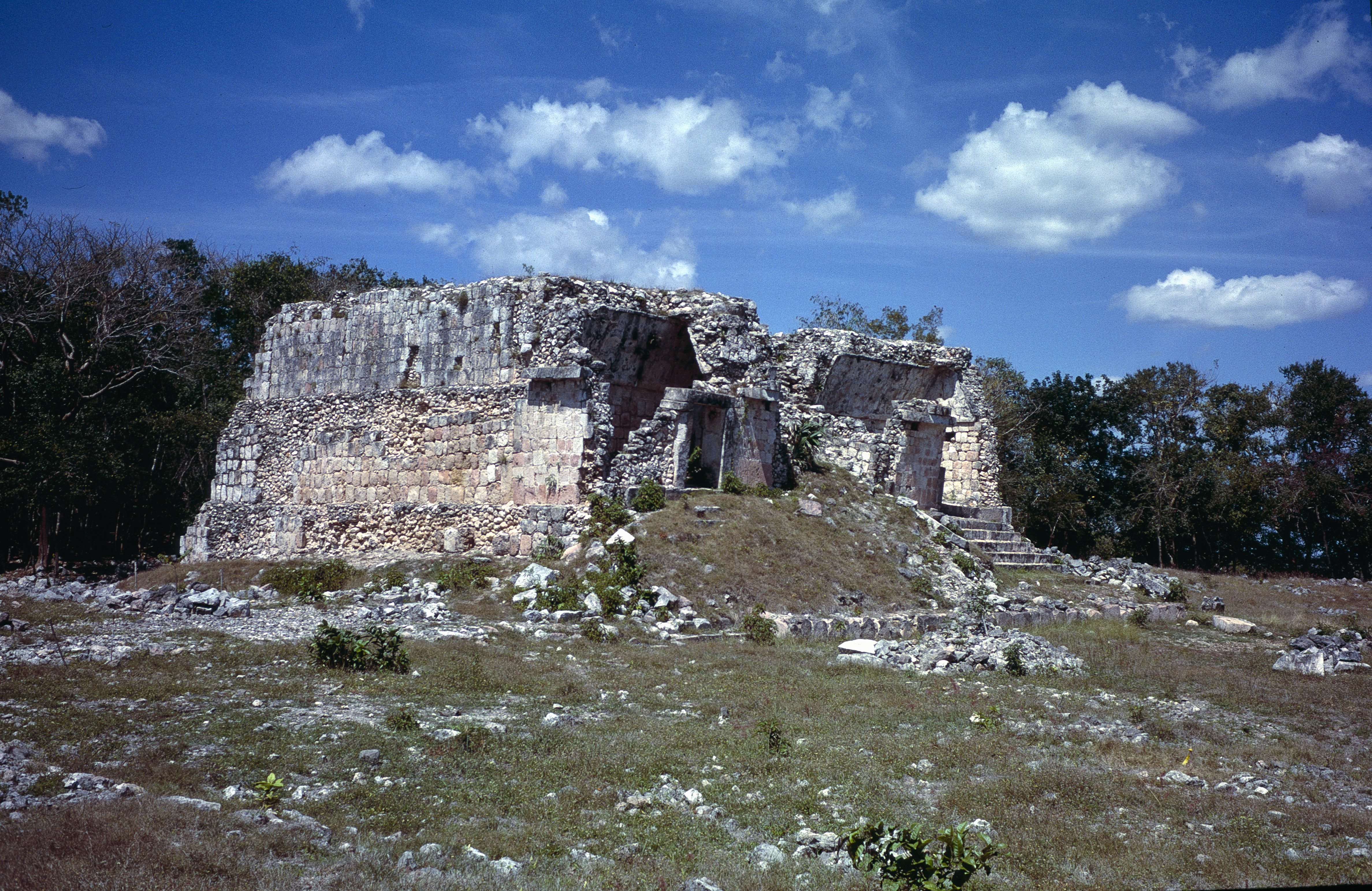 Chacmultun, Yucatan, Mexico: Main Group, building 2
Loose rocks, rough ground and irregular ancient masonry are part of the visit. After rain, limestone can become slippery.
Follow the marked route and the custodian's instructions. Do not climb fragile walls simply because there is no rope directly in front of you.
GuideTekax Travel Guide: Caves, Hills, Chacmultún and Southern YucatánTekax Pueblo Mágico is a small town in the Yucatán Peninsula, designated a Pueblo Mágico in 2009, known for its Mayan archaeological sites, colonial architecture and nearby cenotes. Driving from Mérida takes about one hour via Highway 190 (≈80 km) and parking is free near the Plaza Principal. Colectivos leave the Mérida bus terminal for around 50 MXN and need roughly 1.5 hours; a taxi costs 800‑1,000 MXN. Within town you can walk or rent a bike, but a helmet is advisable. A typical half‑day itinerary begins with arrival at 8:30 am, then a visit to the Church of San Juan Bautista at 9:00 am, the local market at 10:30 am, a short drive to Cenote X’batun for a swim at 11:30 am, and lunch at a restaurant such as Restaurante El Arco at 12:30 pm. The schedule fits history, culture and nature into a few hours. Visitors should come early or late in the day to avoid crowds, bring cash because many vendors do not take cards, and dress modestly when entering churches. Golden‑hour light is best for photography in the town square and cenotes, and trying the local pibil dish is recommended. Nearby attractions such as Ek’ Balam, Oxkutzcab, Uxmal and Cenote Ik Kil are reachable by short drives if time permits.Open
Who should make the trip
Chacmultún makes sense if you are already interested in southern Yucatán or Tekax.
It is not the first archaeological site we would send a first-time visitor to from Mérida.
For travellers who have already seen Chichén Itzá, Uxmal and perhaps Ek Balam, however, it offers a much quieter look at Puuc architecture and a landscape that feels noticeably different.
Read our Chacmultún guide before going.
A rental car or private driver is strongly recommended.
If you also want to explore caves and adventure activities around Tekax, consider staying overnight rather than spending much of the day driving back and forth from Mérida.
Calakmul: the serious jungle climb
 Structure II at Calakmul rising above the Campeche jungle
Calakmul belongs in this guide, but not in the same practical category as Izamal or Ek Balam.
This is not an easy extra stop from Mérida.
The ancient city lies deep in southern Campeche inside the Calakmul Biosphere Reserve, surrounded by one of the great remaining stretches of tropical forest in Mexico.
The monumental structures are enormous. Structure II reaches roughly 55 metres according to INAH's current site information.
Visitors in 2026 continue to report climbing designated major structures, including the great elevated viewpoints above the canopy.
Confirm which structures are open when you enter. Calakmul is an active conservation and archaeological landscape, and access to individual stairways can change.
Why people make the climb
The summit experience is unlike the more developed northern Yucatán sites.
At the top, there is very little modern landscape to orient yourself around.
The forest simply continues.
Other ancient structures rise above the canopy like small stone islands while much of the rest of the city remains below the trees.
Spider monkeys and howler monkeys are common enough that the sound of the forest can become part of the archaeological visit.
Do not attempt Calakmul as a casual Mérida day trip
Base yourself around Xpujil or the southern Campeche corridor.
The access journey itself takes time, and you should arrive with plenty of water, fuel and daylight.
Allow at least three to five hours at the archaeological zone, longer if you walk slowly or spend time watching wildlife.
Wear proper shoes. Bring insect repellent. Carry more water than you think you need.
Calakmul is the right choice for someone building a larger road trip through Campeche and the southern peninsula. It is not the best option if you have three days in Mérida and simply want to say you climbed a pyramid.
For that, go to Ek Balam or Izamal.
Acanceh: a smaller climb close to Mérida
 The Maya pyramid at Acanceh in the centre of the modern town
Acanceh deserves a mention because it is both close to Mérida and unusual.
The archaeological remains sit directly inside the modern town. The main pyramid rises beside the plaza, only a short distance from the colonial church and everyday shops.
This is not a giant jungle summit comparable with Cobá or Calakmul.
Instead, the site provides elevated access around the Pyramid of the Masks, allowing visitors to get much closer to its monumental stucco decoration and see the surrounding town from above.
INAH describes four ancient stairways reaching the upper part of the pyramid, while the practical visitor route is controlled around the conserved sections. Follow the custodian's directions rather than assuming every ancient staircase is open for use.
The pyramid is only part of the site. A few blocks away is the Palace of the Stuccos, which preserves evidence of artistic connections extending well beyond northern Yucatán.
Acanceh is around 30 to 40 minutes from Mérida and takes roughly one to one and a half hours to visit.
Read our Acanceh ruins guide before you go.
It works particularly well when combined with the cenote country around Homún or Cuzamá.
GuideAcanceh Ruins Guide: The Pyramid of the Masks in a Living Maya TownAcanceh is a compact Maya archaeological site set inside a working Yucatecan town, famous for its monumental stucco masks and Teotihuacán-influenced frieze. Here is what to see, how to get there, and how to combine it with nearby cenotes and ruins.OpenWhere you cannot climb the pyramid
The easiest mistake is relying on an old photograph.
Images of people standing on Maya pyramids remain everywhere online, even when climbing has been prohibited for years.
| Site | Main structure | Can you climb it? |
|---|---|---|
| Chichén Itzá | El Castillo | No |
| Tulum | El Castillo and temples | No |
| Uxmal | Pyramid of the Magician | No |
| Cobá | Nohoch Mul | Yes — reopened December 2025 |
At Chichén Itzá, the prohibition is not ambiguous. Do not cross barriers or imitate the occasional visitor who ignores them.
The same principle applies elsewhere.
If a structure is closed, it is closed even if you can physically reach the first step.
Archaeological access is a privilege rather than a feature guaranteed by your entrance ticket.
Which pyramid should you climb?
The answer depends much more on your route than on which pyramid is tallest.
From Valladolid: Ek Balam
Choose Ek Balam.
It is close, the Acropolis climb is substantial, the architecture is excellent and you can add Cenote Xcanché without making the day complicated.
This is the easiest choice for someone specifically asking us, “Where can I still climb a Maya pyramid in Yucatán?”
From Tulum or the Riviera Maya: Cobá
Choose Cobá.
The reopening of Nohoch Mul makes the archaeological zone much more interesting for travellers specifically looking for a summit experience.
Go early enough to arrive well inside the separate pyramid-climbing hours.
From Mérida without a rental car: Izamal
Choose Kinich Kak Moo.
Izamal is straightforward to reach, the pyramid sits inside town, and you do not need to organise an isolated archaeological-site transfer.
You also get an entire town to explore afterwards.
From Mérida with a car: Oxkintok
Choose Oxkintok if you want something quieter and are already interested in Maya archaeology.
It works particularly well for repeat visitors who have already covered the major sites.
For southern Yucatán: Chacmultún
Choose Chacmultún if Tekax and the southern Puuc region are already part of your plans.
The climb is rougher and the visitor infrastructure lighter.
For a major road trip: Calakmul
Choose Calakmul when the journey itself is part of the trip.
Do not add it simply because you saw a photograph of the view from the summit. The distance and logistics deserve at least a proper southern Peninsula itinerary.
How difficult is climbing a Maya pyramid?
Ancient Maya stairways were not designed around modern tourism.
Steps can be:
- unusually high
- narrow
- irregular
- polished by wear
- loose at the edges
- exposed to direct sun
- slippery after rain
Going down is often harder than going up.
If you are uncomfortable with heights, do not assume you will suddenly feel comfortable because the staircase is archaeological rather than modern.
There is no shame in stopping below the summit.
Wear proper shoes
Flip-flops are a poor choice.
Use trainers, walking shoes or secure sandals with grip.
Loose limestone and polished stone become particularly awkward when descending.
Go before the heat builds
The summit has no shade.
During the hotter months, the difference between climbing at 8:30 AM and 1:00 PM can be substantial.
An early start also gives you more time if access is being managed in groups.
Carry water
You may not be allowed to eat inside archaeological areas, but water is essential.
Drink before beginning the climb rather than waiting until you reach the top.
Be more cautious after rain
Wet limestone becomes slick quickly.
Site staff may restrict access during poor conditions. Take that seriously.
Are the pyramid climbs suitable for children?
It depends on the child and the site.
An active older child who is comfortable with heights may handle Ek Balam or Izamal without difficulty.
A toddler on a steep ancient staircase is a different situation.
There may be:
- no handrail
- large gaps between steps
- steep exposed edges
- other visitors descending toward you
- nowhere convenient to stop
Parents should assess the staircase from the bottom rather than deciding in advance that everyone will climb.
Cobá's newer controlled stairway is a different proposition from the old unrestricted stone ascent, but it is still a high archaeological structure.
For families that want the experience without making the pyramid the entire purpose of the day, Izamal is usually easier because anyone who decides not to climb can continue enjoying the town.
Do you need a tour?
Not necessarily.
Izamal is easy to visit independently.
Ek Balam can also be done independently from Valladolid using a car, taxi or shared transport.
Cobá is straightforward with your own car, although a tour is convenient if you are staying on the Riviera Maya and do not want to organise transport.
Oxkintok and Chacmultún become much easier with a rental car or private driver.
Calakmul deserves proper transport planning and is often easier as part of a longer road trip or organised private itinerary.
A guide is not required simply because you want to climb. It can, however, completely change what you understand when you come back down.
The staircase is only the most visible part of the architecture.
Climb respectfully
Being allowed onto an ancient structure does not mean the entire building is open for exploration.
Stay on the approved route.
Do not:
- cross ropes or barriers
- climb walls beside a closed staircase
- sit on stucco decoration
- enter sealed rooms
- move loose stones
- carve names into masonry
- fly a drone without the required permission
If a custodian asks visitors to come down, come down.
These rules are why some climbing opportunities can continue at all.
A final warning about old travel information
Climbing permissions around the Maya world change.
Cobá is the clearest recent example: information saying “you cannot climb Nohoch Mul” was correct for six years and became outdated in December 2025.
The reverse can happen just as easily.
A pyramid described as climbable in an old blog post may now be closed.
For that reason, do not choose a distant hotel, pay for a private driver or restructure an entire trip around a climb without checking current conditions when the climb is the main reason you are going.
Our preference is simple:
Choose a site you would still want to see if the staircase were closed that morning.
Ek Balam still has its stucco façade.
Cobá still has its sacbeob and forest setting.
Izamal still has the town and convent.
Oxkintok still has its long architectural history.
Calakmul is still Calakmul.
The climb should improve the visit rather than be the only reason for making it.
Quick recommendations
If you only want the short version:
- For the strongest all-round pyramid-climbing day in Yucatán: go to Ek Balam.
- For the newly reopened major climb near the Riviera Maya: go to Cobá.
- For the easiest pyramid climb from Mérida: go to Izamal.
- For a quiet archaeological day with your own car: go to Oxkintok.
- For southern Yucatán and fewer visitors: go to Chacmultún.
- For a serious jungle expedition: build a proper trip around Calakmul.
For a quick question about which one fits your existing itinerary, use the free Yucatán Guide WhatsApp assistant.
If you want a real person to check driving times, climbing access, cenote combinations and the wider route, Human Trip Support is the better option. Families and groups arranging several private days can also use the Trip Plan & Booking Portal or Managed Private Concierge.
The pyramid you can actually reach comfortably is usually the right one.