El Castillo is the building most people picture when they hear Chichén Itzá. Its four steep stairways rise above the Great Plaza, its corners catch the morning light, and the north staircase is associated with the famous serpent-shaped shadow seen around the equinoxes. It is an extraordinary monument, but it is easy to reduce it to a photograph and miss the decisions built into its shape.
The structure is also called the Temple of Kukulcán. “El Castillo” is a Spanish colonial-era name meaning “the castle”; it does not describe the building’s original function. This was a temple and a carefully placed statement of political and religious power, built at the center of a major Maya city in northern Yucatán.
You can no longer climb the pyramid or enter its chambers during a normal daytime visit. That restriction changes the experience, but it does not make the monument uninteresting. From ground level, you can study the stairways, balustrades, platforms, proportions, and relationship with the surrounding plaza. The best visit is not a hunt for one perfect serpent photograph. It is a slow look at how architecture, calendar knowledge, ritual, landscape, and authority meet in one building.
 El Castillo, the Temple of Kukulcán, at Chichén Itzá
Quick answer: what is El Castillo?
El Castillo is the central pyramid-temple at Chichén Itzá, dedicated in modern interpretation to Kukulcán, the feathered-serpent deity known in other Mesoamerican traditions as Quetzalcóatl. It stands on a square plan with stairways on all four sides. The building reaches approximately 30 metres in height and measures about 55.5 metres on each side, according to a 2026 INAH description.
The visible pyramid is not a simple, single construction made in one moment. Like many major Mesoamerican temples, it incorporates an earlier structure inside it. A later pyramid was built over an older temple, a process that allowed rulers and builders to renew a sacred monument while preserving a connection with the past. Researchers have documented an inner temple and a jaguar throne within the structure, although interior access is not part of an ordinary visitor route.
The monument belongs to the period when Chichén Itzá was one of the most influential urban centers in the northern Maya area. Its exact history is complex. The city contains architecture associated with different regional traditions, and scholars continue to debate how to describe its relationships with central Mexico and the wider Maya world. A careful guide should not present every old “Toltec influence” explanation as settled fact.
What you can say with confidence is that El Castillo was monumental, centrally positioned, highly planned, and connected to ritual ideas about time, rain, fertility, celestial observation, rulership, and the feathered serpent. Its geometry is meaningful even when individual interpretations remain debated.
Why was El Castillo built?
The honest answer has several layers. It was a temple, but a temple of this scale also organized public space and expressed authority. The building gave the Great Plaza a center. It created a vertical focus that could be seen from the approaches and from the large open area around it. It turned movement, ceremony, and attention toward a controlled point.
A pyramid-temple could perform more than one job at the same time:
- It provided an elevated sacred platform for ritual activity.
- It gave rulers and religious specialists a dramatic architectural setting.
- It made calendar and astronomical knowledge visible in stone.
- It connected the living city with earlier sacred construction.
- It communicated the power to organize labor, materials, water, food, and specialists.
- It helped define the city’s ceremonial core.
It is tempting to ask whether El Castillo was “a calendar.” That phrase is too simple. The building is not a stone clock in the modern sense. Its orientations, stairways, numbers, shadows, and ceremonial use may have worked together, but a visitor should distinguish direct observation from later interpretation.
The four stairways are commonly associated with the four directions. Each has 91 steps, and the top temple platform is often included to produce the familiar total of 365: one step for each day of the solar year. This numerical reading is memorable, and it reflects the way visitors are often taught to see the building. Still, the current visible stairways, restorations, and historical building phases mean the number should be treated as an interpretive feature rather than proof that the Maya designed El Castillo as a literal calendar with one step per day.
The monument’s power comes from the combination of precise planning and open questions. You can admire the geometry without pretending that every symbolic meaning has been settled.
How El Castillo is arranged
Stand in front of the north staircase and look beyond the pyramid before looking up. The building is not isolated. It sits within the Great Plaza, close to the Great Ball Court, the Temple of the Warriors, the Tzompantli, the Platform of Venus, and other structures. The surrounding buildings create a ceremonial neighborhood rather than a collection of unrelated ruins.
Four stairways and four faces
Each side of the pyramid has a central staircase. The symmetry is immediately clear from a distance, but the details reward a closer look. The stairways divide the sloping terraces and lead the eye upward to the small temple at the summit. The horizontal terraces create bands of light and shadow, especially in the early morning and late afternoon.
The north staircase is the one most visitors study because it has the serpent-head sculptures at the base and the balustrades associated with the equinox shadow. The other sides are not merely spare versions. Walking around the building lets you compare light, surface wear, sightlines, and the way the structure relates to different parts of the plaza.
The stairways are extremely steep. That steepness is part of the visual drama, but it also explains why climbing the monument would be dangerous and why access restrictions matter. Do not cross barriers or attempt to climb. The pyramid is a protected archaeological monument, not an observation tower.
The summit temple
At the top is a smaller temple that completes the pyramid’s profile. From ground level, it can appear compact compared with the huge lower terraces. Its placement is important: the pyramid lifts the temple above the plaza and creates a layered composition of base, stairway, terraces, and summit.
Details at the top are difficult to see without a good zoom lens or a guide’s explanation. This is one reason photographs taken from several sides are useful. It is also why a printed reconstruction or a museum visit can complement the outdoor walk. Digital images can show carvings and architectural details that are hard to identify from the visitor path.
The balustrades
The north stairway’s balustrades slope down toward the ground. During the equinox-season light effect, the descending triangular patches of shadow are read as the body of a serpent. The balustrades are not just rails. They frame movement between the plaza and the summit and provide the visual surface on which the shadow effect is noticed.
Look for the relationship between the bright upper wall, the sharp edge of the stairway, and the darker triangular sections. The phenomenon is a changing effect of sunlight and architecture. It is not a carved serpent moving down the steps. The stone serpent heads at the base and the light pattern work together in the visitor’s interpretation.
The serpent heads
At the bottom of the north staircase are large serpent-head sculptures. They are the most obvious reason visitors connect the staircase with Kukulcán. The feathered serpent is a widespread Mesoamerican religious and political image, but local meanings depend on context. Here, the sculpture is part of the building’s entrance composition and its relationship with the sky, the plaza, and the ceremonial calendar.
Spend time looking at the heads from an angle rather than only from directly in front. The scale becomes clearer, and the connection between the stone forms and the staircase is easier to understand. A guide can also explain what is restored, what is original in place, and which interpretations are widely accepted.
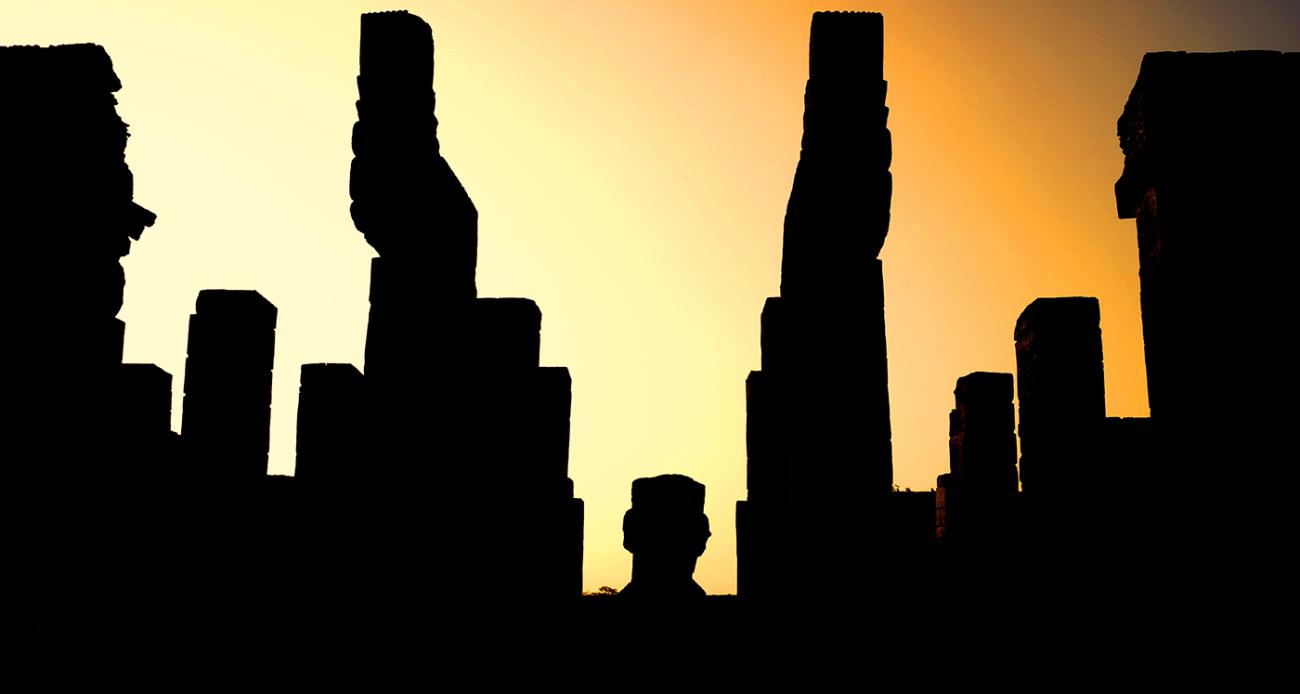 The Temple of the Warriors in the Chichén Itzá ceremonial area
The inner pyramid and the jaguar throne
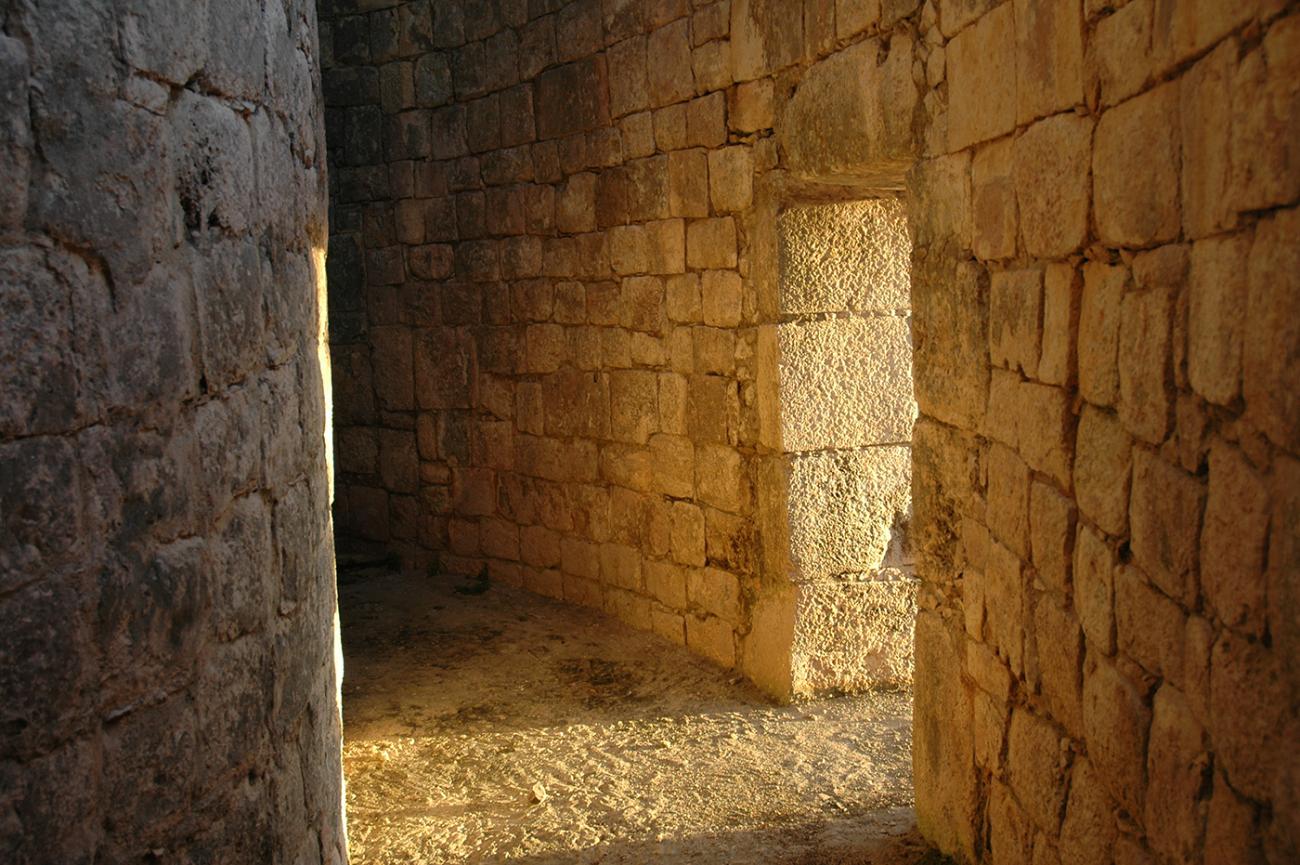
One of the most interesting facts about El Castillo is that an earlier pyramid exists inside the later one. Archaeologists have identified an inner temple reached through a passage that is not part of the standard public route. Inside is a jaguar throne, traditionally described as a red jaguar figure with inlaid details.
This inner building changes how you imagine the monument. The visible pyramid is not simply a large pile of stone with rooms at the top. It is a later architectural envelope around an earlier sacred center. The city’s builders could enlarge a temple while retaining an important interior. In Mesoamerica, covering an older temple with a new one was not necessarily an act of erasure. It could be a way of renewing power, commemorating ancestry, and creating a new ceremonial form around an established sacred place.
For visitors, the practical point is simple: do not believe anyone who promises a normal ticketed “inside El Castillo” climb as part of the daytime visit. Access arrangements can change for specialists or controlled programs, but the ordinary visitor experience is from outside. If a tour description includes an interior claim, ask exactly what is included and whether it refers to another building, a museum reproduction, or an exceptional program.
Kukulcán, Quetzalcóatl, and careful language
Kukulcán is usually translated or explained as a feathered serpent, and the name is associated with the Yucatec Maya tradition. Quetzalcóatl is the Nahua name for a related feathered-serpent figure in central Mexico. The two traditions are connected in the broader Mesoamerican world, but they are not interchangeable labels for one simple god who traveled unchanged from one place to another.
Chichén Itzá’s architecture contains imagery and forms that have encouraged comparisons with central Mexican traditions. Scholars have proposed different explanations: migration, political alliances, exchange of ideas, shared religious concepts, conquest, or the movement of people and specialists. The evidence is not a single neat story.
When visiting, use the local name Kukulcán for the temple at Chichén Itzá and listen for the explanation offered by a qualified guide. You can appreciate the feathered-serpent image without flattening Maya history into a “Maya versus Aztec” story. Chichén Itzá was part of a connected Mesoamerican world, but it was also a place with its own local history and community of descendants.
The equinox serpent shadow: what actually happens?
Around the spring and autumn equinoxes, sunlight and the north staircase create a sequence of triangular shadows along the balustrade. The effect is commonly described as the descent of Kukulcán. It is one of the most famous heritage spectacles in Yucatán.
The basic visual process is easy to understand. As the sun moves across the sky, the upper terraces and edges of the pyramid cast shadows onto the sloping side of the staircase. The triangles appear to connect with the serpent head near the base. The result can look like a long body of light and shadow.
The timing is more complicated than the phrase “on the equinox” suggests. The shadow effect develops over a period around the equinox rather than existing as one identical image for a single instant. Weather, haze, clouds, crowd-control procedures, maintenance, and the angle from which you view the staircase all affect what you see. A dramatic photograph from one year is not a guarantee of the same appearance on your date.
The event is also culturally sensitive. It is not just a photo opportunity. For many people, the serpent represents a living religious and agricultural idea connected with fertility, rain, renewal, and the continuity of life. Plan for crowds, heat, possible access changes, and a large amount of waiting. Check the current official announcement from INAH and Yucatán authorities before planning an equinox trip; never assume last year’s schedule or entrance arrangement will be repeated.
If you want a quieter first experience, visit outside the equinox period. You can still study the architecture and understand the principle without the largest crowds. If the equinox effect is your main reason for coming, arrive with modest expectations and treat the viewing as weather-dependent.
What to look for during a normal visit
A good visit to El Castillo can take 30 minutes or more by itself, even though you cannot climb it. Use a simple four-part method.
First, take in the whole building from the edge of the plaza. Notice how far away you need to stand before the four sides and summit temple fit comfortably in your view. This is the scale the builders wanted you to experience.
Second, walk to the north staircase and study the serpent heads, balustrades, terrace bands, and central axis. Look at the way people move around the building today, then imagine how controlled movement might have worked during ceremonies.
Third, circle the pyramid. The sun changes the surfaces as you walk. One face may be in full light while another is in shadow. The building’s symmetry becomes less abstract when you see how each side meets the plaza.
Fourth, step away and connect El Castillo to the other monuments. The Great Ball Court is close by. The Temple of the Warriors and its columns sit across the ceremonial area. The Sacred Cenote lies farther north. Chichén Itzá makes more sense when El Castillo is treated as the center of a city rather than the entire city.
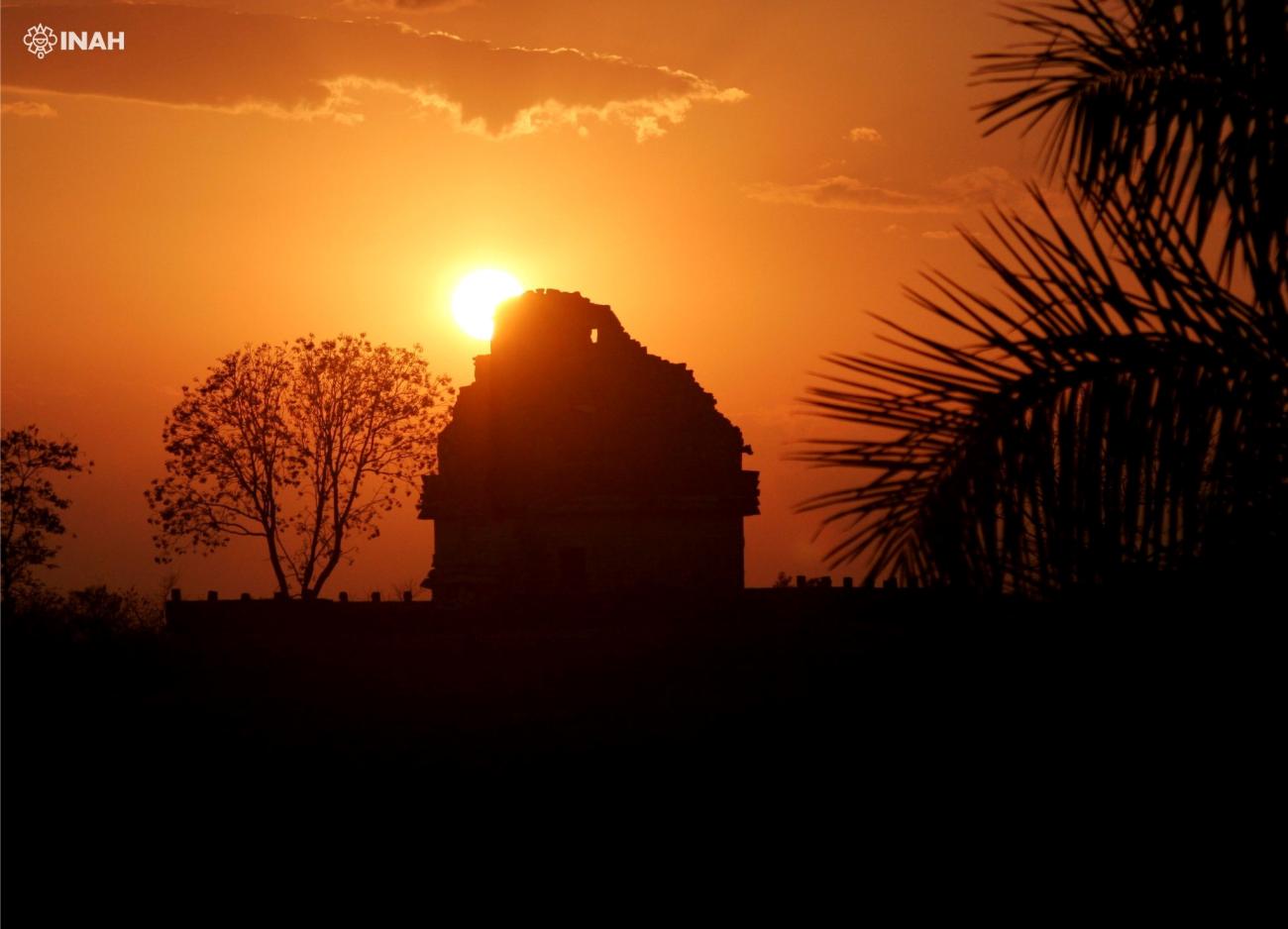
 The Observatory, or El Caracol, at Chichén Itzá
How long should you spend at Chichén Itzá?
Allow at least three hours for a first visit that includes El Castillo, the Great Ball Court, the Temple of the Warriors, the Sacred Cenote area, El Caracol, and the southern structures. Four hours is more comfortable if you want to read signs, take photographs, pause in shade, and visit the site museum when it is open under the current schedule.
A rushed two-hour visit can cover the headline buildings, but it will leave you with little time to understand the layout. A longer visit is not automatically better in the hottest part of the day. If you arrive early, you can see the major monuments before the heat becomes difficult and then decide whether to continue.
Do not schedule a tightly packed sequence of Chichén Itzá, a distant cenote, lunch, Valladolid, and another attraction without allowing for queues and road time. The site is a substantial visit. A simpler plan usually feels better:
- Early Chichén Itzá, then one nearby cenote and lunch.
- Early Chichén Itzá, then Valladolid for an evening and overnight.
- Chichén Itzá plus the museum and a relaxed return to your base.
- An evening in Pisté or nearby, followed by the archaeological zone at opening.
When should you visit?
The best time of day is as close to opening as you can manage. INAH currently lists Chichén Itzá as open daily from 08:00 to 16:00 with last access at 15:00, but hours and ticket arrangements can change. Verify the official listing before travelling.
Early arrival helps with three things: heat, light, and crowds. El Castillo photographs well in the morning, although the ideal direction depends on the weather and the side you want to show. Midday light is strong and harsh on pale limestone. Late afternoon may have softer light, but the last-entry deadline makes a late arrival risky.
The driest months can bring clearer skies but do not guarantee cool weather. The rainy season can produce dramatic clouds and sudden showers. Storms may affect outdoor comfort and, in unusual conditions, access. Bring water, sun protection, shoes with secure soles, and a lightweight layer that dries reasonably quickly.
Getting to El Castillo and Chichén Itzá
Chichén Itzá is inland, near the town of Pisté in the municipality of Tinum. The archaeological zone is not in Mérida, Valladolid, or Cancún itself. Your transport choice should reflect where you sleep and how much control you want over timing.
GuideComplete Guide to Chichén Itzá: Tickets, Hours, Tours, Cenotes & TipsChichén Itzá is the world‑famous Maya archaeological zone located near Pisté in the municipality of Tinum, Yucatán, and is typically accessed from Valladolid, Mérida, Cancún, Playa del Carmen or Tulum. The site is generally open daily from 08:00 to 16:00 with the last entry recorded at 15:00, although visitors should verify the exact hours before travelling. Admission is split between a federal INAH fee of MXN 105 and a state fee of MXN 592 for foreign adults (MXN 697 total) or MXN 205 for Mexican nationals (MXN 310 total); discounts may apply for children, students, seniors or Yucatán residents who present valid ID. Reaching the ruins takes about 40–45 minutes from Valladolid, 1.5–2 hours from Mérida, and 2.5–3 hours from Cancún or Playa del Carmen; travel can be done by rental car, taxi, colectivo or organized tour, with tours often including the entrance fee. A visit usually requires 2.5–4 hours for a quick overview, or 4–5 hours if the on‑site museum and a more relaxed pace are desired. Visitors are advised to arrive at opening to avoid the heat, crowds and vendor pressure that build up later in the morning. Early arrival provides cooler weather, better lighting for photos and shorter queues at El Castillo and the Sacred Cenote. Bring plenty of water, sun protection and cash in pesos; many tours bundle transport, guide services and cenote stops, so check the inclusions carefully. Staying overnight in Valladolid or Pisté makes an early start easier, while a guide is not mandatory but recommended for first‑time visitors who want contextual information.Open
From Valladolid
Valladolid is the most convenient larger base for an early independent visit. The drive is relatively short compared with coming from Mérida or the Caribbean coast. A rental car, private driver, taxi arrangement, or organized tour can work. Confirm the return plan before entering the site, particularly if you are not renting a car.
Valladolid is a useful overnight base because it gives you an evening in a living Yucatecan city rather than only a hotel near the ruins. It also combines well with Ek Balam and cenotes, but avoid turning one day into a race between too many stops.
From Mérida
From Mérida, El Castillo works as a long day trip. A rental car gives you the most control, while a private driver reduces navigation and parking concerns. Guided tours are convenient when you want transport and interpretation arranged together.
The earliest departure is the important part. A late start from Mérida can put you at the site during the hottest and busiest period. If Chichén Itzá is one of the main reasons for your trip, consider staying closer the night before rather than treating the drive as an afterthought.
Compare Chichén Itzá tours from Mérida on GetYourGuide · See Chichén Itzá options on Viator
From Cancún or the Caribbean coast
A same-day visit from Cancún or the Riviera Maya can involve a very early departure and a long round trip. It may make sense if your itinerary is short or your tour handles the logistics, but it is not the most relaxed way to experience the site. Check exactly what the tour includes: transport, both parts of the entrance fee, guide service, food, and any cenote stop.
If you are already moving west toward Valladolid or Mérida, an overnight split can make the archaeological visit much easier. If you are staying on the coast and mainly want a quiet ruins experience, compare Chichén Itzá with a closer site rather than assuming the longest day is automatically the best day.
Independent travel and guides
You do not have to hire a guide to enter. You can walk around El Castillo and the rest of the site independently. A guide is particularly useful if you want help reading the urban plan, separating archaeological evidence from popular claims, or understanding the imagery on buildings beyond the headline pyramid.
If you hire a guide at or near the entrance, agree on the scope, duration, language, and total price before beginning. For a private guide booked in advance, ask whether entrance fees are included or separate. Do not let a rushed sales pitch determine your entire day.
Should you stay near Chichén Itzá?
Staying near the site makes sense when early access matters, when you are travelling with children or older relatives, or when you want to break a long journey. Pisté and the surrounding area are practical, while Valladolid offers more evening atmosphere and a broader range of services.
The immediate area is not a substitute for a city break. Expect a quieter, more limited evening. That can be exactly what you want after a hot archaeological visit, but it may feel isolated if you want a choice of nightlife and restaurants.
Check current accommodation near Chichén Itzá on Booking.com · Compare nearby stays on Trip.com
Valladolid is the better choice if you want to visit El Castillo early and still have a proper town for an evening walk, market visit, or dinner. It is also a useful base for a multi-day eastern Yucatán route.
Browse Valladolid stays on Booking.com · Compare Valladolid hotels on Trip.com
El Castillo photography without the crowds
Arrive early and begin with a wide photograph before moving closer. A wide view shows the pyramid in its plaza and prevents the building from becoming a disconnected object. Later, photograph details: the stairway edge, serpent head, terrace shadows, and the summit temple.
Use people honestly to show scale. Do not ask strangers to move from a protected area or enter a restricted space for your picture. A small figure at a legal viewing point can communicate the size better than an empty frame.
The strongest light is not always the brightest light. Slight cloud cover can soften the pale limestone and make the terrace bands easier to read. During the equinox period, expect many people to be photographing the same staircase. Keep your equipment secure, be patient, and do not let the search for a perfect image turn into pushing or blocking the path.
A polarizing filter may help with glare in bright conditions, but the basics matter more: arrive early, carry spare battery power, protect gear from heat and dust, and keep your camera out of the way when walking through narrow or busy areas. Photography is a way to observe the monument, not a reason to ignore it.
What not to believe about El Castillo
Several popular claims circulate around the pyramid. Some have a useful core; others are repeated with more certainty than the evidence allows.
“The pyramid has exactly 365 steps.” The four stairways are commonly counted as 91 steps each, with the summit platform completing the familiar solar-year number. This is a compelling interpretation, but restoration, building phases, and the difference between physical steps and symbolic count deserve caution.
“The Maya built it only to create the equinox shadow.” The shadow effect is important, but El Castillo served a wider religious and political purpose. It was not a seasonal attraction built for modern spectators.
“You can climb it if you pay for the right tour.” Normal visitors cannot climb El Castillo. Be suspicious of descriptions that promise ordinary interior access or a summit climb.
“Kukulcán and Quetzalcóatl are exactly the same god.” They are related feathered-serpent traditions in Mesoamerica, but the names come from different languages and historical contexts.
“Chichén Itzá was a completely mysterious lost city.” Maya communities continued to live in the region, and the city was known in local and colonial histories. The popular language of discovery often erases Indigenous knowledge and the long work of Maya communities.
Replacing certainty with careful language does not make the site less impressive. It makes the visit more truthful.
Pairing El Castillo with the rest of Chichén Itzá
After studying the pyramid, continue to the Great Ball Court. Its size helps explain the scale of Chichén Itzá as a public and ceremonial center. Then look at the reliefs and nearby structures rather than treating the court as just a place for a quick photograph.
The Temple of the Warriors and the adjacent colonnades provide a different architectural experience. Where El Castillo is dominated by a single geometric pyramid, the columns create rhythm and movement across a broad complex. The details are worth seeing even if you have already spent a long time in the main plaza.
The Sacred Cenote is not a swimming cenote. It is a large natural sinkhole associated with ritual activity and offerings. It lies within the archaeological landscape, and its importance is better understood as part of the city’s water and religious geography than as a photo stop.
El Caracol, often called the Observatory, has a distinctive rounded form. Its exact functions and the degree to which it served as an observatory are discussed by scholars, but the building is a useful reminder that Chichén Itzá’s architecture cannot be reduced to pyramids alone.
The newer museum and any currently open ancillary spaces can add context, but opening arrangements change. Check what is operating on the day rather than building your entire plan around a particular gallery.
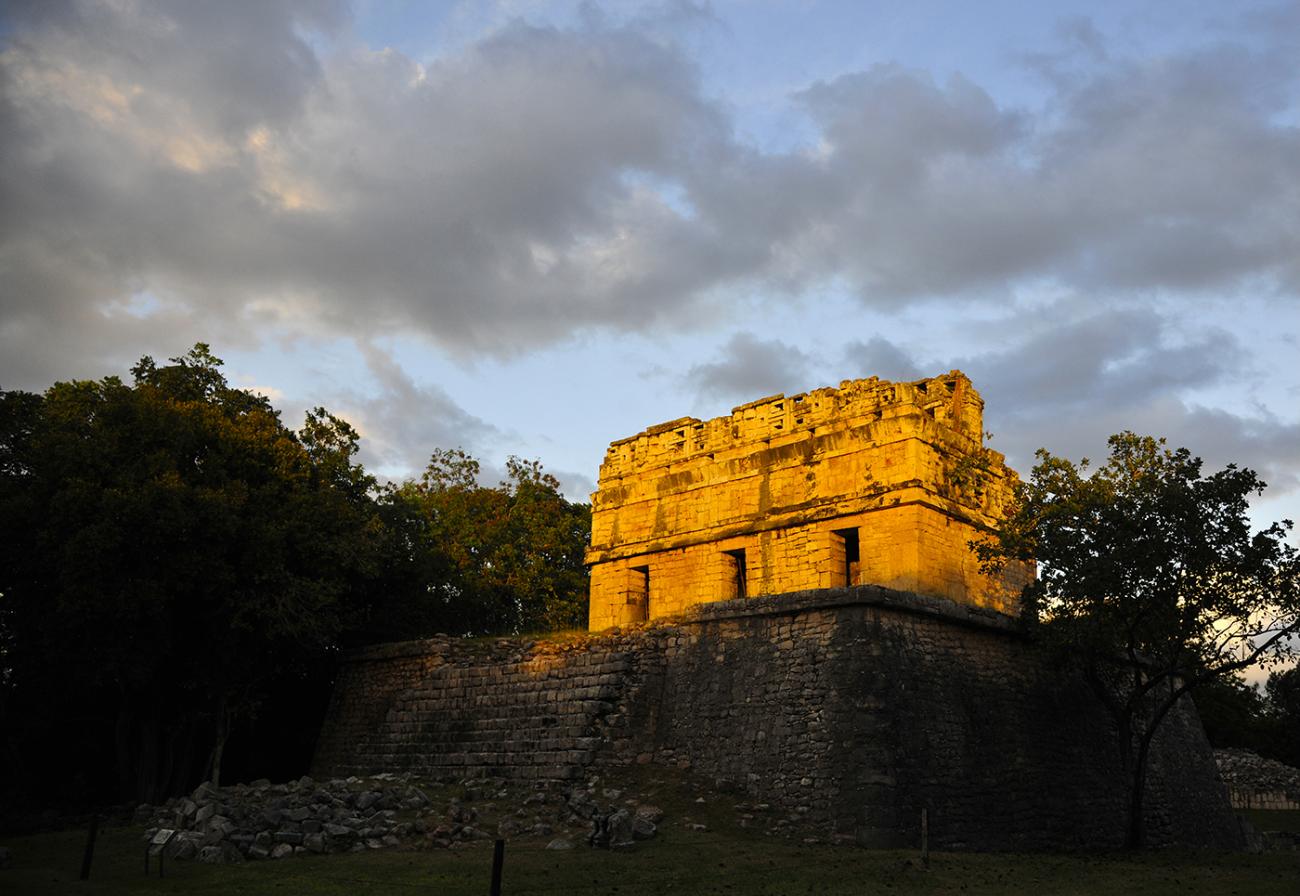 Casa Colorada, or Chichanchob, at Chichén Itzá
Respectful visiting
Chichén Itzá is a protected archaeological site and a sacred landscape for many people. Stay on marked paths, do not touch carvings, do not climb, and follow instructions from site staff. Keep voices low near groups engaged in ceremony or prayer.
Do not remove stones, plants, pottery fragments, or anything else. Do not use drones unless you have the required official authorization. Flash rules and restrictions can apply in museums or interior spaces. Check current signs rather than assuming rules from an older visit.
Heat is a safety issue, not merely an inconvenience. Drink water before you feel thirsty, use a hat and sunscreen, and plan breaks. If someone in your group becomes dizzy, confused, unusually weak, or stops sweating despite the heat, leave the exposed area and seek help from staff.
Wear shoes with grip. The ground can be uneven, and a sandal that is fine on a beach may be poor on stone paths. Keep valuables close and avoid carrying more than you need. A small bag, water, sun protection, phone, and payment method are usually more useful than heavy equipment.
Is El Castillo worth the trip?
Yes, if you want to understand one of the most recognizable monuments in Yucatán and are willing to visit it as part of a larger archaeological city. The pyramid is worth seeing for its scale alone, but the real reward comes from connecting its geometry with the plaza, the serpent imagery, the inner temple, the calendar interpretations, and the other buildings around it.
It is not the quietest or easiest ruin in the state. If you dislike crowds, have limited mobility, or do not want a long transport day, compare Uxmal, Ek Balam, Mayapán, or another closer site. If El Castillo is a priority, go early, allow several hours, verify current access information, and avoid packing too many unrelated stops into the same day.
The simplest good plan is this: stay in Valladolid, Pisté, or another nearby base when possible; arrive at opening; walk the whole ceremonial core; give El Castillo time from more than one angle; and let a qualified guide add context if history matters to you. The building does not need exaggeration. Its proportions, setting, and unanswered questions are already enough.
Frequently asked questions
Can visitors climb El Castillo?
No. El Castillo is closed to ordinary climbing and interior access. View it from the designated visitor areas and follow current staff instructions.
Is El Castillo the same as the Temple of Kukulcán?
Yes. El Castillo is the Spanish name commonly used for the pyramid; Temple of Kukulcán is the name used for its association with the feathered-serpent deity.
Can I see the serpent shadow any time of year?
The dramatic equinox-season effect is tied to a particular relationship between sunlight and the north staircase. Smaller shadow patterns may be visible at other times, but the famous event is seasonal and weather-dependent.
How much time should I allow?
Allow at least three hours for a meaningful first visit to Chichén Itzá, with additional time if you want the museum or a slower pace. El Castillo itself deserves at least 30 minutes of focused attention.
Should I book a guide?
A guide is optional but helpful if you want historical context and a better explanation of the building’s design. Agree on inclusions, duration, language, and price before starting.
Where is the closest useful base?
Pisté and accommodation near the archaeological zone are best for the shortest morning transfer. Valladolid is usually the stronger town base for travellers who want an evening and more options after the visit.
Is the entrance fee included in a tour?
Sometimes, but not always. Ask whether the package includes both federal and Yucatán state charges, guide service, transport, meals, and any cenote admission. Verify current prices before booking.
What is the most respectful way to photograph the pyramid?
Stay in the public viewing areas, do not climb or touch the stone, do not block paths, and treat the monument as a sacred archaeological place rather than a stage set. Early arrival gives you the best chance of taking photographs without crowd pressure.
El Castillo is the obvious starting point at Chichén Itzá, not the ending point. Look up at the temple, down at the stairway, around at the plaza, and beyond toward the rest of the city. That wider view is where the famous pyramid becomes a place rather than an icon.