Printable guide
San Antonio Mulix Travel Guide: X-Batún, Dzombakal & a Cenote Day from Mérida
Updated
Practical guide to visiting San Antonio Mulix from Mérida for Cenote X-Batún and Cenote Dzombakal, including transport, swimming advice, facilities, timing and nearby places to combine.
San Antonio Mulix is a very small rural community south of Mérida, visited mainly for two nearby swimming places: Cenote X-Batún and Cenote Dzombakal.
This is not a conventional town day trip with museums, restaurants and a long list of attractions. The village itself is quiet and modest. The reason to come is the landscape around it: forest tracks, limestone, clear freshwater and two cenotes that feel less developed than the larger commercial parks around Yucatán.
For most travelers, San Antonio Mulix works best as a half-day cenote trip from Mérida. It is easier with a rental car or private driver. Public transport is possible only with patience and a flexible plan.
Visit if you want a natural swimming experience and do not need resort-style facilities. Skip it if you require easy accessibility, predictable public transport or a polished family attraction.
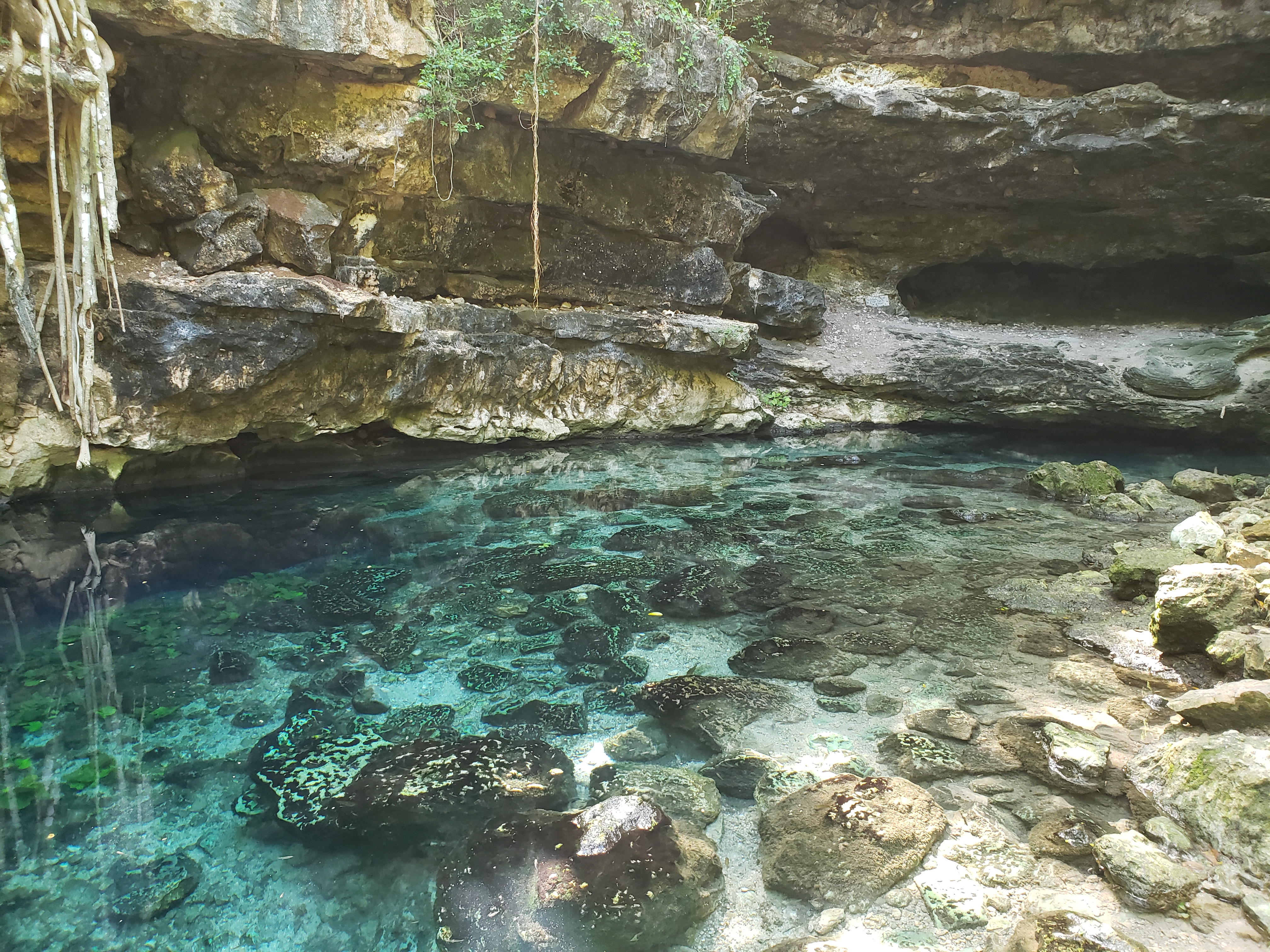
Limestone edge and clear water at Cenote X-Batún
Quick planning notes
| Detail | What to know |
|---|---|
| Main reason to visit | Cenote X-Batún and Cenote Dzombakal |
| Best base | Mérida |
| Drive from Mérida Centro | Usually around 55–70 minutes |
| Time needed | 3–5 hours including the drive; longer with another stop |
| Best for | Swimming, snorkeling, nature, quieter cenotes and independent travelers |
| Less suitable for | Travelers without transport, reduced mobility or anyone expecting extensive facilities |
| Car needed? | Strongly recommended |
| Private driver | Useful for families, groups and multi-stop routes |
| Public transport | Possible in stages, but not convenient for most visitors |
| Best arrival time | Morning |
| Payment | Bring pesos in cash |
| Facilities | Basic and subject to change |
| Strongest pairing | X-Batún and Dzombakal together |
| Full-day combination | Hacienda Yaxcopoil, Muna or Uxmal |
| Family-friendly? | Yes with close supervision and realistic expectations |
Is San Antonio Mulix worth visiting?
San Antonio Mulix is worth visiting if the cenotes are the main purpose of your trip.
The area offers a more rural experience than many of the highly developed cenote parks near Valladolid, Homún and the Riviera Maya. You are not coming for restaurants, gift shops or elaborate infrastructure. You are coming to swim in freshwater surrounded by rock, roots and vegetation.
It is a good fit for:
- Travelers staying in Mérida with access to a car
- Visitors who prefer natural cenotes to large tourism parks
- Couples and small groups looking for a quieter half-day
- Families comfortable with basic facilities
- Swimmers who want to visit two different cenote environments
- Travelers continuing toward Uxmal or the Ruta Puuc
- Repeat visitors looking beyond Yucatán’s most famous attractions
- Photographers interested in roots, water and rural landscapes
It may not be the right choice for:
- Travelers with only one free morning in Mérida
- Anyone depending entirely on public transport
- Visitors requiring smooth, step-free access
- Families wanting restaurants, changing rooms and controlled pool-style access
- People uncomfortable driving on rural roads
- Travelers looking for a substantial town to explore
- Visitors planning to arrive late in the afternoon
San Antonio Mulix makes sense as a cenote destination, not as a standalone sightseeing town.
What is San Antonio Mulix?
San Antonio Mulix is a small locality within the municipality of Umán.
The village has a central park, a small church and ordinary community buildings, but very little conventional tourism infrastructure. Most visitors pass through the settlement while arranging access to X-Batún and Dzombakal.
The name combines San Antonio, referring to Saint Anthony of Padua, with Mulix, a name of Maya origin.
The scale of the village matters when planning your visit. Do not expect an ATM, a large restaurant district, a petrol station beside the cenotes or shops carrying everything you may have forgotten.
Bring what you need from Mérida.
 The small central park in San Antonio Mulix
The village itself
San Antonio Mulix can be seen quickly.
The centre consists of a small park, church and a few surrounding streets. There is no need to schedule a formal walking tour. A short pause is enough to understand the scale of the community before continuing toward the cenotes.
Be respectful when stopping for photographs. This is a residential settlement rather than a staged tourism village.
Avoid blocking doorways, private entrances or narrow roads. Ask before photographing people, homes or anyone working.
The village is useful as:
- The access point for the cenotes
- A place to ask for current directions
- A place to confirm what is open
- A reference point when arranging a driver
- A brief look at rural community life south of Mérida
It is not a place to build an entire afternoon around.
 The church in San Antonio Mulix
Cenote X-Batún
X-Batún is the better-known of the two cenotes.
It is an open cenote with clear water, exposed limestone, hanging roots and dense vegetation around the edges. The amount of sunlight reaching the water changes through the day, giving it blue, green or glassy tones.
The setting is natural rather than heavily constructed. Expect uneven ground, wet rock and simple access.
X-Batún works particularly well for:
- Swimming
- Light snorkeling
- Underwater visibility when conditions are clear
- Nature photography
- A slow, quiet stop
- Travelers who prefer open cenotes
- Families with competent swimmers and close supervision
There may be shallow-looking sections near the edge, but do not assume the entire cenote is shallow. Depth changes, submerged rock and darker areas can be difficult to judge from above.
Use a life jacket when required or whenever swimming confidence is limited.
For a more detailed breakdown of the water, access and route, read our Cenote X-Batún guide.
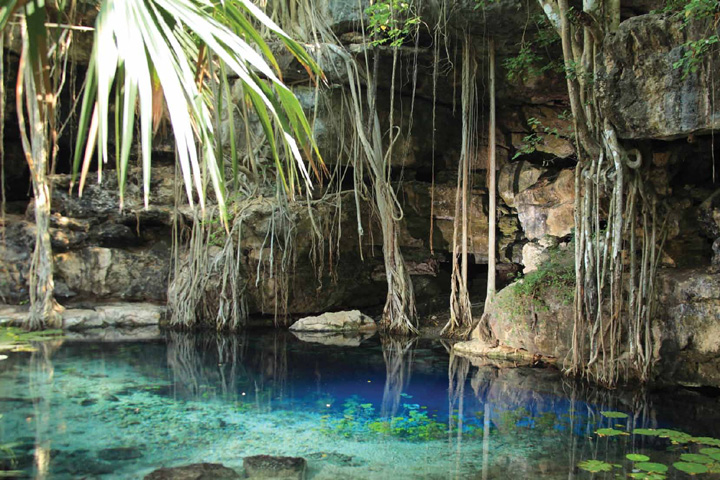 Clear water and hanging roots at Cenote X-Batún
Cenote Dzombakal
Dzombakal is the second main cenote associated with San Antonio Mulix.
The name may also appear online as Dzonbacal, Dzombacal or another similar spelling. Map listings are not always consistent, so save the location and ask locally before following an unfamiliar pin.
Dzombakal generally feels more enclosed than X-Batún. Rock overhangs, shade and the shape of the opening create a more cave-like atmosphere.
This contrast is the main reason to visit both.
X-Batún offers the more open, leafy environment. Dzombakal offers a darker and more enclosed setting. Seeing them together gives a better sense of how varied cenotes can be even within the same small area.
Access conditions can change. Mud, leaves, rain and local maintenance may affect the paths. Walk slowly and do not enter any area that has been closed or roped off.
GuideCenote Dzombakal Guide: How to Visit from Mérida & What to ExpectPractical guide to Cenote Dzombakal near San Antonio Mulix, including access from Mérida, swimming conditions, prices, safety, facilities, and how to combine it with Cenote X-Batún.Open
Should you visit both cenotes?
Yes, in most cases.
Traveling from Mérida for only one short swim may not justify the drive unless you are combining San Antonio Mulix with another destination. Visiting both cenotes makes the route feel more complete.
Allow roughly:
- 60–90 minutes at X-Batún
- 45–75 minutes at Dzombakal
- Extra time for changing, walking, cycling or waiting
- Extra time with young children or less confident swimmers
Do not rush through both simply to complete a checklist. One relaxed swim is better than two stressful visits.
When access to Dzombakal is difficult, weather is poor or your group is tired, X-Batún alone can still make a worthwhile stop.
How to get to San Antonio Mulix from Mérida
San Antonio Mulix lies south of Mérida, within the broader road corridor leading toward Muna, Uxmal and the Puuc region.
From central Mérida, allow approximately one hour in normal conditions. The journey can take longer when crossing the city during busy traffic periods.
The final approach is rural. Road surfaces, signs and mobile data can become less reliable after leaving the main highway.
Download an offline map before leaving Mérida.
By rental car
A rental car is the simplest option.
Driving gives you control over:
- Your departure time
- How long you swim
- Whether you visit one or both cenotes
- Stops for food, fuel or water
- Combining the cenotes with a hacienda or archaeological site
- Returning before dark
- Changing the plan during rain
Leave Mérida early and drive during daylight.
Watch for:
- Topes when passing through communities
- Motorcycles and bicycles
- Animals near rural roads
- Unmarked turns
- Potholes after heavy rain
- Loose gravel
- Mud on the final approach
- Vehicles stopping unexpectedly
A small conventional car may be sufficient in normal dry conditions, but road quality should be checked after periods of heavy rain.
By private driver
A private driver is the easiest option for families, groups and travelers who do not want to rent a car.
A driver is particularly useful when combining San Antonio Mulix with:
Confirm in advance whether the driver will wait at the cenotes or return at an agreed time.
The driver should understand that the visit includes rural access rather than only a drop-off in the centre of San Antonio Mulix.
For quick planning questions, the free Yucatán Guide WhatsApp assistant can help check whether your route is realistic.
For the next step, use the Plan hub to compare itineraries, transport and practical resources already available.
By public transport
San Antonio Mulix is not one of the easiest cenote destinations to visit by public transport.
Regional transport may take you toward Umán, Muna or communities along the main road, but the final connection to the village and cenotes is the difficult part.
You may need a combination of:
- Regional bus
- Colectivo
- Local taxi
- Mototaxi
- Bicycle
- Walking
Return transport may be less predictable than the outbound journey.
Before attempting the trip, confirm:
- The current departure point in Mérida
- Where the regional vehicle drops you
- Whether a taxi or mototaxi is available
- The distance from the village to the cenotes
- The latest practical return time
- Whether mobile signal works where you expect to call a ride
This is not the best option if you are short on time.
Travelers without a car will usually have an easier day with a tour, arranged driver or a cenote destination served by more regular transport. Our getting around Yucatán State guide explains the broader transport limitations outside the main cities.
Arrival, parking and the final approach
Expect a simple rural arrival rather than a formal visitor centre.
Depending on the current local setup, you may be directed to:
- Park near an entrance area
- Pay a community access fee
- Continue along a rural track
- Walk between points
- Rent a bicycle
- Use separate access for each cenote
- Collect or return life jackets
Ask what is included before paying.
Useful questions include:
- Does this payment cover both cenotes?
- Are life jackets included?
- Are bicycles available today?
- How far is the walk?
- What time does access close?
- Are both cenotes open?
- Where are the bathrooms?
- Where should the car be left?
Do not arrive close to closing time and expect to complete both cenotes.
Prices, hours and current access
Exact prices, opening hours and access arrangements can change.
Rural cenotes may adjust operations because of:
- Weather
- Water conditions
- Staff availability
- Community events
- Road maintenance
- Seasonal demand
- Safety work
- Private group visits
Online listings can remain visible long after details have changed.
The safest plan is to:
- Visit in the morning
- Bring cash in pesos
- Carry small bills
- Ask what is included
- Confirm both cenotes are open
- Avoid building the day around a late arrival
Do not rely on card payment.
How long to spend
For the two cenotes and the village, allow approximately three hours on site.
A realistic half-day from Mérida usually needs five to six hours, including driving, changing and delays.
Suggested timing:
| Plan | Time needed |
|---|---|
| X-Batún only | 1–1.5 hours on site |
| X-Batún and Dzombakal | 2–3 hours on site |
| Village and both cenotes | Around 3 hours |
| Half-day from Mérida | 5–6 hours |
| Cenotes and Hacienda Yaxcopoil | 6–8 hours |
| Uxmal and San Antonio Mulix | Full day |
Do not plan another fixed appointment immediately after the visit. Wet clothes, rural roads and small delays can make the return less predictable.
A simple half-day itinerary
Leave Mérida between 7:30 am and 8:30 am.
Aim to reach San Antonio Mulix before the strongest heat and before weekend visitors begin arriving.
A practical order is:
- Arrive and confirm access
- Visit X-Batún
- Continue to Dzombakal
- Change into dry clothes
- Pause briefly in the village
- Return to Mérida for lunch
This is the easiest version of the trip.
It works well for travelers who want one natural outing without turning the day into a long road trip.
Full-day route with Hacienda Yaxcopoil
Hacienda Yaxcopoil is the most natural cultural addition.
The route combines two different parts of inland Yucatán:
- The former henequen landscape
- Small rural communities
- Hacienda architecture
- Cenote swimming
- The road south from Mérida
Visit the hacienda before or after the cenotes depending on confirmed opening arrangements.
Swimming last can feel refreshing, but visiting the cenotes first usually gives you quieter water and cooler conditions.
Read our guide to the best haciendas to visit in Yucatán State when comparing Yaxcopoil with more developed hacienda experiences.
Full-day route with Uxmal
San Antonio Mulix can be combined with Uxmal, but it creates a long day.
Visit Uxmal first.
The archaeological site involves substantial outdoor walking with limited shade. Arriving early makes the ruins more manageable and leaves the cenote swim for the hotter part of the day.
A sensible order is:
- Leave Mérida early
- Visit Uxmal near opening time
- Stop for lunch or a light meal
- Visit San Antonio Mulix
- Swim at one or both cenotes
- Return to Mérida before dark
Do not try to add several Ruta Puuc archaeological sites unless your group is comfortable with a very long day.
For a ruins-focused journey, use our Ruta Puuc visiting guide. For a relaxed cenote day, leave Uxmal for another morning.
Best time to visit
Weekday mornings are usually the easiest time.
Morning offers:
- Cooler temperatures
- Quieter water
- Easier photography
- More time if directions take longer than expected
- A safer return before dark
- Less risk of an afternoon storm interrupting the visit
Weekends can be busier with local families, especially during the hottest months and holiday periods.
Dry-season roads may be easier, although the landscape can appear less green. Rainy season brings thicker vegetation but also mud, mosquitoes and slippery paths.
After heavy rain, check current access before driving out.
Swimming conditions
Cenote water is usually cooler than the surrounding air.
Enter slowly rather than jumping straight in. The temperature difference can feel sharp after walking in the heat.
The water may contain:
- Small fish
- Leaves
- Natural sediment
- Roots
- Rock shelves
- Changing depths
- Darker cave sections
These are natural freshwater environments rather than swimming pools.
Visibility can change after rain or when several swimmers have disturbed sediment near the bottom.
Do not swim into underwater passages, dark chambers or areas outside the normal visitor zone.
Safety
Basic caution is necessary at both cenotes.
Follow these rules:
- Wear a life jacket when required
- Keep children within reach
- Walk slowly on wet limestone
- Do not dive without clear local permission
- Do not climb on roots
- Do not enter closed areas
- Do not explore underwater caves
- Do not swim alone
- Keep track of weather
- Leave enough daylight for the return journey
- Avoid alcohol before swimming
Cave diving in Yucatán is a technical activity requiring specialist training, equipment and local knowledge. Recreational swimmers should remain in the normal open-water visitor areas.
Cenote etiquette
Cenotes form part of Yucatán’s groundwater system.
Help protect the water by avoiding:
- Sunscreen immediately before swimming
- Insect repellent on the skin
- Perfume
- Body oils
- Makeup
- Hair products
- Soap
- Food near the water
- Plastic left behind
Use the shower when one is provided.
A long-sleeved rash guard, hat and shade are better than applying a fresh layer of sunscreen immediately before entering the water.
Do not touch, pull or swing from tree roots. They are living parts of the cenote environment.
Family suitability
San Antonio Mulix can work for families, but it requires active supervision.
It is most suitable for children who:
- Are comfortable around natural water
- Can follow safety instructions
- Will wear a life jacket
- Can manage uneven paths
- Do not require a stroller throughout
- Are comfortable with basic bathrooms
Bring more water and snacks than you think you will need.
One cenote may be enough for very young children. There is no advantage in forcing a second swim when the group is tired, cold or hungry.
Families wanting predictable bathrooms, restaurants and smoother access may prefer a more developed cenote park.
Accessibility
San Antonio Mulix is not a strong accessibility destination.
Possible obstacles include:
- Uneven rural tracks
- Loose gravel
- Mud
- Wet rock
- Natural slopes
- Steps
- Narrow access points
- Limited handrails
- Basic bathrooms
- Distance between parking and water
- Limited places to sit
Travelers with reduced mobility should ask for current access details before leaving Mérida.
A private driver can reduce walking between points, but it cannot remove the natural terrain at the cenotes.
Do not assume wheelchair access.
Food, water and facilities
Do not depend on finding a full meal at the cenotes.
There may be simple drinks, snacks or local food available depending on the day, but availability is not guaranteed.
Bring:
- Drinking water
- A light snack
- Electrolytes in very hot weather
- Cash
- Tissues
- Hand sanitiser
- A bag for rubbish
Eat a proper breakfast before leaving Mérida.
For a longer route, plan lunch in Muna, near Uxmal or back in Mérida rather than assuming the village will provide several restaurant choices.
Use a bathroom before leaving the city when traveling with children or anyone who needs predictable facilities.
Fuel and mobile signal
Fill the vehicle before leaving Mérida or when passing through a larger town.
Do not enter the rural section with a nearly empty tank.
Mobile signal may weaken near the cenotes. Save:
- The village location
- The cenote locations
- Your return route
- Driver contact details
- Accommodation address
- Emergency contacts
A power bank is useful when using the phone for navigation, photography and communication throughout the day.
What to bring
Pack:
- Cash in pesos
- Small bills
- Swimwear
- Towel
- Dry clothes
- Water shoes or secure sandals
- Life jacket for a child when preferred
- Drinking water
- Snacks
- Hat
- Rash guard
- Waterproof phone pouch
- Dry bag
- Tissues
- Hand sanitiser
- Mosquito repellent for after swimming
- Offline maps
- Power bank
- Plastic bag for wet clothes
Avoid carrying valuable jewellery or unnecessary electronics.
Do not leave bags, passports or cameras visible inside a parked vehicle.
What to avoid
Avoid arriving late.
Avoid depending on card payment.
Avoid assuming both cenotes are always open.
Avoid relying on one old map listing for directions.
Avoid applying sunscreen or insect repellent immediately before swimming.
Avoid bringing an elaborate picnic without confirming where food is permitted.
Avoid expecting polished changing rooms.
Avoid allowing children to run near wet rock.
Avoid swimming into dark cave areas.
Avoid scheduling Uxmal after the cenotes in the hottest part of the afternoon.
Avoid attempting the public transport route when you have a fixed evening commitment.
Avoid treating the village as an abandoned attraction. People live there.
Do you need a tour?
You do not need a formal guided tour when you have a rental car and are comfortable navigating rural roads.
Independent travel works well when your plan is simply:
- Drive from Mérida
- Visit both cenotes
- Return to the city
A driver or tour becomes more useful when:
- You do not want to rent a car
- You are traveling with children
- You want to combine several stops
- You need help confirming current access
- You want someone to wait with belongings
- You are uncomfortable driving after dark
- You are visiting Uxmal or the Ruta Puuc
- You have limited Spanish
For a simple couple’s trip, a rental car is normally enough. For a family or multi-generational group, a private driver removes much of the friction.
Frequently asked questions
Is San Antonio Mulix a town or a cenote?
San Antonio Mulix is a small community.
The name is often used by travelers to refer collectively to the nearby X-Batún and Dzombakal cenotes.
How far is San Antonio Mulix from Mérida?
Most travelers should allow around one hour by car from central Mérida.
Traffic, starting location and the condition of the final rural roads can change the journey time.
Can you visit San Antonio Mulix without a car?
It may be possible using regional transport and a local connection, but it is not convenient.
A rental car or private driver is much easier.
Which is better, X-Batún or Dzombakal?
X-Batún is the stronger choice for an open, leafy cenote with hanging roots.
Dzombakal offers a more enclosed atmosphere. Visit both when time and access allow.
Are the cenotes suitable for children?
They can be, provided children are supervised closely and use life jackets where appropriate.
The environment is natural, with wet stone and changing water depth.
Are there bathrooms?
Basic facilities may be available, but standards and availability can change.
Do not expect a large commercial visitor centre.
Can you pay by card?
Do not depend on it.
Bring cash in pesos and carry small bills.
Can you snorkel?
Light recreational snorkeling may be possible when water conditions are clear.
Bring your own well-fitting equipment if snorkeling matters to you, and remain within the normal swimming area.
Can you dive in the cenotes?
Technical cave diving is separate from ordinary visitor swimming and requires specialist training and equipment.
Do not enter underwater passages without the appropriate qualifications and local arrangements.
How long should you spend?
Allow two to three hours for both cenotes, plus approximately two hours of total driving from Mérida.
What should you combine with San Antonio Mulix?
Hacienda Yaxcopoil is the easiest cultural addition.
Uxmal can be added for a full-day route, provided you leave Mérida early.
Is San Antonio Mulix better than Homún?
They offer different experiences.
Homún has a much larger concentration of cenotes, guides, mototaxis and visitor services. San Antonio Mulix is closer to the Uxmal road and easier to understand as a simple two-cenote outing.
Choose Homún for variety. Choose San Antonio Mulix for a quieter half-day or a route south of Mérida.
Final take
San Antonio Mulix is a useful choice when you want a natural cenote day within reach of Mérida.
The village is small, the facilities are basic and the final part of the journey requires more planning than a commercial cenote park. That is also what gives the area its quieter character.
Go early. Bring cash, water and dry clothes. Visit X-Batún first, add Dzombakal when access is straightforward, and return before dark.
Choose a rental car for independence or a private driver for an easier multi-stop day. Combine the cenotes with Hacienda Yaxcopoil when you want a balanced half-day or with Uxmal when you are prepared for a longer route.
For most travelers, the simple plan is the strongest one: two cenotes, an unhurried swim and lunch back in Mérida.
 An earlier view of Cenote X-Batún in San Antonio Mulix
Image notes
Town images are CC0 photographs by Wikimedia Commons contributor Inri. Cenote images are drawn from Wikimedia Commons and the Government of Yucatán tourism gallery. The X´Batun photograph by Natzz95 is licensed under CC BY-SA 4.0.