Printable guide
Cenote Chihuán Guide: Cave Swimming Near Chichén Itzá
Updated
Practical guide to visiting Cenote Chihuán in Holcá, including how to get there from Mérida, Valladolid, and Chichén Itzá, what to expect inside the cave, entry cost guidance, access notes, and what to combine nearby.
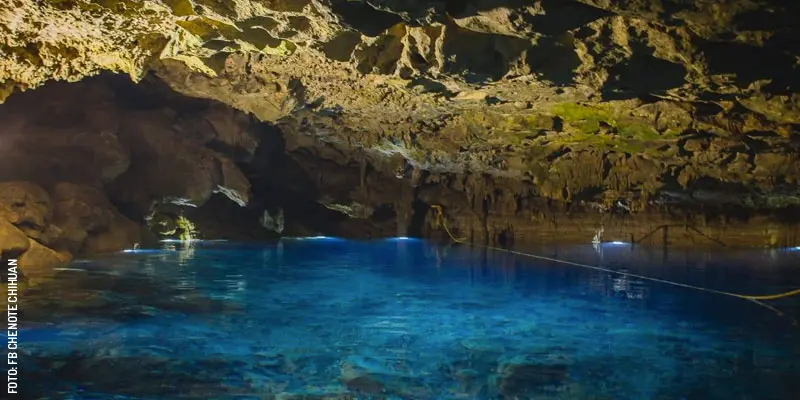
Cenote Chihuán is a fully underground cenote in Holcá, a small village near the old libre highway between Mérida and Chichén Itzá. It is not one of the big bus-tour cenotes, and that is part of its appeal.
This is a practical stop for travelers driving across Yucatán, especially between Mérida, Valladolid, and Chichén Itzá. The water is clear, the cave is lit, and the visit is simple: park, pay, walk down the stone steps, swim, change, and continue your route.
It is not the best cenote if you want open sunlight, dramatic hanging vines, or a full-day resort setup. It is better for a quiet cave swim, a cooling break after ruins, or a less crowded stop on the old road.
Underground pool at Cenote Chihuán in Holcá
Quick visitor summary
| Detail | What to know |
|---|---|
| Location | Holcá, Yucatán, near the old road between Mérida and Chichén Itzá |
| Best for | Cave swimming, road trips, Chichén Itzá day routes, quieter cenote stops |
| From Mérida | About 1 hour 15 minutes to 1 hour 30 minutes by car |
| From Chichén Itzá | About 30 to 35 minutes by car |
| From Valladolid | About 1 hour by car |
| Cenote type | Underground cave cenote with artificial lighting |
| Facilities | Parking, bathrooms, changing areas, life jackets, access steps, simple visitor services |
| Entry guidance | Published tourism information lists around $100 MXN per person; bring cash and confirm locally |
| Typical hours | Published tourism information lists daily opening, roughly 8:00 am to 10:00 pm; confirm before a long detour |
| Time needed | 45 minutes to 1.5 hours |
| Best transport | Rental car, private driver, or a custom Chichén Itzá route |
Go early if you want the calmest visit. If you are visiting after Chichén Itzá, the cenote feels especially useful because the ruins are hot, open, and tiring by late morning.
Where is Cenote Chihuán?
Cenote Chihuán is in Holcá, in the municipality of Kantunil, Yucatán. It sits near the old Mérida–Cancún libre road, not directly on the toll highway.
This matters when you plan the drive. If you are using GPS, check that your route does not keep you on the cuota road for too long. Chihuán works best as a local-road stop for travelers already moving through the interior of Yucatán by car.
The cenote makes sense if you are:
- Driving from Mérida to Chichén Itzá
- Returning from Chichén Itzá toward Mérida
- Moving between Valladolid and Mérida
- Building a quieter route through Holcá, Kantunil, Yaxunah, or Yokdzonot
It is not the easiest cenote for travelers relying only on ADO buses. You may be able to reach Holcá with local transport and patience, but for most visitors this is easier with a rental car, private driver, or planned route.
What the cenote is like
Chihuán is a cave cenote with a low limestone ceiling, artificial lighting, and clear blue water. You enter through a built access area and descend by stone steps into the underground chamber.
The water is calm and deep in parts. Ropes usually help mark the swimming area and give swimmers a place to rest. The cenote is known for limestone formations, stalactites, stalagmites, and good visibility.
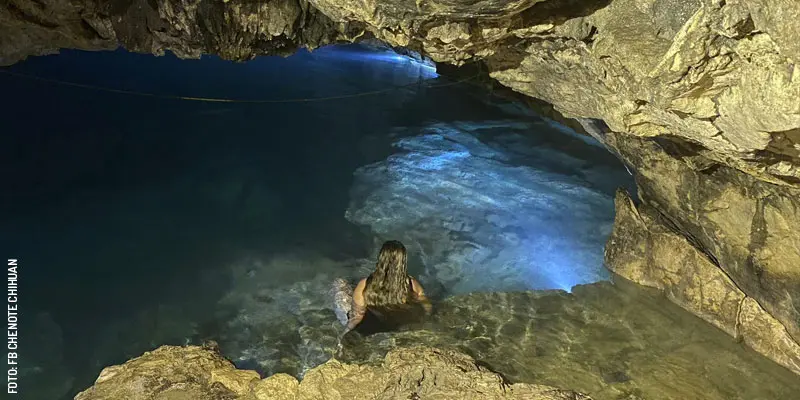 Swimming area inside Cenote Chihuán
The cave setting is the main reason to visit. It feels enclosed, cool, and quiet compared with open cenotes near Valladolid or Homún.
That same setting also means it is not for everyone. If you dislike enclosed spaces, low cave ceilings, or swimming in darker water, choose a semi-open or open cenote instead.
Is Cenote Chihuán worth visiting?
Cenote Chihuán is worth visiting if it fits naturally into your route. It is especially useful as a cooling stop between Mérida and Chichén Itzá.
It is a good choice for:
- Travelers with a rental car
- Visitors who want a quieter cenote near Chichén Itzá
- Families with confident swimmers
- People who prefer cave cenotes over open cenotes
- Road-trippers who do not need a polished resort-style setup
- Travelers who want a simple swim without a big detour
It is less ideal for:
- Travelers without a car
- Anyone with mobility limitations
- Visitors who feel uncomfortable in enclosed caves
- People looking for bright natural sunlight in the water
- Travelers who want restaurants, loungers, cocktails, and a full-day club atmosphere
- Anyone short on time who is already visiting another cenote nearby
If you only have one cenote day from Mérida, Homún or Santa Bárbara may give you more variety. If you are already going to Chichén Itzá, Chihuán becomes much more practical.
How to get there from Mérida
From Mérida, drive east toward Kantunil and Holcá, using the libre road rather than staying entirely on the toll road. The drive usually takes around 1 hour 15 minutes to 1 hour 30 minutes, depending on your starting point in Mérida and traffic leaving the city.
This is easiest with a rental car or private driver. The roads are manageable, but you should avoid rushing. Watch for topes when passing through towns, keep cash for small expenses, and download your map before leaving Mérida.
A good Mérida route could look like this:
- Leave Mérida early
- Visit Chichén Itzá near opening time
- Eat in Pisté or nearby
- Swim at Cenote Chihuán
- Return to Mérida by late afternoon
This keeps the hardest walking for the morning and gives you the cenote swim after the heat builds.
How to get there from Chichén Itzá
From Chichén Itzá or Pisté, Cenote Chihuán is roughly 30 to 35 minutes west by car on the old road toward Mérida.
This is one of the most sensible ways to visit. Chichén Itzá is hot, exposed, and tiring by late morning. A cave cenote afterward gives you shade, cooler air, and a slower finish to the day.
If you are visiting Chichén Itzá independently, keep your timing simple:
- Arrive at Chichén Itzá early
- Leave the ruins before the worst heat
- Have lunch in Pisté or nearby
- Swim at Chihuán
- Continue toward Mérida or Valladolid
If you are with a private driver, ask them to confirm the cenote is open before you leave the ruins.
How to get there from Valladolid
From Valladolid, Chihuán is about an hour by car. It is not the closest cenote to Valladolid, so it does not usually make sense as a standalone Valladolid cenote trip.
Valladolid already has easier cenote options nearby, including cenotes around Dzitnup, Cenote Zací, Suytun, Palomitas, Xcanahaltun, and Xcanché near Ek Balam.
Chihuán makes more sense from Valladolid if you are heading west toward Mérida, Chichén Itzá, or Izamal.
Entry cost and opening hours
Published Yucatán tourism information lists Cenote Chihuán at around $100 MXN per person and open daily, roughly from 8:00 am to 10:00 pm.
Treat those numbers as planning guidance, not a guarantee. Local cenotes can adjust prices and hours for maintenance, private groups, weather, holidays, or local events. Bring cash in small bills and confirm the same day if the cenote is a key part of your route.
Facilities
Cenote Chihuán is simple but organized. Expect basic facilities rather than a luxury cenote club.
You may find:
- Parking
- Bathrooms
- Changing rooms
- Life jackets
- Stone steps into the cave
- Ropes in the water
- Basic food or regional snacks depending on the day
- Green areas or resting space above ground
Bring your own towel. Water shoes can help because the edge of the cenote is natural rock in places.
Do not assume there will be a large restaurant meal available. If food is important, plan to eat in Pisté, Valladolid, Izamal, or Mérida depending on your route.
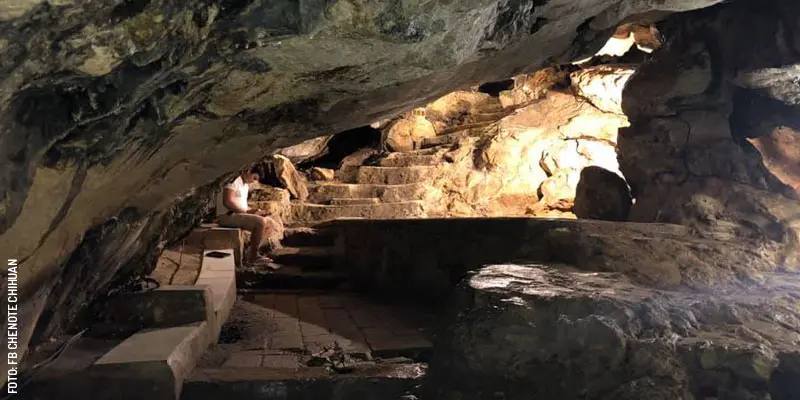 Stone access into Cenote Chihuán
Access and mobility
Chihuán has built access, but it is still an underground cave cenote. You need to descend steps, move through a darker space, and enter the water from a rocky edge or built access point.
This is not the easiest option for travelers with limited mobility. It may also be difficult for very young children, nervous swimmers, or older visitors who are uncomfortable with cave steps.
For families, the key question is not whether children can visit. They can, with supervision. The better question is whether your group is comfortable with stairs, depth, and a cave environment.
Use life jackets for children and anyone who is not a strong swimmer.
What to bring
Pack light, but bring the basics.
- Cash in small bills
- Swimsuit
- Towel
- Water shoes or secure sandals
- Dry clothes
- Drinking water
- Bag for wet items
- Phone pouch if you want photos
- A light layer if you get cold after swimming
Avoid sunscreen, lotion, insect repellent, perfume, and hair products before entering the water. Cenotes are fragile freshwater systems. Shower first if showers are available.
Best time to visit
Morning is usually the easiest time to visit if you want fewer people. Late afternoon can also work, especially after Chichén Itzá, but only if you have confirmed the closing time.
The cave setting means you do not need to chase a specific sunbeam the way you might at Suytun or other photogenic cenotes. Chihuán is more about the underground water and rock formations than direct sunlight.
Weekdays are generally calmer than weekends. Sundays can be busier with local families.
How long to spend
Most travelers need 45 minutes to 1.5 hours.
A short visit works if you just want a swim and a break from the road. Stay longer if your group wants to rest, take photos, and enjoy the cave slowly.
This is not usually a full-day cenote unless you are going very slowly or pairing it with food and local stops nearby.
What to combine with Cenote Chihuán
Chihuán works best as part of a larger day route.
Chichén Itzá
This is the most natural pairing. Visit the ruins early, then cool down underground at Chihuán.
This route is especially good for travelers staying in Mérida who want a quieter cenote than Ik Kil.
GuideComplete Guide to Chichén Itzá: Tickets, Hours, Tours, Cenotes & TipsChichén Itzá is the world‑famous Maya archaeological zone located near Pisté in the municipality of Tinum, Yucatán, and is typically accessed from Valladolid, Mérida, Cancún, Playa del Carmen or Tulum. The site is generally open daily from 08:00 to 16:00 with the last entry recorded at 15:00, although visitors should verify the exact hours before travelling. Admission is split between a federal INAH fee of MXN 105 and a state fee of MXN 592 for foreign adults (MXN 697 total) or MXN 205 for Mexican nationals (MXN 310 total); discounts may apply for children, students, seniors or Yucatán residents who present valid ID. Reaching the ruins takes about 40–45 minutes from Valladolid, 1.5–2 hours from Mérida, and 2.5–3 hours from Cancún or Playa del Carmen; travel can be done by rental car, taxi, colectivo or organized tour, with tours often including the entrance fee. A visit usually requires 2.5–4 hours for a quick overview, or 4–5 hours if the on‑site museum and a more relaxed pace are desired. Visitors are advised to arrive at opening to avoid the heat, crowds and vendor pressure that build up later in the morning. Early arrival provides cooler weather, better lighting for photos and shorter queues at El Castillo and the Sacred Cenote. Bring plenty of water, sun protection and cash in pesos; many tours bundle transport, guide services and cenote stops, so check the inclusions carefully. Staying overnight in Valladolid or Pisté makes an early start easier, while a guide is not mandatory but recommended for first‑time visitors who want contextual information.Open
Yokdzonot
Yokdzonot is another cenote near Chichén Itzá, but it has a more open feel. If you are choosing between the two, Chihuán is better for a cave swim. Yokdzonot is better if you want a greener, more open cenote environment.
Doing both is possible, but most travelers do not need two cenotes after Chichén Itzá unless cenotes are the main focus of the day.
GuideCenote Yokdzonot Guide: Community-Run Swimming Near Chichén ItzáA practical guide to community-run Cenote Yokdzonot near Chichén Itzá, including admission, opening hours, swimming conditions, facilities, transport and sensible day-trip combinations.Open
Yaxunah
Yaxunah works well for travelers interested in quieter Maya sites and community-based routes. It pairs better with slow travel than with a rushed Chichén Itzá itinerary.
GuideYaxuná Archaeological Site Near Chichén Itzá: History and Visitor GuideYaxuná (also spelled Yaxunah) is a living Maya community that surrounds a modest archaeological zone about 20–25 km south of Chichén Itzá, near the village of Yaxuná in the Yucatán. The ruins are open during daylight with informal access; there is no official INAH ticket booth and entry is often free or by donation through the community parador. The nearby community‑run Cenote Lol‑Há costs roughly 100 MXN and is open from 9:00 am to 5:00 pm. A typical visit lasts 1.5–3 hours, plus an additional 45–60 minutes if you swim in the cenote. The site is easy‑moderate, with flat terrain, some uneven stones and low steps; basic parking, restrooms and a small shop are available at the parador. Cash in small bills is needed for the cenote fee and any guided tours; the community phone number is +52 985 114 0808 for inquiries. From Pisté (the Chichén Itzá gateway) follow Calle 22 south for about 22 km; from Mérida the route is Hwy 180 east to Pisté and then the same southward road. Without a car, colectivos can take you to Pisté, where a taxi or community‑arranged transport can complete the trip. Visitors walk among early E‑Group plazas, a north acropolis, defensive walls and traces of the 100‑km Cobá sacbé, then can cool off in the cenote. Bring water, sun protection, closed‑toe shoes, light long sleeves, and cash; the area has limited shade and vendors. Respect the community space, avoid climbing fragile structures, and consider pairing the site with a morning visit to Chichén Itzá for a quieter afternoon at Yaxuná.Open
Izamal
If you are driving from Mérida and want a long interior loop, you can combine Izamal and Chihuán. This works better with a full day and an early start.
Do not try to pack Chichén Itzá, Chihuán, Izamal, and Valladolid into one relaxed day. It becomes too much driving and not enough time in each place.
GuideIzamal: The Yellow City GuideIzamal is a small colonial town painted yellow, located east of Mérida in central Yucatán, about one hour to one hour 15 minutes by road from Mérida Centro and roughly 1½ hours from Valladolid. It is most often visited as a half‑day or full‑day day trip from Mérida, using a rental car, private driver, or the cheapest option—a bus from Mérida’s Noreste/Oriente terminals; a Tren Maya connection exists but the station is not in the main plaza. The essential sights can be covered in 4–6 hours, or a full day if you include a leisurely lunch, extra photography time and a slower pace. Entry to the Convento de San Antonio de Padua is free (donations welcome) and the Kinich Kakmó pyramid can be climbed at no charge; the cost of the visit is therefore limited to transport, meals and any optional guide or carriage hire. Visitors should expect a walkable historic centre with a wide convent atrium, the climb of Kinich Kakmó (uneven stone steps, bring proper shoes and water), and the chance to wander yellow‑washed streets, small markets and craft shops. Early morning (before 10 am) or late afternoon (after 4 pm) offers softer light for photography and cooler temperatures; midday can be very hot and the stone of the pyramid becomes scorching. Dress modestly for the convent, bring a hat for the exposed atrium, and carry cash for meals—restaurants such as Kinich and Zamná serve traditional Yucatecan dishes, while smaller loncherías are cheaper but may not accept cards. Horse‑drawn carriages are available but should be used after checking the animal’s condition. The town’s layered Maya, colonial and modern character makes it a relaxed, family‑friendly alternative to larger archaeological sites.Open
Suggested route from Mérida
For most travelers, this is the cleanest plan:
7:00 am — Leave Mérida
9:00 am — Enter Chichén Itzá
11:30 am — Leave the ruins before the worst heat
12:00 pm — Lunch in Pisté or nearby
1:30 pm — Swim at Cenote Chihuán
3:00 pm — Start return drive toward Mérida
4:30 pm to 5:00 pm — Arrive back in Mérida
This is easier with a private driver if you do not want to manage navigation, parking, heat, and timing yourself.
Suggested route from Valladolid
If you are staying in Valladolid, use Chihuán as a westbound stop rather than a dedicated cenote day.
Morning — Leave Valladolid
Mid-morning — Visit Chichén Itzá or Yaxunah
Early afternoon — Swim at Chihuán
Late afternoon — Continue to Mérida or Izamal
If your base is Valladolid and you are not heading west, choose a closer cenote instead.
Photography notes
Chihuán is beautiful, but it is not the easiest cenote for phone photos. The cave is dark, the water is artificially lit, and the contrast can confuse phone cameras.
For better photos:
- Keep your phone steady
- Avoid using harsh flash
- Shoot wide rather than zooming
- Take photos before the cave gets busy
- Protect your phone from humidity and splashes
The most useful photos are usually the wide cave pool, the access steps, and the blue-lit water.
Safety notes
Cenote Chihuán is considered one of the more accessible cave cenotes because it has lighting and direct access to the surface, but you should still treat it like a natural swimming site.
Keep these points in mind:
- Wear a life jacket if you are not a confident swimmer
- Do not dive unless staff clearly allow it
- Stay inside marked swimming areas
- Watch your footing on wet rock
- Keep children close
- Avoid alcohol before swimming
- Do not touch stalactites or rock formations
The cenote is deep in parts. Calm water does not mean shallow water.
Is Cenote Chihuán good for families?
Yes, for the right family. Children who are comfortable with stairs, cave spaces, and deeper water may enjoy it. The lighting and managed access make it easier than more rustic cave cenotes.
It is not the best choice for toddlers, nervous swimmers, or families who want open-air space where children can run around freely.
For a smoother family visit, bring towels, water shoes, snacks, and dry clothes. Make life jackets non-negotiable for children.
Is Cenote Chihuán good for diving?
Chihuán is known as a cave-diving and cavern-diving site, with underwater formations and good visibility. Recreational swimmers should not treat this as a place to explore beyond the marked areas.
If you want to dive, arrange it with a qualified local dive operator. Do not improvise. Cave and cavern environments require proper training, equipment, and supervision.
Should you visit with a tour or independently?
Most travelers visit independently by car or as a custom stop with a private driver.
A standard group tour is less common here than at Ik Kil, Suytun, or the major Valladolid cenotes. That can be a good thing if you want a calmer swim.
Choose a private driver or custom itinerary if:
- You are visiting Chichén Itzá from Mérida
- You do not want to drive after a long hot ruins visit
- You want to combine Chihuán with Yaxunah, Izamal, or Valladolid
- You are traveling with children or older family members
- You want someone to check timing and opening status for you
Go independently if you are comfortable driving in Yucatán and want flexibility.
Common mistakes to avoid
Do not visit Chihuán as a long detour if you are short on time. It is best when it sits naturally on your route.
Do not assume card payment is available. Bring cash.
Do not arrive covered in sunscreen or lotion. Protect the water.
Do not expect a luxury beach-club atmosphere. This is a local cave cenote with practical facilities.
Do not overschedule the day. Chichén Itzá, a cenote, a long lunch, Izamal, and Valladolid in one day will feel rushed for most travelers.
Final verdict
Cenote Chihuán is a strong choice if you want a quiet underground swim near the Chichén Itzá route. It is simple, cool, and practical, with clear water and a cave setting that feels different from the more photographed open cenotes around Valladolid.
It is not the cenote to choose for a resort-style day or bright sunbeam photos. It is better as a calm, useful stop on a real Yucatán road trip.
For the next step, use the Plan hub to compare itineraries, transport and practical resources already available.