
Last updated: 12 June 2026.
June 12, 2026 update: Chichén Itzá remains open after reopening on Monday, 1 June 2026. Based on the latest information available, operations appear to be running as normal, with public access through the CATVI visitor centre only. No new closure has been announced.
Chichén Itzá had been closed because of a dispute over visitor access, vending spaces, guides, and local commerce around the newer CATVI visitor centre.
It is not closed because the ruins are damaged.
For travelers, the practical answer is straightforward: Chichén Itzá is open again. A quick check with your tour operator, driver, hotel, or an official source before a long day trip is still sensible, especially if you are coming from Mérida, Cancún, Playa del Carmen, or Tulum.
 Backup planComplete Guide to Chichén Itzá: Tickets, Hours, Tours, Cenotes & Tips
Current status: is Chichén Itzá open today?
Yes. As of 12 June 2026, Chichén Itzá appears to be open and operating normally following its reopening on 1 June 2026. Public access continues through the CATVI visitor centre.
The site was closed from 19 May to 1 June 2026 because of a local dispute involving the traditional entrance area, the newer CATVI visitor centre, artisans, guides, vendors, and authorities responsible for managing the archaeological zone.
For current visits, the usual practical checks still apply:
- confirm opening hours with an official or up-to-date source
- verify your tour is running if you booked in advance
- do not rely on old listings or outdated hotel advice
Operations have returned to a normal rhythm for travelers, but hours, entry flow, and on-site conditions can still change. If your visit depends on Chichén Itzá, a same-morning confirmation remains a good habit.
 El Castillo at Chichén Itzá in Yucatán
Why is Chichén Itzá closed?
The short version: Chichén Itzá was closed because authorities and local groups had not fully settled how the site should operate around the newer CATVI visitor centre.
CATVI stands for Centro de Atención a Visitantes. It is the newer visitor centre connected to the updated entry system, services, and market area for Chichén Itzá.
Authorities want a more organised visitor experience. That can mean clearer arrivals, better control of access, designated commercial spaces, and improved services for one of Mexico’s busiest archaeological sites.
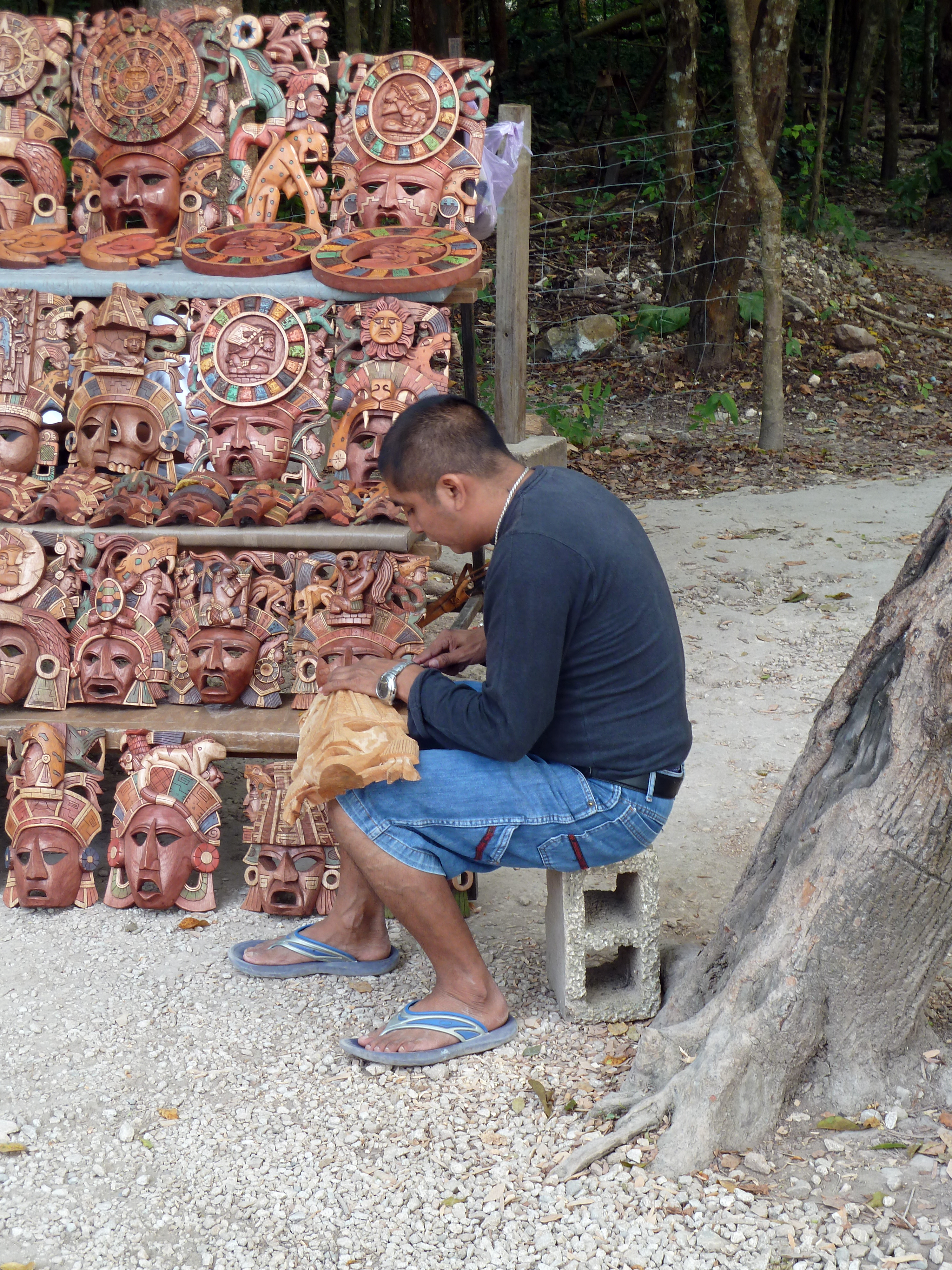
Many local artisans, vendors, guides, and families from Pisté and nearby communities see the change differently. For them, changing where visitors enter and where commerce happens could mean losing direct access to tourists and losing income they depend on.
That is why the closure is not only about souvenirs or ticket lines. It is about who controls the economic life around Chichén Itzá.
Backup planComplete Guide to Chichén Itzá: Tickets, Hours, Tours, Cenotes & TipsIs Chichén Itzá closed because the ruins are damaged?
No.
There has been no official indication that the closure is because El Castillo, the temples, the ball court, the Sacred Cenote, or other archaeological structures have been damaged.
The issue is operational, social, and economic. It involves access, security, visitor flow, local commerce, and the reorganisation of activity around the site.
This matters because travelers should understand the closure correctly. This is not a conservation emergency where the ruins are unsafe to see. It is a dispute over how one of Yucatán’s most important tourist sites should function.
 Stone carving detail at Chichén Itzá
What is the CATVI visitor centre?
The CATVI is the newer visitor centre designed to organise arrivals, ticketing, services, and artisan sales at Chichén Itzá.
For visitors, the idea is easy to understand. A better arrival area can mean:
- clearer entry
- better bathrooms
- more organised ticketing
- less confusion with groups and buses
- a more controlled route into the archaeological zone
For local sellers and guides, the same change can feel risky. If the main flow of visitors moves away from the traditional entrance and into a new controlled centre, the money moves too.
That is the heart of the dispute.
The old entrance vs. the new CATVI system
For years, the traditional access area near the old Parador Turístico has been part of the Chichén Itzá visitor experience. It has also been an important place for local commerce.
Artisans and vendors know where tourists walk, where buses arrive, where guides gather, and where people stop before or after visiting the ruins.
The new CATVI changes that geography.
Authorities have discussed ways to recognise registered spaces, use artisan census information, guarantee places inside the CATVI market, and reorganise people affected near the old access area.
Local groups have pushed back, especially over the future of the old Parador area. Their position has been that both systems should remain open: the traditional access and the CATVI access.
Authorities want a more ordered system. Local workers want to protect their access to visitors.
Both positions explain why the closure became difficult to resolve.
 Queue at the entrance to Chichén Itzá
Why local artisans and guides are worried
Chichén Itzá is not only an archaeological site. It is also an economic engine for Pisté, nearby communities, guides, drivers, food sellers, artisans, mototaxis, and families who depend on tourism.
For visitors, a vendor stand may feel like a small part of the day. For local families, those sales may be the day.
That is why changing the entrance route matters.
If visitors are channelled through a new market or a different path, some sellers may benefit from better infrastructure. Others may lose visibility. A stand that worked well near the traditional route may not work the same way in a new layout.
The dispute is not simply “vendors versus tourists” or “order versus disorder.” It is about livelihoods, local Maya organisation, state control, heritage management, and who benefits from tourism at Chichén Itzá.
 T-shirt vendor near Chichén Itzá
Why authorities want to reorganise the site
The official position is easier to understand if you have visited Chichén Itzá on a busy day.
The site receives heavy traffic from Mérida, Valladolid, Cancún, Playa del Carmen, Tulum, cruise routes, private drivers, group buses, and independent travelers.
On peak days, the entrance experience can feel crowded and confusing.
A more controlled visitor centre can help with crowd flow, ticketing, tour group movement, designated artisan areas, visitor services, and oversight of access points.
That is the most charitable reading of the government and INAH position: they are trying to modernise and regulate one of Mexico’s most visited archaeological zones.
The local concern is also reasonable: modernisation can change who gets access to the tourist money stream.
Both things can be true at the same time.
How the closure started
The closure began on 19 May 2026 as a temporary or preventive operational closure.
Authorities framed it as a measure to coordinate operations and restore proper visitor conditions. But the local dispute around CATVI, the old Parador, artisans, vendors, and guides quickly became the central issue.
After that, the situation developed into a standoff.
Meetings were held between authorities, artisans, guides, and community representatives. Proposals were discussed. A planned reopening for Monday 25 May 2026 did not go ahead as expected because the proposed terms were rejected.
On Sunday, 31 May 2026, authorities announced that the site would reopen on Monday, 1 June 2026, with public access routed through CATVI.
Backup planComplete Guide to Chichén Itzá: Tickets, Hours, Tours, Cenotes & TipsWhat should travelers do now?
Check before going.
Before you leave for Chichén Itzá, confirm with at least one reliable source:
- your tour operator
- your private driver
- official INAH channels
- Yucatán government notices
- your hotel concierge, if they are actively checking local updates
If you are already in Valladolid or Pisté, ask locally before paying for transport to the entrance.
If you are coming from Mérida, Cancún, Playa del Carmen, or Tulum, be more cautious. Chichén Itzá is a long day trip, and it is not worth spending hours in a van without confirmation that the site is open.
What if you already booked a Chichén Itzá tour?
Contact the tour company before pickup time.
Ask three direct questions:
- Is Chichén Itzá confirmed open today?
- If it is closed, what is the replacement plan?
- Can I refund, reschedule, or switch to another route?
A good operator should give you a clear answer. If the answer is vague, do not spend the day hoping the situation changes at the gate.
If you are traveling with children, older relatives, or a tight schedule, choose certainty over hope. This is not the week to gamble on a long day trip without confirmation.
Good alternatives if Chichén Itzá is closed
If Chichén Itzá is closed and you still want a ruins day, choose an alternative that is confirmed open that morning.
From Mérida, Uxmal is usually the strongest substitute. It is beautiful, less chaotic, and works well with Kabah or a Ruta Puuc day if you have enough time.
From Valladolid, Ek Balam can work well, especially if you combine it with a cenote and a slower lunch stop.
From Cancún, Playa del Carmen, or Tulum, ask whether a revised route through Valladolid, Ek Balam, and a cenote makes more sense than a cancelled Chichén Itzá day.
A simple replacement plan could be:
- Uxmal and Kabah from Mérida
- Ek Balam and cenotes from Valladolid
- Valladolid, cenote, and lunch from the Riviera Maya
- Izamal and cenotes if returning toward Mérida
Private drivers and flexible tours are easier to adjust. Large group tours may have less room to change the day.
Backup planComplete Guide to Chichén Itzá: Tickets, Hours, Tours, Cenotes & Tips Visitors walking through the archaeological site of Chichén Itzá
Should you still go to Valladolid?
Yes, Valladolid can still be worth visiting even if Chichén Itzá is closed.
Valladolid works well as a calmer colonial city stop with food, cenotes, churches, and easy access to nearby communities. It is also a good base if Chichén Itzá reopens and you want to be close.
But if your only reason for going east is Chichén Itzá, pause before committing to the drive.
From Mérida, Valladolid is still a long day. From Cancún or the Riviera Maya, it can also become a full-day trip. Without the ruins, make sure the replacement plan is something you actually want.
What this means for independent travelers
If you have a rental car, do not leave early for Chichén Itzá without checking the status.
The drive from Mérida is usually around two hours each way. From Valladolid it is shorter, but still not worth doing blind if gates are closed or access is contested.
Keep your day flexible. A sensible backup plan could be:
- breakfast in Valladolid
- a nearby cenote
- lunch in town
- Ek Balam if confirmed open
- or return toward Mérida with a stop in Izamal
Carry cash, water, and patience. When a site like this is in dispute, information can change faster than websites are updated.
What this means for families
Families should be cautious.
Chichén Itzá is already hot, exposed, and tiring for children. Adding uncertainty at the gate makes the day harder.
If you are traveling with young kids, older adults, or anyone who struggles with heat, choose a confirmed alternative instead of waiting near the entrance.
A cenote and Valladolid day may be more comfortable than a tense ruins attempt.
When did Chichén Itzá reopen?
According to the 31 May 2026 joint announcement from the Yucatán government and INAH, Chichén Itzá reopened on Monday, 1 June 2026.
The most important practical detail is that public access is exclusively through the CATVI visitor centre.
In the days after reopening, that meant some changes to entry flow and extra confusion at the gate. As of 12 June 2026, operations appear to have settled into a more normal pattern for travelers.
Backup planComplete Guide to Chichén Itzá: Tickets, Hours, Tours, Cenotes & TipsShould you cancel your Yucatán trip?
No. Do not cancel a whole Yucatán trip because of this closure.
You may need to adjust one day, but Yucatán still has strong alternatives: Uxmal, cenotes, Valladolid, Izamal, Mérida, haciendas, beach towns, and smaller archaeological routes.
Chichén Itzá is important, but it is not the only reason to visit the region.
If this was your one big ruins day, replace it with a confirmed site rather than spending the day chasing uncertain access.
FAQ
Why is Chichén Itzá closed?
Chichén Itzá was closed because of a dispute over visitor access, vending spaces, guide activity, and the reorganisation of local commerce around the new CATVI visitor centre. It was not closed because the ruins were damaged.
Is Chichén Itzá closed permanently?
No. The closure was temporary. The site reopened on Monday, 1 June 2026 and remains open, with access through the CATVI visitor centre.
What is CATVI at Chichén Itzá?
CATVI means Centro de Atención a Visitantes. It is the newer visitor centre and market area designed to organise arrivals, services, and artisan sales at Chichén Itzá.
Why are artisans protesting the CATVI changes?
Many artisans and local workers worry that moving visitor flow away from the traditional entrance area will reduce their contact with tourists and hurt their income.
Can I still visit Chichén Itzá with a tour?
Yes. Tours are operating again, but confirm with your operator that your booking is active and that entry follows the current CATVI access route.
What should I visit instead of Chichén Itzá?
From Mérida, Uxmal is usually the strongest alternative. From Valladolid or the Riviera Maya, Ek Balam, cenotes, and a Valladolid day may work better. Always confirm current opening conditions before leaving.
Bottom line
Chichén Itzá was closed because of a local dispute over access, commerce, and control around the new visitor centre.
The ruins themselves are not the problem.
As of 12 June 2026, the site remains open with visitor access through CATVI. For travelers, the best approach is practical: plan as you would for any major ruins day, keep a backup plan in mind, and confirm details before leaving if you are on a tight schedule.
Backup planComplete Guide to Chichén Itzá: Tickets, Hours, Tours, Cenotes & Tips
