
Cruise ships dock at the end of the world's longest pier — a 6.5 km (4 mi) stretch of concrete and steel that juts into the Gulf of Mexico. Walking it is not allowed, so a free shuttle bus ferries passengers to shore in about 15–20 minutes. Budget your time accordingly: the last shuttle back leaves one hour before your all-aboard time.
Progreso itself is a working fishing port and seaside town, not a polished resort. That is the point. You get genuine Yucatecan character, accessible Mayan ruins, a beach you can walk to, and excursions that do not require a two-hour bus ride. Here is how to spend a day ashore.
 Progreso beach and pier on the Yucatán coast
The Beach and the Malecón
The easiest option is also the most pleasant. From the cruise terminal, turn right and walk about 1 km along the Malecón — a waterfront boardwalk lined with palm trees, food stalls, and small shops — to reach Playa Progreso. The sand is soft, the Gulf water is warm and shallow, and the beach stretches for miles.
The section nearest the pier can get crowded when ships are in port. Walk further east and the crowds thin out. You can rent a palapa (palm-throofed shelter) for a few pesos, grab a fresh coconut from a vendor, or settle into a free beach lounger. Water shoes are a good idea — parts of the shoreline can be rocky, and seaweed washes up seasonally.
Several casual restaurants line the Malecón serving fresh seafood, ceviche, and cold beer. Look for places with a view of the water and a steady flow of locals. A full meal with a drink typically runs 150–300 MXN (US$8–16).
Museo del Meteorito
One of the most unexpected museums in southern Mexico sits right on Progreso's Malecón. The Museo del Meteorito (Meteorite Museum) opened in 2022 and tells the story of the Chicxulub impact — the asteroid strike 66 million years ago that wiped out the dinosaurs and, not coincidentally, created the geological conditions for Yucatán's famous cenotes.
The museum is small but well done. Eight rooms walk you through 14 billion years of planetary history, with fossils, interactive displays, video mapping, and animatronic dinosaurs that move and roar. There is a 360-degree projection room and tablets where visitors can design their own dinosaur. It is genuinely engaging for children and interesting for adults.
Practical details: Open Tuesday–Sunday, 11:00–18:15. Closed Mondays. Admission is 350 MXN (US$18) for foreign adults, less for Mexican nationals and children. The museum is on the Malecón (Calle 19, between Calle 66 and Calle 68), about a 10-minute walk from the shuttle drop-off point. Plan for 45–60 minutes inside.
El Corchito Ecological Reserve
About 10 km east of the port terminal, El Corchito is a mangrove reserve with a twist: it has open-air cenotes where you can swim through tunnels of mangrove roots. The water in these sinkholes has a greenish glow from sunlight filtering through the canopy, and the reserve is home to raccoons, herons, crocodiles, and — if you are lucky — flamingos.
You reach the cenotes by a short boat ride through the mangroves. There are three main swimming areas, ranging from shallow (waist-deep) to over 1.5 m deep. A small shallow pool offers a "fish pedicure" where tiny fish nibble at your feet.
Getting there requires a taxi from the port (around 150–200 MXN each way) or a pre-arranged tour. If you are on a tight cruise schedule, this works best as part of a half-day excursion that combines it with another stop.
 A cenote in Yucatán, the region's signature natural swimming holes
Mayan Ruins Within Reach
Progreso's real advantage over other Caribbean cruise ports is proximity to genuinely interesting Mayan ruins that do not require an all-day commitment.
Dzibilchaltún is the closest major site — about 25 minutes by taxi from the port. This was one of the longest-occupied cities in the Maya world, inhabited continuously from around 500 BCE until the Spanish arrival. The Temple of the Seven Dolls is the highlight: on the spring and fall equinoxes, the rising sun passes directly through its doorways. The site also has the enormous Cenote Xlacah (the largest in Yucatán), a small but good museum, and the ruins of a 16th-century open-air chapel built from dismantled Maya stones. Entrance fee is around 227 MXN for foreign visitors. Allow 1.5–2 hours.
Xcambó is a smaller coastal ruin about 37 minutes from the port, less visited and more personal. It sits near salt flats and has a cenote on site. A good option if you want ruins without the crowds.
Skip Chichén Itzá on a port day. It is over two hours away by bus, and you would spend more time in transit than at the site.
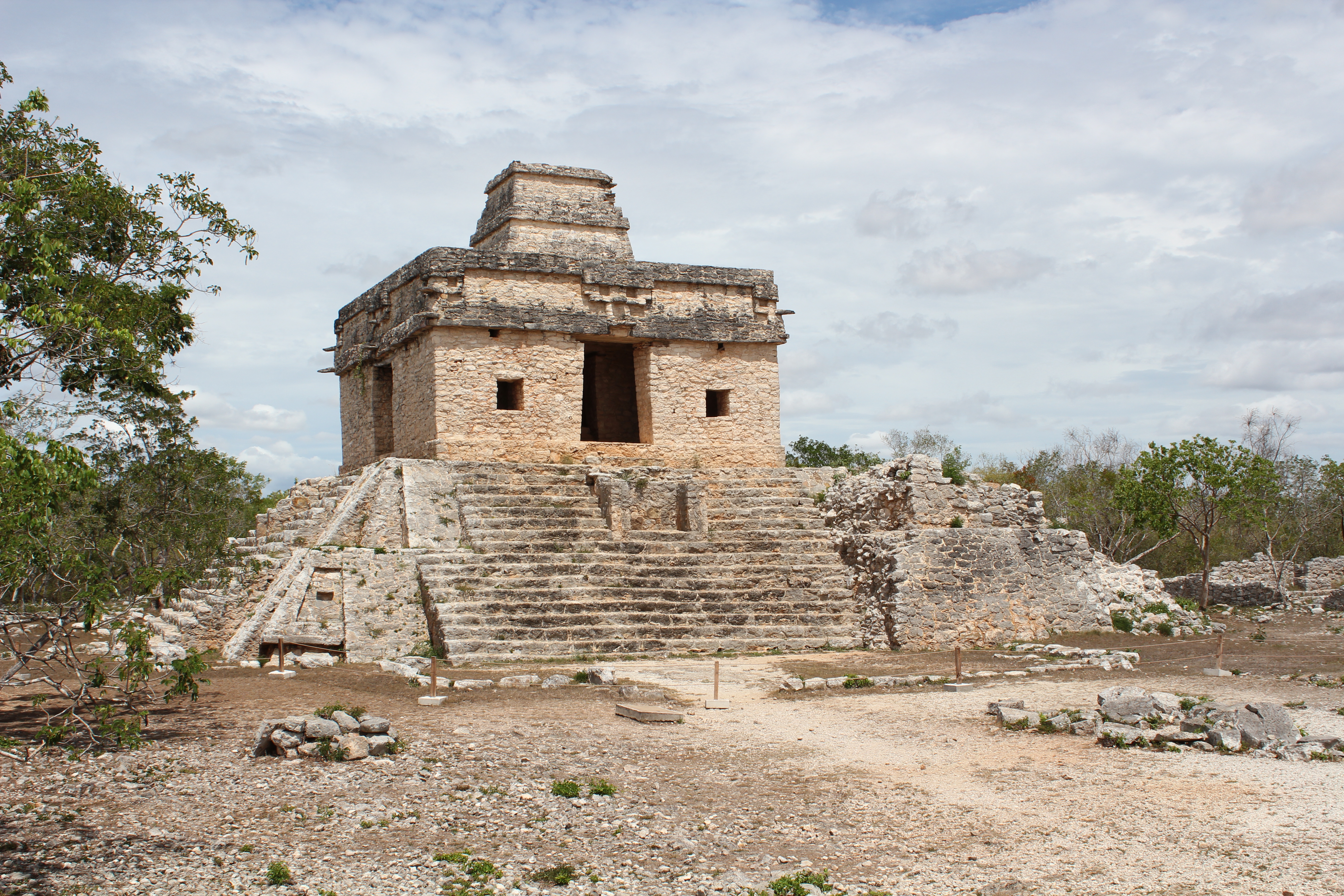 Temple of the Seven Dolls at Dzibilchaltún, Yucatán
Getting Around
- Free shuttle: Runs from the ship to the port terminal every 20–30 minutes. Last return one hour before all-aboard.
- Taxi: Readily available at the terminal. A ride into Progreso town costs about 100–150 MXN. A ride to Dzibilchaltún runs 200–300 MXN each way. Negotiate the fare before getting in.
- Tour: Cruise lines offer shore excursions, but independent taxis and local guides are cheaper and more flexible. Several local operators offer half-day tours from the port that combine ruins, cenotes, and beach time.
Practical Tips
- Currency: Mexican pesos (MXN). The $ symbol is the same as the US dollar sign — check whether prices are in MXN or USD. Many tourist-facing businesses accept US dollars, but you get better value in pesos. ATMs are available in town.
- Language: Spanish is the main language. English is spoken near the port and at tourist sites, but less so in town. A few Spanish phrases go a long way.
- Heat: Progreso is hot and humid, especially May–September. Wear sunscreen, a hat, and light clothing. Carry water.
- Safety: Progreso is generally safe during the day. Use normal precautions with belongings on the beach. Avoid walking alone at night in unlit areas.
- Time: Most ships are in port from early morning to late afternoon. Start early to beat the heat and crowds, especially at the ruins.
- Cash: Bring small bills (100s and 200s MXN) for taxis, beach rentals, and small vendors. Not all places accept cards.

