
The third Festival del Salbut will take over the main square of Seyé on Saturday 15 August 2026, beginning at 5:00 pm.
Twenty-two traditional cooks are expected to participate, alongside visiting food exhibitors, artisans, local performers and small businesses from different parts of Yucatán. Entry is free, while individual salbutes will generally cost $20 MXN for traditional varieties and from $30 MXN for special fillings.
Seyé is around 33 kilometres southeast of Mérida. This makes the festival an easy evening trip for travelers who want to experience a community food event without committing to an overnight stay.
Go near the opening time. The previous edition attracted approximately 5,000 visitors, and some food sold out before the end of the night.
Festival del Salbut 2026 at a glance
| Detail | Information |
|---|---|
| Date | Saturday 15 August 2026 |
| Opening time | 5:00 pm |
| Location | Main square of Seyé, Yucatán |
| Entry | Free |
| Traditional cooks | 22 expected |
| Traditional salbutes | $20 MXN |
| Special salbutes | From $30 MXN |
| Expected attendance | More than 6,000 visitors |
| Distance from Mérida | Approximately 33 kilometres |
| Driving time | Around 35–45 minutes, depending on traffic |
| Recommended arrival | Between 4:30 pm and 5:15 pm |
| Payment | Bring cash and small notes |
| Best for | Food travelers, families and regional culture |
| Closing time | Not yet formally published |
The event will be held around the Parque Principal de Seyé.
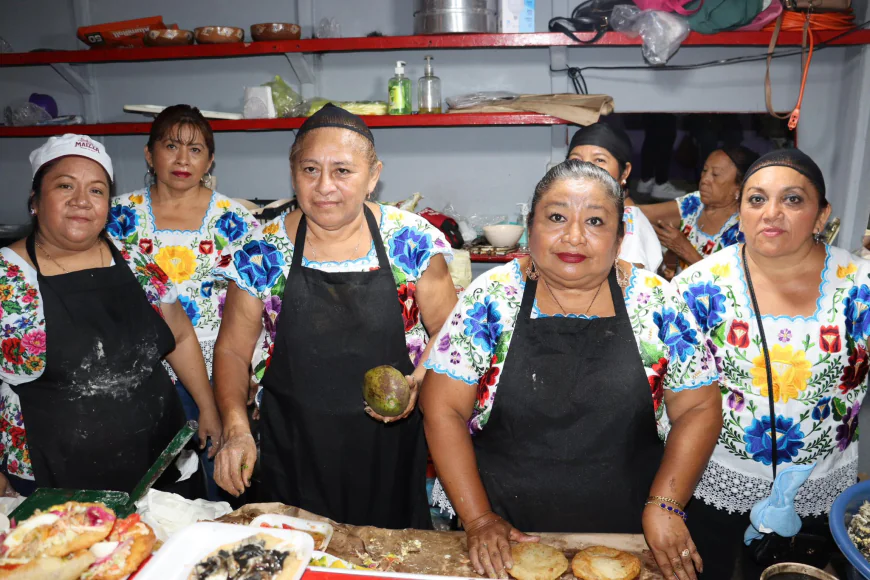 Traditional cooks at the Festival del Salbut in Seyé
Traditional cooks during the 2025 edition of the festival. Photo: MexicoTrip.
Is the festival worth visiting?
The festival is worth considering when food is an important part of your Yucatán trip.
Unlike a restaurant tasting menu, the evening brings together home-style cooks, local vendors and regional recipes in one public space. You can compare several versions of the same antojito without traveling between different markets or towns.
It particularly suits:
- Travelers staying in Mérida who want an easy evening outside the city
- Visitors interested in traditional Yucatecan cooking
- Families comfortable with busy public events
- Travelers who enjoy informal food stalls rather than formal restaurants
- People already planning a daytime trip to Acanceh, Cuzamá or Homún
This is not the best option if you need a quiet dinner, guaranteed seating or tightly controlled dietary preparation. Expect queues, warm weather, loud stages and a crowded central square.
What exactly is a salbut?
A salbut begins with a small disc of fresh corn masa. It is shaped by hand and fried until the masa inflates slightly, producing a base that is soft and airy rather than dry and crisp.
The classic version is normally topped with shredded turkey or chicken, lettuce, tomato, pickled red onion and avocado. Habanero salsa is added separately.
The main difference between a salbut and a panucho is the base. A panucho is usually made with a tortilla containing refried black beans. A salbut does not normally have the bean-filled centre and tends to be softer and more inflated.
Because the masa absorbs some of the cooking oil, salbutes are filling. Four or five can amount to a substantial meal, especially when topped with heavier preparations such as relleno negro, lechón or cochinita.
 Salbutes prepared with relleno negro
Salbutes prepared with a dark regional guiso. Photo: Irving Gil for POSTA.
What food will be available in 2026?
The announced menu combines familiar Seyé recipes with less conventional fillings.
Traditional options are expected to include:
- Turkey
- Ground beef
- Egg
- Relleno negro
- Higadilla
The wider selection announced for 2026 includes:
- Tzic de venado
- Cabeza de res
- Carnitas
- Pastor
- Queso de bola
- Relleno blanco
- Carne asada
- Lechón
- Cochinita
- Octopus
- Pezuña
- Salbut motuleño
Not every stall will prepare every variety. The point of the festival is that each cook or visiting exhibitor brings a smaller selection based on their own recipes.
A sensible approach is to begin with one classic salbut before trying the more unusual fillings. Share between two people where possible. This lets you compare more stalls without becoming full during the first half-hour.
Five styles worth looking for
Classic turkey
Start with a straightforward turkey salbut. It provides a useful reference point for judging the masa, frying and pickled onion before moving to heavier preparations.
Relleno negro
Relleno negro brings a darker, smokier and more complex flavour. The black recado can be intense, so this works well as one of several shared salbutes rather than an entire plate.
A recipe from a visiting municipality
Representatives from Mérida, Motul, Maní, Hunucmá, Sisal, Tekax, Valladolid, Izamal and Espita have been announced among the visiting participants. Kanasín, Conkal, Acanceh and Tunkás are also expected to return.
Look for a preparation that reflects the exhibitor's home town rather than ordering only familiar cochinita.
Seafood
Octopus and other seafood preparations provide a contrast to the turkey, pork and beef options. Ask the stall when the topping was prepared and whether it has been kept properly chilled.
Queso de bola or salbut motuleño
These are less traditional as everyday salbutes but fit the experimental side of the festival. They are useful choices after you have already tried one or two classic versions.
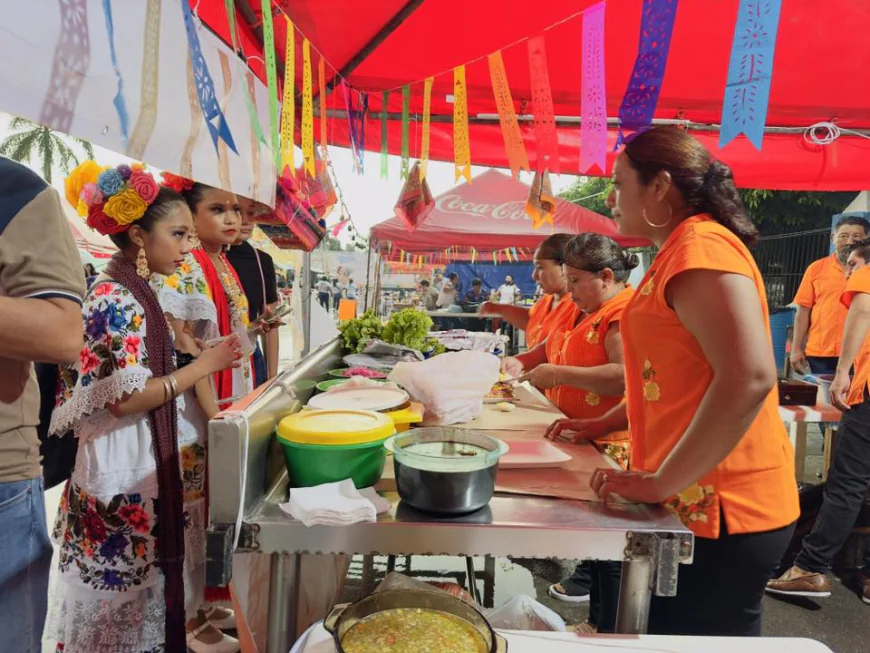 Cooks preparing food during the Seyé festival
Festival stalls operate as working kitchens rather than display stands. Photo: MexicoTrip.
How much cash should you bring?
Traditional salbutes have been announced at $20 MXN each. Special varieties will start at $30 MXN, with the final price depending on the filling and stall.
For one adult, a practical food budget is:
| Purchase | Approximate budget |
|---|---|
| Four traditional salbutes | $80 MXN |
| Four mixed or special salbutes | $120–$180 MXN |
| Drinks | $30–$80 MXN |
| Food and drinks together | Around $150–$300 MXN |
| Crafts or packaged food | Additional budget needed |
Bring small notes and coins. Mobile signal and card terminals can be unreliable when thousands of people are gathered in one small area.
Do not rely on every vendor accepting cards or transfers.
More than a food market
The 2026 festival is planned as a larger cultural and commercial event rather than a row of food stalls alone.
Organizers have announced:
- Three activity and performance stages
- More than 35 artisans
- Approximately 40 Yucatecan entrepreneurs
- Local music and cultural performances
- The presentation of Seyé's traditional festival ambassador
- The election of the Rey del Salbut
- Regional food exhibitors
- Artisan and community-product corridors
The detailed stage timetable had not yet been published when this guide was prepared. Treat the food as the main reason to visit and the performances as part of the wider atmosphere.
Products expected in the artisan area include textiles, hammocks, filigree jewellery, honey, habanero products, natural cosmetics, henequén work and traditional toys.
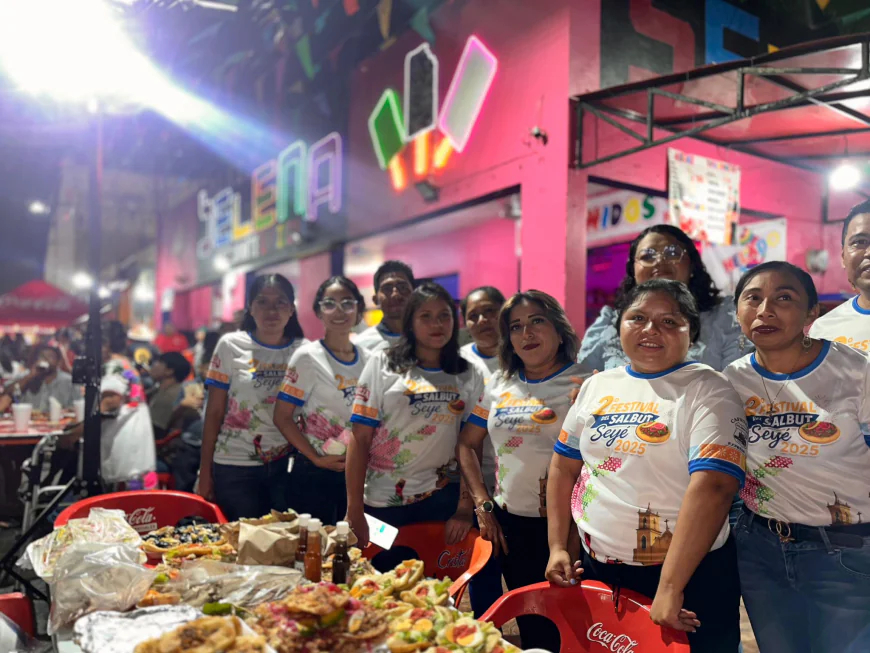 Festival participants and food stalls in Seyé
The festival becomes busiest after dark. Photo: MexicoTrip.
What time should you arrive?
Arrive between 4:30 pm and 5:15 pm.
Although the festival formally begins at 5:00 pm, arriving slightly early gives you time to park, find the square and see how the stalls are arranged. It also puts you near the front of the first food queues.
The 2025 edition attracted close to 5,000 people. Organizers are preparing for more than 6,000 visitors in 2026 and have increased the number of traditional cooks from 15 to 22.
The previous event reportedly ran short of food before the evening was over. The additional stalls should improve capacity, but popular fillings may still sell out first.
Come early when a particular variety matters to you. Do not plan to arrive at 9:00 pm and assume the complete menu will remain available.
Getting to Seyé from Mérida
Rental car
A rental car is the easiest independent option.
The journey from Mérida is roughly 33 kilometres and normally takes around 35–45 minutes. Traffic leaving the city and congestion near the festival may lengthen the trip.
Use live navigation to the Parque Principal de Seyé rather than relying on a saved route. Roads immediately around the square may be closed or redirected for stalls and stages.
Expect to park several blocks from the centre. Avoid blocking residential entrances and do not leave valuables visible inside the vehicle.
Private driver
A private driver is the easiest arrangement when nobody in your group wants to drive after dark.
Ask the driver to remain nearby or agree on a precise collection point outside the busiest streets. Mobile coverage can become less reliable when the square is crowded.
This is particularly useful for families, groups and travelers combining the festival with a cenote or archaeological site earlier in the day.
Bus
Regional buses connect Mérida with Seyé, commonly through the city's eastern or Noreste transport network.
The outward journey is possible independently, but the return requires more care. Evening departure times can change, and the festival may continue beyond the last convenient service.
Confirm the final return departure at the terminal before leaving Mérida. Do not assume that buses will operate late specifically for the event.
Taxi or ride-hailing app
A taxi or app-based ride may be available from Mérida, but finding a return vehicle late in the evening can be less predictable.
Pre-arranging both directions is safer than requesting a car after the busiest part of the festival. Confirm the fare and collection location in advance.
A useful half-day plan from Mérida
The festival works particularly well after a short visit to Acanceh.
A relaxed schedule could look like this:
| Time | Plan |
|---|---|
| 2:30 pm | Leave Mérida |
| 3:15 pm | Walk around central Acanceh and see the archaeological remains |
| 4:15 pm | Continue toward Seyé |
| 4:40 pm | Park and walk to the main square |
| 5:00 pm | Begin with one traditional salbut |
| 6:00 pm | Visit the artisan and entrepreneur corridors |
| 6:45 pm | Return for special or visiting-town recipes |
| 7:30 pm | Watch part of the cultural programme |
| 8:00–9:00 pm | Depart for Mérida or remain for later performances |
Keep the daytime portion simple. This is not the day to schedule several ruins, a long cenote tour and a large lunch before the festival.
Combining the festival with a cenote
A morning in Homún or Cuzamá can work, but allow time to shower and change before continuing to Seyé.
Cenote visits often involve wet clothing, dirt roads and limited changing facilities. Returning briefly to Mérida may add unnecessary driving, so choose a cenote complex with proper showers when possible.
Eat a light lunch. The festival is less useful when you arrive already full.
This route is easier with a rental car or private driver. Public transport between individual cenotes and Seyé is not straightforward enough for a tightly timed festival evening.
Visiting with children
The festival is family-friendly, but it is still a busy outdoor event.
Families should consider:
- Arriving before the largest evening crowds
- Bringing water, wipes and mosquito repellent
- Choosing a compact stroller rather than a wide pushchair
- Agreeing on a meeting point in case the group becomes separated
- Beginning with mild turkey, egg or meat fillings for younger children
- Keeping children away from hot oil and active cooking areas
- Carrying hearing protection for children sensitive to stage noise
The central area is relatively flat, but crowd density may make movement difficult later in the evening.
Seating will be limited. Do not assume every stall will have its own tables and chairs.
Dietary and allergy considerations
The festival is not a controlled allergy-friendly environment.
Corn masa is naturally gluten-free, but cross-contact can occur through shared preparation surfaces, toppings and frying equipment. Visitors with coeliac disease or serious allergies should speak directly with each cook and make their own assessment.
Vegetarian choices may be limited. Egg and queso de bola could be possible options, but recipes, stocks and frying oil may still involve animal products.
Pork appears in several fillings, including cochinita, lechón, carnitas and some versions of relleno. Ask before ordering when avoiding pork for religious, medical or personal reasons.
Seafood allergies require particular care because octopus and possibly other seafood will be prepared close to meat dishes.
What to bring
Carry only what you need:
- Cash in small denominations
- Refillable water bottle
- Small umbrella or light rain layer
- Mosquito repellent
- Hand sanitiser or wipes
- Portable phone battery
- Lightweight clothing
- Comfortable closed shoes or secure sandals
August evenings in inland Yucatán remain warm and humid. A short rain shower is also possible, even when the afternoon begins dry.
Avoid bringing a large backpack. Narrow spaces around popular stalls become difficult to navigate once the main crowd arrives.
A little about Seyé
Seyé is a small Yucatecan town east of Mérida, centred on its municipal buildings, main square and the parish church of San Bartolomé.
For most international visitors, Seyé is not a conventional sightseeing destination. The festival is valuable precisely because it provides a clear reason to spend time in a town that otherwise sits outside the main tourism circuit.
The evening is built around local cooks, traders and community organisations rather than attractions designed solely for visitors.
 Church of San Bartolomé in Seyé, Yucatán
The principal church of Seyé. CC0 photograph by Inri via Wikimedia Commons.
Practical drawbacks
The festival has several clear advantages, but it is worth planning around its limitations.
Expect:
- Heavy traffic close to the square
- Informal or limited parking
- Long lines at popular stalls
- Limited public seating
- Few guaranteed card-payment options
- Hot and humid conditions
- Loud performances
- Possible rain
- Some recipes selling out early
- Uncertain late-night public transport
These are normal conditions for a successful town festival. They are easier to manage when you arrive early and keep the evening flexible.
Final verdict
The Festival del Salbut is one of the more approachable community food events within easy reach of Mérida.
It does not require an expensive ticket, an overnight hotel or a full-day excursion. The main commitment is accepting the crowds and reaching Seyé before the most sought-after dishes begin to disappear.
Go for the cooks and the chance to compare regional recipes. Stay for the artisan stalls and cultural programme.
A rental car or pre-arranged driver makes the evening substantially easier. Public transport can work, but only after confirming the return journey.
For a quick check on transport, family logistics or how to combine Seyé with Acanceh or a cenote, use the free Yucatán Guide WhatsApp assistant. Travelers who want a real person to review the complete day can also use Human Trip Support or the Trip Plan & Booking Portal.
Programme status and sources
Festival information was checked on 29 July 2026. Stage times, participating stalls and transport arrangements may still change before the event.
Current details were reported by POSTA, Diario de Yucatán, Radio Mayab and PorEsto.
Check the municipal or festival social channels shortly before traveling for the final stage programme and any road-closure instructions.


